

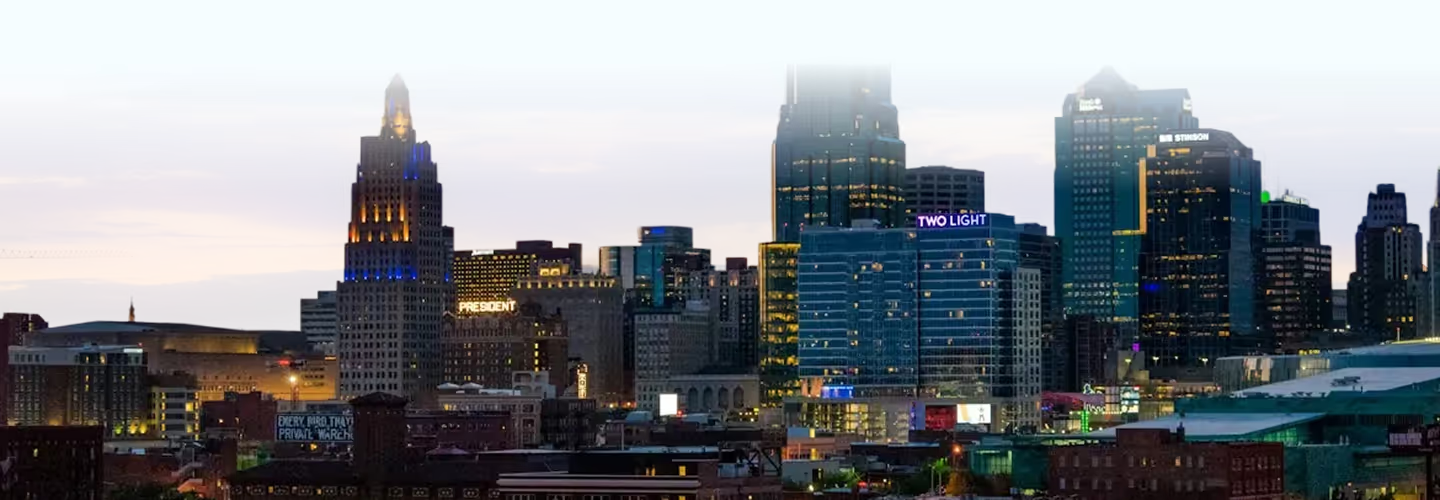


Heating Installation in Grandview, MO
Ensure your Grandview home stays warm this winter with professional heating installation. Trust us for 24/7 service, expert workmanship, and flexible financing.
Is Your Heating System Failing When You Need It Most?
Facing the brunt of Grandview's cold winters without efficient heating puts your home’s safety and comfort at immediate risk. All Day Comfort Heating and Cooling LLC provides fast, expert installations to ensure your home remains warm regardless of the outdoor temperature. Contact us immediately to schedule a site evaluation or discuss our available financing options.
We deliver concrete results for homeowners facing heating crises:
- Professional installations tailored specifically to your home's square footage and thermal needs.
- 24/7 emergency availability to handle unexpected breakdowns during freezing temperatures.
- Guaranteed workmanship backed by long-standing local expertise and industry standards.
All services come with full manufacturer warranty coverage and flexible financing options to fit your budget.
Comprehensive Heating Installation Solutions
When you invest in a new heating system, you are purchasing more than just a piece of equipment; you are investing in the next two decades of your home’s climate control. A proper installation requires a technical approach that goes beyond simply swapping out an old box for a new one. The efficiency and longevity of your new furnace or heat pump depend entirely on how well it is sized and installed.
We provide a complete installation service that addresses the unique heating load of your property. This involves calculating the necessary heating output based on the layout of your home, insulation levels, and window placements. An oversized unit will short-cycle, leading to wear and tear, while an undersized unit will run continuously without ever reaching the set temperature. Our process ensures the equipment selected is perfectly matched to your specific requirements.
Modern heating technology has advanced significantly. We handle the installation of high-efficiency gas furnaces that utilize up to 98% of fuel, as well as electric furnaces and dual-fuel heat pump systems. For residents in Grandview, where winter lows can drop significantly, selecting a system with the right AFUE (Annual Fuel Utilization Efficiency) rating is critical for keeping monthly utility costs manageable. We manage the entire scope of the project, from the initial load calculation to the final safety check, ensuring your system is compliant with all current energy standards.
The Installation Process Step-by-Step
A seamless installation minimizes disruption to your daily life and ensures your system operates at peak performance from day one. We follow a rigorous, standardized protocol for every project to maintain quality control and safety; request service today.
Site Evaluation and Sizing
First, technicians perform a Manual J load calculation. This is the industry standard for determining the exact heating requirements of a residential structure. We inspect existing ductwork to ensure it can handle the airflow of the new, more powerful system. If the ductwork is compromised or leaky, it is noted for repair or modification to prevent energy loss.
Safe Removal of Existing Equipment
Next, the old unit is disconnected from gas lines, electrical supplies, and ventilation shafts. This step requires precision to ensure no damage occurs to the surrounding infrastructure. We handle the removal and environmentally responsible disposal of the old furnace or heat pump, including the reclamation of any refrigerants if applicable.
System Positioning and Connection
Then, the new unit is positioned. For gas furnaces, this involves connecting the gas supply line and ensuring a perfect seal to prevent leaks. For all systems, high-voltage and low-voltage electrical connections are established. We also install the flue piping for proper ventilation, ensuring that carbon monoxide and combustion gases are safely vented outside the home.
Integration and Calibration
After the physical installation, we connect the system to your thermostat and ductwork. We may install a new thermostat if the new system requires advanced controls, such as communicating technology or zoning capabilities. The system is then calibrated to the manufacturer’s specifications, adjusting blower speeds and gas pressure to optimize combustion and airflow.
Final Testing and Walkthrough
Finally, we run the system through a full heating cycle to verify performance. We check temperature differentials between the supply and return air to confirm the unit is heating effectively. A final walkthrough is conducted to show you how to operate the new system, how to change filters, and how to read the new thermostat settings.
Determining When Replacement Beats Repair
Deciding between repairing an aging unit and investing in a new installation is a common dilemma. While repairs can solve immediate issues, there is a mathematical tipping point where replacement becomes the more financially sound decision.
The 50% Rule
If the cost of a necessary repair approaches 50% of the value of a new system, replacement is generally the better option. Putting expensive parts into an old system does not extend its life significantly and often leads to a "money pit" scenario where other components fail shortly after.
System Age and Reliability
Furnaces typically last between 15 and 20 years, while heat pumps may last 10 to 15 years. If your system is within this age range and requires a major repair—such as a heat exchanger or compressor replacement—it is time to replace. Older units are significantly less efficient than modern counterparts. Upgrading often results in immediate savings on energy bills that can help offset the cost of the new installation.
Rising Energy Costs
If your heating bills have increased steadily despite usage remaining the same, your system is losing efficiency. As components wear out, the motor and burners must work harder to produce the same amount of heat. All Day Comfort Heating and Cooling LLC recommends evaluating your energy history; a sharp rise in consumption is a clear indicator that the system has reached the end of its useful life.
Uneven Heating and Comfort Issues
When a system can no longer distribute air effectively, you will notice cold spots in certain rooms or significantly different temperatures on different floors. This often indicates that the internal components are no longer capable of maintaining the static pressure required to push air through the ductwork. Replacement allows for the installation of variable-speed blowers that resolve these airflow issues.
Safety Concerns
Older gas furnaces are at a higher risk for cracked heat exchangers. This is a critical safety hazard that can allow carbon monoxide to leak into your living space. If a crack is detected, the unit must be shut down immediately. in these cases, replacement is the only safe option.
Local Considerations for Homeowners
Operating a heating system in this region requires specific attention to local climate patterns and infrastructure. The humid subtropical climate means that while winters are the primary concern for heating, the transitional seasons of fall and spring also bring humidity and temperature fluctuations that your system must handle.
Climate and Equipment Selection
Grandview experiences winter lows that frequently drop to between 20°F and 30°F. Your heating system must be rated to handle this specific heating load without relying entirely on emergency backup heat strips, which are expensive to run. We recommend systems that maintain efficiency even during these sub-freezing periods.
Permits and Code Compliance
Installing a new heating system involves altering gas lines, electrical circuits, and ventilation systems. This work requires adherence to local building codes and often necessitates pulling a permit with the city. We manage the permitting process to ensure the installation is legal and passes all required municipal inspections. This is vital for your home insurance validity and future resale value.
Utility Rebates and Incentives
Local utility providers often offer rebates for homeowners who upgrade to high-efficiency systems. These programs are designed to reduce the load on the local grid. We can assist in identifying which equipment qualifies for these incentives, potentially lowering the net cost of your installation.
Venting and Air Quality
Because local homes are often built tightly to conserve energy, proper venting is essential. If you are upgrading from a standard-efficiency furnace to a high-efficiency condensing furnace, the venting requirements change. We install the necessary PVC intake and exhaust piping to accommodate these changes, ensuring that moisture and acidic condensate are handled correctly to prevent damage to your home.
Why Professional Installation is Non-Negotiable
The most expensive heating system on the market will fail if it is not installed correctly. Professional installation ensures that the equipment operates according to the manufacturer’s design, providing the expected efficiency and lifespan.
Manufacturer Warranty Protection
Most equipment manufacturers strictly void warranties if the equipment is not installed by a licensed professional. DIY or handyman installations leave you without coverage if a component fails. We ensure that all paperwork is filed correctly and that the installation adheres to the specific protocols required to keep your warranty valid.
Safety Assurance
Heating installation involves working with flammable gas, high-voltage electricity, and combustion fumes. A minor error in gas line connection can lead to leaks, while improper wiring can cause fire hazards. Professional technicians are trained to test all connections rigorously, ensuring the safety of your household.
Long-Term System Efficiency
Improper airflow settings or incorrect refrigerant charges (for heat pumps) can reduce system efficiency by up to 30%. This hidden cost accumulates on your monthly bills for years. We utilize precision tools to measure static pressure and temperature rise, fine-tuning the system to run as efficiently as possible.
Access to Modern Technology
Professional installers have access to the latest thermostat technologies and zoning systems. We can integrate your new heater with smart home systems, allowing for remote monitoring and control. This level of integration requires specialized knowledge of low-voltage wiring and system configuration that goes beyond basic installation.
Get Ready for the Cold: Schedule Your Heating Installation Today
When the temperature drops and your comfort is on the line, you need a partner who prioritizes speed, accuracy, and long-term reliability. We are committed to restoring warmth to your home with minimal delay and maximum professionalism. Trust All Day Comfort Heating and Cooling LLC to handle your next project with the expertise your home deserves.
Secure your comfort for the winter ahead; schedule your heating installation service now.
Contact Us
customer reviews
Areas We Serve




Copyright © 2026 All Day Comfort Heating and Cooling.
All rights reserved.
