




Heating Installation in Independence, MO
Looking for reliable heating installation in Independence, MO? Choose All Day Comfort Heating & Cooling for quick, code-compliant installations. Schedule today!
Restore Consistent Warmth to Your Home Efficiently
Is your heater failing to keep up with the freezing winter temperatures common in Independence, MO, leaving your home uncomfortable and your pipes at risk? Don’t get left in the cold—All Day Comfort Heating and Cooling LLC offers fast, reliable, and code-compliant heating installations designed to restore safety and comfort immediately. Schedule your heating installation estimate today to secure your home’s warmth.
- Quick installation times ensure your comfort is restored before the deep freeze sets in.
- Flexible financing options are available to make your new high-efficiency system affordable.
- Comprehensive labor and parts warranties secure your investment for years to come.
All installations are fully compliant with Independence building codes and come backed by our satisfaction guarantee and manufacturer-approved protocols.
What We Offer: Comprehensive Heating Installation Services
When you commit to a new heating system, you are purchasing more than just a metal box; you are investing in the correct sizing, design, and implementation of a thermal system for your specific property. A proper installation dictates the efficiency, longevity, and noise level of the unit for its entire lifespan. We provide a turnkey solution that handles every aspect of the transition from your old, failing unit to a modern, high-efficiency system.
Our service begins with a precise load calculation. Many homes in Independence have heating units that are either too large or too small, resulting in "short cycling" or an inability to reach the thermostat set point. We assess your home’s square footage, insulation values, window quality, and ductwork integrity to recommend a unit that fits your specific thermal envelope. This ensures you are not paying for energy you do not need or stressing a system that is too small for the job.
We handle the removal and environmentally responsible disposal of your existing equipment. Old furnaces often contain components or refrigerants (in the case of heat pumps) that require specific handling. Our team manages the teardown and haul-away process so your property remains clean and safe. Following removal, we prepare the installation site, which may involve modifying the plenum, adjusting gas lines, or upgrading electrical connections to support modern, high-efficiency equipment.
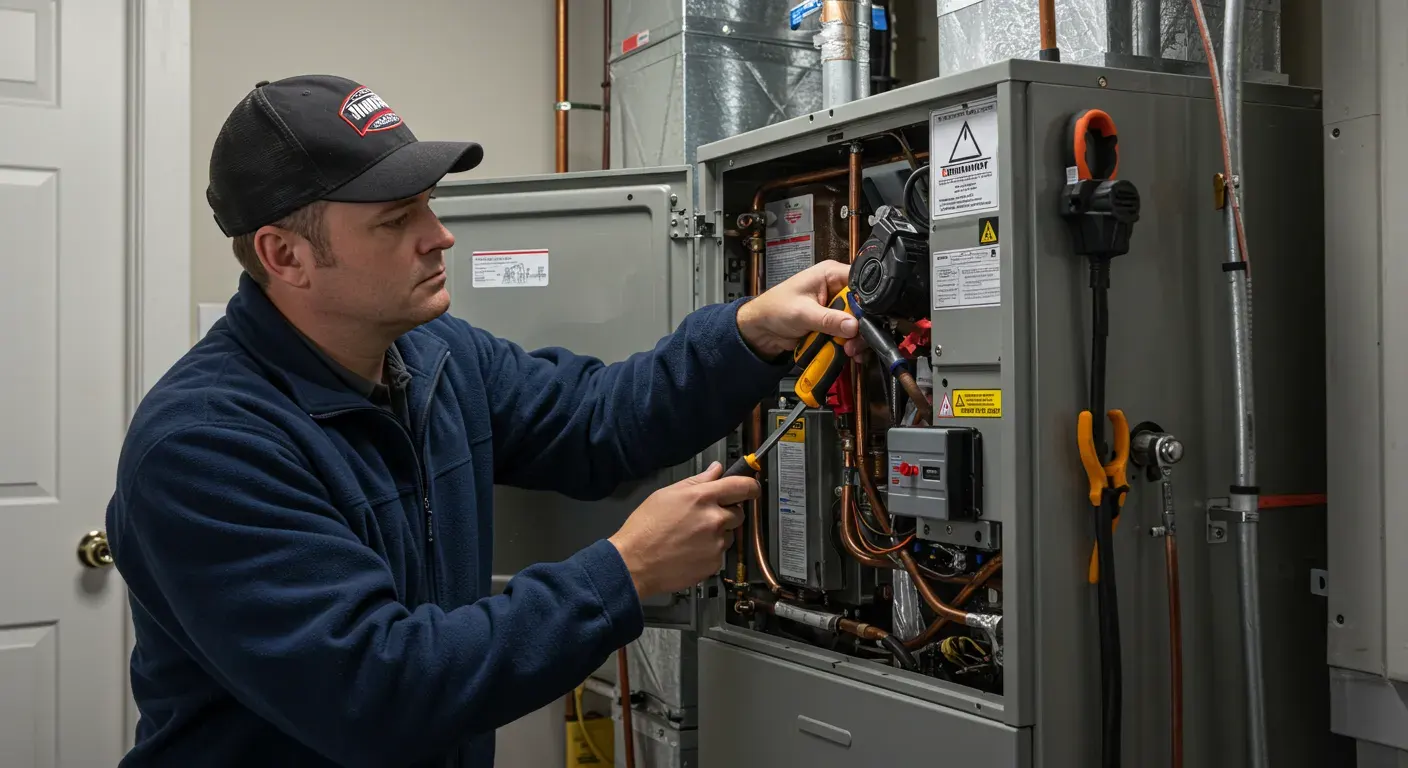
Our Step-by-Step Installation Process
A standardized, technical process is the only way to ensure a heating system operates at its rated efficiency (AFUE). We strictly adhere to manufacturer specifications and local safety regulations during every phase of the project.
- Site Assessment and Protection: Before bringing in heavy equipment, we lay down floor protection and clear a path to the installation site. This minimizes disruption to your daily routine and protects your flooring and walls. We verify that the designated area meets clearance requirements for combustion air and service access.
- System Sizing and Selection: Using Manual J load calculation protocols, we determine the exact heating load required for your home. We then present you with options ranging from single-stage standard efficiency units to variable-speed high-efficiency systems. This step ensures the equipment selected matches your budget and comfort goals.
- Ductwork and Infrastructure Inspection: A new furnace cannot perform well on a compromised duct system. We inspect the supply and return plenums for leaks or restrictions. If necessary, we seal connections or recommend modifications to ensure the static pressure remains within the healthy range for the new blower motor.
- Equipment Placement and Connection: The new unit is positioned and leveled. We meticulously connect the flue pipe for safe venting of combustion gases, ensuring there is no risk of carbon monoxide back-drafting. Gas lines are connected and leak-tested using electronic sniffers. Electrical wiring is tightened and verified for proper voltage and amperage.
- System Calibration and Commissioning: Once physically installed, the system is not simply turned on; it is commissioned. We adjust the gas manifold pressure to manufacturer specs and set the blower speed to match your ductwork's static pressure. We verify temperature rise—the difference between air entering and leaving the furnace—to confirm the heat exchanger is operating safely.
- Final Walkthrough and Education: We walk you through the operation of your new system. This includes programming the thermostat, showing you how and when to change the filter, and explaining the warranty registration process. We leave only when you are fully confident in operating your new heating setup.
Knowing When to Replace vs. Repair Your Heating System
Deciding between another repair bill and a full system replacement is a financial calculation based on age, safety, and efficiency. While repairs can extend the life of a unit, there is a tipping point where replacement becomes the more economical choice.
- The Age of the System: The average lifespan of a gas furnace is typically between 15 and 20 years, while heat pumps last about 10 to 15 years. If your system in Independence is approaching or has exceeded this age range, components like the heat exchanger or compressor are likely near failure. Replacing the unit preemptively avoids emergency service calls during the coldest weeks of the year.
- The 50% Rule: A common industry standard for decision-making is the 50% rule. If the cost of a necessary repair approaches 50% of the cost of a brand-new system, replacement is the smarter financial move. Investing heavy capital into an old asset with diminishing reliability rarely yields a positive return.
- Rising Energy Bills: As heating systems age, they lose efficiency due to wear and tear on motors and the accumulation of soot or scale on heat exchangers. If your utility bills have spiked despite normal usage, your system is likely working double-time to produce the same amount of heat. Modern systems with high AFUE ratings can significantly reduce monthly operational costs, offsetting the price of installation over time.
- Safety Concerns: Visible rust on the unit, soot around the registers, or odd smells can indicate a cracked heat exchanger. This is a serious safety hazard that allows carbon monoxide to leak into the living space. In these instances, repair is rarely an option; immediate replacement is required to ensure the safety of the occupants.
- Uneven Heating and Comfort Issues: If some rooms in your house are freezing while others are overheating, or if the air coming from the vents feels lukewarm rather than hot, the system may no longer be capable of distributing air effectively. This is often due to a failing blower motor or a compressor losing compression, signaling the end of the unit's service life.
Types of Heating Systems We Install
Understanding the hardware options available allows you to make an informed decision based on your home's fuel sources and your efficiency goals.
- Gas Furnaces: The most common heating source in the region, gas furnaces provide powerful, consistent heat. We install units ranging from 80% AFUE (standard efficiency) to 98% AFUE (modulating, high-efficiency). High-efficiency models utilize a secondary heat exchanger to capture energy from exhaust gases, drastically reducing fuel consumption.
- Electric Furnaces / Air Handlers: For homes without access to natural gas, electric furnaces utilize heating strips to generate warmth. While generally cheaper to install, they can be more expensive to operate. These are often paired with heat pumps to provide auxiliary heat during extreme cold.
- Heat Pumps: Heat pumps move heat rather than creating it, making them incredibly efficient. They provide both heating and cooling. Modern cold-climate heat pumps can operate effectively even when temperatures drop below freezing. For Independence homeowners, a "dual fuel" system—pairing a heat pump with a gas furnace—often provides the best balance of efficiency and raw heating power.
Adhering to Independence's Building Regulations and Seasons
Operating locally means understanding the specific constraints and requirements of Independence, MO. Unlike a national call center, we are familiar with the local nuances that affect HVAC installation.
- Permitting and Inspections: Heating installations involving gas lines or electrical work generally require a permit from the City of Independence Community Development Department. This process ensures that the installation meets current safety codes regarding venting, gas piping, and electrical grounding. We handle the application and coordination of the final inspection to ensure your home remains compliant and sellable in the future.
- Regional Climate Factors: Our region experiences a humid continental climate. This means winters can bring sub-zero temperatures and significant humidity shifts. Your heating system must be sized not just for the "average" winter day, but for the design temperature extremes. Furthermore, because summers are hot, the blower motor in your furnace usually doubles as the air handler for your AC. We ensure the new heating installation is compatible with your existing AC coil to prevent airflow issues during the summer transition.
- Utility Requirements and Rebates: Local utility providers often offer rebates for upgrading to high-efficiency equipment. These programs frequently require specific AFUE or SEER2 ratings and installation by a qualified contractor. We help identify eligible equipment that meets these utility standards, potentially lowering your net investment cost — request service today.
Why Professional Installation Matters
Attempting a DIY installation or hiring an unlicensed handyman for heating equipment is dangerous and often illegal. Modern heating systems are complex appliances that integrate high-voltage electricity, combustible gases, and pressurized refrigerants.
- Warranty Preservation: Almost all equipment manufacturers require proof of professional installation to honor their parts warranty. If a component fails two years down the road, a lack of professional documentation can leave you paying out of pocket for expensive parts.
- Carbon Monoxide Safety: Improper venting is the leading cause of carbon monoxide poisoning in homes with gas appliances. Professional installers use combustion analysis tools to verify that the system is venting correctly and that the fuel-to-air mixture is safe.
- Longevity and Performance: A system that is poorly installed—whether it is leveled incorrectly, has undersized return air, or improper gas pressure—will wear out prematurely. All Day Comfort Heating and Cooling LLC ensures that the equipment runs within the manufacturer's specified design parameters, maximizing the life of the unit.
Secure Your Comfort for the Winter
Your home’s heating system is the only barrier between your family and the harsh winter weather. Delaying replacement when a system is showing signs of failure can lead to frozen pipes, structural damage, and emergency service fees. By choosing a professional installation now, you ensure predictable comfort, lower energy bills, and peace of mind knowing your system is safe and compliant.
Don't wait for the first blizzard to discover your heater has quit. Trust the experts to size, install, and calibrate a system that fits your specific needs. Contact us now to discuss your heating installation options and schedule an on-site assessment.
Contact Us
customer reviews
Areas We Serve




Copyright © 2026 All Day Comfort Heating and Cooling.
All rights reserved.
