




AC Service in Kansas City, MO
Facing AC issues in Kansas City? Contact All Day Comfort Heating and Cooling for fast diagnostics and repairs. No hidden fees. Flexible financing available.
Restore Cool Air to Your Home Immediately
When your air conditioning system fails during a sweltering heat wave in Kansas City, MO, waiting days for a technician is not an option. You need a rapid response to diagnose the failure, secure the necessary parts, and restore a comfortable indoor temperature before the humidity causes damage to your home or health. All Day Comfort Heating and Cooling LLC provides urgent, diagnostic-led service to get your system running efficiently again. Contact us today to schedule your service or inquire about available financing options.
- Rapid response teams are available 24/7 to handle emergency breakdowns.
- Comprehensive service capabilities cover complex repairs, routine maintenance, and full system installations.
- Transparent pricing structures ensure you understand the cost of repairs without hidden fees.
We are fully licensed and insured for your peace of mind, with flexible financing available to handle unexpected HVAC expenses.
What to Expect From Professional AC Service
Effective air conditioning service goes beyond a simple filter change. It involves a rigorous inspection of the system's mechanical and electrical components to identify the root cause of performance issues. When you schedule service, you are engaging in a process designed to maximize energy efficiency and prolong the lifespan of your central air unit.
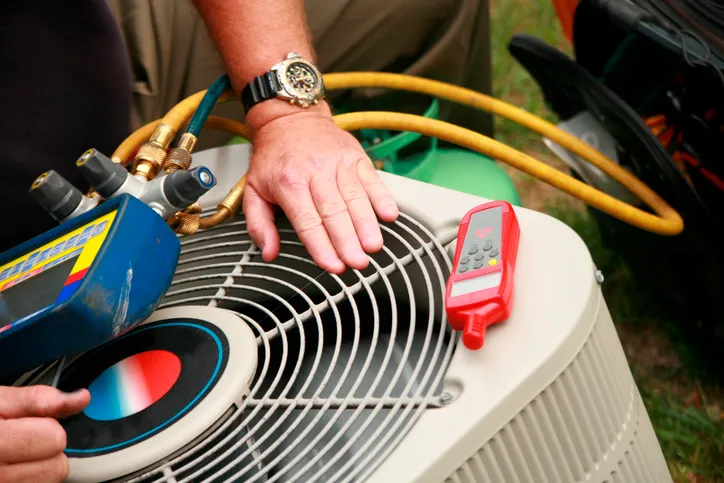
The scope of service typically includes a thorough examination of the following components:
- Refrigerant Levels and Pressure: Technicians measure refrigerant charge using gauges to ensure it matches the manufacturer’s specifications. Incorrect levels often lead to frozen coils or inefficient cooling.
- Electrical Connections and Controls: Loose connections or worn contacts can cause unsafe operation or system failure. Service includes tightening connections and measuring voltage and current on motors.
- Condenser and Evaporator Coils: Dirty coils reduce the system's ability to absorb and release heat. Cleaning these components is essential for maintaining airflow and cooling capacity.
- Blower Motor and Belt Inspection: The blower moves air through your home. Technicians check for wear on belts and ensure the motor is operating at the correct speed to prevent overheating.
- Thermostat Calibration: ensuring the thermostat reads the temperature accurately prevents the system from short-cycling or running continuously without reaching the set point.
- Condensate Drain Line Clearing: clogged drains can cause water damage and increase indoor humidity levels. Service includes flushing these lines to prevent backups.
Homeowners in the Kansas City area receive a detailed report of the system's health. This breakdown allows you to see exactly what is working, what requires immediate repair, and what might become an issue in the near future. This level of detail empowers you to make informed decisions about your property’s cooling infrastructure.
The Air Conditioning Service Process
Understanding the workflow of a service call helps homeowners prepare for the visit and eliminates uncertainty. A structured approach ensures that no component is overlooked and that the repair or maintenance is conducted safely and efficiently.
- Initial Assessment and Diagnostics: The technician arrives equipped with diagnostic tools to test the system. This involves listening for unusual noises, checking airflow from registers, and using multimeters to test electrical components. The goal is to isolate the specific failure point, whether it is a failed capacitor, a refrigerant leak, or a seized compressor.
- Presentation of Findings and Solutions: Once the issue is identified, the technician explains the problem in clear terms. You receive options for repair, including the cost of parts and labor. If the system is nearing the end of its life, options for replacement may also be discussed. Work only begins after you approve the scope and price.
- Execution of Repairs: The technician proceeds with the approved work. This may involve brazing copper lines, replacing electrical contactors, or cleaning out debris from the outdoor unit. Service vehicles are typically stocked with common parts to facilitate same-day repairs whenever possible.
- System Testing and Verification: After the repair is complete, the system is cycled on to verify performance. The technician checks the temperature split—the difference in temperature between the supply air and return air—to confirm the unit is cooling effectively.
- Clean Up and Final Report: The work area is cleaned, and old parts are removed. You receive a final invoice and documentation of the work performed, which is vital for maintaining manufacturer warranties.
Determining When to Repair or Replace Your Unit
Deciding between repairing an existing unit and investing in a new system is a common dilemma for homeowners. While repairs are often the most immediate and cost-effective solution for minor issues, there comes a tipping point where replacement becomes the more financially prudent choice.
Consider the following factors when making this decision:
- The Age of the System: The average lifespan of a central air conditioner is between 10 and 15 years. If your unit is approaching or has exceeded this range, major repairs may not yield a good return on investment. New systems offer significantly higher energy efficiency, which can lower monthly utility bills.
- Frequency of Breakdowns: If you find yourself calling for service multiple times a season, the cumulative cost of repairs will eventually surpass the cost of a new installation. A reliable system should not require constant intervention.
- The "5,000 Rule": A common industry benchmark involves multiplying the age of the unit by the cost of the repair. If the total exceeds $5,000, replacement is generally recommended. For example, a $600 repair on an 8-year-old unit ($4,800) might be worth it, while the same repair on a 10-year-old unit ($6,000) suggests replacement is better.
- Refrigerant Type: Older systems often use R-22 refrigerant (Freon), which has been phased out due to environmental regulations. As R-22 becomes scarcer, the cost to recharge these systems has skyrocketed. Upgrading to a system that uses R-410A or newer refrigerants resolves this issue.
- Efficiency Ratings (SEER): Older units may have a Seasonal Energy Efficiency Ratio (SEER) of 10 or less. Modern standards require a minimum of 13 or 14, with high-efficiency units reaching well over 20. Replacing a low-SEER unit can result in immediate and noticeable energy savings, particularly during hot summers.
Navigating Kansas City HVAC Requirements and Climate
Operating an HVAC system in this region requires specific attention to local climate patterns and regulatory standards. The distinct four-season climate, with summer temperatures often reaching the upper 80s and mid-90s, places a heavy load on cooling equipment. High humidity levels can also make homes feel warmer than the actual temperature, necessitating systems that excel at dehumidification as well as cooling.
- Permitting and Inspections: Major HVAC work, particularly system replacements, often requires permits from local municipal offices. This ensures that the installation meets safety codes regarding electrical connections, gas lines (if applicable), and structural integrity. Professional providers handle the application and inspection process to ensure compliance.
- Electrical Load Management: Older homes in the area may not have electrical panels capable of supporting modern, high-capacity AC units. An assessment of your home’s amperage capacity is a critical step before installing new equipment to prevent breaker trips and fire hazards.
- Seasonality and Scheduling: The demand for AC service peaks sharply during the first heat waves of late spring and early summer. Proactive maintenance in the early spring is recommended to avoid long wait times and ensure the system is ready for the intense workload of July and August. Conversely, winterizing the outdoor unit is necessary to protect it during the freezing months of December and January.
- Utility Rebates: Local utility providers frequently offer rebates for upgrading to high-efficiency systems. These programs are designed to reduce the strain on the electrical grid during peak usage times. Professional technicians can guide you toward equipment that qualifies for these financial incentives.
Why Professional Diagnostics Matter
Attempting DIY repairs on central air conditioning systems can be dangerous and costly. Modern HVAC equipment involves high-voltage electricity, high-pressure refrigerant gases, and complex electronic controls. Without the proper training and tools, a minor issue can easily escalate into a catastrophic system failure or personal injury.
Professional diagnostics ensure that the underlying cause of the problem is addressed, not just the symptom. For instance, a compressor failure is often a symptom of another issue, such as a blocked thermal expansion valve or a refrigerant leak. Simply replacing the compressor without fixing the root cause will result in the new compressor failing shortly after installation.
All Day Comfort Heating and Cooling LLC employs technicians who undergo rigorous training to stay updated on the latest HVAC technologies. This expertise ensures that diagnostics are accurate the first time, preventing callback visits and unnecessary part replacements. Utilizing a professional service also protects the validity of your manufacturer’s warranty, which often requires proof of professional maintenance.
When you choose professional service, you are investing in the reliability and safety of your home environment. Technicians carry specialized equipment to recover refrigerant responsibly, preventing environmental contamination. They also have access to OEM (Original Equipment Manufacturer) parts that ensure the system operates within its designed parameters.
Securing Your Home Comfort
A functioning air conditioner is essential for navigating the extreme temperatures of summer. Whether you are dealing with a sudden breakdown, inconsistent cooling, or rising energy bills, taking immediate action minimizes discomfort and prevents further damage to your system. From routine maintenance that catches small issues early to complex repairs that restore full functionality, professional intervention is the key to a cool, safe home.
By addressing HVAC issues promptly, you protect your investment and ensure your family remains comfortable regardless of the weather outside. Prioritize expertise and responsiveness when selecting a service provider to ensure the job is done correctly and in compliance with all local standards.
For dependable air conditioning solutions that stand up to the heat, trust All Day Comfort Heating and Cooling LLC to deliver results. Don't let the heat take over your home—schedule your AC service today.
Contact Us
customer reviews
Areas We Serve




Copyright © 2026 All Day Comfort Heating and Cooling.
All rights reserved.
