

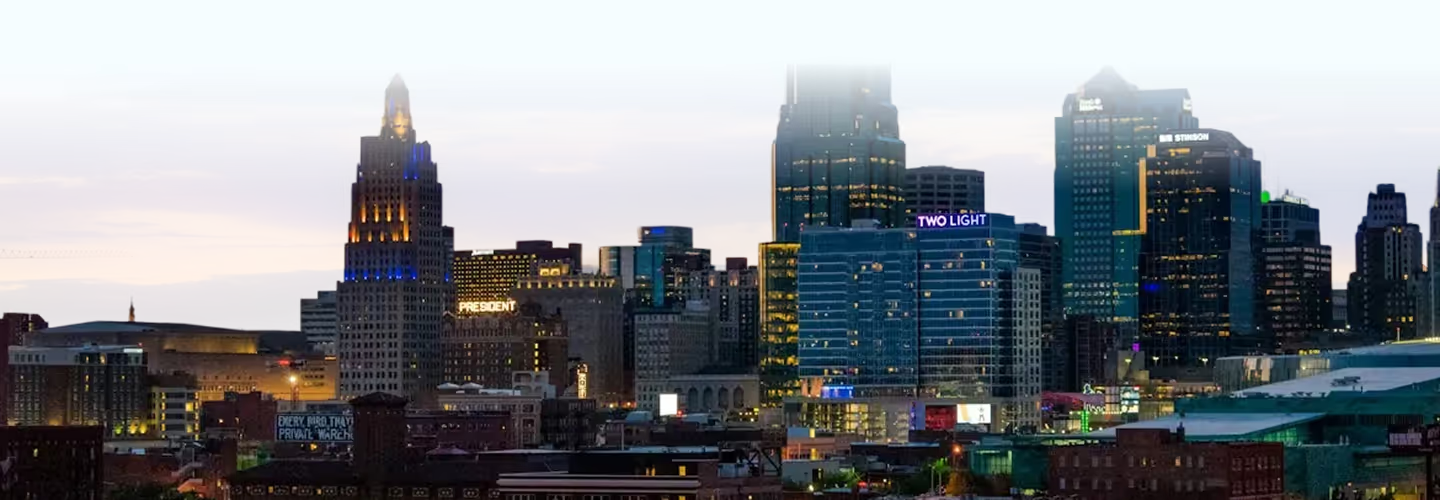


Heating Installation in Kansas City, MO
Struggling with a failing furnace in Kansas City? Opt for our expert heating installation services. Enjoy quick setup, full testing, and clean installation. Call now!
Is Your Furnace Failing to Keep Up with Freezing Temperatures?
When your heating system fails, the bitter Kansas City winter can feel even colder inside your home than it does outside. Don’t shiver through the season or rely on space heaters that drive up your electric bill—call us immediately at our local number or inquire about our flexible financing options to restore warmth today.
Homeowners in this region know that a breakdown isn't just an inconvenience; it is a safety concern for your family and your plumbing. We provide a streamlined, transparent installation experience designed to get your home back to a comfortable temperature without unnecessary delays.
- Same-day installation capabilities to restore your comfort fast.
- Competitive pricing models paired with flexible financing options.
- Warranty-backed installations ensuring long-term peace of mind.
All installations comply with local codes and come with a comprehensive warranty—rest easy knowing you’re covered. All Day Comfort Heating and Cooling LLC is ready to help you navigate your options and secure a high-efficiency system that handles the Missouri cold.
What Our Heating Installation Includes: Quick Setup, Complete Testing, and Full Cleanup
Investing in a new heating system is about more than just buying a unit; it is about ensuring that the unit is integrated perfectly into your home’s existing infrastructure. A poorly installed heater will suffer from efficiency loss, frequent breakdowns, and a shortened lifespan. Our installation service is a turnkey solution. We handle every aspect of the project, from the initial load calculation to the final safety inspection, ensuring that you do not have to worry about permits, debris, or configuration settings.
When we arrive at your property in Kansas City, we arrive with a fully stocked truck and a clear plan. We focus on proper sizing first. Many older homes have units that are either too big or too small. An oversized unit will "short cycle," turning on and off rapidly, which wears out components. An undersized unit will run constantly without ever reaching the set temperature. We perform a Manual J load calculation to determine exactly what your home requires based on square footage, insulation levels, and window orientation.
Our scope of work generally covers:
- Site Preparation and Safety: We lay down drop cloths and wear shoe covers to protect your flooring. We also shut off gas and electrical connections safely before touching the old equipment.
- System Removal and Disposal: We disconnect the old furnace or heat pump, remove it from the premises, and handle the environmentally responsible disposal of the unit and any hazardous materials.
- Ductwork and Airflow Assessment: We check the immediate plenum and duct connections to ensure they are sealed and sized correctly for the new unit’s airflow requirements.
- Gas and Electrical Connections: We professionally pipe in the gas lines and wire the electrical components, adhering strictly to the National Electric Code and local fuel gas codes.
- Thermostat Integration: Whether you are keeping your current thermostat or upgrading to a smart system, we ensure the interface communicates correctly with the new heater.
Your Step-by-Step Guide to New Heating Installation
Understanding the timeline and the process helps alleviate the stress of a replacement day. We believe in transparency, so you know exactly what is happening in your basement, attic, or utility closet. While every home has unique challenges, our standard workflow is designed for efficiency and safety.
- Arrival and Assessment: Our technicians call ahead to confirm arrival. Upon getting to your home, we review the workspace and discuss the day’s timeline with you.
- Safety Disconnection: We isolate the existing equipment from the power source and fuel supply. This is a critical safety step to prevent gas leaks or electrical shocks during removal.
- Extraction of Old Equipment: The old unit is carefully disconnected from the plenum and flue pipe. We maneuver the heavy equipment out of your home without damaging walls or door frames.
- Positioning the New Unit: The new furnace or air handler is set in place. We ensure it is level, which is vital for proper drainage of condensate (especially in high-efficiency models) and quiet operation.
- Reconnection of Utilities: We reconnect the flue pipe for ventilation, the gas line, and the high-voltage electrical wiring. New filter racks or humidifiers are installed at this stage if included.
- System Startup and Commissioning: We don't just flip the switch. We systematically test the static pressure, measure the temperature rise (the difference between air entering and leaving the unit), and verify gas pressure.
- Final Walkthrough: We show you how to operate the new system, how to change the filter, and discuss the maintenance schedule required to keep your warranty valid.
Deciding Between Heating Repair or Replacement: What You Need to Know
One of the most difficult decisions for a homeowner is knowing when to stop paying for repairs and invest in a new system. While we offer repair services, there comes a point of diminishing returns where a new installation is the more financially sound choice. Continuing to patch up an aging system can cost you more in monthly utility bills and emergency service calls than the monthly payment on a modern, high-efficiency unit.
You should strongly consider replacement over repair if:
- The 50% Rule Applies: If the cost of the repair approaches 50% of the value of a new system, replacement is generally the better investment.
- Age of the Equipment: If your furnace is over 15 years old or your heat pump is over 10 years old, it has likely surpassed its expected lifespan. Even if it runs, it is likely operating at a significantly lower efficiency than when it was new.
- Rising Energy Bills: A sudden or gradual spike in heating costs without a change in usage often indicates internal wear and tear or a failing heat exchanger. New systems have higher AFUE (Annual Fuel Utilization Efficiency) ratings, meaning more of your dollar goes to heat and less up the flue.
- Uneven Heating: If some rooms are freezing while others are hot, the system may be losing compression or airflow capacity.
- Safety Concerns: If there are cracks in the heat exchanger, this can lead to carbon monoxide leaking into your home. This is a red-flag condition that requires immediate replacement for your safety.
Understanding Kansas City Heating Requirements: Permits and Seasonal Advice
Operating a heating system in Missouri requires equipment that can handle rapid weather shifts. We have a humid continental climate, which means winters can fluctuate between mild days and deep freezes where temperatures drop well below freezing. Your system needs to be robust enough to handle the 24°F lows in January but efficient enough not to waste energy during the milder shoulder seasons.
All Day Comfort Heating and Cooling LLC ensures that your new system is specifically selected for this climate. We look at factors like "stages" of heat. A single-stage furnace blasts at 100% capacity whenever it is on, which is fine for the coldest days but inefficient for mild ones. Two-stage or modulating furnaces can run at lower capacities (like 60% or 40%), providing more consistent comfort and humidity control during the varied Kansas City winter.
Permits and Inspections
Local municipalities require permits for heating replacements to ensure safety. This is not just red tape; it is a protection for you.
- We handle the application for all necessary mechanical permits required by the city.
- The permit process ensures that the gas line sizing, flue venting, and electrical clearances meet the current International Residential Code (IRC) adopted by local authorities.
- After installation, a city inspector may need to verify the work. We schedule this and ensure our work passes inspection the first time.
Ventilation and Air Quality
Modern homes are sealed tighter for efficiency, but heating systems—especially gas furnaces—need combustion air.
- We verify that your utility room has adequate intake air so your furnace doesn't "starve," which can create back-drafting issues.
- We also assess the flue liner. In older masonry chimneys, we often install a metal liner to prevent condensation from destroying the brickwork and to ensure exhaust gases exit the home correctly.
Choosing the Right Heating Equipment for Your Home
Not all heating systems are created equal. The right choice depends on your fuel access, budget, and comfort preferences. We guide you through the technical specifications so you can make an educated decision.
Gas Furnaces
The most common heating source in our area.
- Standard Efficiency (80% AFUE): These vent through a metal pipe and are reliable and cost-effective upfront. However, 20% of the heat energy is lost.
- High Efficiency (90-98% AFUE): These utilize a secondary heat exchanger to capture escaping heat. They vent with PVC piping and can significantly lower gas bills.
Heat Pumps
Electric-powered units that move heat rather than create it.
- Modern heat pumps are capable of heating effectively even in lower temperatures.
- They serve as both air conditioning in the summer and heating in the winter.
- For our climate, we often recommend "dual fuel" or "hybrid" systems, which use a heat pump for mild days and switch to a gas furnace when temperatures drop below freezing.
Air Handlers with Electric Heat Strips
Common in homes without natural gas access.
- These systems pair with heat pumps to provide emergency backup heat during extreme cold snaps.
Why Professional Installation Matters for Warranty and Longevity
Manufacturer warranties are strict. They often state that coverage is void if the equipment is not installed by a licensed professional. When you attempt a DIY install or hire an unverified handyman, you risk losing that 10-year parts warranty. Furthermore, the longevity of your system is directly tied to the quality of the installation. A system that is not leveled, not charged with the correct amount of refrigerant (for heat pumps), or not calibrated for gas pressure will fail prematurely.
We register your equipment with the manufacturer immediately after installation. This administrative step locks in your warranty coverage. We also provide our own labor warranty, guaranteeing the quality of our workmanship. If a connection comes loose or a setting needs adjustment in the initial period after installation, we return to fix it at no cost to you.
Secure Your Comfort for the Season Ahead
Winter in Missouri is unforgiving to those with failing heating systems. The risk of frozen pipes and a freezing home is not worth the gamble of waiting "one more month" to see if your old unit survives. You need a solution that is permanent, efficient, and backed by a team that understands the local infrastructure.
Our team is prepared to handle your installation from start to finish, ensuring your home remains a sanctuary against the cold. We provide clear answers, transparent pricing, and robust equipment options that fit your specific needs. Don't wait for the first snowstorm to find out your heater is broken. Contact us today to schedule your heating installation and enjoy a warm, worry-free winter.
Contact Us
customer reviews
Areas We Serve




Copyright © 2026 All Day Comfort Heating and Cooling.
All rights reserved.
