




Smart Thermostat Installation in Mission, KS
Upgrade to a smart thermostat in Mission, KS for enhanced home climate control and energy savings. Schedule your professional installation today and start saving!
Trouble Managing Your Home’s Temperature Efficiently?
Struggling with inefficient heating and cooling in your home is a frustration many homeowners face, especially when older controls fail to adapt to fluctuating weather patterns. Smart thermostats provide a high-tech, reliable solution for managing your home's climate effortlessly while eliminating the guesswork associated with manual dials. Contact us today to schedule your professional installation or discuss financing options.
All Day Comfort Heating and Cooling LLC specializes in upgrading residential systems to modern standards, ensuring your environment in Mission, KS, remains comfortable year-round.
- Reduce monthly energy bills significantly with smart, programmable settings that adapt to your schedule.
- Gain easy remote control via dedicated smartphone apps to adjust temperature settings on the go.
- Professional installation ensures optimal functionality, proper wiring, and immediate savings.
Fully licensed installations backed by satisfaction guarantees and available financing options.
What You Get With Professional Installation Service
Upgrading to a smart thermostat is more than just swapping a device on the wall; it is a full integration of your HVAC system with modern technology. When you choose professional service, the scope of work covers every technical requirement to ensure the device communicates correctly with your furnace and air conditioner. Many older homes lack the necessary "Common Wire" (C-wire) required to power modern smart devices continuously. A professional installation addresses this immediately, utilizing add-a-wire kits or running new thermostat wire to ensure constant power without draining the unit's internal battery or causing system short-cycling.
The service includes a comprehensive assessment of your current HVAC equipment. Whether you have a single-stage furnace, a two-stage cooling system, or a heat pump with auxiliary heat, the thermostat must be configured to match these specific operational stages. Incorrect configuration can lead to the system running inefficiently or, in worst cases, damaging the compressor. Technicians verify compatibility before beginning work, ensuring the investment you make in hardware delivers the expected performance.
You also receive full network setup and mobile integration. Technicians do not leave until the device is connected to your local Wi-Fi network, the mobile app is installed on your phone, and you are trained on how to use the interface. This includes setting up geofencing features, drafting initial schedules, and understanding how to interpret energy usage reports. The goal is to hand over a fully functional system that begins saving energy the moment the technician drives away.
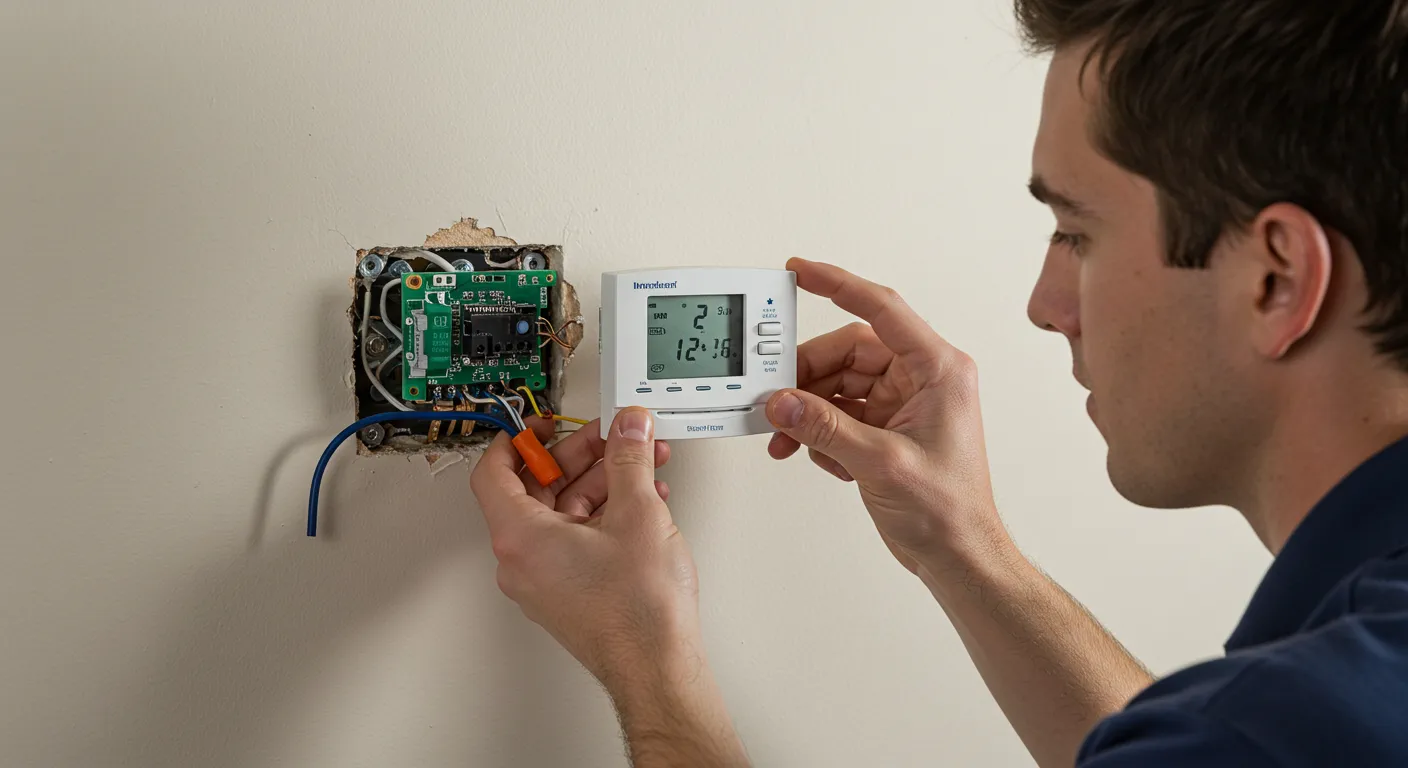
How The Installation and Setup Process Works
The installation process is designed to be efficient, clean, and technically precise. We follow a strict protocol to ensure safety and system integrity throughout the transition from your old thermostat to the new smart unit.
- First, the technician shuts off power to the HVAC system at the breaker panel to ensure safety during the wiring process. This protects both the installer and the sensitive control board within your furnace or air handler.
- Next, the existing thermostat is removed, and the technician carefully labels the existing wires based on the terminal designations, not just the wire colors, as color-coding in older homes can often be non-standard.
- Following the removal, the wall area is prepped. If the new thermostat has a different footprint than the old one, a trim plate is installed to cover any unpainted areas or screw holes, ensuring a clean aesthetic finish.
- Then, the wiring is connected to the new smart thermostat backplate. If a C-wire is missing, the technician performs the necessary wiring modifications at the furnace control board to establish a consistent 24-volt power path.
- Once wired, the display unit is attached, power is restored, and the system initialization begins. The technician navigates through the installer setup menu, configuring system type, heating fuel source (gas, electric, oil), and fan control logic.
- Finally, the technician runs a full system test, cycling through heating, cooling, and fan modes to verify that the equipment responds instantly to commands from the new thermostat.
Deciding Between Repair and Replacement
Determining whether to stick with an existing thermostat or upgrade to a smart model often comes down to functionality and energy goals. While simple manual thermostats are durable, they lack the precision required for modern energy efficiency. If you notice wide temperature swings—where the room gets too hot before the AC kicks in or too cold before the heat starts—your current thermostat’s anticipator or temperature sensor may be failing. In these cases, replacement is usually the more cost-effective option compared to attempting to calibrate obsolete mechanical components.
Replacement is also the logical choice if your energy bills are steadily climbing despite regular HVAC maintenance. Older thermostats create "set and forget" habits that result in heating or cooling an empty house for hours a day. If your lifestyle involves varying schedules, the inability to program setbacks or control the system remotely means you are paying for wasted energy. A smart thermostat pays for itself over time by learning your habits and automatically adjusting the climate when you leave for work or go to sleep.
Furthermore, if you are upgrading your HVAC equipment, retaining an old thermostat is often a bottleneck. Modern high-efficiency furnaces and variable-speed air conditioners require sophisticated controls to modulate their output effectively. An old bimetal or basic digital thermostat acts as a simple on/off switch and cannot utilize the advanced features of new HVAC hardware. In this scenario, replacement is mandatory to protect the warranty and efficiency ratings of the new heating and cooling units.
Navigating Local Climate and Compatibility
Operating an HVAC system in Mission requires a thermostat capable of handling distinct seasonal shifts. We experience a humid subtropical climate, meaning the region faces hot, humid summers and cold winters with significant snowfall. A smart thermostat is particularly valuable here because of its ability to manage indoor humidity levels in addition to temperature. During the late spring and summer months, when precipitation is highest, a smart thermostat can be set to run the air conditioner specifically to dehumidify the air, even if the temperature setpoint hasn't been reached, improving comfort without over-cooling the space.
Winter functionality is equally critical. With average annual snowfall around 15 inches, typically concentrated from December to February, ensuring your heating system is reliable is a safety priority. Smart thermostats allow for "safety temperatures," ensuring that if the home drops below a certain threshold while you are away on vacation, the heat automatically engages to prevent frozen pipes. This peace of mind is essential during Kansas winters where temperature drops can be sudden and severe.
Local utility programs frequently offer rebates for installing Energy Star-certified smart thermostats. These incentives are designed to reduce the load on the grid during peak demand times. All Day Comfort Heating and Cooling LLC stays current on local rebate eligibility and permit requirements to ensure your installation complies with all regional codes. Proper installation is not just about comfort; it is about ensuring your home’s electrical and mechanical systems meet the safety standards expected in our area.
Common Installation Challenges We Resolve
While smart thermostats are marketed as consumer-friendly, the reality of residential wiring often presents hurdles that require professional intervention.
- The Missing C-Wire: This is the most frequent obstacle. Older thermostats did not require continuous power, but smart units with Wi-Fi and color screens do. Without a C-wire, the thermostat may "steal" power from the fan or heat wire, causing the HVAC system to pulse on and off rapidly. We resolve this by running new wire bundles or installing power extender kits at the furnace level.
- High-Voltage Systems: Some older homes utilize line-voltage (120V or 240V) thermostats typically found with baseboard heating. Most consumer smart thermostats are designed for low-voltage (24V) systems. Connecting a low-voltage smart thermostat to a high-voltage line will instantly destroy the device and potentially cause a fire. We identify these systems immediately and recommend specific line-voltage compatible smart solutions or install necessary relays.
- Zoning Panels: Homes with multiple thermostats controlling different zones via a single HVAC unit utilize a zone control panel. Smart thermostats must be compatible with this panel. Incorrect installation can burn out the zone dampeners or the main control board. We ensure the impedance and voltage draw of the new thermostats match the specifications of your existing zone controller.
- Heat Pump Configuration: Heat pumps require specific settings for the reversing valve (O/B terminal). If this is set incorrectly, the system will cool when asking for heat and heat when asking for cool. We verify the specific orientation of your heat pump’s reversing valve to ensure the thermostat sends the correct signal.
Selecting the Right Device for Your Home
The market is flooded with options, but choosing the right device depends on your specific ecosystem and HVAC equipment. We help homeowners navigate the differences between top-tier brands like Nest, Ecobee, and Honeywell.
If you utilize other smart home products, integration is key. For example, some thermostats work seamlessly with existing voice assistants or security systems, acting as a central hub for home automation. If your home has hot or cold spots—common in multi-story properties—we often recommend thermostats that support remote room sensors. These sensors averaging the temperature across multiple rooms rather than just the hallway where the thermostat is located, ensuring bedrooms are comfortable at night.
We also consider the complexity of the interface. Some users prefer a device that learns their schedule automatically without manual input, while others prefer a robust, programmable schedule they can set and lock. We provide unbiased recommendations based on how you interact with your home's technology, ensuring you don't pay for features you won't use or miss out on capabilities that would solve your specific comfort issues.
Technical Reliability and Warranties
One of the significant advantages of professional installation is the protection of your equipment and warranty. Many smart thermostat manufacturers offer extended warranties when the unit is installed by a licensed professional (Pro Install). DIY installation can sometimes void these extended protections or leave you with limited recourse if the unit malfunctions.
Furthermore, an improperly installed thermostat can void the warranty of your furnace or air conditioner. If a thermostat is wired incorrectly and causes the compressor to short-cycle, the manufacturer of the AC unit may deny a warranty claim for the damaged compressor, attributing the failure to external control errors. By hiring a licensed provider, you transfer that liability. We carry the necessary insurance and licenses to guarantee the work. If an issue arises related to the installation, we return to fix it.
Our service includes a 100% satisfaction guarantee. We do not consider the job finished until the system is running smoothly, the Wi-Fi connection is stable, and you are comfortable operating the interface. This level of support ensures that your upgrade is an asset to your home, not a technical headache.
Ensuring Long-Term Efficiency
Once installed, a smart thermostat becomes a tool for long-term maintenance of your HVAC system. Many models track run-times and can alert you when it is time to change the air filter or if the furnace is taking longer than usual to reach the set temperature—a potential sign of a mechanical issue. This proactive monitoring helps catch small problems before they evolve into expensive emergency repairs during the peak of summer or winter.
We also assist in setting up appropriate differential settings. The differential determines how far the temperature must drop before the heat turns back on. A wider differential might save energy but reduce comfort, while a narrow one keeps the temperature precise but cycles the equipment more frequently. We help you find the sweet spot that balances equipment longevity with energy savings and personal comfort.
Ready to Upgrade Your Home Climate Control?
Upgrading to a smart thermostat is a smart investment in your home’s value and your daily comfort. It eliminates the waste of heating an empty house and puts control directly in your pocket, no matter where you are. Don't let wiring complexities or compatibility concerns stop you from enjoying modern efficiency.
All Day Comfort Heating and Cooling LLC is ready to help you make the switch. We provide upfront pricing with no hidden service fees, ensuring you know exactly what the project entails before we begin. Contact us today to schedule your smart thermostat installation and start saving on your energy bills immediately.
Contact Us
customer reviews
Areas We Serve




Copyright © 2026 All Day Comfort Heating and Cooling.
All rights reserved.
