




HVAC Contractor in Belton, MO
Need urgent HVAC repair or looking for reliable installation in Belton? Contact All Day Comfort today for professional service guaranteed to restore your system's efficiency.
Is Your HVAC System Unreliable or Failing to Regulate Temperature?
Stressed by a malfunctioning heater or air conditioner in Belton's fluctuating weather? You need a solution, and fast. Call All Day Comfort Heating and Cooling LLC immediately to restore your comfort.
When your climate control system fails, the safety and usability of your home are immediately compromised. You require a service provider who understands the urgency of the situation and brings the technical expertise to resolve it on the first visit.
- Rapid response team available to tackle any HVAC emergency.
- Experienced technicians ensuring high-quality repair and maintenance services.
- Comprehensive HVAC services from installations to routine check-ups.
Fully licensed and insured—your comfort, guaranteed.
What You Can Expect From Professional HVAC Services Today
When you request service for your heating or cooling system, the objective is to restore functionality and efficiency with minimal disruption to your daily routine. Professional contractors in Belton, MO, approach every service call with a diagnostic mindset, aiming to identify the root cause of the failure rather than simply patching a symptom.
Whether you are dealing with a furnace that blows cold air, an air conditioner that cannot combat the summer humidity, or a heat pump that has frozen over, the service scope remains consistent. Technicians arrive equipped to handle high-voltage electrical components, refrigerant pressures, and combustion analysis. The goal is to evaluate the entire system—including the thermostat, ductwork, and mechanical units—to ensure comprehensive performance.
Immediate Diagnostics and Repair Scope
Upon arrival, a qualified technician will perform a series of tests to isolate the issue. This involves checking refrigerant levels to ensure they match manufacturer specifications, inspecting electrical connections for signs of wear or arcing, and verifying that airflow is not restricted by debris or collapsed ducting.
For heating systems, the focus shifts to safety and combustion. Technicians inspect the heat exchanger for cracks which could lead to carbon monoxide leaks, verify the ignition sequence, and test the flame sensor to ensure the unit cycles correctly. If the system is an air conditioner, the focus is on the compressor, the capacitor, and the evaporator coil. The service includes clearing drainage lines to prevent water damage and ensuring the condenser unit outside is free from obstruction.
Maintenance for Long-Term Reliability
Beyond immediate repairs, professional service includes preventative measures designed to extend the lifespan of your equipment. This includes cleaning blower wheels to improve air movement, lubricating moving parts to reduce friction and motor strain, and tightening all electrical connections to prevent future failures. By addressing these minor wear-and-tear issues today, you prevent catastrophic breakdowns during the peak of summer or the dead of winter.
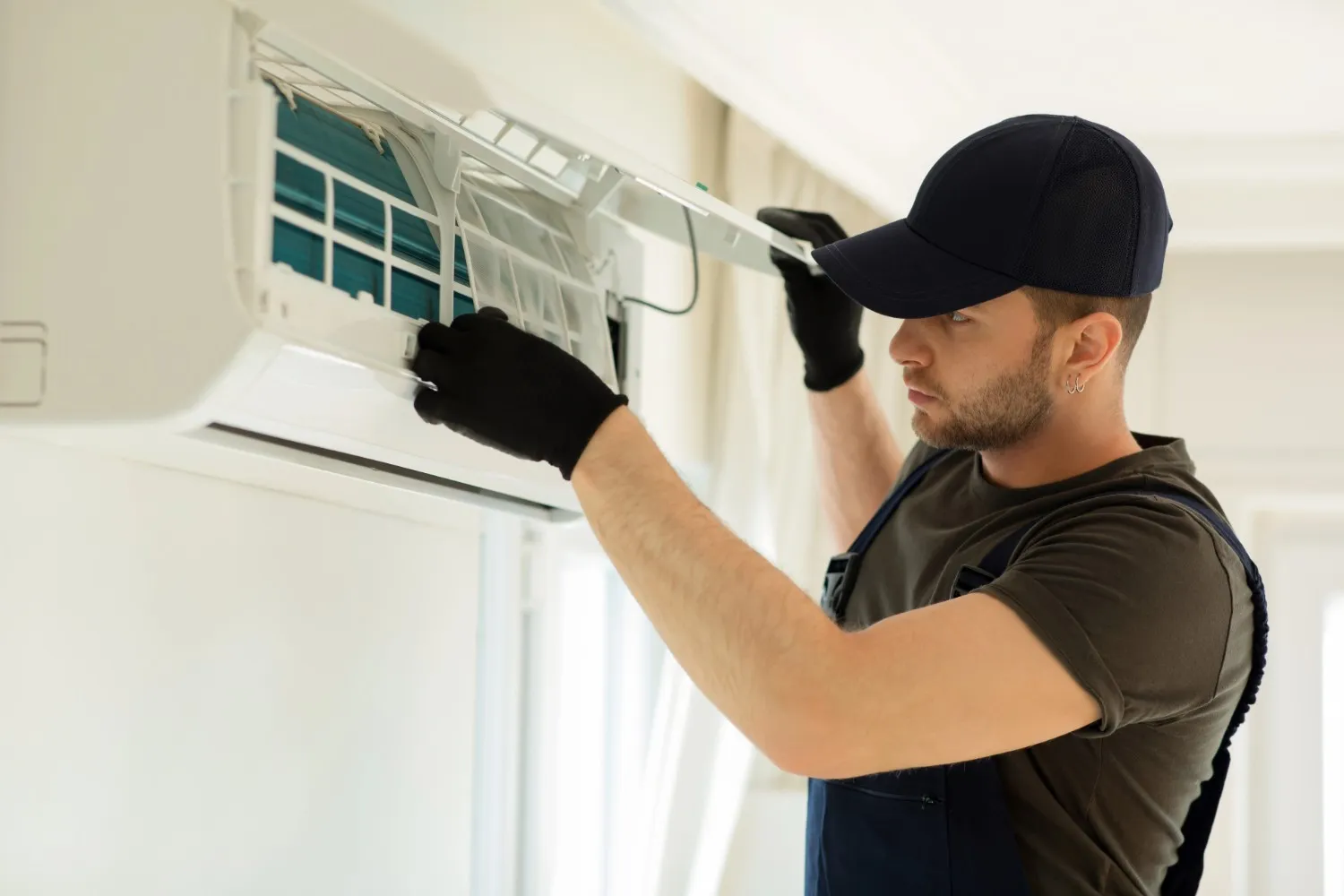
The Installation and Replacement Process
Replacing a central heating and cooling system is a significant construction project that involves electrical, plumbing, and airflow dynamics. A proper installation is the single most important factor in how well a system performs and how long it lasts. The process is systematic and adheres to strict industry standards to ensure maximum efficiency.
- Load Calculation and Sizing: The process begins with a Manual J load calculation. This is not a guess based on the size of the previous unit. Technicians measure your home’s square footage, insulation levels, window orientation, and local climate data. This calculation determines the exact BTU capacity required to heat and cool your home efficiently. An oversized unit will short-cycle, leading to humidity issues and wear, while an undersized unit will run continuously without reaching the target temperature.
- Site Preparation and Safety Checks: Before the new unit is brought in, the installation team prepares the site. This involves protecting your flooring and clearing the workspace. Existing gas lines, electrical circuits, and refrigerant lines are inspected to ensure they meet current code requirements. If the existing ductwork is leaking or undersized, modifications are planned to ensure the new, high-efficiency system can breathe properly.
- System Installation: The old equipment is disconnected and removed for proper disposal. The new indoor and outdoor units are positioned and leveled. For split systems, the refrigerant lines are brazed using nitrogen to prevent oxidation inside the copper tubing. The electrical wiring is connected, and a new thermostat is often installed to communicate effectively with the modern equipment.
- Commissioning and Testing: Once the hardware is in place, the system is not just turned on; it is commissioned. Technicians use digital gauges to measure superheat and subcooling, ensuring the refrigerant charge is precise. Static pressure tests are conducted to verify that air is moving through the ducts at the correct velocity. Finally, the system is run through a full cycle to verify that it heats, cools, and dehumidifies as intended.
When to Replace vs. Repair: Making the Financial Decision
Deciding between repairing an aging unit and investing in a replacement is a common dilemma for homeowners. This decision should be based on data, safety, and long-term financial impact rather than immediate convenience. While repairs often seem cheaper upfront, maintaining a failing system can cost more in energy bills and repeated service calls over time.
The 50% Rule and System Age
A standard industry guideline is the 50% rule. If the cost of the repair approaches 50% of the value of a new system, replacement is generally the wiser financial choice. Furthermore, age is a critical factor. Most air conditioners and heat pumps have a lifespan of 10 to 15 years, while furnaces may last 15 to 20 years. If your equipment is nearing the end of this expected life cycle and requires a major component replacement—such as a compressor or heat exchanger—investment in a new system provides a better return on investment.
Efficiency and Energy Costs
Older systems often operate at much lower efficiency levels compared to modern standards. An air conditioner installed a decade ago likely has a SEER (Seasonal Energy Efficiency Ratio) rating well below current requirements. Modern systems, with higher SEER2 and AFUE (Annual Fuel Utilization Efficiency) ratings, consume significantly less energy to provide the same level of comfort. By upgrading, you can often offset the monthly cost of the new unit through savings on your utility bills.
Frequency of Breakdowns
If you find yourself calling for service multiple times a year, your system has likely become unreliable. All Day Comfort Heating and Cooling LLC recommends evaluating the frequency of these disruptions. Constant repairs indicate that internal components are failing in succession. Replacing the system eliminates the stress of unexpected breakdowns and provides the peace of mind that comes with a new manufacturer’s warranty.
Comfort and Air Quality Issues
As systems age, they lose their ability to effectively control humidity and maintain even temperatures. If some rooms in your house are freezing while others are hot, or if the air feels clammy despite the AC running, the system is no longer performing its core function. New variable-speed units run longer at lower capacities to provide superior dehumidification and consistent temperature stratification throughout the home.
Managing Local Climate and Regulatory Requirements
Operating an HVAC system in this region requires specific attention to environmental factors and local regulations. The weather here demands a system that is versatile enough to handle extreme heat and humidity in the summer, as well as freezing temperatures in the winter.
Combatting Humidity and Freezing Conditions
The high humidity levels common in the summer months place a heavy load on air conditioning units. A system must be correctly sized not just to lower the temperature, but to remove moisture from the air. If a unit is too large, it will cool the air too quickly and shut off before it has dehumidified the space, leading to mold growth and discomfort. Conversely, winter brings the risk of freezing pipes and equipment. Heating systems must be robust enough to maintain interior temperatures even when outdoor readings drop significantly below freezing. Heat pumps, in particular, require specific defrost controls and backup heat strips to function effectively in this climate.
Navigating Permits and Codes
HVAC work is governed by local building codes designed to ensure safety and energy efficiency. Replacing a furnace or air conditioner often requires a permit from the local municipality. This process ensures that the installation meets safety standards regarding gas piping, electrical connections, and venting. Professional contractors handle the permitting process on your behalf, ensuring that the work passes inspection. This is crucial not only for safety but also for the future resale value of your home, as unpermitted work can complicate real estate transactions.
Utility Considerations
Local utility providers often have specific requirements for equipment efficiency and installation practices. Connecting high-voltage equipment and gas lines requires strict adherence to utility standards to prevent hazards. Furthermore, many local utilities offer rebates for upgrading to high-efficiency equipment. Professional contractors are familiar with these programs and can guide you toward equipment that qualifies for financial incentives, helping to lower the overall cost of installation.
Why Choose Professional HVAC Management
Attempting to troubleshoot or repair modern heating and cooling equipment without professional training is dangerous and often ineffective. Modern systems rely on complex circuit boards, variable-speed motors, and precise refrigerant charges. Professional management ensures that your system is handled by technicians who understand the engineering behind the equipment.
Technical Expertise and Certification
Professional technicians undergo rigorous training to stay updated on the latest HVAC technologies. This includes understanding the nuances of new refrigerants, diagnosing communication errors in smart thermostats, and calculating airflow dynamics. When you hire a professional, you are paying for the diagnostic accuracy that prevents unnecessary parts replacement and ensures the job is done right the first time.
Warranty Protection and Liability
Most HVAC manufacturers require proof of professional installation and maintenance to honor their warranties. DIY repairs or work performed by unlicensed individuals can void these warranties, leaving you responsible for the cost of future parts. Licensed contractors carry liability insurance to protect your property during the service. This ensures that if any damage occurs during the repair or installation, you are not held financially liable.
Long-Term System Health
A professional approach views your HVAC system as a long-term investment. The focus is not just on fixing the immediate problem but on optimizing the system for years of service. This involves checking static pressure, measuring temperature splits, and verifying electrical draw. These detailed checks reveal underlying issues that, if left unaddressed, would shorten the lifespan of the unit. By prioritizing technical precision, professional services ensure that your home remains comfortable and safe regardless of the weather outside.
Get Reliable Comfort Fast: Schedule Your HVAC Service Today
Restore peace of mind and prevent further disruption by calling All Day Comfort Heating and Cooling LLC for fast, reliable HVAC help. Our team is committed to stabilizing your home’s temperature, improving system performance, and protecting your long-term comfort. Secure your home comfort and equipment longevity today.
Contact Us
customer reviews
Areas We Serve




Copyright © 2026 All Day Comfort Heating and Cooling.
All rights reserved.
