



Furnace Repair in Belton, MO
Struggling with a broken furnace in Belton? Get fast repair services today. Ensure your home stays warm with our professional furnace solutions. Call now!
Is Your Heating System Failing to Keep Up With The Cold?
Is your home left cold by an underperforming furnace right when you need it most? With the harsh winters common to this region, ensuring your heating system functions effectively is not just about comfort, but safety. If your system has stopped working, contact us immediately or inquire about our financing options to restore your heat today.
Residents in Belton know that January lows frequently drop into the twenties. A malfunctioning furnace during a freeze is a critical issue that requires immediate professional attention. We prioritize rapid response times to ensure your plumbing and pipes remain safe from freezing and your family stays warm.
Our service approach focuses on solving the immediate mechanical failure while inspecting the system for long-term reliability. We provide:
- Fast, same-day repair services to restore warmth and comfort to your home.
- Upfront pricing and clear communication with absolutely no hidden fees.
- Comprehensive maintenance checks to prevent future breakdowns during the season.
All Day Comfort Heating and Cooling LLC ensures that every service comes with a warranty, and we handle all necessary permits and regulations required by local codes.
Comprehensive Diagnostic and Repair Scope
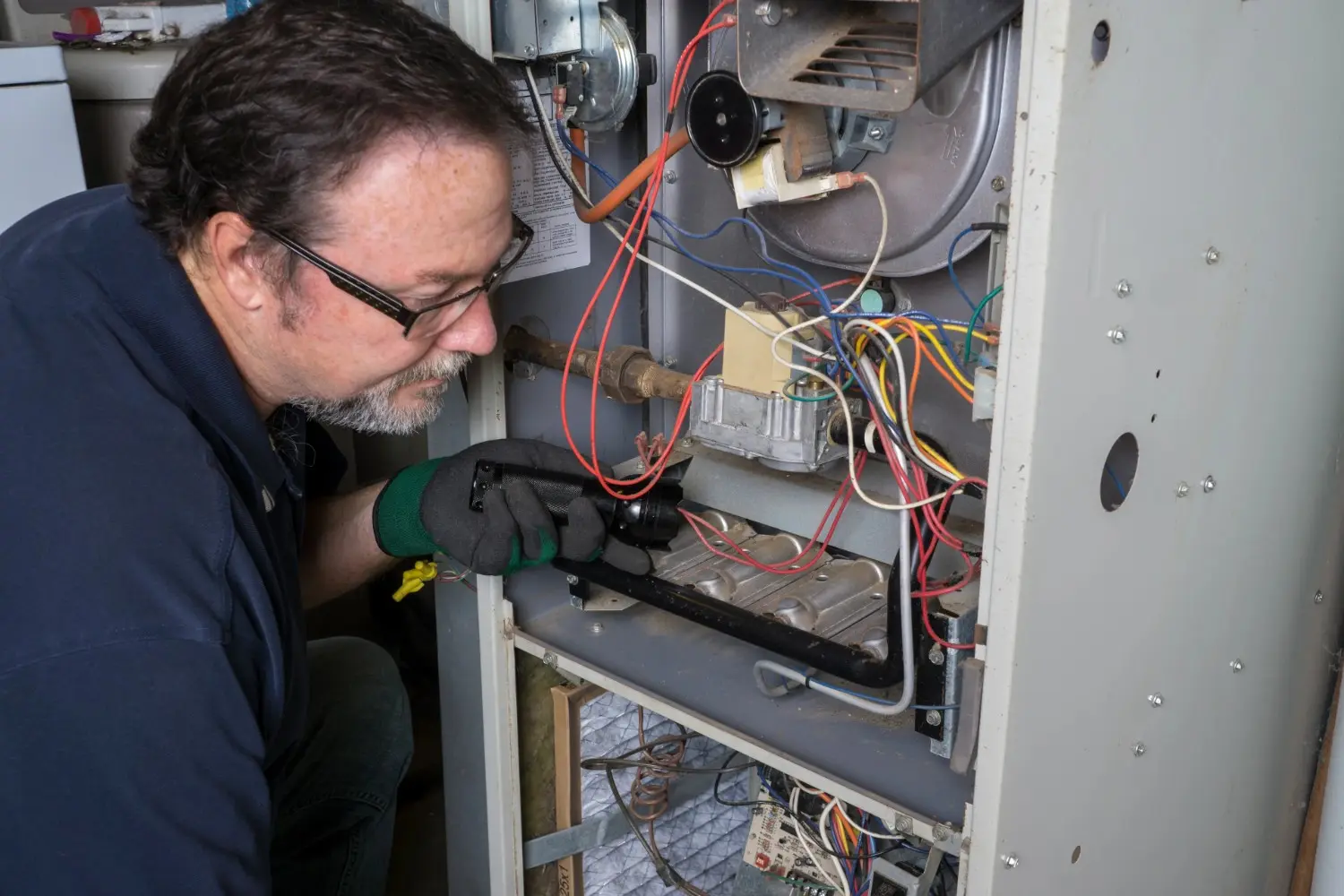
When a technician arrives at your property, the objective is to identify the root cause of the failure, not just the symptom. Modern furnaces are complex systems involving electrical, gas, and airflow components. A thorough diagnostic process is required to pinpoint exactly why the system is short-cycling, blowing cold air, or refusing to ignite.
We address a wide variety of furnace issues on the spot. Our trucks are stocked with common parts to facilitate immediate repairs whenever possible. The scope of our repair services covers every critical component of your heating system:
- Ignition System Failure: Whether your furnace uses a standing pilot, hot surface igniter, or intermittent pilot, ignition issues are the most common reason for a "no heat" call. We test voltage and resistance to ensure the burners light safely.
- Airflow and Blower Motor Issues: If the furnace runs but the air coming out of the vents is weak, the blower motor or capacitor may be failing. We inspect the belt tension, motor bearings, and electrical connections.
- Thermostat and Control Board Logic: Sometimes the issue is not mechanical but digital. We calibrate thermostats and test the control board to ensure it is sending the correct signals to the gas valve and blower.
- Safety Switch Tripping: Furnaces have limit switches, rollout switches, and pressure switches designed to shut the unit down if dangerous conditions are detected. We determine why the switch tripped—usually due to overheating or blocked venting—and correct the underlying cause.
- Heat Exchanger Inspection: This is the most critical safety check. A cracked heat exchanger can leak carbon monoxide into the living space. We use combustion analyzers and visual inspection tools to verify the integrity of the metal.
The Repair Process: From Assessment to Resolution
Understanding what happens during a service visit helps homeowners make informed decisions. We follow a strict protocol to ensure safety and efficiency during every interaction. This process is designed to minimize downtime and restore your home’s temperature quickly — request service online.
- Initial System Assessment: The technician begins by cycling the thermostat to observe the furnace’s startup sequence. This reveals where the cycle is interrupted—whether the inducer motor fails to spin, the igniter fails to glow, or the gas valve fails to open.
- Electrical and Gas Safety Checks: Before touching mechanical parts, we test the electrical supply for proper voltage and check gas lines for leaks. This is mandatory for protecting your property.
- Root Cause Diagnosis: Once the safety check is clear, we isolate the faulty component. We explain exactly what broke, why it broke (wear and tear, lack of maintenance, or external factors), and what is needed to fix it.
- Clear Quoting: You receive a firm price for the repair before any work begins. There are no hourly surprises. You approve the work based on a flat rate.
- Execution of Repair: The technician removes the defective part and installs the replacement. This includes cleaning the surrounding area, such as the burner assembly or flame sensor, to ensure the new part operates in a clean environment.
- Performance Testing: After the repair, we do not just leave. We run the furnace through a full heating cycle to measure temperature rise (the difference in temperature between the supply and return air) to confirm it matches the manufacturer’s specifications.
- Final Walkthrough: We show you the old part, explain the work done, and provide tips on how to maintain the system to prevent a recurrence.
Deciding Between Furnace Repair and Replacement
Homeowners often face the difficult decision of whether to invest in another repair or opt for a full system replacement. This decision should be based on data and financial logic, not sales pressure. There are specific thresholds where repair is no longer the most economical choice.
- The 50% Rule: A general guideline in the HVAC industry is that if the cost of the repair approaches 50% of the cost of a new system, replacement is the smarter financial move. This is particularly true if the warranty on the existing unit has expired.
- Age of the System: The average lifespan of a gas furnace is between 15 and 20 years. If your unit is over 15 years old and requires a major component like a blower motor or gas valve, the money is often better spent on a new, more efficient unit.
- Frequency of Breakdowns: If you have required repairs more than twice in the last two years, the system is likely entering the end of its useful life. "Nickel and diming" repairs can quickly exceed the monthly cost of financing a new system.
- Rising Energy Bills: As furnaces age, they lose efficiency. If you notice a steady increase in your gas or electric usage despite normal weather patterns, the internal components may be degrading, forcing the system to work harder to produce the same amount of heat.
- Uneven Heating: If certain rooms in your house are freezing while others are hot, and ductwork modifications haven't helped, the furnace may no longer have the compression or capacity to distribute air effectively.
- Safety Concerns: If a heat exchanger is cracked, repair is rarely an option due to the high risk of carbon monoxide poisoning. In almost all cases involving a compromised heat exchanger, immediate replacement is the only safe path.
Local Considerations for Belton Residents
Operating a furnace in this specific region requires attention to local climate patterns and regulations. The weather here is characterized by variable precipitation and distinct seasonality, meaning your system must be prepared for rapid shifts from mild autumn days to freezing winter storms.
- Permitting and Codes: Significant modifications to gas lines or furnace replacements often require permits from the local building department. We ensure all repairs are code-compliant, adhering to the specific safety regulations enforced in the area. This is vital for insurance purposes and future home sales.
- Utility Coordination: Whether your home relies on natural gas or propane, ensuring your pressure regulators and supply lines are compatible with local utility standards is part of our check. We verify that the gas pressure entering the manifold matches the requirements for efficient combustion.
- Humidity Management: Winters here can be dry, but the transitional seasons bring humidity. A well-functioning furnace plays a role in dehumidification. If you notice excess condensation on windows during the winter, your furnace’s venting or intake may need adjustment to better handle the local atmospheric conditions.
- Venting and Snow: Heavy snowfall can occasionally block PVC intake and exhaust pipes for high-efficiency furnaces. Our technicians check the termination points of your venting to ensure they are positioned high enough to avoid obstruction by snow drifts, a common issue during severe mid-Missouri storms.
Technical Differentiators in Service
Not all repairs are created equal. The difference between a temporary patch and a permanent solution lies in the technical depth of the service provider. We utilize advanced diagnostic tools that go beyond simple voltage meters.
- Combustion Analysis: We use digital combustion analyzers to measure oxygen, carbon dioxide, and carbon monoxide levels in the flue gas. This allows us to tune the fuel-air mixture for maximum efficiency, saving you money on fuel.
- Static Pressure Testing: We measure the resistance in your ductwork. High static pressure kills blower motors. By identifying airflow restrictions, we can recommend filter changes or duct modifications that prolong the life of your repair.
- Temperature Rise Verification: We ensure the furnace is not overheating. If the air gets too hot as it passes through the heat exchanger, the metal can warp or crack. We adjust the fan speed to keep the temperature rise within the "Goldilocks" zone—not too hot, not too cool.
- Gas Pressure Tuning: Factory settings are not always correct for every home. We use manometers to fine-tune the gas pressure to the exact inches of water column (in. WC) specified on the furnace rating plate.
Maintaining Efficiency After Repair
Once your furnace is repaired, maintaining that efficiency is the homeowner's responsibility. Neglect is the leading cause of premature failure. While we handle the heavy lifting, there are specific actions you must take to protect your investment.
- Filter Discipline: The most common cause of furnace overheating is a dirty filter. In our region, where dust and pollen can be high, checking filters monthly is mandatory. A clogged filter restricts airflow, causing the heat exchanger to overheat and the limit switch to trip.
- Vent Clearance: Ensure that return air vents are not blocked by furniture or curtains. Your furnace needs to "breathe" to circulate air. Blocked returns create a vacuum effect that strains the blower motor.
- Thermostat Settings: utilizing a programmable thermostat helps reduce the load on the furnace. Lowering the temperature by a few degrees at night or when the house is empty reduces total run time, decreasing wear on the ignition system.
Reclaim Reliable Heat Fast: Schedule Today
When you need reliable heat, you cannot afford to wait. The safety of your home and the comfort of your family depend on a system that works correctly, efficiently, and safely. All Day Comfort Heating and Cooling LLC is ready to diagnose and resolve your heating issues with precision and speed. Don't let a broken furnace compromise your comfort; schedule your repair service now.
Contact Us
customer reviews
Areas We Serve



Copyright © 2026 All Day Comfort Heating and Cooling.
All rights reserved.
