




HVAC Installation in Blue Springs, MO
Ensure your home in Blue Springs stays comfortable with All Day Comfort's professional HVAC installation. Efficient, reliable service awaits! Schedule now.
Your Home Temperature Shouldn't Be a Daily Guessing Game
Dealing with inconsistent heating or cooling in your Blue Springs home creates unnecessary stress, reduces sleep quality, and leads to unpredictably high utility bills. All Day Comfort Heating and Cooling LLC ensures your indoor environment remains perfectly regulated with professional, reliable HVAC installation services designed for long-term performance. Contact us today to schedule your comprehensive estimate or ask about our available financing options.
When your system fails to keep up with the weather, you need a solution that goes beyond a quick patch. You need a system engineered for your specific square footage and lifestyle.
- Experience efficient service timelines—from initial consultation and sizing to complete system activation.
- Enjoy precise temperature control designed to handle Missouri’s humid summers and freezing winters.
- Benefit from transparent pricing structures with absolutely no hidden fees.
All installations are fully licensed, compliant with local codes, and come with an extensive warranty for your peace of mind.
What You Get Today: Scope, Timeline, and Inclusions
Investing in a new heating and cooling system is a significant decision that impacts your home for the next 15 to 20 years. The effectiveness of your new unit depends entirely on the quality of the installation. A high-efficiency unit installed poorly will operate like a low-efficiency unit, wasting energy and money. We provide a turnkey installation experience that addresses every component of your home’s climate control system.
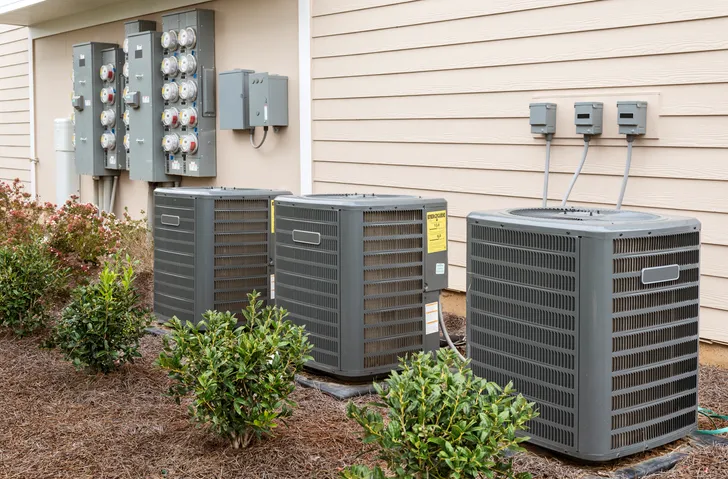
The scope of a professional installation involves much more than swapping out boxes. It requires a detailed analysis of your home's thermal characteristics. Before any equipment is ordered, we perform a load calculation. This ensures the unit is neither too small, which causes it to run constantly, nor too large, which causes "short cycling"—a process that wears out components prematurely and fails to dehumidify the air properly.
When you move forward with a new installation, the package includes:
- System Sizing and Selection: We evaluate your home’s insulation levels, window placement, and total volume to recommend the correct tonnage and SEER2 (Seasonal Energy Efficiency Ratio) rating.
- Safe Removal and Disposal: The existing equipment is disconnected, removed, and disposed of according to environmental regulations, particularly regarding the recovery of old refrigerants.
- Site Preparation: We prepare the installation site, whether it is a basement utility room, an attic, or a crawlspace, ensuring the ground is level and the area is accessible for future maintenance.
- Ductwork Inspection and Modification: We assess your current duct system to identify leaks or restrictions. If the new unit requires different plenum sizing or transitions, we fabricate and install the necessary sheet metal to ensure optimal airflow.
- Component Installation: This includes the placement of the condenser (outdoor unit) and the evaporator coil/furnace (indoor unit), along with the connection of new refrigerant lines, condensate drains, and flue venting.
- Electrical and Gas Connections: We ensure all high-voltage and low-voltage wiring meets current safety codes and that gas lines are pressure-tested for leaks.
Timelines for installation are prioritized to minimize disruption to your daily life. In many cases, once the equipment is selected, the physical installation is completed within a single day. Our goal is to have your system operational before the crew leaves, restoring comfort to your home immediately.
How We Manage Your HVAC Installation From Start to Finish
A structured process eliminates errors and ensures that your property is respected throughout the installation. We approach every project in Blue Springs with a rigorous workflow that prioritizes safety, cleanliness, and technical accuracy.
- Pre-Installation Walkthrough: Upon arrival, the lead technician reviews the job scope with you. We lay down drop cloths and wear protective shoe covers to safeguard your flooring and personal property from dust and debris.
- Safety Isolation: Power to the existing HVAC circuits is shut off at the breaker panel. Gas supplies are turned off and locked out to prevent accidental leaks during the exchange.
- Refrigerant Recovery: Before cutting any lines, we attach a recovery machine to the old unit to capture existing refrigerant. This is a federal requirement and a critical environmental safety step.
- Equipment Set and Connect: The new units are positioned. We pay special attention to the outdoor unit's pad, ensuring it is elevated off the ground to prevent snow accumulation from blocking airflow during winter months. Inside, the furnace or air handler is leveled to ensure proper drainage of condensate water, preventing future water damage.
- Brazing and Vacuum: The copper refrigerant lines connecting the indoor and outdoor units are brazed (welded) together. Once connected, we perform a nitrogen pressure test to check for leaks. Following this, a vacuum pump removes all moisture and air from the lines before the factory-specified refrigerant charge is released.
- System Commissioning: This is the most critical step. We do not just turn the switch on. We measure static pressure, check temperature rise and drop across the coil, and verify that the blower motor is set to the correct speed. We also calibrate the thermostat to ensure it communicates correctly with the new equipment.
- Final Walkthrough: We demonstrate how to operate your new thermostat, show you how to change the filter, and explain the maintenance requirements to keep your warranty valid.
Choosing Between HVAC Replacement and Repair: What You Need to Know
Determining whether to repair an aging system or invest in a replacement is a common dilemma. While repairs can solve immediate issues, there is a tipping point where continuing to patch an old system becomes a financial drain. Making the right decision requires looking at the age of the unit, the cost of the repair, and the efficiency of the current technology.
Consider replacement if you are facing the following scenarios:
- The 50% Rule: If the cost of the repair approaches 50% of the value of a new system, replacement is generally the smarter financial move. A new system resets the warranty clock, whereas a repair only guarantees that specific part.
- System Age: Most air conditioners and heat pumps last 10 to 15 years, while furnaces may last 15 to 20. If your equipment is in this age range and requires a significant repair (like a compressor or heat exchanger), it is likely nearing the end of its useful life.
- Rising Energy Bills: As components wear, they work harder to produce the same amount of heating or cooling. If your utility bills have increased despite normal usage, your system’s efficiency has degraded. New systems with higher SEER2 ratings can significantly reduce monthly operating costs.
- Phase-Out of Refrigerants: Older systems often use R-22 refrigerant (Freon), which is no longer produced. If your older unit has a leak, the cost to recharge it is exorbitant. Modern systems use environmentally safer and more affordable refrigerants.
- Safety Concerns: Cracks in a furnace heat exchanger can lead to carbon monoxide leaks. This is a non-negotiable safety hazard that requires immediate unit replacement.
Conversely, repair is likely the better option if the system is under ten years old, the warranty is still active, and the repair cost is minor (such as a capacitor, contactor, or fan motor). We provide honest assessments to help you weigh the immediate cost against long-term value — request service today.
Local Regulations and Climate Considerations for Your HVAC
Operating an HVAC system in Missouri requires equipment that can handle extreme versatility. The climate here shifts from sweltering, humid summers to dry, freezing winters. This distinct seasonality dictates specific installation requirements to ensure year-round comfort and equipment longevity.
- Humidity Management: High humidity levels in summer can make a home feel warmer than the thermostat reading. We often recommend two-stage or variable-speed compressors for local homes. These units run for longer periods at lower speeds, which pulls more moisture out of the air compared to a standard single-stage unit that blasts cold air and shuts off quickly.
- Winter Protection: Heat pumps in this region must be equipped with a defrost board and supplemental heat strips (emergency heat). During deep freezes, a heat pump alone may not extract enough heat from the outside air, so the auxiliary heat ensures your home remains warm. We also ensure outdoor units are installed above the average snow line to prevent ice damming around the coil.
- Permitting and Codes: Installations in the area are subject to specific building codes. These regulations cover everything from the gauge of the electrical wire to the clearance around the flue pipe. A permit is often required for a full system replacement. This inspection process protects the homeowner, ensuring the installation meets safety standards. Unpermitted work can complicate future home sales and may void manufacturer warranties.
- Energy Rebates: Local utility providers often offer rebates for upgrading to high-efficiency systems. We stay up to date on current qualification criteria to help you maximize available savings.
Mid-page mention: All Day Comfort Heating and Cooling LLC understands these regional nuances and ensures every installation is optimized for the local climate and regulatory landscape.
Why Professional Installation Matters for Long-Term Efficiency
The most advanced HVAC system on the market will fail if installed incorrectly. Industry studies suggest that a large percentage of new HVAC systems are installed with some form of deficiency, such as improper refrigerant charge or restrictive ductwork. These installation errors reduce efficiency, shorten the equipment's lifespan, and lead to comfort complaints.
Professional installation focuses on airflow dynamics. Your system breathes through its ductwork. If the new unit is powerful but the ducts are undersized, the static pressure increases. This is comparable to trying to breathe through a straw while running. It strains the blower motor and creates noise. We assess the entire envelope of the system, not just the mechanical box, to ensure balanced airflow to every room.
Furthermore, manufacturer warranties are almost always contingent on proof of professional installation. If a compressor fails three years down the road, the manufacturer will require evidence that the unit was installed by a licensed contractor and maintained properly. DIY or handyman installations often void these protections, leaving the homeowner liable for expensive parts.
Our Commitments to You
Selecting a contractor is about trust. You are inviting technicians into your private space and relying on them to secure your family's comfort. We take this responsibility seriously. Our approach is built on technical precision and customer transparency.
- Technical Expertise: Our technicians undergo continuous training to stay ahead of industry advancements, including inverter technology, smart thermostat integration, and zoning systems. We diagnose the home, not just the hardware.
- Respect for Your Home: We treat your property with care. From using floor protectors to cleaning up the workspace after the job is done, we leave your home in better condition than we found it.
- Honest Communication: We believe in educating our clients. We explain what we are doing, why we are doing it, and what you can expect from your new system. There are no surprise costs at the end of the job. The price we quote is the price you pay.
- Post-Installation Support: Our relationship does not end when the truck drives away. We stand behind our work with labor warranties and offer maintenance plans to keep your new system running at peak efficiency for years to come.
We recognize that you have choices when it comes to heating and cooling services. Our focus is on delivering a result that eliminates worry. When you turn on your thermostat, you should expect immediate response and consistent comfort, regardless of the weather outside.
Secure Your Comfort With Expert Installation
Don't let a failing system compromise your safety or comfort. Whether you are building a new home or replacing an inefficient unit, proper installation is the key to years of trouble-free operation. All Day Comfort Heating and Cooling LLC is ready to help you upgrade your home’s climate control with efficiency and professionalism. Take control of your home’s temperature today. Contact us now to schedule your comprehensive evaluation and installation.
Contact Us
customer reviews
Areas We Serve




Copyright © 2026 All Day Comfort Heating and Cooling.
All rights reserved.
