



Heating Repair in Blue Springs, MO
Struggling with a failing heating system in Blue Springs, MO? Contact us for quick, effective repairs and restore your home comfort today. Immediate service available!
Eliminate Heating Failures and Restore Home Comfort
Is your home's heating system failing to keep up with the chilly winters of Blue Springs, MO, leaving your family in the cold? Don't wait for the temperature to drop further; call us immediately or apply for financing to schedule rapid, reliable repairs.
When the furnace stops working, you need more than just a quick patch; you need a permanent solution that ensures safety and warmth. Our expert technicians offer:
- Immediate 24/7 response to heating emergencies.
- Professional heating repair that restores comfort swiftly.
- Clear, upfront pricing with no hidden costs.
All services are fully licensed, bonded, and insured with satisfaction guaranteed.
Immediate Response Protocols for Heating Outages
When a heating system fails during a freeze, time is the most critical factor. A cold house is not just uncomfortable; it poses risks to your plumbing pipes and the health of the occupants. We prioritize service calls based on urgency, ensuring that homes without heat receive the fastest possible attention.
Upon contacting our dispatch team, you receive a clear timeline for arrival. We do not offer vague windows that keep you waiting all day. Our technicians arrive in fully stocked service vehicles, carrying a wide inventory of universal parts, control boards, switches, and sensors. This preparation allows us to resolve the vast majority of heating issues in a single visit, eliminating the need for return trips and extended downtime.
We service all major makes and models of heating equipment. Whether you rely on a gas furnace, an electric heat pump, or a boiler system, our team possesses the specific diagnostic tools required to identify the root cause of the failure. The goal is always to reinstate your heating service the same day you call.
Comprehensive System Diagnostics and Repair Process
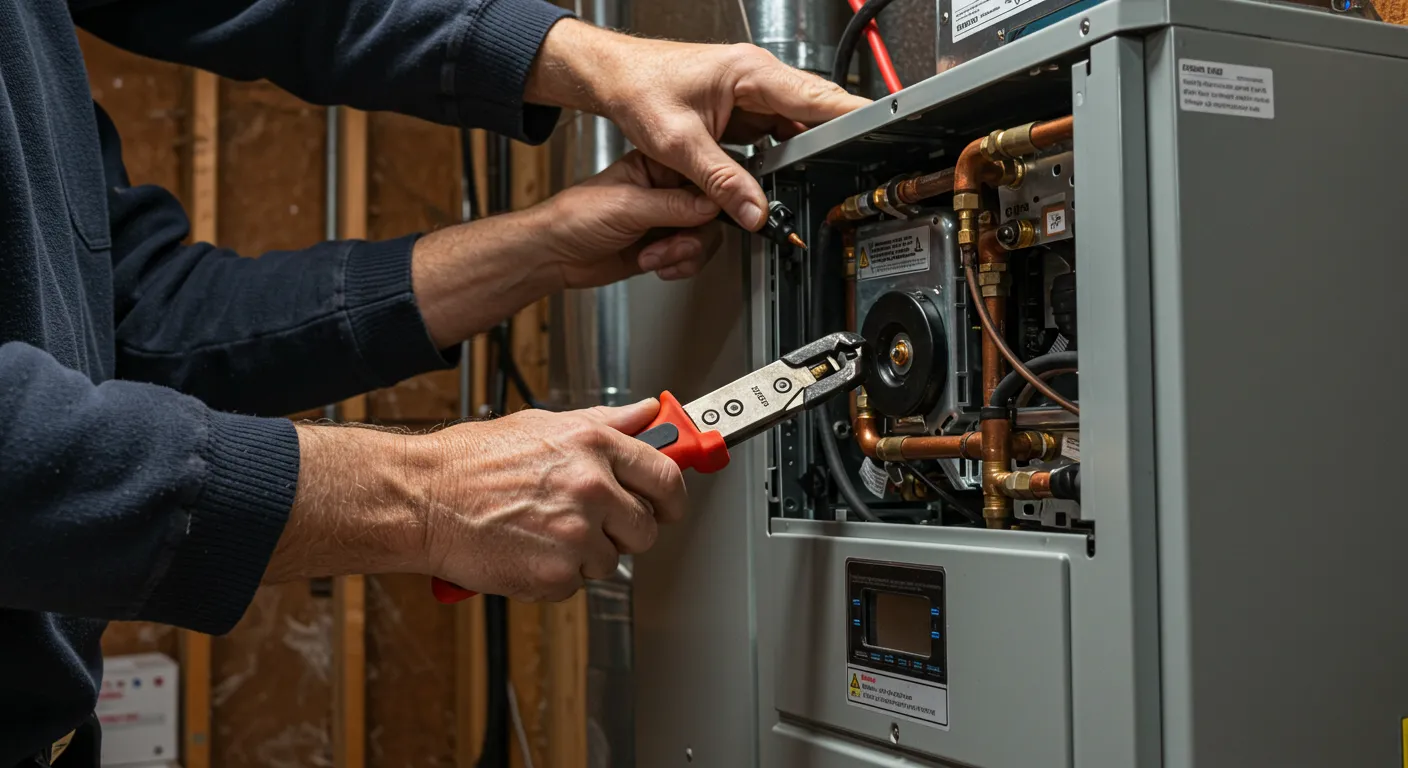
Correctly identifying the issue is the first step toward a lasting repair. Guesswork leads to wasted money and recurring problems. Our approach relies on data and mechanical testing to pinpoint the exact component causing the malfunction.
The repair process generally follows this sequence:
- First, the technician performs a complete safety check of the unit, inspecting for gas leaks, carbon monoxide risks, and electrical hazards.
- Next, we utilize advanced diagnostic meters to test the ignition system, flame sensors, blower motor amp draw, and thermostat communication.
- Then, we verify airflow restrictions. A clogged filter or blocked ductwork is a frequent culprit that mimics mechanical failure.
- Once the problem is isolated, the technician explains the specific failure, outlines the necessary repair, and provides a flat-rate price for the work before lifting a tool.
- After you approve the repair, we replace the faulty components and perform a full system cycle to verify the unit is heating to manufacturer specifications.
- Finally, we check the temperature rise and static pressure to ensure the system is running efficiently, not just running.
This rigorous process ensures that we address not just the symptom, such as a cold radiator or a blowing fan with no heat, but the underlying cause.
Identifying Common Mechanical Failures
Heating systems are complex machines with numerous moving parts and safety switches. Understanding what has gone wrong can help homeowners make informed decisions. While DIY fixes are rarely recommended for combustion appliances due to safety risks, recognizing the signs helps in communicating with the technician:
Ignition and Pilot Control Issues
Modern furnaces rely on electronic ignition systems, such as hot surface igniters or intermittent pilots. If the system calls for heat but the burners never light, the igniter may be cracked, or the flame sensor may be coated in carbon buildup. These are standard repairs that can be completed quickly. In older systems with standing pilot lights, a faulty thermocouple is often the reason the pilot won't stay lit.
Airflow and Blower Motor Problems
If the furnace runs for a few minutes and then shuts off before reaching the set temperature, it is likely overheating. This "short cycling" is a safety mechanism triggered by a limit switch. The root cause is usually poor airflow. This can stem from a dirty filter, blocked return vents, or a failing blower motor that cannot push air through the heat exchanger effectively. Replacing a blower motor or capacitor restores proper circulation and prevents the heat exchanger from cracking due to thermal stress.
Thermostat and Control Board Malfunctions
The thermostat acts as the brain of the HVAC system. If it cannot communicate with the control board inside the furnace, the system will not engage. Problems here range from dead batteries and loose wiring to a fried circuit board caused by a power surge. We test the low-voltage wiring to ensure signals are being sent and received correctly.
Unusual Noises and Vibrations
A heating system should operate relatively quietly. Grinding, squealing, or banging noises indicate mechanical distress. A squeal often points to a slipped belt or a dry bearing in the blower motor. A banging sound upon ignition suggests "delayed ignition," where gas builds up before lighting, creating a small explosion. This requires immediate professional attention to prevent damage to the heat exchanger.
Critical Decision: Repairing vs. Replacing
Homeowners often face the difficult choice between investing in a repair or opting for a full system replacement. This decision involves analyzing the age of the unit, the cost of the current repair, and the long-term efficiency of the system.
You should consider proceeding with a repair if:
- The equipment is under 10 years old and generally reliable.
- The cost of the repair is less than 50% of the cost of a new system.
- The unit has been well-maintained and shows no signs of major component failure (like a cracked heat exchanger).
- You are planning to move in the near future and need the system functional for the sale.
Replacement becomes the more logical financial choice if:
- The heat pump or furnace is over 15 years old.
- The system requires frequent repairs, with costs adding up year over year.
- Your energy bills are rising despite moderate usage, indicating a loss of efficiency.
- The repair involves a critical component, such as the compressor or heat exchanger, which carries a high price tag close to the cost of a new unit.
- The system uses outdated refrigerant or technology that is becoming obsolete and expensive to service.
Our technicians provide an honest assessment using the "50% Rule" and industry standards. We present the facts regarding the condition of your specific unit so you can choose the path that makes the best financial sense for your household.
Navigating Local Climate and Safety Codes
Operating a heating system in Blue Springs requires attention to specific environmental factors and local regulations. The humid continental climate means winters can drop well below freezing, placing a heavy load on your furnace for months at a time:
Combating the Freeze
In this region, a furnace failure isn't just an inconvenience; it can lead to frozen pipes. When we perform repairs, we also check the insulation around the unit and the condition of the flue pipe. Condensation lines in high-efficiency furnaces are prone to freezing if not properly routed or insulated, causing the system to shut down. We ensure your system is winterized to handle the coldest nights of the year.
Adherence to Safety Codes
Any repair involving gas lines, venting, or electrical connections must adhere to local building codes. Improperly vented furnaces can leak carbon monoxide back into the home. Our team stays updated on all local safety regulations to ensure every repair is compliant. If we notice a code violation from a previous installation or DIY attempt, we will bring it to your attention and offer a solution to correct it.
Utility Considerations
We work with equipment compatible with local utility providers. Whether your home is fueled by natural gas, propane, or electricity, we ensure the unit is calibrated to maximize the energy provided. All Day Comfort Heating and Cooling LLC understands the specific calibration needed for the gas pressure typically found in this area, ensuring your burners operate cleanly and efficiently.
The Importance of Professional Safety Inspections
A major component of our repair service involves a thorough safety inspection. Gas furnaces burn fuel to generate heat, and this process produces exhaust gases that must be vented safely.
During a repair visit, we inspect the heat exchanger for cracks. A cracked heat exchanger allows exhaust gases, including carbon monoxide, to mix with the breathable air in your home. This is a life-safety issue. We use combustion analyzers to detect even trace amounts of CO leakage.
We also verify the operation of all safety switches. The limit switch prevents overheating, the rollout switch detects flames escaping the burner compartment, and the pressure switch proves that the venting system is open. If any of these safety devices are bypassed or faulty, the risk of fire or injury increases. We never bypass safety switches to make a unit run; we replace them and correct the condition that caused them to trip.
Technical Expertise and Service Standards
When you hire a professional service, you are paying for expertise, reliability, and peace of mind. Our technicians undergo continuous training to stay current with the evolving technology in the HVAC industry. From variable-speed blower motors to smart thermostat integration, we understand how modern systems operate.
We maintain a clean workspace. Heating repair often involves working in basements, attics, or crawlspaces. Our technicians use drop cloths and shoe covers to protect your home. We respect your property and clean up any debris or old parts before we leave.
Transparency is our standard. You will never receive a bill that does not match the quote provided before the work began. We explain what we are doing and why, empowering you to understand the health of your heating system.
Maximizing System Longevity After Repair
Once your system is repaired, keeping it running requires diligence. The most important task for a homeowner is regular filter replacement. A clean filter protects the blower motor and heat exchanger from dust and debris. We can recommend the correct filter rating (MERV) for your specific system to balance filtration with airflow.
We also recommend keeping supply and return vents open and unobstructed. Blocking vents with furniture or curtains increases pressure in the ductwork, which strains the blower motor and reduces efficiency. Ensuring your home has proper insulation and sealing air leaks around windows and doors also reduces the workload on your furnace, extending its lifespan.
Secure Your Comfort Today
Don't let a broken heater compromise your safety or comfort. The winter months in Missouri are unforgiving, and your home requires a functioning, efficient heating system. Our team is ready to diagnose the issue accurately and provide a lasting repair solution.
For fast, professional service that Blue Springs residents trust, contact All Day Comfort Heating and Cooling LLC. We are standing by to restore warmth to your home. Contact Us Now for Immediate Heating Repair
Contact Us
customer reviews
Areas We Serve



Copyright © 2026 All Day Comfort Heating and Cooling.
All rights reserved.
