




HVAC Contractor in Grain Valley, MO
Experiencing HVAC issues in Grain Valley? Contact All Day Comfort for fast, professional repair and installation services. Same-day service available!
Is Your HVAC System Failing to Keep Up with The Weather?
Is your AC struggling against the intense humidity typical of a Grain Valley summer, or is your heating system failing to keep your home warm during freezing winter nights? When your comfort is compromised, you need immediate, professional intervention to restore safety and temperature control to your home. Contact us now to schedule an immediate inspection or discuss financing options.
Homeowners in Grain Valley know that our local climate is unforgiving. A breakdown is rarely just an inconvenience; it can quickly become a safety hazard or a source of property damage due to frozen pipes or humidity issues. At All Day Comfort Heating and Cooling LLC, we prioritize restoring your indoor environment efficiently and correctly.
- Get same-day service: We understand that temperature control issues cannot wait, which is why we prioritize rapid response times to get your system running again.
- Full transparency in pricing: You receive a clear, upfront explanation of costs without hidden fees or surprise charges on your final bill.
- Energy-efficient solutions: Our repairs and installations focus on optimizing your equipment to lower monthly utility bills year-round.
- Guaranteed Quality: All services come with our customer satisfaction guarantee and strictly adhere to local building codes for your peace of mind.
Comprehensive HVAC Assessment and Repair Services
When you request service, the primary goal is to accurately identify the root cause of the malfunction rather than simply treating the symptoms. Modern heating and cooling systems are complex networks of electrical components, refrigerants, airflow channels, and combustion chambers. A superficial fix often leads to recurring breakdowns.
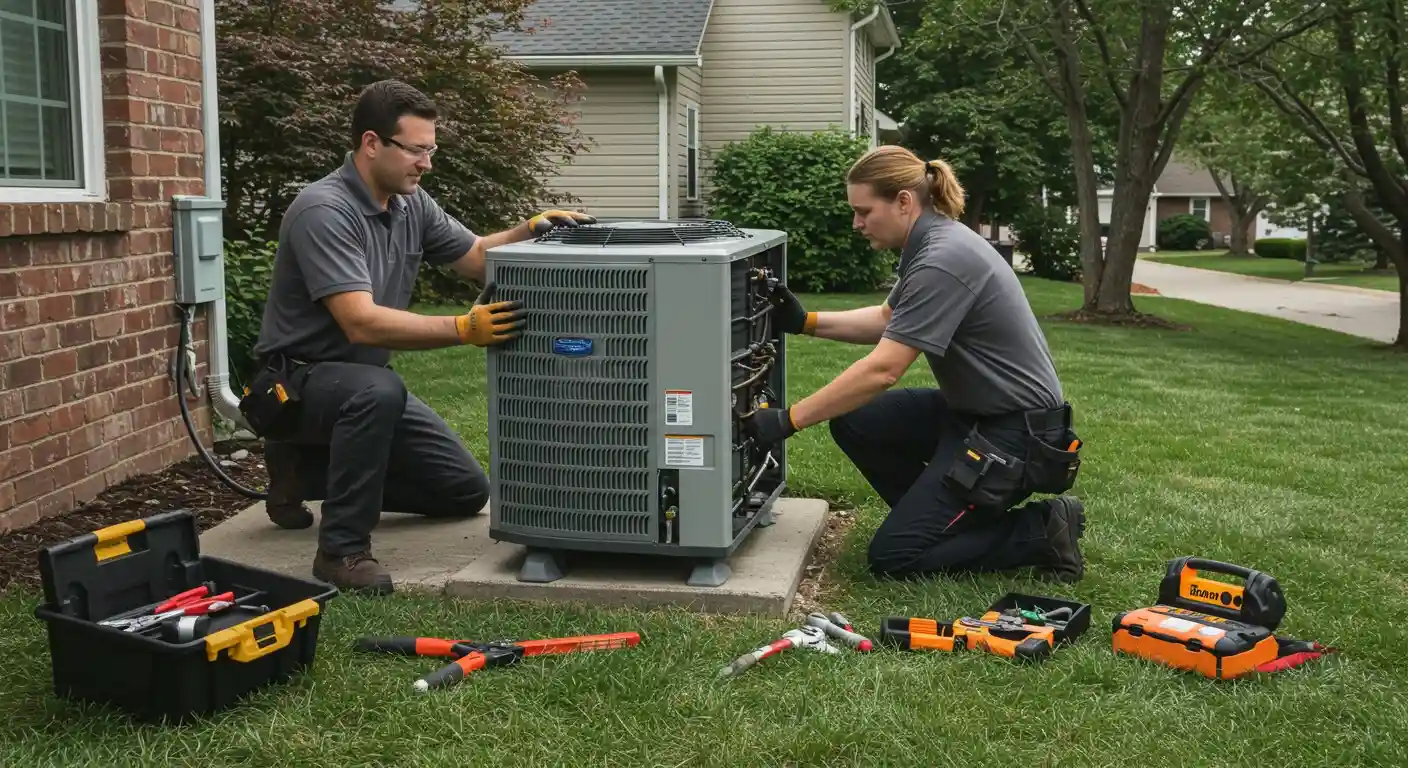
The diagnostic phase involves a rigorous inspection of your entire system. For air conditioning units, this means checking refrigerant levels to ensure there are no leaks, inspecting the compressor for electrical integrity, and verifying that the condenser coil is free of debris that could inhibit heat transfer. For heating systems, the focus shifts to the heat exchanger, burner assembly, and ignition systems to ensure safe and efficient combustion.
In Grain Valley, where weather patterns can shift rapidly, your system must be calibrated to handle extreme load changes. A technician will evaluate the static pressure within your ductwork to ensure that air is moving freely. Restricted airflow is a leading cause of premature component failure, as it forces motors to work harder than necessary. By addressing these underlying issues, we ensure that the repair lasts and that the system operates at peak efficiency.
Key components inspected during a standard service call include:
- Thermostat Calibration: Ensuring the interface controlling your system is reading temperatures accurately and communicating correctly with the furnace or AC unit.
- Electrical Connections: Tightening loose wiring and measuring voltage and amperage on motors to prevent electrical shorts or fire hazards.
- Condensate Drains: Clearing clogs in the drain line to prevent water damage and humidity buildup within the home.
- Safety Controls: Testing high-limit switches and flame sensors to verify the system shuts down safely in the event of a malfunction.
The Installation and Replacement Process
There comes a time when a system is too old, inefficient, or damaged to warrant further repairs. Replacing an HVAC system is a significant investment in your home’s infrastructure. The success of a new installation depends entirely on the precision of the sizing and the quality of the workmanship. A unit that is too large will short-cycle, leading to humidity issues and wear and tear, while a unit that is too small will run continuously without ever achieving the desired temperature.
The process begins with a manual load calculation. This calculation takes into account the square footage of your home, the insulation levels in your attic and walls, the number of windows, and the orientation of the house relative to the sun. This data allows us to recommend a unit that is perfectly matched to your specific cooling and heating needs.
Once the correct equipment is selected, the physical installation involves several critical steps to ensure longevity and efficiency.
- Site Preparation: The area is prepared to protect your flooring and property. Old equipment is disconnected, removed, and disposed of according to environmental regulations, particularly regarding refrigerant recovery.
- Ductwork Modification: If necessary, the transition point between the new unit and the existing ductwork is modified to ensure airtight seals. Leaky ducts can result in significant energy loss.
- System Placement: The new furnace, air handler, or condenser is leveled and secured. For outdoor units, this often involves placing a new pad to ensure stability and proper drainage.
- Line Set Connection: Refrigerant lines are brazed with nitrogen flowing through them to prevent oxidation, which can clog the sensitive metering devices in modern high-efficiency units.
- Vacuum and Charge: A deep vacuum is pulled on the refrigeration circuit to remove all moisture and non-condensables. The system is then charged with the precise amount of refrigerant specified by the manufacturer.
- Commissioning: The system is started, and a series of tests are performed to verify airflow, temperature split, and gas pressure. This ensures the unit is operating within factory specifications before the technician leaves.
When to Choose Replacement Over Repair
Deciding whether to repair an aging unit or replace it with a modern system is a common dilemma for homeowners. Making the right financial choice requires balancing the immediate cost of a repair against the long-term savings of a new, more efficient system. We help you navigate this decision by looking at the data.
The "50% Rule" is a standard industry metric. If the cost of the repair approaches 50% of the value of a new system, replacement is generally the wiser financial move. Additionally, the age of the equipment plays a major role. The average lifespan of an air conditioner is 10 to 15 years, while furnaces can last 15 to 20 years. If your equipment is nearing the end of this range and requires a major component replacement, such as a compressor or a heat exchanger, investing in a new unit is often more logical.
Efficiency is another major factor. Older systems often have much lower SEER (Seasonal Energy Efficiency Ratio) or AFUE (Annual Fuel Utilization Efficiency) ratings compared to modern standards. A system installed 15 years ago may operate at 10 SEER, whereas current regulations require a minimum of 13.4 or 14.3 SEER2 depending on the region, with high-end units reaching over 20 SEER.
Consider replacement if you observe the following:
- Rising Utility Bills: A steady increase in energy costs without a change in usage patterns indicates the system is losing efficiency.
- Frequent Breakdowns: If you are calling for repairs multiple times a year, the cumulative cost will quickly outpace the cost of a new monthly payment plan.
- Uneven Temperatures: Hot and cold spots throughout the house suggest the system can no longer effectively distribute air.
- Noise and Odors: Grinding, squealing, or persistent burning smells are signs of serious mechanical deterioration.
Managing Seasonal Challenges and Local Requirements
Operating an HVAC system in Grain Valley requires attention to the specific demands of the Missouri climate. We experience four distinct seasons, but the extremes of summer and winter pose the biggest challenges to residential comfort systems.
In the summer, humidity control is just as important as temperature reduction. High humidity can make the air feel warmer than it actually is, causing your AC to run longer. If your system is not removing moisture effectively, you risk mold growth and a clammy indoor environment. Proper equipment sizing and the potential addition of whole-home dehumidifiers can address this specific regional issue.
Winters bring the risk of freezing temperatures that can strain heat pumps and furnaces. For homes utilizing heat pumps, it is vital to ensure the auxiliary or emergency heat strips are functioning correctly to take over when outdoor temperatures drop below the heat pump's efficiency threshold.
Furthermore, local compliance is non-negotiable. Any major modification to your heating or cooling system usually requires adherence to local building codes. This ensures that gas lines are piped correctly, electrical circuits are grounded properly, and exhaust gases are vented safely out of the home. Ignoring these codes can lead to failed home inspections if you decide to sell and, more importantly, safety risks for your family.
- Permitting: We handle the necessary paperwork to ensure the installation meets all city and county requirements.
- Utility Rebates: Many local utility providers offer rebates for upgrading to high-efficiency equipment. We assist in identifying these opportunities to help offset the initial investment.
- Ventilation: Ensuring your home has adequate fresh air intake and exhaust is crucial for maintaining indoor air quality, especially in tightly sealed modern homes.
Maximizing System Lifespan Through Maintenance
The longevity of your HVAC investment is directly tied to how well it is maintained. Neglect is the number one cause of premature system failure. Regular maintenance is not just about changing a filter; it is a comprehensive tune-up that restores the system to factory specifications.
During a maintenance visit, All Day Comfort Heating and Cooling LLC technicians focus on preventative measures. For example, a dirty condenser coil forces the compressor to run at higher pressures and temperatures, significantly shortening its life. By chemically cleaning the coil, we reduce the strain on the heart of your system. Similarly, checking the heat exchanger for hairline cracks is a critical safety check that prevents carbon monoxide leaks.
Consistent maintenance also protects your manufacturer's warranty. Most manufacturers require proof of annual maintenance to honor warranty claims on parts. Without this documentation, you could be liable for the full cost of a replacement part even if the unit is relatively new.
Benefits of a structured maintenance plan include:
- Lower Energy Costs: Clean, lubricated, and calibrated systems use less energy to do the same amount of work.
- Extended Equipment Life: reducing wear and tear adds years to the operational life of the unit.
- Improved Air Quality: Clean filters and coils mean fewer allergens and dust particles are circulated through your home.
- Priority Service: Regular maintenance customers often receive priority scheduling during peak demand times.
Restoring Comfort to Your Home
Your home should be a sanctuary, regardless of the weather outside. Whether you are dealing with a sudden breakdown in the middle of a heatwave or planning a proactive replacement of an aging furnace before winter arrives, the quality of the contractor you choose dictates the quality of your comfort for years to come. We focus on technical excellence, adherence to safety standards, and providing clear, data-driven advice to help you manage your indoor climate.
Don't let a failing system disrupt your life or compromise your safety. All Day Comfort Heating and Cooling LLC is ready to provide the skilled service required to get your system back on track.
Ready to restore your home's comfort? Contact us today to schedule your service or request an estimate for a new system.
Contact Us
customer reviews
Areas We Serve




Copyright © 2026 All Day Comfort Heating and Cooling.
All rights reserved.
