




HVAC Installation in Grain Valley, MO
Seeking professional HVAC installations in Grain Valley? Contact All Day Comfort for efficient, local installations and 24/7 support. Schedule today!
Is Your Home Comfort Compromised by Unreliable Equipment?
Dealing with unbearable heat or freezing conditions in your home can bring daily life to a screeching halt. When your climate control system fails to maintain a consistent temperature, you need a solution that restores safety and relaxation to your living space immediately. For homeowners in Grain Valley seeking reliable relief, All Day Comfort Heating and Cooling LLC provides expert HVAC installations ensuring your comfort throughout the year. Contact us today to discuss financing options and schedule your assessment.]
- Immediate service appointments available for urgent needs.
- Custom installations by trusted local experts.
- 24/7 support to keep your system running smoothly.
Fully licensed and insured, with flexible financing options to meet all your HVAC needs.
Comprehensive System Installation and Replacement Scope
When you invest in a new heating and cooling system, you are purchasing more than just a unit; you are investing in a complete comfort ecosystem. A professional installation goes far beyond simply swapping out a metal box. It involves a rigorous analysis of your property’s thermal characteristics to ensure the new equipment operates at peak efficiency. Inadequate installation can reduce system efficiency by up to 30%, leading to higher utility bills and a shortened equipment lifespan.
Our installation process focuses on total system performance. This begins with a detailed evaluation of the existing infrastructure. We examine the ductwork for leaks, obstructions, or design flaws that could hamper airflow. We also assess the electrical capacity and gas lines (if applicable) to ensure they meet the requirements of modern, high-efficiency units. The goal is to create a seamless integration where the thermostat, air handler, condenser, and furnace work in perfect unison.
Homeowners receive a complete turnkey solution. This includes the safe removal and environmentally responsible disposal of the old unit. We handle all logistics, from the delivery of the new machinery to the final calibration. The scope of work also covers the installation of necessary auxiliary components, such as new refrigerant lines, condensate drain piping, and updated electrical disconnects. By the time the project is complete, the system is fully operational, tested, and ready to handle the specific climate demands of the region.
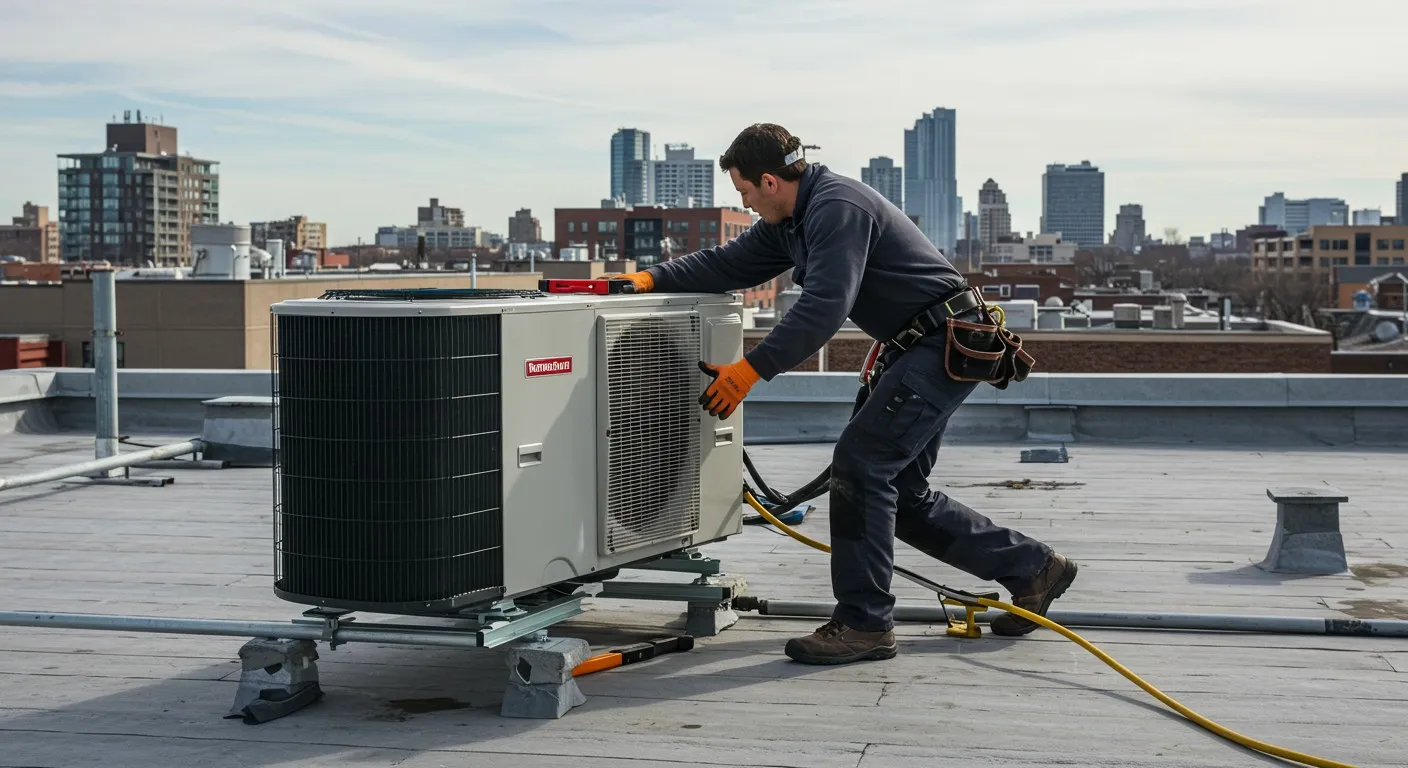
The Installation Workflow: From Assessment to Airflow
Understanding the installation timeline helps homeowners prepare for the day of service. A structured approach ensures that no step is overlooked and that the system is set up for long-term reliability. We adhere to a strict protocol that prioritizes safety, cleanliness, and technical precision.
- Site Evaluation and Sizing: Before any equipment is ordered, a load calculation is performed. This mathematical process, often referred to as a Manual J calculation, determines the exact heating and cooling output required for the specific square footage, insulation levels, and window orientation of the home. This prevents the common issues of short-cycling (system is too big) or continuous running (system is too small).
- Work Area Preparation: Technicians arrive with drop cloths and protective gear to ensure the home remains clean. The area around the indoor and outdoor units is cleared to provide safe access. Power and gas supplies to the existing HVAC equipment are shut off to ensure safety during the removal process.
- Decommissioning and Removal: The old refrigerant is pumped down or recovered according to EPA regulations to prevent environmental contamination. The existing units are disconnected from the ductwork, electrical panel, and fuel sources. The old equipment is then carefully removed from the property.
- Equipment Positioning and Connection: The new indoor unit (furnace or air handler) is positioned and leveled to ensure proper drainage. The outdoor condenser is placed on a new, stable pad to prevent vibration and sinking. Technicians then braze the refrigerant lines, ensuring a sealed system free of leaks.
- Electrical and Control Setup: High-voltage wiring is connected to the disconnect box and the unit components. Low-voltage wiring is run to the thermostat and control board. If a new smart thermostat is part of the package, it is mounted and programmed during this stage.
- System Start-Up and Commissioning: Once mechanical connections are complete, the system is pressurized with nitrogen to test for leaks. A deep vacuum is pulled to remove moisture and air from the lines. Refrigerant is then released or added to the factory specifications. The system is powered on, and technicians measure airflow, static pressure, and temperature splits to verify performance.
Determining When to Replace Versus Repair
Deciding between repairing an aging unit or investing in a new installation is a critical financial decision for any homeowner. While repairs may seem cheaper upfront, they can often lead to a "money pit" scenario where cumulative costs exceed the value of a modern system. Understanding the tipping point helps in making a rational, cost-effective choice.
One effective method for evaluating this decision is the "$5,000 Rule." Multiply the age of your equipment by the estimated cost of the repair. If the total exceeds $5,000, replacement is generally the wiser investment. For example, if a system is 12 years old and requires a $500 repair (12 x 500 = 6,000), replacement is recommended. This logic accounts for the diminishing reliability of older units and the likelihood of future breakdowns.
Consider the frequency of service calls. If a system requires professional attention more than once a year, it has become unreliable. In Grain Valley, where seasons shift dramatically, reliability is non-negotiable. An unreliable system is most likely to fail during extreme weather events—the exact moments when the equipment is under the highest stress.
Energy efficiency is another major factor. HVAC technology has advanced significantly in the last decade. A system installed 15 years ago likely has a SEER (Seasonal Energy Efficiency Ratio) rating of 10 or less. Modern standards require a minimum of SEER2 13.4 or higher in the Midwest. Upgrading to a high-efficiency unit can lower monthly cooling and heating costs by 20% to 40%, effectively helping the new system pay for itself over time.
Understanding System Types and Configurations
Selecting the right type of HVAC configuration is essential for maximizing comfort and efficiency. Different homes have different architectural constraints and heating loads. We guide homeowners through the selection process to ensure the chosen technology aligns with their lifestyle and property requirements.
- Split Systems: This is the most common configuration, consisting of an outdoor air conditioner or heat pump and an indoor furnace or air handler. It utilizes a network of ducts to distribute conditioned air. This setup is ideal for homes with existing ductwork and a central utility closet or basement.
- Hybrid Heat (Dual Fuel) Systems: For regions with cold winters, a hybrid system combines an electric heat pump with a gas furnace. The heat pump handles moderate temperatures efficiently, while the gas furnace takes over during extreme cold snaps. This automated switching optimizes fuel usage and keeps utility costs low.
- Ductless Mini-Splits: These systems are perfect for home additions, garages, or older homes without ductwork. They consist of an outdoor compressor and one or more indoor air handlers mounted on walls or ceilings. Ductless systems offer zoning capabilities, allowing different rooms to be set to different temperatures.
- Packaged Units: In homes with limited indoor space, a packaged unit may be the solution. All components—compressor, condenser, and evaporator—are housed in a single cabinet located outside on a slab or the roof. This frees up valuable indoor square footage.
Local Climate Considerations and Compliance
Installing HVAC equipment in the Midwest requires specific attention to regional weather patterns and local building codes. All Day Comfort Heating and Cooling LLC ensures that every installation meets the rigorous demands of the local environment and municipal regulations.
Grain Valley experiences a continental climate, characterized by hot, humid summers and cold winters. This dual challenge requires equipment that can handle high latent heat loads (humidity) in July while delivering substantial heating capacity in January. We recommend systems with two-stage or variable-speed compressors. These units run for longer cycles at lower speeds, which is far more effective at removing humidity than single-stage units that blast cold air and shut off quickly. Proper humidity control prevents mold growth and protects hardwood flooring and furniture.
Winter conditions also dictate specific installation practices. Heat pumps and outdoor condensers must be elevated above the anticipated snow line to maintain airflow and prevent ice buildup. Furthermore, furnace venting requires careful routing to prevent blockages from snow drifts, ensuring that carbon monoxide is safely exhausted from the home at all times.
From a regulatory standpoint, adherence to local codes is mandatory. This includes securing the proper mechanical permits before work begins. Inspections cover everything from gas line pressure testing to electrical circuit sizing. Compliance ensures that the installation is safe, legal, and will not cause issues during a future home sale. Our team handles the permit acquisition and coordinates with city inspectors, removing that administrative burden from the homeowner.
Maximizing Longevity Through Proper Sizing
One of the most pervasive myths in HVAC is that "bigger is better." In reality, an oversized system is detrimental to comfort and equipment longevity. If an air conditioner is too powerful for the space, it will cool the air too rapidly, satisfying the thermostat before it has had a chance to remove humidity. This results in a cold, clammy indoor environment.
Conversely, an undersized system will run continuously, struggling to reach the set temperature. This places immense strain on the compressor and blower motor, leading to premature failure. We utilize precise load calculations to match the equipment capacity exactly to the home's needs. This involves measuring windows, checking insulation values in the attic and walls, and accounting for the orientation of the house relative to the sun.
Correct sizing also impacts noise levels. A properly sized system running at a steady, lower speed is significantly quieter than an oversized unit that blasts air noisily through the ducts every time it cycles on. By prioritizing precision over raw power, we ensure a quieter, more comfortable home environment.
The Importance of Warranty and Future Support
A robust warranty provides peace of mind that your investment is protected. Manufacturer warranties typically cover parts for 10 years, provided the equipment is registered and installed by a licensed professional. However, these warranties often do not cover labor. We provide clarity on what is covered, helping homeowners understand the difference between parts warranties and labor guarantees.
Beyond the initial installation, the longevity of the system depends on regular maintenance. New installations should be inspected annually to keep warranties valid. Manufacturers often require proof of maintenance if a warranty claim is filed. We set up our installations to be service-friendly, placing access panels and filters in locations that are easy for technicians to reach, ensuring that future maintenance is efficient and thorough.
Your Partner in Home Comfort
Upgrading your heating and cooling system is a significant step toward improving your quality of life and the value of your property. It requires a partner who understands the technical intricacies of modern HVAC technology and the specific demands of the local climate. From the initial load calculation to the final explanation of the thermostat functions, the focus remains on delivering a solution that is efficient, quiet, and reliable.
We prioritize clear communication and technical excellence. Every connection is double-checked, every setting is calibrated, and the workspace is left cleaner than it was found. The result is a system that you can trust to perform, regardless of what the weather forecast predicts.
If you are ready to secure a comfortable environment for your home with a professional installation that stands the test of time, take the next step today.
Contact Us
customer reviews
Areas We Serve




Copyright © 2026 All Day Comfort Heating and Cooling.
All rights reserved.
