




HVAC Service in Mission, KS
Discover top-tier HVAC repair and installation services in Mission, KS. Ensure your home maintains optimal temperature all year. Schedule your service now!
Rapid Solutions for Inconsistent Temperatures and System Failures
Facing unexpected HVAC breakdowns or skyrocketing energy bills? Mission’s weather demands top-notch efficiency from your heating and cooling systems, and waiting for a solution is rarely an option when temperatures spike or plummet. All Day Comfort Heating and Cooling LLC provides immediate, professional intervention to restore safety and comfort to your home. Contact us today to schedule your comprehensive system diagnostic or emergency repair.
- Immediate 24/7 emergency responses—get service when you need it most.
- Comprehensive service covering heating, cooling, and air quality maintenance.
- Flexible financing options to smoothly manage unexpected expenses.
All services are fully licensed and come with a solid warranty for peace of mind.
Comprehensive HVAC Diagnostics and Repair Services
When a climate control system fails, the symptoms are often immediate and disruptive. You might notice airflow that is weak, air that isn't the right temperature, or strange noises clanging from the utility room. Effective service begins with a forensic approach to diagnostics. Rather than simply swapping out parts until the unit turns on, a professional technician performs a root-cause analysis to determine why the failure occurred. This prevents recurring issues and ensures that the repair you pay for actually solves the problem for the long term.
In Mission, KS, where homes range from historic builds to modern constructions, the challenges facing HVAC systems vary significantly. Older ductwork may contribute to static pressure issues that strain blower motors, while newer, tighter homes might suffer from poor ventilation. A thorough service visit addresses the mechanical components as well as the airflow dynamics of the property.
Immediate Repair Protocols
Once the issue is identified, the focus shifts to restoring function. Professional service trucks are stocked with common failure points, such as capacitors, contactors, flame sensors, and control boards. This preparation allows for same-day repairs in the majority of service calls.
- Electrical Component Replacement: Technicians safely replace failed capacitors, fuses, and relays that prevent the unit from starting.
- Refrigerant Leak Repair: Simply adding refrigerant is a temporary fix; proper service involves locating the leak, brazing the line set, and recharging the system to manufacturer specifications.
- Airflow Correction: Clearing blocked condensate drains, cleaning evaporator coils, and adjusting blower speeds to ensure the system breathes correctly.
- Safety Controls: verifying that limit switches and pressure sensors are functioning to prevent hazardous operation, particularly in gas furnaces.
Seasonal Maintenance and Tune-Ups
Preventative care is the most effective way to avoid emergency calls. The intense humidity of Kansas summers and the freezing lows of winter put immense stress on mechanical equipment. Routine maintenance ensures that efficiency remains high and wear and tear is minimized.
- Cleaning Coils: Dirty condenser and evaporator coils reduce the system's ability to absorb and release heat, driving up energy costs.
- Lubrication: Moving parts in motors and fans require lubrication to reduce friction and electricity usage.
- Connection Tightening: Vibration can loosen electrical connections over time, leading to arcing or component failure.
- Thermostat Calibration: Ensuring your control interface reads the temperature accurately prevents the system from over-cycling.
The Installation and Replacement Process
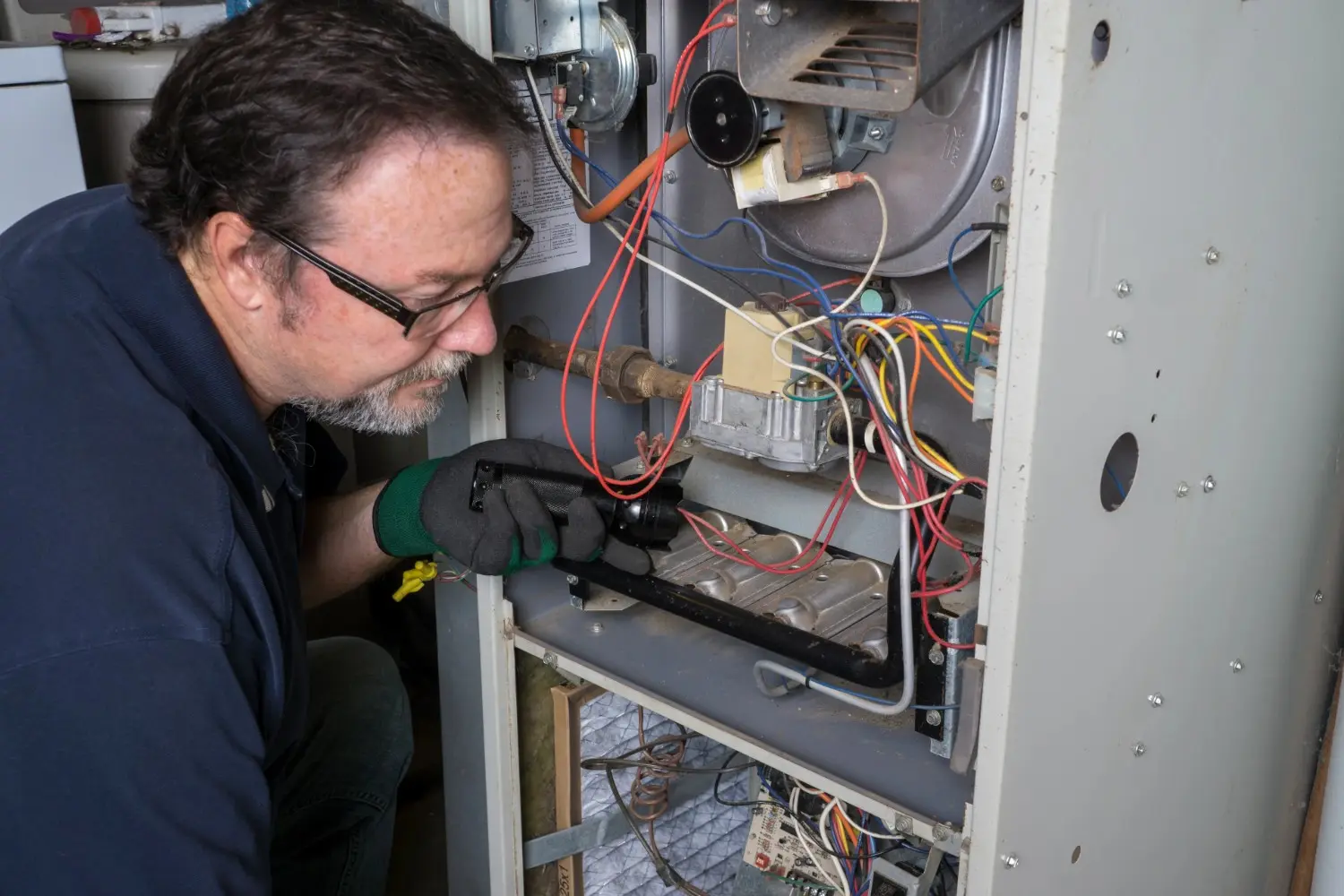
There comes a point where repair is no longer the most economical or reliable option. Installing a new HVAC system is a major construction project that alters the infrastructure of your home. It requires precise calculation, skilled labor, and adherence to strict safety codes. The process is designed to result in a system that runs quietly, maintains even temperatures, and filters the air effectively.
Accurate Sizing and System Design
The most critical step in installation happens before the equipment arrives. Size matters; a unit that is too big will short-cycle, failing to dehumidify the home, while a unit that is too small will run continuously without reaching the set temperature. Technicians perform a load calculation (Manual J) that accounts for square footage, window placement, insulation levels, and local climate data.
Step-by-Step Installation Workflow
Professional installation follows a rigorous checklist to ensure the new system operates at peak efficiency from day one.
- First, the site is prepared. Technicians lay down drop cloths and floor protection to ensure your home remains clean during the removal of the old unit.
- Next, the existing equipment is safely disconnected. This involves shutting off gas and electrical lines and reclaiming old refrigerant according to environmental regulations to prevent venting harmful chemicals into the atmosphere.
- Then, the new equipment is positioned. Whether it is a basement furnace or an outdoor condenser, the unit must be leveled and placed on a stable pad or vibration-isolation blocks to reduce noise.
- Following placement, connections are fabricated. The plenum (the box connecting the unit to the ductwork) is sealed to prevent air leaks. Flue pipes are installed for gas units to ensure carbon monoxide is vented safely outside.
- Finally, the system undergoes a commissioning phase. Technicians test static pressure, measure temperature rise or drop, and verify that the refrigerant charge matches the manufacturer’s subcooling or superheat requirements.
Deciding Between Repair and Replacement
Homeowners often struggle to determine whether to sink money into a repair or invest in a new system. This decision relies on several data points regarding the current unit's health, age, and performance history. Making the wrong choice can result in wasted money on a dying unit or unnecessary capital expenditure on a fixable one.
The 50% Rule and Age Considerations
A standard industry benchmark is the 50% rule: if the cost of the repair approaches 50% of the value of a new system, replacement is generally the wiser financial move. Additionally, the age of the system is a primary factor. Most air conditioners and heat pumps have a service life of 10 to 15 years, while furnaces may last 15 to 20 years. If your equipment is nearing the end of this window, major repairs like compressor or heat exchanger replacements are rarely worth the investment.
Frequency of Breakdowns
If you have required service calls multiple times in the last two years, the system has likely become unreliable. Frequent breakdowns indicate that internal components are failing in succession. Continuing to repair a "lemon" often costs more in the long run than the monthly payment on a new, warranted system.
Energy Efficiency and Technology
Older systems typically operate at much lower efficiency levels (SEER and AFUE ratings) than modern equivalents. A 15-year-old AC unit might operate at 10 SEER, whereas modern units start at 14 SEER and can go much higher.
- Single-Stage vs. Variable Speed: Older units usually run at 100% capacity or 0%. New variable-speed systems can ramp up and down to match the exact heating or cooling demand, saving significant energy.
- Refrigerant Types: Older systems use R-22 (Freon), which has been phased out and is incredibly expensive to source. Newer systems use R-410A or R-454B, which are more environmentally friendly and affordable to service.
- Smart Integration: Modern systems often communicate directly with smart thermostats, allowing for zoning and remote diagnostics that older analog systems cannot support.
Navigating Local Regulations and Climate Demands
Operating in Mission, KS requires a deep understanding of local building codes and the specific climate challenges of the region. HVAC work is not a "wild west" industry; it is highly regulated to ensure the safety of occupants and the energy efficiency of the housing stock.
Permitting and Code Compliance
Any significant alteration to a heating or cooling system usually requires a permit from the local municipality. This ensures that the installation meets safety standards regarding gas piping, electrical connections, and venting. Professional contractors handle the permitting process, scheduling necessary inspections to close out the job legally. This is crucial for maintaining the resale value of your home; unpermitted work can be a major red flag during real estate transactions.
Regional Climate Considerations
The Midwest climate is characterized by extremes. High humidity in the summer requires air conditioners that run long enough to dehumidify the air, not just cool it. Conversely, winters can drop well below freezing, requiring furnaces with high AFUE ratings to convert fuel to heat efficiently without wasting energy up the flue.
- Insulation and Ductwork: Many older homes in the area may have insufficient insulation or leaky ductwork. Service providers often assess these factors, as a high-efficiency unit cannot overcome a leaky building envelope.
- Humidity Control: Beyond standard cooling, many homeowners in the region benefit from whole-home humidifiers for winter (to protect wood floors and health) and dehumidifiers for summer.
- Utility Rebates: Local utility providers often offer rebates for upgrading to high-efficiency equipment. Professional installers stay updated on these programs to help customers offset the initial cost of installation.
Why Homeowners Prioritize Professional Solutions
The difference between a DIY fix or a handyman special and a professional HVAC service lies in the details. Modern heating and cooling equipment is complex, relying on sophisticated electronics and high-pressure thermodynamics. All Day Comfort Heating and Cooling LLC focuses on technical precision and long-term reliability — read our reviews to see why.
Technical Expertise and Training
Professional technicians undergo rigorous training to understand the physics of airflow and thermodynamics. They are certified to handle refrigerants and work with high-voltage electricity and combustible gases. This expertise ensures that diagnostics are accurate and repairs are safe.
- Proper Tooling: Professionals utilize advanced diagnostic tools, such as combustion analyzers, digital manifolds, and micron gauges, to see what is happening inside the system invisible to the naked eye.
- Safety First: Handling natural gas and 240-volt electricity carries inherent risks. Certified technicians follow strict safety protocols to protect your home and family.
- Cleanliness: Respect for your property is paramount. This includes using shoe covers, drop cloths, and ensuring the workspace is left cleaner than it was found.
Transparent Communication
A major pain point for homeowners is not understanding what they are paying for. Professional service involves clear explanations of the problem, the proposed solution, and the associated costs before any work begins. There are no hidden fees or surprise upcharges. You receive a detailed breakdown of the options available, allowing you to make an educated decision that fits your budget and goals.
Long-Term Support
The relationship does not end when the truck drives away. Professional installations come with labor warranties that back the quality of the workmanship. Manufacturers’ warranties cover the parts, but they often require proof of professional installation and regular maintenance to remain valid. Partnering with a dedicated service provider ensures that your warranty remains intact and you have a resource to call for future maintenance or questions.
Restoring Your Home Comfort
Your home’s heating and cooling system is the engine that drives your daily comfort. Whether you are dealing with a sudden breakdown in the middle of a heatwave or planning a proactive replacement to improve energy efficiency, the quality of the service you choose determines the longevity and performance of your equipment. All Day Comfort Heating and Cooling LLC is committed to delivering precise, reliable HVAC solutions tailored to the specific needs of Mission residents. Don't let a malfunctioning system disrupt your life or drain your bank account through inefficiency. Take control of your indoor climate today—schedule your expert service or consultation now.
Contact Us
customer reviews
Areas We Serve




Copyright © 2026 All Day Comfort Heating and Cooling.
All rights reserved.
