




Indoor Air Quality in Lee's Summit, MO
Explore professional air quality services in Lee's Summit for your home. Improve your indoor environment with tailored humidity, filtration, and ventilation solutions. Contact us now!
Is Your Indoor Air Compromising Your Health?
Worrying about the air you breathe at home? You're not alone—many homeowners in Lee's Summit face hidden air quality issues that standard filters cannot catch. Contact us today to schedule a professional air quality assessment or discuss financing options for whole-home purification systems.
Indoor air pollution often exceeds outdoor levels, trapping contaminants inside where you spend the majority of your time. Modern homes are built to be airtight for energy efficiency, but this construction style inadvertently seals in pollutants, allergens, and volatile organic compounds (VOCs). Without proper mechanical ventilation or advanced filtration, your HVAC system simply recirculates the same stale, contaminated air. All Day Comfort Heating and Cooling LLC provides targeted strategies to identify and eliminate these invisible threats:
- Identify specific allergens, mold spores, and chemical pollutants with advanced testing technology.
- Receive a comprehensive, easy-to-understand air quality report within 24 hours of assessment.
- Improve your living environment immediately with tailored solutions like UV lights and HEPA filtration.
All services are performed by certified specialists, ensuring your peace of mind and long-term system reliability.
Comprehensive Air Quality Solutions: Scope and Capabilities
Improving indoor air quality (IAQ) requires more than a generic air filter from a hardware store. Real improvement comes from integrating hospital-grade purification and humidity control directly into your central heating and cooling system. This approach treats 100% of the air flowing through your ducts, rather than just a single room:
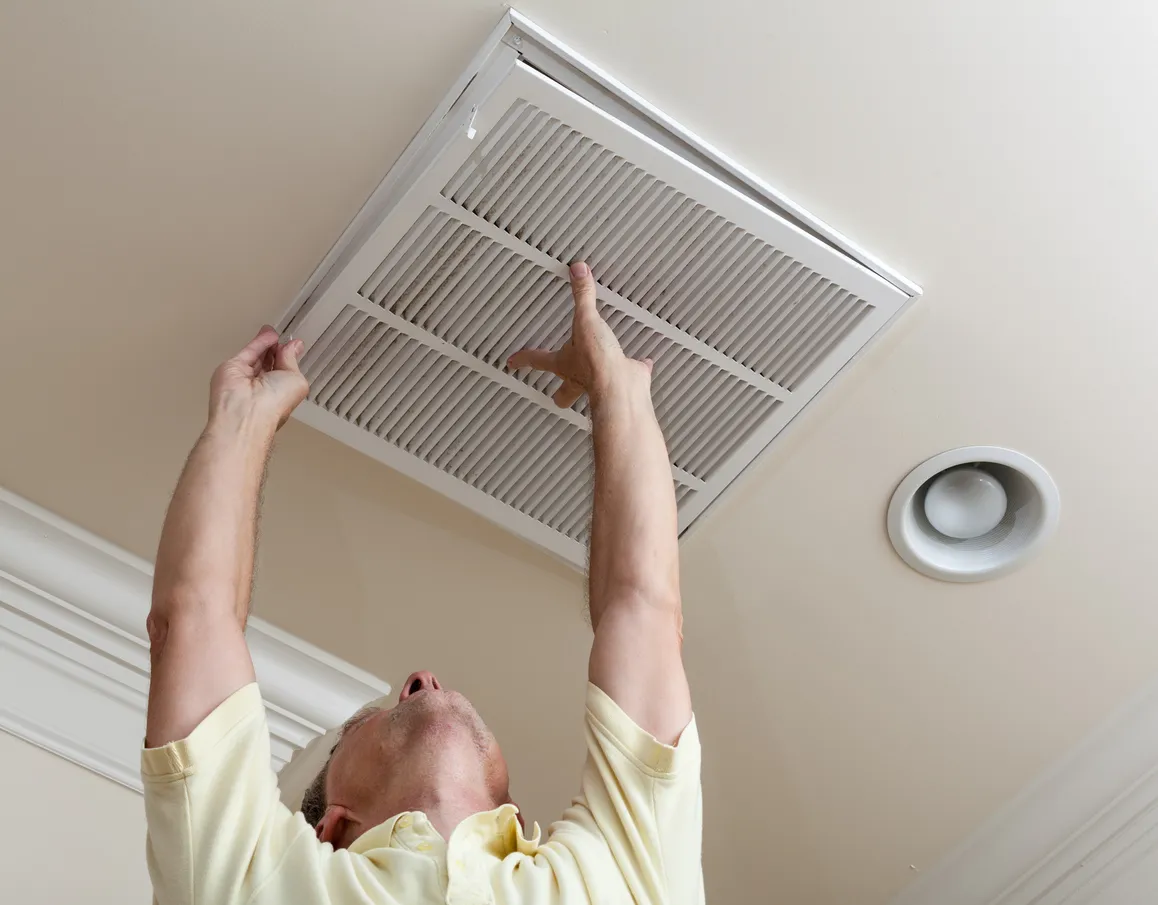
Advanced Filtration and Purification
Standard one-inch furnace filters are designed primarily to protect the equipment, not your lungs. They capture large dust bunnies but allow microscopic particles to pass through:
- Media Cabinet Installation: We install thick, high-efficiency media air cleaners that vastly increase the surface area for filtration. These systems capture significantly smaller particulate matter, including pet dander and pollen, without restricting airflow to your furnace.
- UV-C Germicidal Lights: Installed directly inside the ductwork or above the evaporator coil, these powerful lights destroy the DNA of biological contaminants. This prevents mold from growing on damp coils and neutralizes airborne viruses and bacteria as they circulate past the light.
- Electronic Air Cleaners: These systems use an electrostatic charge to trap microscopic particles that would otherwise slip through fiber filters. They are highly effective at capturing smoke, smog, and ultra-fine dust.
Humidity Control Systems
Managing moisture is just as critical as filtration. Inconsistent humidity levels can damage your home structure and exacerbate health issues:
- Whole-Home Dehumidifiers: During humid Missouri summers, high indoor moisture encourages dust mite proliferation and mold growth. A dedicated whole-home dehumidifier works in tandem with your AC to remove gallons of excess water from the air daily, reducing the load on your cooling system and making the air feel cooler.
- Steam and Bypass Humidifiers: In the winter, dry air causes cracked skin, sinus irritation, and static electricity. It can also cause wood floors and furniture to crack. We install humidifiers that add precise amounts of moisture back into the heated air, improving comfort and preserving your home’s interior.
Ventilation and Fresh Air Exchange
Tight homes need a way to breathe without losing energy:
- Energy Recovery Ventilators (ERVs): These devices swap stale indoor air for fresh outdoor air. Crucially, they transfer heat and moisture between the two airstreams. This means in summer, the incoming air is pre-cooled and dehumidified; in winter, it is pre-warmed and humidified. You get fresh air without the energy penalty of opening a window.
The Installation and Integration Process
Implementing a whole-home air quality strategy involves precise modifications to your existing HVAC infrastructure. This ensures that new components work seamlessly with your furnace and air conditioner without causing static pressure issues or reducing system efficiency:
- Initial Site Evaluation: The process begins with a thorough inspection of your current ductwork and equipment. Technicians measure static pressure and airflow to determine if the system can handle the resistance of higher-efficiency filters or the integration of bypass humidifiers.
- Custom Design and Selection: Based on the evaluation and the specific pollutants identified (e.g., high VOCs vs. high particulate matter), the correct equipment is selected. For example, a home with pets may prioritize filtration, while a home with a damp basement may prioritize dehumidification.
- Ductwork Modification: To install a media cabinet or humidifier, a section of the return or supply plenum is professionally cut and modified. This requires sheet metal expertise to ensure an airtight seal. Leaky connections at the filtration point would render the system useless, as air follows the path of least resistance.
- Electrical and Drainage Integration: Powered units like UV lights, electronic cleaners, and humidifiers require safe electrical connections. Dehumidifiers and condensing furnaces require proper condensate drain lines to prevent water damage. These lines are routed to floor drains or condensate pumps — request service today.
- System Calibration: Once installed, the equipment is tested. Humidistats are set to optimal levels (usually between 35% and 45% relative humidity), and UV lights are verified for operation.
- Final Airflow Verification: Technicians re-test static pressure to ensure the blower motor is not overworking. This step is vital for protecting the lifespan of your expensive heating and cooling equipment.
When to Upgrade Beyond Standard Filters
Homeowners often wonder if upgrading to whole-home IAQ systems is necessary or if they can rely on portable units and standard filter changes. While regular filter changes are maintenance basics, they are often insufficient for addressing specific, persistent problems. Replacement or addition of dedicated IAQ hardware is the correct decision in the following scenarios:
- Persistent Respiratory Issues: If family members suffer from year-round allergies, asthma, or frequent sinus infections, standard filtration is likely failing to capture the triggers. Particles under 2.5 microns (PM2.5) enter the bloodstream deeply; only high-efficiency media or electronic filtration can capture these effectively.
- Visible Mold or Musty Odors: Smelling "dirty socks" when the AC turns on often indicates mold growth on the evaporator coil. A standard filter cannot fix this. This scenario requires coil cleaning followed by the installation of a UV germicidal light to prevent regrowth.
- Condensation on Windows: If you see water beading on the inside of windows during winter, indoor humidity is too high, leading to hidden mold in walls. Conversely, persistent static shock indicates humidity is too low. Both situations require mechanical humidity control, not filtration.
- Lingering Odors and VOCs: Cooking smells, pet odors, or chemical smells from new furniture/flooring are gases, not particles. Particle filters cannot stop them. Carbon-based filtration or air scrubbers are required to adsorb these volatile compounds.
- High Dust Levels: If you find yourself dusting furniture days after cleaning, your ductwork may be leaking, or your return filtration is inadequate. A sealed media cabinet prevents bypass air, forcing all dust to pass through the filter material.
Local Climate Factors Affecting Air Quality
In Lee's Summit and the surrounding region, the humid continental climate creates distinct challenges for indoor air quality across the four seasons. Understanding these local variables is essential for selecting the right equipment:
- Summer Humidity Loads: The region experiences summers with high dew points. Your air conditioner cools the air, but it may not run long enough to sufficiently dehumidify it, especially on mild days. This leads to a "cold and clammy" indoor environment perfect for mold. Whole-home dehumidifiers are particularly effective in this climate zone.
- Winter Dryness and Tight Houses: Winters can be harsh, leading to long periods where windows stay shut. This accumulation of indoor pollutants creates a concentration of CO2 and VOCs. Additionally, the heating process naturally lowers relative humidity, necessitating humidification to protect health and hardwood finishes.
- Seasonal Allergens: Spring brings heavy pollen counts from oak and maple, while late summer introduces ragweed. Because the local wind patterns can carry these allergens into the home through tiny cracks, positive pressure ventilation or high-MERV filtration is necessary to create a sanctuary for allergy sufferers.
- Code and Utility Considerations: Installing IAQ equipment often involves electrical and plumbing work. Compliance with local building codes regarding electrical safety and condensate disposal is mandatory. Furthermore, certain high-efficiency upgrades may qualify for rebates from local utility providers, depending on current programs for energy efficiency.
Why Professional Execution is Critical
While the market is flooded with consumer-grade air quality gadgets, professional implementation differentiates a novelty item from a functional home improvement. A standalone purifier in a corner cannot clean the air in a 2,000-square-foot home; it simply recirculates the air in its immediate vicinity.
Whole-home systems integrated by All Day Comfort Heating and Cooling LLC leverage the powerful blower motor of your furnace to cycle the entire volume of air in your house through the purification system multiple times per hour. This ensures consistent air quality in every room, upstairs and downstairs.
Professional installation also safeguards the longevity of your HVAC system. Adding high-restriction filters to a system not designed for them can choke the airflow, causing the heat exchanger to overheat or the AC compressor to freeze up. Specialists calculate the precise pressure drop allowed for your specific ductwork, ensuring you get cleaner air without sacrificing system performance or voiding equipment warranties.
Furthermore, correct sensor placement is vital. A humidistat placed in the wrong location will result in erratic operation, either waterlogging the ducts or failing to add moisture when needed. Professional calibration ensures that the sensors read the true average of the home’s air, leading to precise, set-it-and-forget-it operation.
Ready to Breathe Easier?
Secure the health of your home and family by addressing air quality at its source. Don't let invisible pollutants compromise your comfort. Take control of your indoor environment today.
Ready to breathe easier? Contact us now to schedule your comprehensive indoor air quality consultation.
Contact Us
customer reviews
Areas We Serve




Copyright © 2026 All Day Comfort Heating and Cooling.
All rights reserved.
