




AC Repair Lee's Summit MO
Struggling with AC issues in Lee's Summit? Our certified technicians provide quick repairs to restore comfort. Call us for reliable and transparent service.
Is Your Air Conditioning Failing in the Missouri Heat?
Facing unexpected AC breakdowns during the hottest days of summer can be more than uncomfortable—it can be a health hazard. If your cooling system has stopped working in Lee's Summit, immediate professional intervention is necessary to restore comfort and safety. Contact us to schedule your AC repair today.
At All Day Comfort Heating and Cooling LLC, we ensure your system is repaired quickly and effectively. Breakdowns rarely happen at convenient times, which is why having a responsive local team matters. We prioritize restoring your home’s climate control to prevent humidity damage and heat stress:
- Get your AC up and running on the same day with our prompt repair services.
- Enjoy peace of mind with a clear, upfront pricing structure and no hidden fees.
- Benefit from our full-service repair solutions that extend the lifespan of your AC.
All services are performed by certified technicians, with extended warranties and flexible financing options available.
Comprehensive Diagnostic and Repair Capabilities
When a technician arrives at your property, the immediate goal is to identify the root cause of the malfunction rather than simply treating the symptom. Air conditioning systems are complex networks of electrical components, mechanical parts, and chemical refrigerants. A failure in one area often indicates stress in another. The diagnostic phase involves a thorough examination of the thermostat, electrical connections, airflow volume, and the condenser unit.
Modern air conditioning units rely on precise calibration. If the refrigerant charge is off by even a small percentage, the system’s efficiency drops, and the compressor risks overheating. Our technicians arrive in service vehicles stocked with common parts such as capacitors, contactors, fan motors, and control boards. This preparation minimizes the need for follow-up visits and ensures that most repairs are completed during the initial appointment.
The scope of repair covers everything from minor electrical adjustments to major component replacements. Whether the issue stems from a frozen evaporator coil due to restricted airflow or a failed compressor, the objective remains the same: restoring the system to manufacturer specifications. Technicians also inspect the condensate drain lines to prevent water damage and check for refrigerant leaks that could harm the environment and reduce cooling capacity.
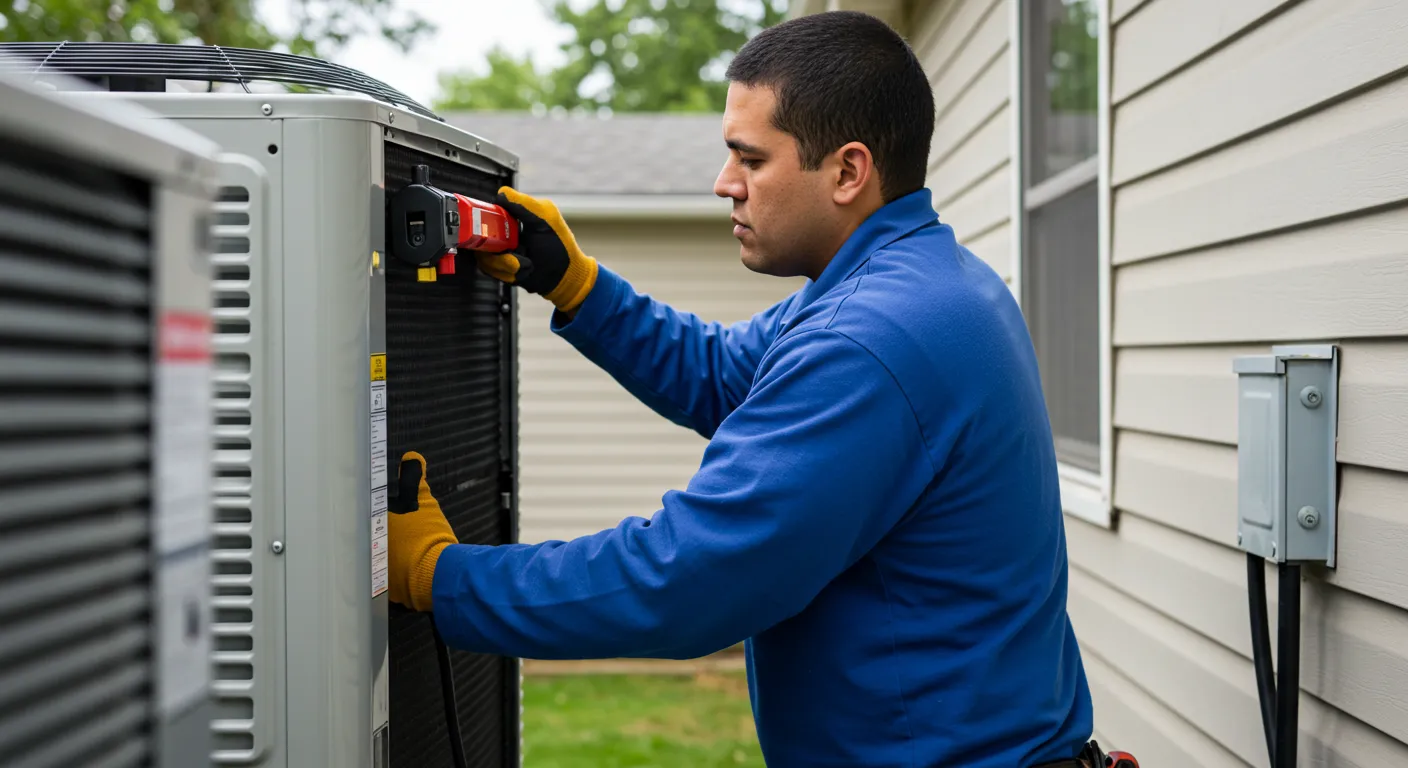
The AC Repair Process: Step-by-Step
Understanding how a professional approaches a cooling repair helps homeowners know what to expect. The process is systematic, ensuring safety and accuracy at every stage. Instead of guessing, technicians utilize advanced diagnostic tools like multimeters, manifold gauges, and psychrometers to measure performance data:
- First, the technician conducts a visual and operational inspection. This includes listening for irregular sounds, checking the thermostat settings, and measuring the temperature drop between the return and supply air.
- Next, safety controls are tested. The system’s electrical voltage and amperage are measured to ensure components are drawing the correct amount of power. High amperage often signals a failing motor or compressor.
- Once the problem is isolated, the technician provides a detailed explanation of the failure and a flat-rate quote for the repair. This ensures transparency regarding the cost before any work begins.
- Upon approval, the repair is performed using high-quality replacement parts. This may involve welding refrigerant lines, replacing electrical relays, or cleaning dirty coils that are obstructing heat transfer.
- Finally, the system is restarted and monitored. The technician verifies that the cooling cycle engages properly, the pressure levels are stable, and the air coming from the vents has reached the target temperature.
Identifying Common Cooling System Malfunctions
Air conditioners often provide warning signs before a total collapse. recognizing these symptoms allows for early intervention, which is often less expensive than emergency repairs. In Lee's Summit, where humidity levels can fluctuate, the strain on an AC unit is significant:
- Insufficient Cooling or Warm Air: If the air coming from the vents is lukewarm, the issue often lies with the compressor or the refrigerant levels. A restricted air filter can also cause this by blocking airflow over the evaporator coil, causing it to freeze. When the coil freezes, the air cannot be cooled effectively, leading to a warm home despite the system running constantly.
- Loud or Unusual Noises: Cooling systems should operate relatively quietly. Grinding, squealing, or banging sounds indicate mechanical failure. A squealing noise usually points to a slipped belt or a fan motor bearing that requires lubrication or replacement. Rattling sounds may indicate loose debris in the outdoor unit or a loose fan blade. A hissing noise is a serious indicator of a refrigerant leak, which requires immediate professional attention to seal the leak and recharge the system.
- Frequent Cycling (Short Cycling): If the AC turns on and off repeatedly in short bursts without completing a full cooling cycle, it is "short cycling." This puts immense stress on the compressor and drives up energy bills. Common causes include an oversized unit, a failing thermostat, or safety switches shutting the system down due to low refrigerant pressure.
- Water Leaks Around the Indoor Unit: Air conditioners dehumidify the air as they cool it. This moisture collects in a drain pan and flows out through a condensate line. If this line becomes clogged with algae or dust, water can back up and overflow, potentially damaging flooring or ceilings. Active leaks require clearing the blockage and checking the drain pan for rust or cracks.
Repair vs. Replacement: Making the Financial Decision
Homeowners frequently face the dilemma of whether to pour money into an aging system or invest in a new unit. While repair is often the most immediate and cost-effective solution, there are specific thresholds where replacement becomes the smarter financial move:
- The 50% Rule: A common industry standard is the 50% rule. If the cost of the repair approaches 50% of the value of the system, or 50% of the cost of a new unit, replacement is generally recommended. This is particularly true if the warranty has expired.
- System Age and Refrigerant Type: The average lifespan of a central air conditioner is between 10 and 15 years. Units older than this often use R-22 refrigerant (Freon), which has been phased out due to environmental regulations. Repairs requiring R-22 are becoming prohibitively expensive as supplies dwindle. If an older unit develops a refrigerant leak, upgrading to a system that uses R-410A or newer refrigerants is usually more economical than paying for a recharge.
- Frequency of Breakdowns: If a system requires multiple repairs within a single season, it has likely reached the end of its reliable service life. The cumulative cost of frequent service calls often exceeds the monthly financing cost of a modern, high-efficiency system.
All Day Comfort Heating and Cooling LLC assists homeowners in calculating the long-term costs of keeping an old unit running versus the energy savings provided by a new installation. Higher SEER (Seasonal Energy Efficiency Ratio) ratings on modern units can significantly reduce monthly utility bills, offsetting the installation cost over time.
Regional Considerations for Climate and Codes
Operating an air conditioning system in Missouri requires specific attention to regional weather patterns and local regulations. The intense humidity during the summer months means that an AC unit is not just cooling the air but also actively removing moisture. If a system is short-cycling or under-charged, humidity levels inside the home will rise, leading to mold growth and discomfort:
- Seasonality and Maintenance Timing: The transition from spring to summer is critical. Cottonwood and pollen, common in the area, can clog outdoor condenser coils. A dirty condenser cannot release heat effectively, causing the system to work harder and consume more electricity. Professional cleaning is essential to maintain efficiency during peak heat. Conversely, as autumn approaches, preparing the unit for dormancy prevents rust and debris accumulation during the winter months.
- Permits and Utility Requirements: Major repairs or system replacements often involve compliance with local building codes. This ensures that electrical connections meet safety standards and that the unit is sized correctly for the square footage of the home. Working with licensed professionals ensures that all work adheres to the regulations set forth by local authorities and utility providers. Improperly installed systems can void manufacturer warranties and may even pose safety risks.
- Electrical and Load Management: During heatwaves, the electrical grid experiences high demand. Ensuring that your AC unit’s electrical components, such as the capacitor and contactor, are in prime condition prevents excessive amp draw. This not only protects the unit but also reduces the risk of tripping breakers or damaging the home’s electrical panel.
The Value of Certified Technical Expertise
Attempting DIY repairs on central air conditioning systems is dangerous and rarely effective. High-voltage electricity, high-pressure refrigerant gases, and complex circuitry require specialized training and equipment. Professional technicians undergo rigorous training to handle these hazards safely:
- Accurate Diagnostics vs. Guesswork: A professional diagnosis relies on data, not intuition. Using advanced gauges and metering devices, technicians can see exactly what is happening inside the sealed system. This precision prevents the "parts cannon" approach, where unnecessary parts are replaced in hopes of fixing the problem.
- Warranty Protection: Most manufacturer warranties explicitly state that repairs must be performed by a licensed HVAC professional. Unlicensed work can void the warranty, leaving the homeowner responsible for the full cost of future part replacements. Professional service ensures that the warranty remains valid and that any replacement parts carry their own guarantees.
- Long-Term Reliability: A professional repair includes a holistic view of the system. A technician fixing a failed capacitor will also check the motor that the capacitor serves. This preventative approach catches potential future failures before they happen, ensuring the system remains reliable throughout the season.
Restoring Comfort to Your Home
A functioning air conditioner is essential for navigating the intense heat and humidity typical of the region. Whether dealing with a minor electrical issue or a major mechanical failure, professional intervention ensures the longevity and efficiency of your cooling system. Prompt repairs prevent small issues from escalating into total system failures, protecting your investment and your indoor air quality.
We are committed to providing decisive, high-quality repair services that respect your time and property. By focusing on accurate diagnostics and durable solutions, All Day Comfort Heating and Cooling LLC ensures your home remains a sanctuary from the heat.
Schedule your system diagnostic now to restore your home's comfort. For any questions, contact us.
Contact Us
customer reviews
Areas We Serve




Copyright © 2026 All Day Comfort Heating and Cooling.
All rights reserved.
