




Heating Service in Lee's Summit, MO
Need quick heating repair in Lee's Summit? Contact All Day Comfort for emergency furnace and heat pump services. Ensure your home stays warm today!
Is Your Heating System Failing When You Need It Most?
When your furnace quits during a deep freeze or starts making concerning noises, the safety and comfort of your home are immediately compromised. You need a solution that restores warmth without delay, which is why All Day Comfort Heating and Cooling LLC provides rapid, diagnostic-focused heating services to residents throughout Lee's Summit. Contact us to schedule an urgent dispatch or explore our financing options to get your system running again.
We understand that heating failures rarely happen at convenient times. Our approach is built on speed, technical accuracy, and clear communication:
- Rapid dispatch protocols to address heating failures the same day they occur.
- Certified technicians equipped to diagnose and repair all major furnace and heat pump brands on the first visit.
- Upfront, flat-rate pricing provided before any work begins, ensuring no surprise costs.
- Fully licensed and insured service backed by straightforward financing options for major repairs or replacements.
Immediate Heating Solutions for Urgent Needs
A broken heating system in the middle of a Midwest winter is not just an inconvenience; it can lead to frozen pipes and unsafe indoor temperatures. When you request service, the priority is stabilization and restoration. The goal is to minimize downtime so your household routine returns to normal as quickly as possible.
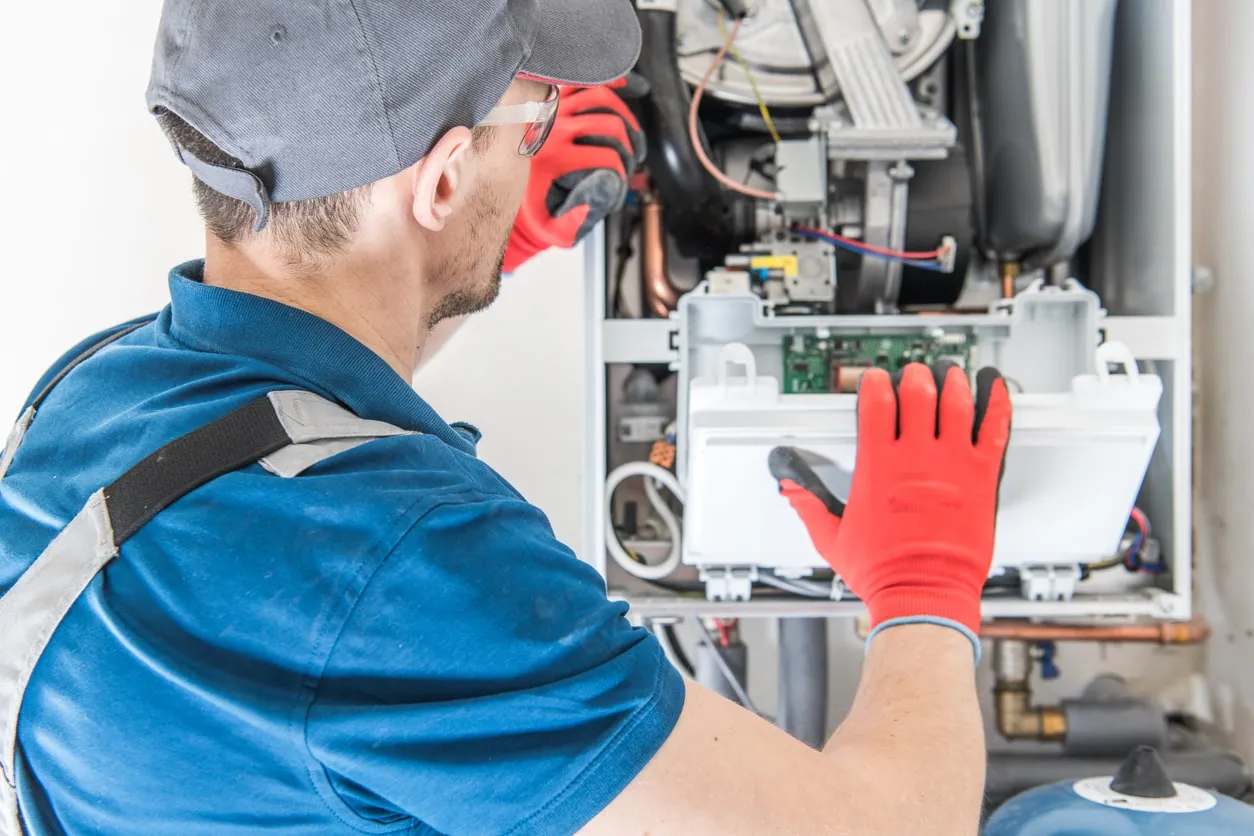
Upon arrival, the focus shifts immediately to accurate troubleshooting. A heating system is a complex network of electrical, mechanical, and fuel-burning components. Guesswork is not an option. Technicians utilize advanced diagnostic tools to pinpoint the exact failure point, whether it is a safety switch, a failing motor, or an ignition issue.
The Diagnostic Process
The service visit follows a rigorous checklist designed to uncover both the symptom and the root cause. This prevents "band-aid" fixes that fail again a few weeks later:
- Thermostat Communication: The technician verifies that the thermostat is correctly sending signals to the control board.
- Airflow Analysis: Static pressure is measured to ensure air is moving freely through the filter, blower, and ductwork. Restricted airflow is a leading cause of overheating and system failure.
- Safety Circuit Testing: Limit switches, rollout switches, and pressure switches are tested to ensure they are functioning correctly and not tripping due to a dangerous condition.
- Ignition Sequence Check: For gas furnaces, the igniter, flame sensor, and gas valve are inspected to ensure proper firing and combustion.
- Electrical Assessment: Capacitors, blower motors, and wiring connections are tested for voltage irregularities or wear that could lead to breakdown.
Once the issue is identified, you receive a clear explanation of the problem and a written quote for the repair. Service trucks are stocked with a wide inventory of universal and OEM parts, allowing for immediate repairs in most scenarios without waiting for supply house deliveries.
Common Heating Failures Addressed
Heating systems often provide warning signs before total failure. Recognizing these issues allows for intervention before you are left in the cold:
- Ignition Failure: If a furnace clicks but does not fire, it is often a faulty hot surface igniter or a dirty flame sensor. These components wear out over time and are standard replacements.
- Blower Motor Issues: Loud hums, squeals, or weak airflow often indicate a blower motor that is seizing or a run capacitor that has failed.
- Short Cycling: If the system runs for only a few minutes and shuts off repeatedly, it may be overheating due to a dirty filter or a blocked flue pipe.
- Heat Exchanger Cracks: This is a critical safety concern. Corrosion or stress cracks can allow carbon monoxide to mix with indoor air. If this is detected, the unit must be shut down immediately for safety.
Quick Fixes Today: Scope and Speed of Our Heating Services
The scope of heating service extends beyond simple repairs. It encompasses the optimization of the entire thermal envelope of your home. In Lee's Summit, where temperatures can fluctuate drastically, the efficiency of your system directly correlates to your monthly utility bills.
Modern heating equipment involves sophisticated electronics. Whether you rely on a high-efficiency gas furnace, an electric air handler, or a dual-fuel heat pump system, the service provided covers specific technical requirements for each.
Gas Furnace Services
Gas furnaces are the most common heating source in the region. Service for these units focuses heavily on combustion safety and efficiency:
- Combustion Analysis: Technicians analyze the flue gases to ensure the fuel is burning cleanly and efficiently.
- Heat Exchanger Inspection: A visual and camera-assisted inspection checks for cracks or separations in the metal.
- Gas Pressure Calibration: The gas valve is adjusted to ensure the manifold pressure matches the manufacturer's specifications for optimal heat output.
Heat Pump and Electric Heating Services
Heat pumps are becoming increasingly popular for their efficiency, but they face unique challenges in freezing weather:
- Defrost Board Testing: Heat pumps must periodically defrost their outdoor coils. If the defrost board fails, the unit creates a block of ice and stops heating.
- Auxiliary Heat Strip Verification: When temperatures drop below freezing, the electric backup heat strips must engage. Technicians verify these strips are drawing the correct amperage.
- Refrigerant Charge Checks: Just like an AC, a heat pump relies on refrigerant. A low charge reduces heating capacity and drives up electric bills.
Your Guide to Smooth Heating Installations
There comes a point where a heating system is beyond viable repair, or the cost of operation justifies an upgrade. Installing a new heating system is a construction project that requires precise calculation and skilled labor. It is not a plug-and-play appliance purchase. The quality of the installation determines 70% of the system's longevity and efficiency.
A structured installation process ensures that the new unit performs exactly as rated:
- Load Calculation: First, a Manual J load calculation is performed. This determines the exact heating requirement of the home based on square footage, insulation levels, window quality, and orientation. Guessing the size based on the old unit is a recipe for inefficiency.
- Ductwork Assessment: Then, the existing ductwork is evaluated. If the ducts are undersized or leaking, a new high-efficiency furnace will suffocate. Modifications to the plenum or return drops are often necessary to accommodate better airflow.
- System Selection: Next, options are presented that fit the specific needs of the home, ranging from standard efficiency single-stage units to modulating variable-speed systems that offer precise temperature control.
- Removal and Prep: The old equipment is disconnected and removed. The area is prepped, and floor coverings are used to protect the home during the transition.
- Installation and Brazing: The new unit is set in place. For heat pumps and AC combinations, refrigerant lines are brazed with nitrogen to prevent internal oxidation. Gas lines are connected and leak-tested.
- Venting and Drainage: Flue pipes are installed with the correct slope to ensure exhaust gases exit the home safely. Condensate drains are routed to floor drains or pumps.
- Commissioning: Finally, the system is started. Gas pressure is set, airflow is balanced, and the thermostat is programmed. The technician does not leave until the system is operating within factory parameters.
Deciding Between Repair and Replacement for Your Heating System
Homeowners often face the difficult decision of whether to invest in another repair or replace the system entirely. Making this choice requires an objective analysis of the system's condition, age, and recent performance history:
The Age Factor
The average lifespan of a gas furnace is between 15 and 20 years, while heat pumps typically last 12 to 15 years:
- Under 10 Years: Unless the repair cost is catastrophic (like a compressor or heat exchanger), repair is usually the best financial choice.
- 10 to 15 Years: This is the "grey zone." If the system has been well-maintained, repairs may still be viable. However, if major components are failing, replacement should be considered.
- Over 15 Years: At this stage, parts may be obsolete or expensive. Efficiency has likely degraded significantly. Replacement is often the smarter long-term investment.
The Cost of Repair vs. System Value
A common metric used in the industry is the "50% Rule." If the cost of the repair approaches 50% of the cost of a new system, replacement is generally recommended. Alternatively, the "Investment Rule" suggests multiplying the age of the unit by the repair cost. If the total exceeds $5,000, replacement is the better option.
Safety and Efficiency Considerations
- Carbon Monoxide Risks: If a heat exchanger is cracked, there is no debate—the furnace must be replaced or the heat exchanger swapped (if under warranty). Safety takes precedence over all other factors.
- Rising Energy Bills: Older furnaces often operate at 60-70% AFUE (Annual Fuel Utilization Efficiency), meaning 30-40 cents of every dollar spent on gas goes up the chimney. Modern systems operate at 95-98% efficiency. The fuel savings alone can offset a significant portion of the monthly payment for a new system.
- Comfort Issues: If the current system results in hot and cold spots or dries out the air excessively, a modern system with variable-speed blowers can resolve these comfort complaints.
Local HVAC Rules and Seasonal Advice for Lee's Summit
Operating a heating system in Missouri requires attention to specific environmental factors and local regulations. Lee's Summit experiences distinct seasonality that stresses HVAC equipment in unique ways.
Permitting and Code Compliance
Any significant alteration to a heating system, particularly system replacements, requires adherence to local building codes:
- Permit Requirements: The City of Lee's Summit requires permits for furnace replacements to ensure the installation meets safety standards regarding gas piping, electrical connections, and venting.
- Inspection Process: A third-party inspection protects the homeowner. It verifies that the contractor performed the work correctly and that the system is safe to operate.
- Flue Liner Codes: Many older homes in the area have masonry chimneys. When upgrading to certain types of furnaces, specific flue liners may be required to prevent condensation from destroying the chimney structure.
Seasonal Preparation
The transition from a humid summer to a dry, freezing winter creates specific demands:
- Humidification: Cold air holds less moisture. Running a furnace dries the air further, which can cause wood floors to crack and static electricity to build up. Whole-home humidifiers are often recommended in this region to maintain indoor humidity between 35-45%.
- Ice and Snow Management: For homes with heat pumps, it is vital to keep the outdoor unit clear of snow drifts. The unit needs unrestricted airflow to extract heat from the outside air.
- Filter Changes: During the peak of winter, filters should be checked monthly. The system runs longer cycles, trapping more dust and debris. A clogged filter is the primary cause of high-limit switch trips.
Why Choose All Day Comfort? Our Commitments and Credentials
Selecting a service provider is about trust. You need to know that the technician entering your home is competent, respectful, and backed by a company that stands behind its work. All Day Comfort Heating and Cooling LLC is built on the premise that technical excellence and customer service are inseparable:
Technical Expertise
Technicians undergo continuous training to stay current with evolving HVAC technology. From communicating thermostat systems to high-efficiency modulating gas valves, the team is equipped to handle modern complexities. Diagnostic procedures rely on data, not hunches, ensuring that parts are not replaced unnecessarily.
Respect for Your Home
Service involves entering your personal space. Technicians wear shoe covers and use drop cloths to protect flooring. Work areas are cleaned thoroughly upon completion. The goal is to leave the home in better condition than it was found, with the only evidence of the visit being a warm, comfortable environment.
Transparent Warranties
Repairs and installations come with clear warranty terms. There is no fine print regarding labor guarantees or part warranties. If a repair fails within the warranty period, it is corrected without hassle. This accountability ensures peace of mind for every homeowner served.
Ready for Fast, Reliable Heat? Contact Us Today
When the temperature drops and your system falters, you need a partner who responds with urgency and skill. We provide the expertise necessary to secure your comfort through the harshest weather.
Don't let a broken heater compromise your safety—contact us now to schedule your service.
Contact Us
customer reviews
Areas We Serve



Copyright © 2026 All Day Comfort Heating and Cooling.
All rights reserved.
