



Furnace Repair in Lee's Summit, MO
Experiencing furnace issues in Lee's Summit? Get quick, expert repair services to restore your home's warmth with no hidden fees. Contact us today for immediate help.
Immediate Heating System Restoration When Temperatures Drop
When your furnace fails, especially during the harsh freeze of a Lee's Summit winter, quick and reliable repair services are a safety necessity rather than a simple convenience. You need a team that arrives promptly, diagnoses the issue accurately, and restores your home’s warmth without unnecessary delays or upsells. Contact us immediately to schedule a diagnostic visit or to discuss our flexible financing options for unexpected repairs.
Our expert technicians are prepared to handle high-stakes heating failures with the urgency your situation demands. We prioritize getting your system back online so you can return to comfort:
- Receive immediate attention with our responsive emergency repair scheduling.
- Expect reliable, transparent quotes with absolutely no hidden fees before work begins.
- Rely on experienced, certified technicians who ensure your furnace functions correctly after the first visit.
- All repairs are fulfilled with guaranteed parts and full compliance with local building codes.
What to Expect from Our Furnace Repair Services Today
When you request service, the goal is to minimize the downtime of your heating system. You are likely dealing with a cold house, frozen pipes, or a system that is making alarming noises. The focus of the service visit is to move from a state of malfunction to a state of operational safety as efficiently as possible.
Residents in Lee's Summit need a service provider who understands the urgency of a Missouri winter. Upon arrival, the technician assesses the immediate safety of the unit. This involves checking for gas leaks, carbon monoxide risks, and electrical hazards. Once safety is established, the focus shifts to restoring heat. You can expect a fully stocked truck containing the most common universal parts, including ignitors, flame sensors, and limit switches. This inventory strategy allows for a high percentage of repairs to be completed on the very first visit, eliminating the need for a second appointment or days of waiting for parts shipping.
Transparency is paramount during this stage. You will receive a breakdown of exactly what component has failed, why it failed, and the specific cost to rectify it. There is no guesswork. The technician provides a clear timeline for the repair, whether it is a thirty-minute fix or a more complex heat exchanger replacement requiring specific ordering. You remain in control of the approval process before any tools are applied to the machinery.
The Step-by-Step Guide to Your Furnace Repair
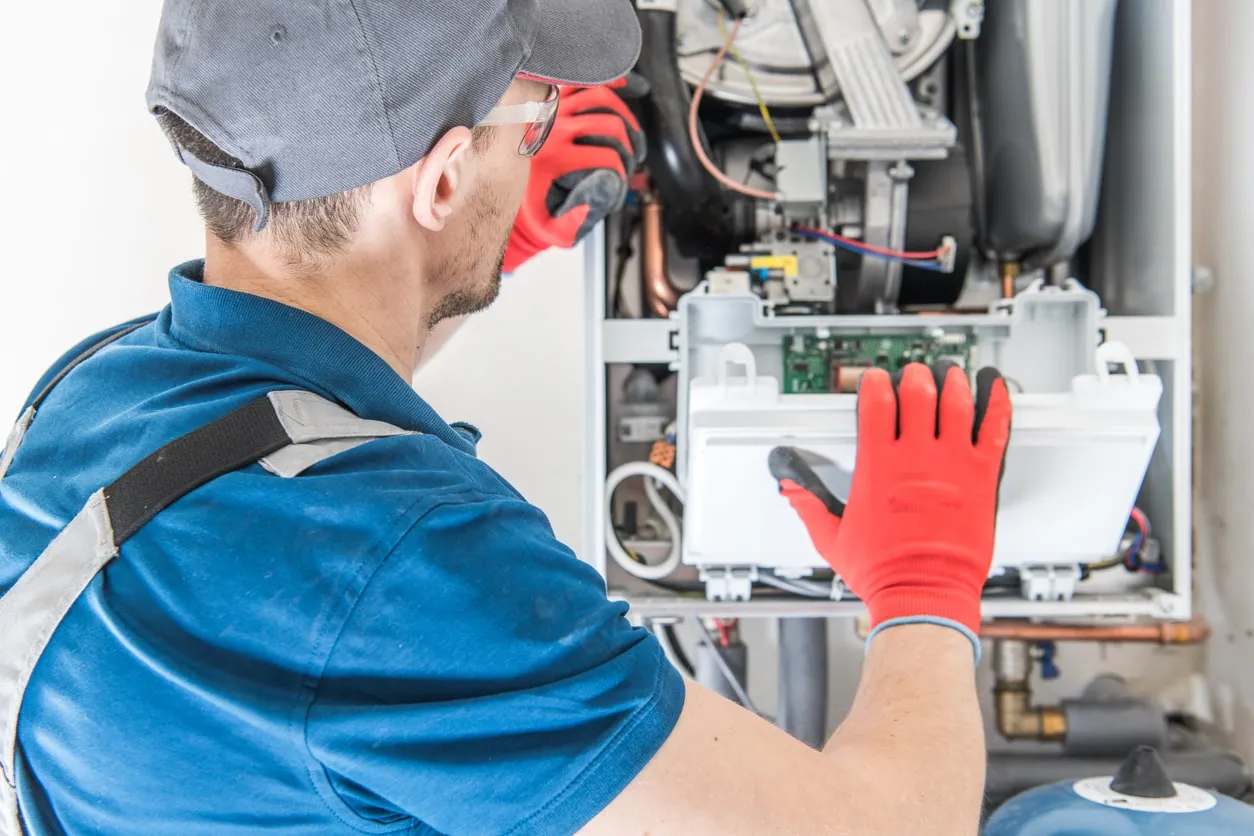
Understanding the workflow of a professional repair visit helps alleviate the stress of a breakdown. We utilize a systematic approach to diagnostics and repair to ensure no underlying issues are missed. This structured process ensures that we are not just treating the symptom, but curing the root cause of the furnace failure:
Initial System Diagnostics
The technician begins by cycling the thermostat to observe the system's response. They check the error codes displayed on the furnace control board, which act as the unit's internal diagnostic report. Electrical connections are tested for voltage drops, and airflow is measured to ensure the blower motor is functioning within manufacturer specifications.
Component Isolation and Verification
Once the error is identified, the specific part is tested in isolation. If a pressure switch is stuck open, the technician verifies if the switch itself is faulty or if there is a blockage in the flue pipe or inducer motor housing. This step confirms that the replacement part will actually solve the problem.
Presentation of Options
You receive a detailed explanation of the findings. If multiple repair paths exist—such as a temporary patch versus a permanent component replacement—these options are laid out clearly. You are given the data needed to make an informed decision based on the age of the unit and your budget.
Execution of Repairs
Upon approval, the technician performs the repair. This involves shutting off gas and power, removing the defective component, and installing the new OEM or universal equivalent part. All wiring is re-secured, and gaskets are checked to prevent leaks.
Safety Testing and Calibration
The job is not finished when the part is installed. The furnace is cycled through a full heating sequence. The technician measures the temperature rise (the difference between the air going in and the air coming out) to ensure it matches the system's rating. Carbon monoxide detectors are used around the unit to verify the integrity of the heat exchanger and exhaust venting.
Site Cleanup and Final Report
The work area is cleaned, and old parts are removed from your property. You receive a digital or physical report detailing the services performed, parts used, and warranty information for your records.
Deciding Between Furnace Repair and Replacement
One of the most difficult decisions a homeowner faces is whether to pour more money into an existing system or invest in a new one. This decision often arises when a repair bill is significant. Making the right choice depends on a mathematical evaluation of your current unit's viability rather than emotional pressure. All Day Comfort Heating and Cooling LLC focuses on providing the data you need to make this calculation logically.
There are specific metrics you should evaluate when facing this choice:
The 50% Rule
If the cost of the repair approaches or exceeds 50% of the cost of a brand-new system, replacement is generally the wiser financial move. Investing half the cost of a new unit into an old one that may break down again shortly is rarely cost-effective.
System Age vs. Life Expectancy
Gas furnaces typically last between 15 and 20 years. If your unit is over 15 years old and suffers a major component failure—such as a cracked heat exchanger or a failed blower motor—repair is often a temporary stopgap. Parts for older units may be harder to source and more expensive, increasing the long-term cost of ownership.
Frequency of Repairs
Review your service history. If you have required repairs in the last two years, or if your utility bills have been steadily climbing despite moderate usage, your system's efficiency is degrading. A "money pit" furnace will continue to fail as different components reach the end of their lifecycle simultaneously.
Comfort Consistency
A furnace near the end of its life often struggles to maintain consistent temperatures. If some rooms in your Lee's Summit home are freezing while others are hot, or if the unit runs constantly to maintain the set temperature, the internal mechanics are likely too worn to be restored by a simple repair.
Safety Concerns
Older units are at higher risk for heat exchanger cracks, which can leak carbon monoxide. If a technician flags a safety violation or a cracked exchanger, replacement is not just a recommendation; it is a safety imperative.
Local Insight: Understanding Lee's Summit Furnace Requirements
Operating a heating system in this region requires specific attention to local climate patterns and building codes. The weather here is highly variable, with winters that can bring sub-zero temperatures and ice storms. This places a heavy load on heating equipment, often requiring it to run for extended cycles:
Permitting and Code Compliance
When significant repairs or replacements involve gas lines or flue venting, local building codes must be followed strictly. Lee's Summit enforces codes that ensure proper ventilation and clearance for combustible materials. Professional repair services ensure that any modification to your system satisfies these local ordinances, preventing issues when you eventually sell your home or undergo a municipal inspection.
Utility Rebates and Incentives
Local utility providers often offer rebates for high-efficiency upgrades or specific types of repairs that improve energy conservation. A knowledgeable service provider can help identify if your repair or potential replacement qualifies for these local programs, potentially offsetting some of the costs.
Humidity and Ventilation
Winter in this area is dry. A properly functioning furnace shouldn't just heat air; it should integrate well with whole-home humidifiers. Repair visits are an excellent time to check the solenoid valves and water panels on attached humidifiers, ensuring your home doesn't become uncomfortably dry, which can damage wood flooring and impact respiratory health.
Ventilation Constraints
Many homes in the area have older masonry chimneys used for venting. Modern high-efficiency furnaces produce acidic condensate that can damage these chimneys. During a repair assessment, checking the liner and venting path is critical to ensure that the exhaust is leaving the home safely and not deteriorating the chimney structure.
Common Furnace Components We Service
To better understand what goes into your repair, it is helpful to know the components that most frequently require professional attention. A furnace is a complex interplay of electrical signals, gas combustion, and air movement:
Ignitors and Pilot Lights
Modern furnaces use hot surface ignitors which are brittle and have a finite lifespan. If the ignitor cracks, the furnace will not light. Older systems use pilot lights which can have thermocouple failures. These are routine but critical repairs.
Flame Sensors
This safety device detects if a fire is actually burning. If it gets dirty or fails, it shuts the gas valve to prevent raw gas from filling your home. Cleaning or replacing this sensor is a common fix for a furnace that turns on and immediately shuts off.
Blower Motors and Capacitors
The blower moves the air through your ducts. If the motor fails, you have no heat circulation. Often, the capacitor (which gives the motor the torque to start) fails first. Replacing a capacitor is a quick fix, whereas a motor replacement is more involved.
Inducer Motors
This smaller motor clears exhaust gases from the heat exchanger before ignition. If this motor fails or the vacuum port is clogged, the pressure switch will not close, and the furnace will not start.
Limit Switches
These switches monitor the temperature inside the furnace. If the filter is dirty and airflow is restricted, the furnace overheats, and the limit switch trips. Repeated tripping can cause the switch to stick open, requiring replacement.
Why Choose Us? Our Commitment to Excellence
In an industry where trust is paramount, we focus on technical proficiency and customer respect — read our testimonials. We understand that inviting a technician into your home requires confidence in their ability and character:
Diagnostic Accuracy
We do not guess. We use advanced multimeters, manometers, and combustion analyzers to derive scientific data regarding your system's performance. This ensures that we replace only the parts that are broken.
Fully Stocked Vehicles
Our service trucks act as mobile warehouses. By carrying a wide array of universal and OEM parts, we reduce the likelihood of needing to order parts, getting your heat back on faster.
Respect for Property
Technicians use drop cloths and shoe covers to protect your flooring. The workspace is left as clean as, or cleaner than, it was found. We treat your home with the same care we would expect on our own.
Ongoing Training
HVAC technology changes rapidly with new efficiency standards and smart home integrations. Our team undergoes regular training to stay ahead of these changes, ensuring we can service everything from vintage cast-iron boilers to modern modulating gas furnaces.
Secure Your Comfort and Safety Today
A broken furnace is more than an inconvenience; in the depth of winter, it disrupts your life and endangers your home. You do not have to endure the cold or wait indefinitely for a solution. We provide the rapid, professional response necessary to diagnose the issue and implement a lasting fix.
Whether you require a minor adjustment or a major component replacement, our team is equipped to handle the job with precision and transparency. Don't let a heating failure linger. Contact All Day Comfort Heating and Cooling LLC now to restore warmth to your home and peace of mind to your family.
Contact Us
customer reviews
Areas We Serve



Copyright © 2026 All Day Comfort Heating and Cooling.
All rights reserved.
