



Heating Repair in Lee's Summit, MO
Need quick furnace repair in Lee's Summit? Contact us for immediate heating system diagnosis and effective solutions. Ensure a warm, safe home today!
Is Your Heating System Failing to Keep Your Home Warm?
Winter chills should stay outside, not creep into your living space and compromise your family's comfort. When your furnace or heat pump malfunctions during a freezing night in Lee's Summit, swift and decisive action is critical to prevent frozen pipes and safety hazards. Contact our team immediately to schedule an urgent diagnostic visit and restore heat to your home.
We understand that a broken heater is not just an inconvenience; it is an emergency that requires professional attention. All Day Comfort Heating and Cooling LLC provides the technical expertise required to diagnose complex HVAC issues and implement lasting solutions. You do not need to wait for business hours to ensure your home is safe and warm:
- Immediate response to heating emergencies to minimize downtime and discomfort.
- Trusted local technicians equipped to handle all major brands and models.
- Clear, upfront pricing provided before any work begins, ensuring no hidden fees.
- Comprehensive diagnostic checks to identify the root cause, not just the symptoms.
All repairs are fully compliant with Missouri safety codes and come with a satisfaction guarantee for your peace of mind.
What to Expect From Professional Heating Repair Services
When a heating system fails, homeowners often worry about the timeline, the cost, and the complexity of the repair. Professional service focuses on efficiency and transparency. When a technician arrives at your property, the primary goal is to assess the situation accurately and provide a solution that restores functionality immediately. The scope of repair services covers everything from minor electrical calibrations to the replacement of major mechanical components.
The service timeline typically begins with a thorough inspection. Technicians do not guess; they use advanced diagnostic tools to measure airflow, test electrical voltage, and inspect combustion chambers. This data-driven approach ensures that the repair addresses the specific failure point. Most common repairs, such as replacing a faulty ignitor, swapping out a capacitor, or clearing a blocked condensate line, can be completed in a single visit because service trucks are stocked with universal parts.
Homeowners in Lee's Summit can expect a focus on the following critical components during a repair visit:
- Thermostat Calibration and Connections: often, the issue lies in the communication between the control unit and the furnace. Technicians verify that the thermostat is reading temperatures accurately and sending the correct signals to the HVAC unit.
- Ignition System Troubleshooting: For gas furnaces, the pilot light, hot surface ignitor, or flame sensor are frequent points of failure. If the system clicks but does not fire, these components are tested and replaced if necessary.
- Blower Motor Performance: If the system is running but little air is coming out of the vents, the blower motor or its capacitor may be failing. Technicians check the amperage draw and belt tension to ensure proper airflow.
- Heat Exchanger Inspection: This is a critical safety check. A cracked heat exchanger can leak carbon monoxide into the home. Professionals visually inspect and pressure test this component to ensure the air you breathe is safe.
- Safety Switch Verification: Modern furnaces have limit switches, rollout switches, and pressure switches designed to shut the system down if dangerous conditions are detected. If a system is short-cycling, it is often a safety switch doing its job. The technician determines why the switch tripped rather than just resetting it.
The Repair Process: From Diagnosis to Restoration
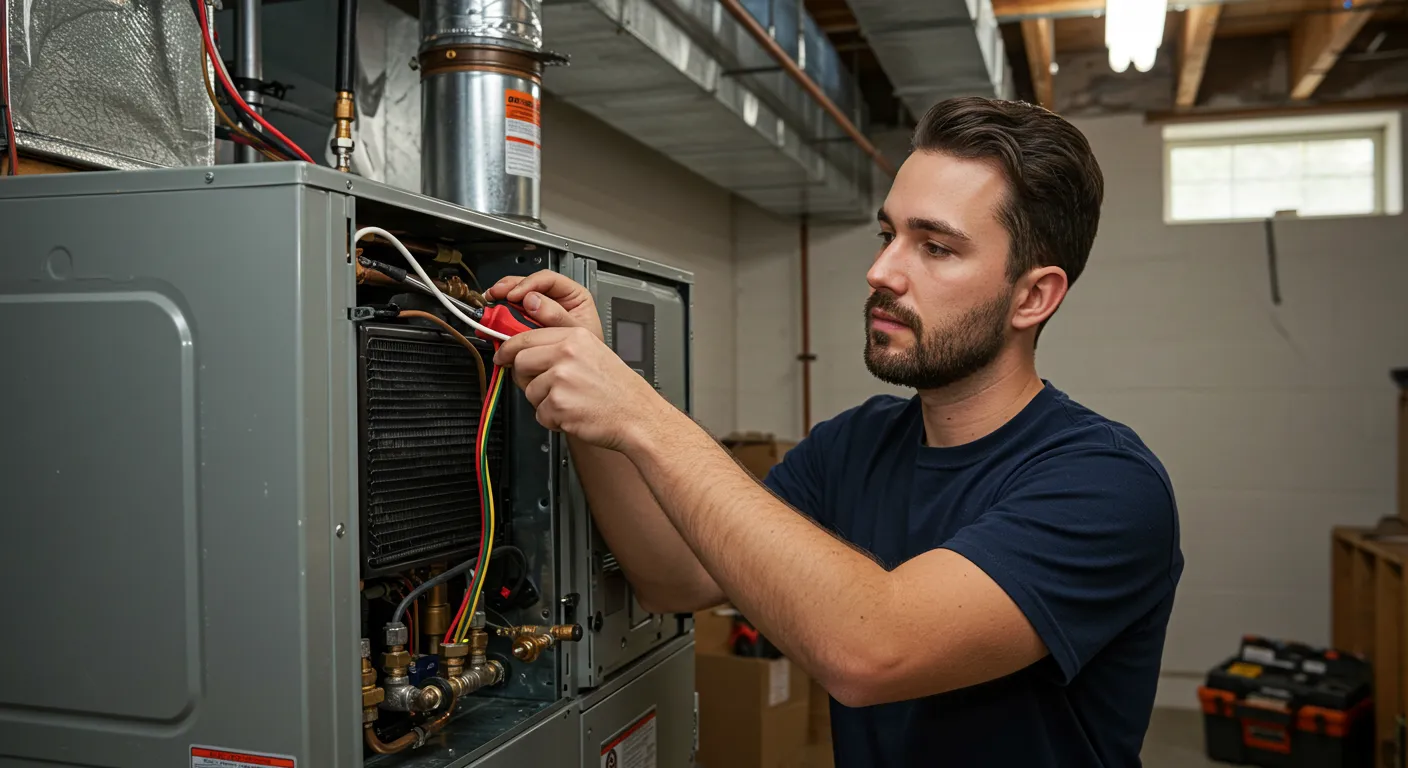
Understanding the workflow of a heating repair helps alleviate the stress of the situation. A structured process ensures that nothing is overlooked and that the system is returned to optimal performance standards. The goal is to move from a cold house to a comfortable environment with minimal disruption to your daily routine:
- Initial Site Assessment: The process begins with the technician discussing the symptoms you have noticed. They will ask about noises, smells, and how long the issue has been present. This context helps narrow down potential causes before the toolbox is even opened.
- System Diagnostics: Using multimeters, manometers, and combustion analyzers, the technician tests the system. This step isolates the electrical or mechanical failure. This is not a quick glance; it is a systematic testing of circuits and pressures.
- Findings and Recommendations: Once the problem is identified, the technician explains the issue clearly. You receive a detailed explanation of what part failed, why it failed, and what is required to fix it. At this stage, you are presented with a quote for the repair.
- Authorization and Repair: Work only begins after you have approved the scope and price. The technician proceeds to remove defective parts and install high-quality replacements. This step involves precise work to ensure gas lines are sealed, electrical connections are tight, and mechanical parts are aligned.
- System Testing and Safety Checks: After the new part is installed, the job is not done. The system is cycled through a full run to ensure it ignites, heats, and shuts down properly. Technicians check for gas leaks, monitor carbon monoxide levels, and measure temperature rise to confirm efficiency.
- Clean Up and Debrief: The work area is cleaned, and the technician provides a summary of the service performed. You may also receive advice on filter changes or settings that can prevent future issues.
Deciding Between Repair and System Replacement
One of the most difficult decisions a homeowner faces is determining when a repair is no longer the most economical option. While the priority is always to fix the existing unit, there are distinct thresholds where replacement becomes a smarter financial move. Continuing to patch up a dying system can lead to throwing good money after bad.
The decision generally hinges on three main factors: age, cost of repair, and efficiency:
- The Age Factor: The average lifespan of a furnace or heat pump is typically between 15 and 20 years. If your system is approaching or has exceeded this age range, parts may be obsolete or difficult to source. Even if a repair is possible, an older unit is statistically likely to suffer another major breakdown in the near future.
- The 50% Rule: A common industry standard for decision-making is the 50% rule. If the cost of the current repair approaches 50% of the cost of a brand-new system, replacement is usually the better investment — apply for financing today. Investing half the cost of a new unit into an old, inefficient machine rarely yields a good return on investment.
- Frequency of Breakdowns: If you find yourself calling for service multiple times in a single season, the system has likely lost its reliability. "Nickel and diming" repairs—fixing a sensor one month, a motor the next—adds up quickly and indicates systemic failure.
- Efficiency and Utility Bills: Older systems operate at lower efficiency ratings (AFUE) compared to modern units. If you have noticed a steady increase in your heating bills despite normal usage, the system may be working twice as hard to produce the same amount of heat. Upgrading to a high-efficiency model can sometimes offset the monthly cost through utility savings.
- Home Comfort Levels: If some rooms are freezing while others are roasting, or if the system struggles to maintain the set temperature on the coldest days, it may be undersized or suffering from significant wear that a simple repair cannot rectify.
Critical Local Considerations for Heating Systems
Operating a heating system in Missouri requires attention to specific regional factors. The climate in Lee's Summit fluctuates significantly, bringing deep freezes in the winter and humidity considerations in the shoulder seasons. These environmental factors influence how heating systems degrade and what maintenance is required:
- Extreme Temperature Swings: The region is prone to sudden drops in temperature. A system that is not well-maintained can struggle to catch up when the mercury drops rapidly. This puts immense strain on the heat exchanger and the blower motor. Regular inspection ensures the system can handle the peak load demands of a Midwest winter.
- Humidity Control: Winter air is naturally dry, and heating it further reduces humidity levels, leading to static electricity and dry skin. Conversely, improper venting or oversized units can lead to condensation issues within the home. Repair technicians often assess the humidifier components integrated into the HVAC system to ensure balanced indoor air quality.
- Utility Provider Integration: Whether your home relies on natural gas, propane, or electricity, local utility infrastructure plays a role. Technicians are familiar with the specific pressure requirements and delivery systems of local energy providers. Ensuring your furnace is calibrated to the correct gas pressure provided by the local utility is essential for safety and efficiency.
- Permitting and Code Compliance: While minor repairs typically do not require permits, major modifications or replacements involving gas lines and flue venting must adhere to local building codes. Adherence to these codes is not optional; it ensures the safety of the household and compliance with insurance requirements. Professional technicians ensure that all work meets the current standards set by local authorities and the Department of Natural Resources.
- Carbon Monoxide Safety: Because many homes in the area utilize gas furnaces, the risk of carbon monoxide poisoning is a real concern. The freeze-thaw cycle can cause masonry chimneys to shift or metal flues to rust, potentially blocking exhaust gases. A professional repair always includes a check of the venting system to ensure deadly gases are being expelled safely outside the home.
The Value of Specialized HVAC Technicians
The complexity of modern heating systems demands a high level of technical proficiency. Gone are the days when a furnace could be fixed with a simple wrench and a generic part. Today’s systems utilize complex circuit boards, variable-speed motors, and smart diagnostic codes. Relying on specialized technicians ensures that the person working on your equipment understands the intricacies of these advanced technologies.
Local expertise goes beyond just technical skill; it involves an understanding of the specific housing stock in the area. Technicians who work daily in the region are familiar with the common installation quirks found in different neighborhoods. They know which brands were popular during specific construction booms and the common failure points associated with those models.
All Day Comfort Heating and Cooling LLC employs technicians who undergo rigorous training to stay updated on the latest industry standards. This continuous education allows them to troubleshoot effectively, minimizing the time they spend in your home and maximizing the accuracy of the repair:
- Advanced Diagnostic Tools: Professionals use infrared cameras to detect heat loss in ductwork and electronic leak detectors to find gas leaks that are undetectable by smell.
- Stocked Mobile Warehouses: Service vehicles are equipped with a wide inventory of parts. This preparation reduces the need for ordering parts and scheduling follow-up visits, getting your heat back on faster.
- Warranty Preservation: Attempting DIY repairs or hiring unlicensed handymen can void the manufacturer's warranty on your heating equipment. Certified technicians provide documentation that validates the maintenance history of the unit, keeping your warranty coverage intact.
- Holistic System Approach: A specialist looks at the heating system as part of the whole home. They check intake vents, return air sizing, and insulation levels to ensure the furnace has the proper environment to function efficiently.
When your heat goes out, the priority is restoring warmth and safety to your home without delay. The difference between a quick fix and a lasting solution lies in the quality of the diagnosis and the skill of the repair. Do not settle for temporary patches that leave you vulnerable to future breakdowns. Trust in a service that prioritizes technical excellence, code compliance, and transparent communication.
Call Us Now!
Secure your comfort and protect your home from the freezing temperatures. Schedule your heating repair service today.
Contact Us
customer reviews
Areas We Serve



Copyright © 2026 All Day Comfort Heating and Cooling.
All rights reserved.
