




AC Service in Lee's Summit, MO
Expert AC repair and maintenance in Lee's Summit. Fast diagnostics, efficient repairs, preventive care, and financing options. Call us to restore your comfort today!
Restore Consistency to Your Home Cooling System
Facing unexpected AC breakdowns during the peak of summer or in the dead of winter can disrupt your home's comfort and safety. Call us immediately to schedule a diagnostic visit or inquire about financing options to restore your system today. At All Day Comfort Heating and Cooling LLC, we ensure quick, reliable repairs to restore your comfort quickly for residents throughout Lee's Summit:
- Quick diagnosis and efficient repairs—often completed within the same day.
- Professional advice on whether to repair or replace, based on a cost-effective analysis of your specific unit.
- Seasonal maintenance services designed to identify hidden issues and prevent unexpected breakdowns.
Licensed and insured, offering straightforward pricing and flexible financing options.
Today's AC Service: What to Expect
When your cooling system fails, you need a clear understanding of what happens next. The service process is designed to be transparent, efficient, and technical. The goal is not just to get the air blowing again, but to ensure the system operates at peak efficiency to handle the humidity common in this region:
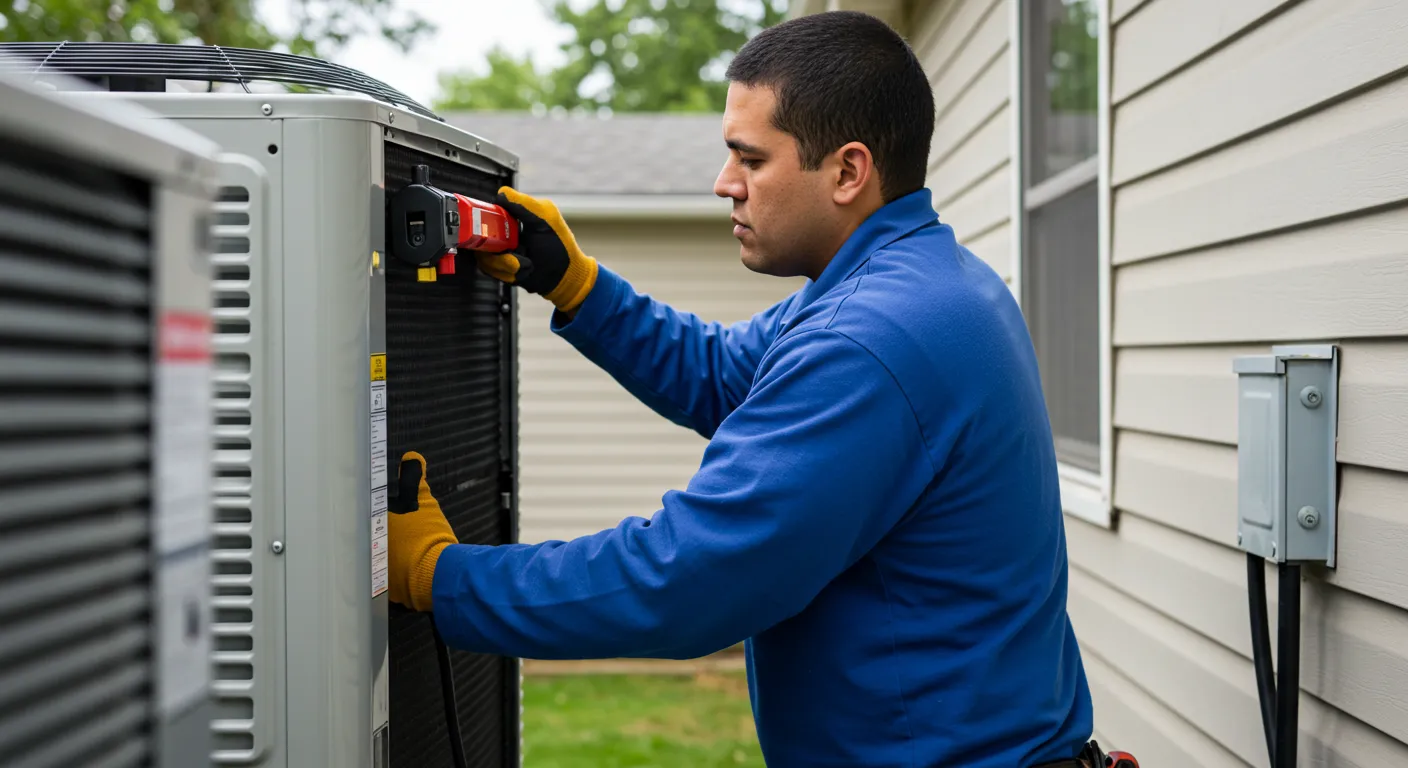
Diagnostic Precision
The service visit begins with a comprehensive assessment. A technician does not simply guess at the problem; they utilize calibrated tools to measure performance data against manufacturer specifications. This involves checking refrigerant levels (superheat and subcooling), measuring airflow (static pressure), and testing electrical components (voltage and amperage):
- Electrical Analysis: The technician inspects the capacitor, contactor, and wiring connections. Loose connections or failing capacitors are common culprits that can cause the compressor to overheat or fail to start.
- Refrigerant Leaks: If the system is low on refrigerant, it indicates a leak. Technicians use electronic leak detectors to locate the source. Simply adding more refrigerant without fixing the leak is a temporary solution that leads to future failure.
- Airflow Verification: Restricted airflow freezes coils and strains the blower motor. The assessment includes checking filters, ductwork integrity, and blower wheel cleanliness.
Comprehensive Repair Protocols
Once the issue is identified, the repair process moves quickly. Service trucks are stocked with universal parts and common components to minimize downtime:
- Component Replacement: Whether it is a fan motor, a control board, or a thermostat, the replacement part is installed according to OEM standards.
- System Cleaning: A dirty condenser coil cannot release heat effectively. Chemical cleaning of the outdoor coils is often necessary to lower head pressure and improve energy efficiency.
- Condensate Management: A clogged drain line can trigger water damage or shut off the system via a float switch. The service includes clearing the condensate trap and ensuring proper drainage.
Routine Maintenance and Tune-Ups
Preventative maintenance is distinct from repair. It is a proactive service meant to catch degradation before it causes a breakdown. In Lee's Summit, where summer storms can blow debris into outdoor units and high humidity creates a heavy latent load, maintenance is critical:
- Coil Cleaning: Ensuring the evaporator and condenser coils are free of dust and debris allows for optimal heat exchange.
- Lubrication: Moving parts, such as fan motors, require lubrication to reduce friction and prevent overheating.
- Thermostat Calibration: Ensuring the thermostat reads the temperature accurately prevents the system from running longer than necessary, saving on utility bills.
AC Installation and Replacement: Step-by-Step
There comes a point where a repair is no longer the most economical choice. When installing a new air conditioner, the quality of the installation matters as much as the brand of the equipment. A poor installation can reduce the efficiency of a high-end unit by up to 30%:
Sizing and Load Calculation
The process does not begin with the equipment; it begins with the home. A Manual J load calculation is performed to determine the exact cooling requirements of the space:
- Factors include square footage, insulation levels, window orientation, and local climate data.
- Oversized units cool the air too quickly without removing humidity, leading to a clammy indoor environment.
- Undersized units run continuously, failing to reach the set temperature on the hottest days.
Site Preparation and Removal
Before the new unit arrives, the site must be prepped. This involves safely recovering any remaining refrigerant from the old system according to EPA regulations:
- The existing unit is disconnected from the electrical supply and refrigerant lines.
- The pad for the outdoor unit is leveled or replaced to ensure stability and proper drainage.
- The indoor plenum is inspected to ensure it can accommodate the new evaporator coil.
Installation and Connection
The physical installation involves precise connections that seal the system against the elements and pressure:
- Refrigerant Lines: Copper linesets are brazed with nitrogen flowing through them to prevent oxidation inside the pipe. This prevents contaminants from damaging the compressor valves.
- Electrical Safety: A new disconnect box and whip are often installed to ensure the electrical supply meets current code requirements.
- Ductwork Modification: If the new unit has different dimensions, the ductwork transitions are fabricated to ensure smooth airflow without turbulence.
Commissioning and Testing
The final step is the most critical. The system is not just turned on; it is commissioned:
- The technician pulls a deep vacuum on the lineset to remove all moisture and non-condensables.
- The refrigerant charge is weighed in and fine-tuned based on the length of the lineset and outdoor temperatures.
- Static pressure is measured to verify that the blower is moving the correct volume of air (CFM) for the system's tonnage.
Deciding When to Replace Your AC
Homeowners often struggle with the decision between a major repair and a full replacement. Making the right financial choice requires evaluating the age, condition, and efficiency of the current system:
The 50% Rule
A general industry guideline is the 50% rule. If the cost of the repair approaches 50% of the value of a new system, replacement is usually the smarter investment. This is particularly true if the unit is out of warranty.
Age and Refrigerant Type
Air conditioners typically last between 10 and 15 years. Units older than this are likely using R-22 refrigerant, which has been phased out and is prohibitively expensive to replace:
- If your system utilizes R-22 and develops a leak, upgrading to a modern system using R-410A or newer refrigerants is the only viable long-term solution.
- Older units also suffer from metal fatigue in the compressor and corrosion on the coils, making them prone to cascading failures.
Efficiency and Energy Costs
Modern air conditioners have significantly higher SEER2 (Seasonal Energy Efficiency Ratio) ratings than units manufactured a decade ago:
- Replacing a 10 SEER unit with a 16 SEER unit can result in substantial reductions in monthly energy bills.
- Variable-speed technology allows modern units to run at lower capacities, maintaining a consistent temperature while using less electricity.
If your system requires frequent repairs, the team at All Day Comfort Heating and Cooling LLC can calculate the long-term savings of a high-efficiency replacement compared to the ongoing costs of nursing an aging unit — request service today.
Understanding Lee's Summit's Climate and AC Needs
Local climate conditions dictate specific requirements for air conditioning systems. The weather in this region presents a humid continental climate, characterized by hot, humid summers and the potential for severe weather:
Battling High Humidity
The primary challenge in this area during the summer is not just heat, but humidity:
- An air conditioner must run long enough to pull moisture out of the air. If a unit is oversized, it satisfies the thermostat temperature too quickly and shuts off before dehumidification occurs.
- Two-stage or variable-speed compressors are highly recommended for this climate because they can run for longer periods at lower power, effectively acting as whole-home dehumidifiers.
Weatherproofing and Protection
The region is vulnerable to severe summer storms, including heavy rain, hail, and high winds:
- Outdoor units should be installed with tie-downs if located in exposed areas.
- Hail guards are a valuable addition to protect the delicate aluminum fins of the condenser coil from impact damage.
- Surge protectors are essential. Lightning strikes or grid fluctuations during storms can fry the sensitive electronics in modern high-efficiency units.
Permits and Local Codes
HVAC work is subject to local building codes to ensure safety and efficiency:
- Permitting: Major installations and replacements typically require a permit. This ensures that the work is inspected by a third party and meets all safety standards.
- Clearances: Local codes dictate how close a unit can be to the property line and how much clearance is required around the unit for airflow and service access.
- Noise Ordinances: The placement of the outdoor unit must consider noise levels to avoid disturbing neighbors, adhering to local municipal guidelines.
Why Choose Us? Local Expertise and Reliable Service
Selecting a service provider is a decision that impacts the longevity of your equipment and the safety of your home. The focus must be on technical competency and adherence to industry best practices:
Technical Training and Certification
The technicians dispatched to your home are trained in the latest HVAC technologies. This includes inverter-driven compressors, communicating thermostats, and zoning systems. Continuous education ensures that diagnostics are accurate and repairs are permanent:
- Technicians understand the specific load calculations required for homes in this specific geographic area.
- Troubleshooting follows a logical, evidence-based process rather than guesswork.
Transparency and Communication
You receive clear information regarding the status of your system:
- Diagnostic findings are explained in plain language, detailing exactly what failed and why.
- Pricing is presented upfront before any work begins, eliminating surprise costs on the final invoice.
- Recommendations for repair or replacement are backed by data, such as pressure readings and electrical measurements.
Stocked Vehicles for Faster Service
Time is of the essence when the AC goes out. Service vehicles are stocked with a wide inventory of parts to maximize the chances of a first-time fix:
- Inventory includes a range of capacitors, contactors, motors, and control boards.
- Specialized tools for refrigerant recovery and vacuum decay testing are always on board.
- By minimizing the need to drive to a supply house, the repair is completed faster, restoring your home to a comfortable temperature sooner.
Call Now
Don't wait for the next breakdown to disrupt your comfort. Contact All Day Comfort Heating and Cooling LLC today to schedule your service or consultation, explore how our proven expertise can protect your home, and see why homeowners consistently trust us. Check out our reviews to hear directly from satisfied customers and visit our About Us page to learn more about our commitment to reliable, professional service. Take the first step toward a cooler, safer, and more efficient home now.
Contact Us
customer reviews
Areas We Serve




Copyright © 2026 All Day Comfort Heating and Cooling.
All rights reserved.
