




Indoor Air Quality in Mission Hills, KS
Ensure your home's air quality in Mission Hills with effective repair and service options. Contact us for a professional air assessment and solutions tailored to your needs.
Is Contaminated Air Affecting Your Home Comfort?
Living with persistent allergens, lingering odors, or uneven humidity levels affects more than just your comfort; it directly impacts the health and safety of your household. If you are noticing increased respiratory issues or excessive dust accumulation in your Mission Hills home, immediate intervention is required to restore a healthy living environment. Schedule your comprehensive air quality assessment today.
All Day Comfort Heating and Cooling LLC provides targeted strategies to neutralize airborne pathogens and regulate humidity, ensuring your indoor environment is safe and breathable. We move beyond basic filtration to implement whole-home systems that integrate directly with your existing HVAC infrastructure:
- Same-day service availability to address urgent contamination or humidity concerns.
- Customized solutions tailored specifically to your home's square footage and ductwork configuration.
- Comprehensive testing to identify invisible pollutants like VOCs, mold spores, and dander.
- Financing options are available to help you invest in long-term health without immediate financial strain.
Comprehensive Testing and Targeted Air Quality Solutions
Effective indoor air quality (IAQ) management begins with understanding exactly what is circulating through your ventilation system. Standard fiberglass filters are often insufficient for capturing microscopic particles that cause the most significant health issues. Modern homes are built to be energy efficient, which often means they are airtight; while this keeps utility bills low, it traps pollutants inside, creating a concentration of contaminants up to five times higher than outdoor air levels.
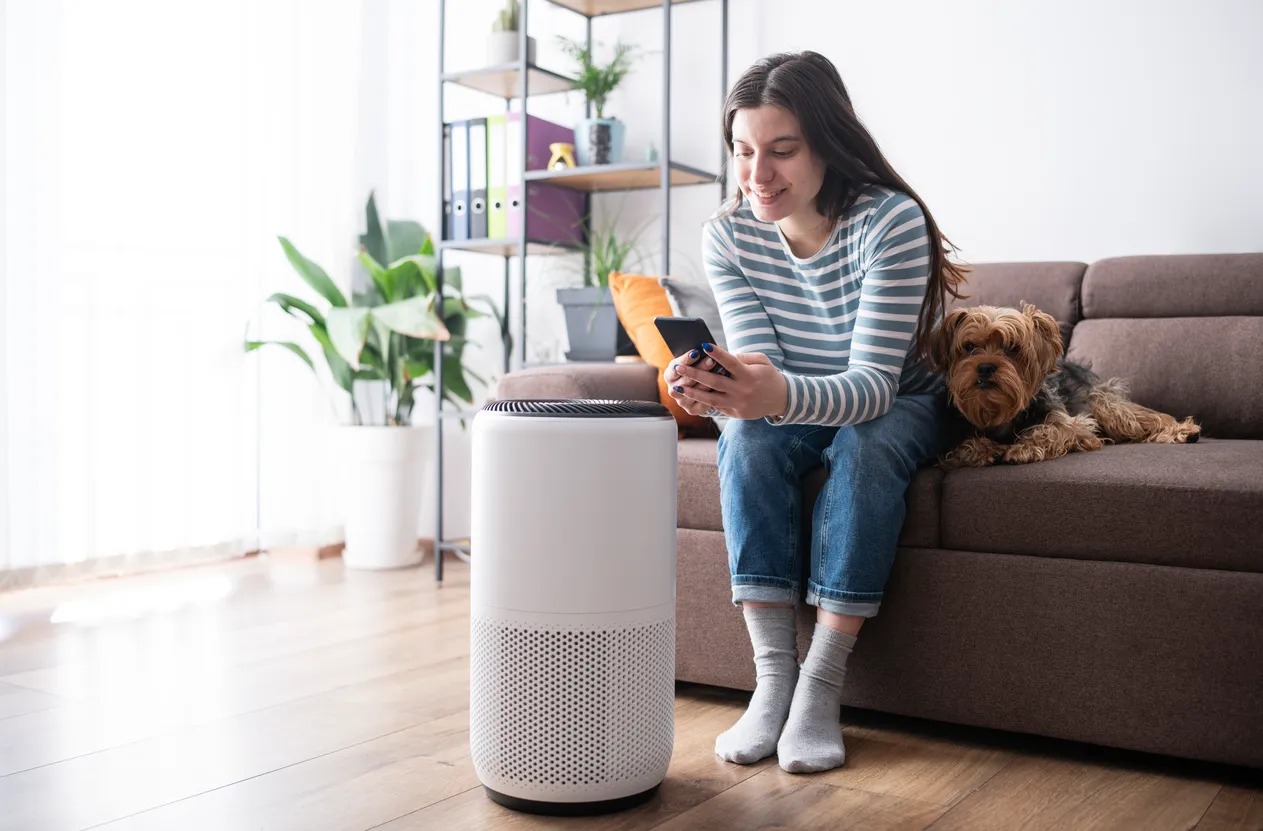
We provide a multi-faceted approach to air purification and humidity control. Rather than relying on portable units that only treat a single room, our services focus on whole-home integration. This ensures that every cubic foot of air passing through your heating and cooling system is treated before it reaches your living spaces:
Advanced Filtration Systems
High-efficiency particulate air (HEPA) filtration and media air cleaners are the first line of defense. Unlike standard one-inch filters, these systems use deep-pleated media to capture particles as small as 0.3 microns:
- Traps common allergens including pollen, pet dander, and dust mites.
- Reduces the accumulation of dust on furniture and inside ductwork.
- Protects the HVAC equipment from debris buildup, extending system lifespan.
- Requires less frequent replacement compared to standard hardware store filters.
Ultraviolet (UV) Germicidal Lights
Filtration captures solids, but it does not always kill biological contaminants. UV germicidal lights are installed directly within the ductwork or near the evaporator coil:
- Neutralizes airborne bacteria and viruses before they recirculate.
- Prevents mold and mildew growth on the AC coil, a common source of "dirty sock" syndrome.
- Improves system efficiency by keeping internal components clean.
- Operates silently and continuously without restricting airflow.
Whole-Home Humidifiers and Dehumidifiers
Humidity control is critical for maintaining air quality. Excess moisture breeds mold, while dry air damages wood furnishings and aggravates respiratory tracts:
- Steam or bypass humidifiers add necessary moisture during dry winter months to prevent static electricity and dry skin.
- Dedicated dehumidifiers remove gallons of excess water from the air during humid summers, reducing the load on your air conditioner.
- Automatic controls adjust humidity levels based on outdoor temperatures to prevent window condensation.
Energy Recovery Ventilators (ERVs)
For homes that lack fresh air intake, an ERV exchanges stale indoor air with fresh outdoor air without losing energy.
- Transfers heat and moisture to incoming air to maintain temperature balance.
- Dilutes concentrations of Volatile Organic Compounds (VOCs) from household cleaners and off-gassing furniture.
- Reduces odors from cooking and pets by constantly cycling air.
The Installation and Integration Process
Improving your indoor air quality is a technical process that requires precise calculation and professional installation. Incorrectly installed equipment can restrict airflow, leading to frozen coils or overheated furnaces. Our process ensures that any addition to your system enhances performance rather than hindering it:
Initial Assessment and Diagnostics
The process begins with a thorough evaluation of your current HVAC system and the specific air quality challenges you face:
- Technicians perform static pressure testing to determine if the ductwork can support high-efficiency filtration.
- Air quality monitors are used to detect specific pollutant levels, such as high VOCs, CO2, or particulate matter.
- The physical space is measured to size humidification or dehumidification equipment correctly.
System Selection and Design
Based on the data collected, a specific set of solutions is recommended:
- Equipment is selected to match the blower capacity of your furnace or air handler.
- Placement locations are identified to maximize exposure to the air stream.
- Electrical requirements are verified to ensure safe operation.
Professional Installation
Certified technicians handle the physical installation with minimal disruption to your home:
- Access points are cut into the return or supply plenums with precision to prevent air leaks.
- Equipment is mounted securely, and all seams are sealed with mastic or foil tape.
- Electrical connections are hardwired into the HVAC system controls so that air quality units run in tandem with the blower motor.
- Drain lines for humidifiers or dehumidifiers are routed to floor drains or condensate pumps.
Calibration and Final Testing
Once the hardware is in place, the system is calibrated for optimal performance:
- Thermostats and humidistats are programmed to the homeowner's desired settings.
- Airflow is re-tested to ensure the new components are not creating excessive resistance.
- Technicians verify that UV lights are functioning and safety switches are engaging properly.
When to Retrofit vs. Repair Existing Systems
Homeowners often wonder if their current setup can be fixed or if a new installation is necessary. Air quality equipment has a lifespan, and older technology may no longer be effective against modern standards of cleanliness. Making the right decision depends on the age of the equipment, the severity of the air quality issues, and the cost of upkeep:
Signs You Should Repair or Service
If you have existing air quality equipment, simple maintenance may restore performance:
- The humidifier pad is calcified but the unit motor still runs quietly.
- The UV bulb has burned out, but the ballast and housing are intact.
- The electronic air cleaner is making snapping noises, indicating it needs a deep cleaning rather than replacement.
- Humidity levels are slightly off due to a miscalibrated sensor.
Indicators That Replacement or Retrofit is Necessary
There are scenarios where repairing old equipment is throwing good money after bad, or where passive solutions are no longer sufficient:
- Persistent Mold Growth: If you find mold in your ducts or on vents despite having a UV light, the existing unit may be underpowered or positioned incorrectly. A higher-intensity system is required.
- Chronic Health Symptoms: If family members suffer from year-round allergies or asthma that improves when leaving the house, the current filtration system is likely bypassing particles. Upgrading to a HEPA bypass or whole-home media filter is necessary.
- HVAC System Strain: If an older electronic air cleaner is restricting airflow and causing the furnace to overheat, it should be replaced with a high-flow media cabinet that offers better protection with less resistance.
- Obsolete Technology: Older ozone-generating air purifiers are now known to be lung irritants. These should be replaced immediately with non-ozone-producing UV or ionization technology.
- Excessive Humidity Variance: If your AC cannot keep humidity below 55% inside, adding a dedicated whole-home dehumidifier is the only way to prevent biological growth and structural damage.
All Day Comfort Heating and Cooling LLC technicians provide honest assessments, helping you distinguish between a component that needs a tune-up and a situation requiring a system upgrade.
Local Considerations for Mission Hills Residents
Operating HVAC equipment in Mission Hills, KS, presents specific challenges due to the regional climate and housing stock. The transition from hot, humid summers to dry, freezing winters requires a system that is versatile and robust:
Managing High Humidity and Storm Season
During the summer, dew points in the region can remain high for weeks:
- Excess moisture infiltration is common in basements and crawl spaces.
- Standard air conditioning often satisfies the temperature setpoint before removing enough humidity, leaving the home feeling "clammy."
- Supplemental dehumidification is often required to keep humidity between 35% and 50%, inhibiting dust mite reproduction and mold growth.
Combating Winter Dryness and Viral Spread
Kansas winters can see temperatures drop significantly, causing heating systems to run constantly:
- Gas furnaces dry out the air, causing wood floors to crack and increasing susceptibility to respiratory infections.
- Viruses and bacteria remain airborne longer in dry air.
- Whole-home humidifiers are essential to maintain relative humidity above 30% for health and property protection.
Permitting and Utility Programs
Local regulations and utility programs play a role in system upgrades:
- Modifications to gas lines or major electrical circuits during installation may require adherence to local building codes.
- EnergyStar rebates are occasionally available for upgrading to high-efficiency ventilation or smart thermostat controls that monitor IAQ.
- Professionals ensure that all installations meet the specific safety codes relevant to the area.
Housing Specifics
Many homes in the area have unique architectural features or older ductwork designs:
- Renovated historic homes may have limited space for equipment, requiring low-profile or remote-mounted units.
- Ensuring ductwork is sealed is a prerequisite for air quality; leaky ducts in attics or crawl spaces pull in insulation fibers and outdoor contaminants.
Why Professional IAQ Services Matter
Investing in indoor air quality is a decision to protect the long-term health of your property and its occupants. Retail solutions often provide a false sense of security, moving air around without effectively treating it. Professional implementation ensures that the solution addresses the root cause of the contamination rather than just masking odors.
We focus on measurable results. By integrating solutions into the central HVAC system, we treat the entire volume of air in the home multiple times per hour. This level of comprehensive coverage is impossible to achieve with standalone units. Furthermore, professional installation guarantees that the warranty on your expensive heating and cooling equipment remains valid, as improper restrictions can void manufacturer guarantees.
Our approach prioritizes technical accuracy. We do not guess at the problem; we test, measure, and implement based on building science principles. From ensuring the correct MERV rating for your specific blower motor to positioning UV lights for maximum kill rates, every detail is handled by certified experts.
For residents in Mission Hills and the surrounding areas, maintaining a healthy indoor environment is just a phone call away. Trust All Day Comfort Heating and Cooling LLC to deliver precise, effective air quality solutions that let you breathe easier.
Ready to improve the air inside your home? Contact us now to schedule your professional air quality assessment.
Contact Us
customer reviews
Areas We Serve




Copyright © 2026 All Day Comfort Heating and Cooling.
All rights reserved.
