




Heating Service in Mission Hills, KS
Experience fast, professional heating services in Mission Hills, KS. Schedule immediate repairs to restore warmth in your home. Learn more about our comprehensive solutions.
Restore Warmth Immediately When Your Heater Fails
Facing unexpected heating failures during a freezing winter night in Mission Hills, KS is a stressful situation that demands a quick, professional solution. Get your system back online by scheduling a service visit today.
When temperatures drop to the teens or below zero, a malfunctioning furnace or heat pump is more than an inconvenience; it is a safety concern for your home and family. You need a technical team that understands the urgency of the situation and arrives fully prepared to diagnose the issue accurately the first time. Whether you are dealing with a complete system breakdown, strange noises, or a unit that simply cannot keep up with the thermostat setting, professional intervention is required to restore consistent heat:
- Immediate response times for urgent heating restoration requests.
- Certified technicians equipped to service all major furnace and heat pump brands.
- Guaranteed repair quality backed by comprehensive service warranties.
All services are fully licensed, compliant with local codes, and we offer flexible financing options for major repairs or replacements.
Comprehensive Heating Solutions Available Today
When you request service, the objective is to identify the root cause of the inefficiency or failure immediately. Modern heating systems are complex networks of electrical components, gas valves, airflow sensors, and mechanical parts. A surface-level inspection often misses underlying issues that cause repeat breakdowns. The focus is on thorough diagnostics that inspect the entire heating cycle, from the thermostat signal to the warm air delivery:
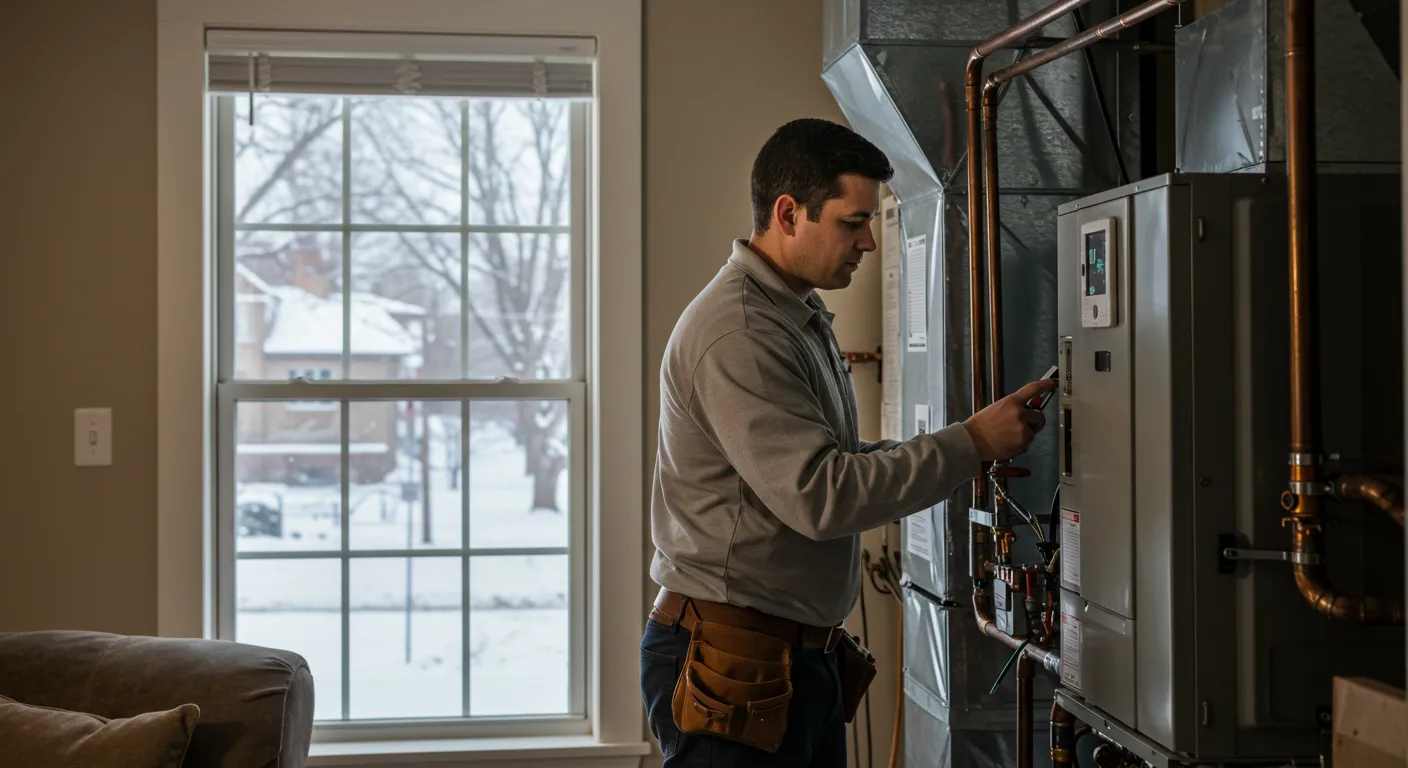
Diagnostic and Repair Scope
Technicians arrive with stocked service vehicles containing the most common fail points for furnaces and heat pumps. This inventory management allows for many repairs to be completed during the initial visit, minimizing downtime. The diagnostic process covers several critical areas:
- Ignition Systems: Technicians test hot surface igniters, pilot lights, and flame sensors. If the burner fails to ignite or stay lit, these components are often the culprit. Cleaning flame sensors or replacing a cracked igniter restores the combustion process.
- Airflow and Blower Motors: If a furnace runs but little air comes out of the vents, the blower motor or capacitor is tested. Technicians measure amperage draw and capacitor microfarads to ensure the motor is running within manufacturer specifications.
- Safety Switches: Modern heaters have multiple safety interlocks, including high-limit switches, rollout switches, and pressure switches. If your system shuts down repeatedly, it is often a safety mechanism preventing a fire or carbon monoxide leak. These switches are tested to see if they are faulty or if they are reacting to a genuine hazard.
- Heat Exchanger Inspection: This is a critical safety check. A cracked heat exchanger can leak carbon monoxide into the living space. Professionals use combustion analyzers and visual inspection cameras to verify the integrity of the metal.
- Thermostat Calibration: sometimes the issue is not the unit, but the control center. Technicians verify that the thermostat is reading ambient temperature correctly and sending the proper voltage signals to the furnace control board.
Residents in Mission Hills know that reliability is key during the heavy snowfall months. By addressing these components systematically, the heating service ensures that the system can handle the heavy workload required to maintain 70 degrees inside when it is below zero outside.
Maintenance and Tune-Ups
Beyond emergency repair, proactive service helps prevent mid-winter failures. A comprehensive tune-up involves cleaning the burner assembly, tightening all electrical connections, lubricating moving parts, and checking the gas line pressure. Adjusting the gas pressure to the manifold ensures the furnace burns fuel efficiently, which is vital for keeping energy costs manageable during the peak heating season.
The Installation and Replacement Process
There comes a time when a heating system is beyond viable repair or simply too inefficient to justify keeping. Installing a new heating system is a construction project that requires precise calculation and skilled labor. It is not merely swapping one box for another; it involves integrating a new, high-efficiency machine into your home’s existing ductwork and utility infrastructure:
Sizing and Load Calculation
The process begins with a Manual J load calculation. This engineering calculation determines exactly how much heat your home requires based on square footage, insulation levels, window quality, and the local climate data for the region:
- First, the technician measures the home’s thermal envelope. An oversized unit will short-cycle, turning on and off too frequently, which wears out parts and creates uncomfortable temperature swings.
- Conversely, an undersized unit will run continuously without ever reaching the set temperature on the coldest days.
- Finally, the correct size is selected to ensure optimal run times that dehumidify the home and provide even, consistent warmth.
Removal and Site Preparation
Once the correct unit is selected, the workspace is prepared to protect your property:
- Technicians lay down drop cloths and wear shoe covers to protect flooring.
- The old unit is disconnected from gas, electric, and venting lines safely.
- Existing ductwork connections are inspected. If the new unit is physically smaller or larger than the old one, a transition plenum is fabricated to ensure a sealed, airtight fit. Leaky transitions are a major source of energy loss.
System Installation and Commissioning
The physical installation involves connecting the new furnace or heat pump to the home’s infrastructure:
- Gas and Electric: Gas lines are reconnected with sediment traps (drip legs) to prevent debris from entering the gas valve. Electrical connections are tightened and checked for proper voltage.
- Venting: High-efficiency furnaces often require PVC venting out the side of the home rather than a metal flue through the roof. The intake and exhaust pipes are routed carefully to adhere to local building codes and ensure proper clearance from windows or snow levels.
- Condensate Management: High-efficiency units produce water (condensate) during operation. A drainage system, including pumps or gravity lines, is installed to move this water away from the foundation or into a floor drain.
- Commissioning: This is the most important step. The system is fired up, and technicians measure static pressure (airflow resistance) and temperature rise (the difference between air entering and leaving the furnace). Adjustments are made to the blower speed and gas valve to match the manufacturer’s precise performance charts.
All Day Comfort Heating and Cooling LLC ensures that every installation follows these rigorous steps to maximize the lifespan of the investment.
Deciding When to Replace vs. Repair
Determining whether to sink money into a repair or invest in a new system is a common dilemma for homeowners. This decision should be based on data and financial logic rather than emotion. Several factors dictate the most prudent path forward:
The 50% Rule
A widely accepted guideline in the HVAC industry is the 50% rule. If the cost of the repair approaches 50% of the value of a new system, replacement is generally the better financial option. For example, if a compressor or heat exchanger fails, these are major capital repairs. The labor and part costs are significant enough that applying that money toward a new unit with a fresh warranty often makes more sense.
System Age and Reliability
Heating systems generally last between 15 and 20 years depending on maintenance history:
- If your furnace is over 15 years old and requires a minor repair, it may be worth fixing, but you should start budgeting for a replacement.
- If the unit is over 15 years old and requires a major component like a blower motor or control board, replacement is usually recommended. An old unit that breaks down once is likely to break down again soon as other parts reach the end of their fatigue life.
Efficiency and Operating Costs
Older furnaces may operate at 60% to 80% AFUE (Annual Fuel Utilization Efficiency). This means for every dollar spent on gas, 20 to 40 cents is wasted up the chimney. Modern systems can reach up to 98% AFUE:
- Analyze your winter utility bills. If they have been steadily climbing despite comparable weather, the system is losing efficiency.
- Upgrading from an 80% unit to a 96% unit can result in substantial monthly savings, which helps offset the cost of installation over time.
Safety Considerations
Safety is the ultimate tie-breaker. If a unit has a cracked heat exchanger or recurring electrical shorts that pose a fire hazard, immediate replacement is non-negotiable. Patching a dangerous system is not a viable risk management strategy.
Local Considerations for Heating Systems
Operating a heating system in Mission Hills involves specific regional factors that influence performance and installation requirements. The local climate and infrastructure dictate certain standards that must be met for safety and efficiency:
Climate and Seasonality
The winters here produce significant snowfall, often around 15 inches per season, and temperatures that challenge even robust heating systems:
- Vent Clearance: Intake and exhaust pipes for high-efficiency furnaces must be installed high enough above the ground to prevent blockage by snow drifts. Blocked vents will cause the furnace to shut down immediately as a safety precaution.
- Humidification: The cold winter air is extremely dry. Integrating a whole-home humidifier into the heating system protects hardwood floors, furniture, and artwork from drying out and cracking, which is a common concern in local homes.
Permitting and Inspections
HVAC work is regulated to ensure safety. Replacing a furnace or modifying gas lines requires adherence to local building codes:
- Technicians manage the permit process, ensuring that the installation meets all municipal requirements regarding venting distances, gas line sizing, and electrical disconnects.
- Proper permitting is essential for future home sales; unpermitted work can cause complications during real estate inspections.
Utility Configuration
Most homes in the area rely on natural gas, but hybrid systems are gaining popularity:
- Dual Fuel Systems: These systems pair an electric heat pump with a gas furnace. The heat pump handles the heating load during moderately cold days (efficiently using electricity), while the gas furnace takes over during deep freezes when temperatures drop below freezing. This setup optimizes energy usage based on the strengths of each fuel source.
Why Choose Professional Heating Services?
Selecting a service provider is about trusting a team to enter your home and work on a critical infrastructure system. Technical competence must be paired with respect for the property:
- Technical Precision and Training: Heating equipment is evolving rapidly. Variable-speed blowers, modulating gas valves, and communicating thermostats require technicians who engage in ongoing training. Understanding the electronics behind these systems is just as important as understanding the mechanical piping. Professional teams use advanced diagnostic tools, such as digital manometers and combustion analyzers, to see what is happening inside the system beyond what the naked eye can detect.
- Property Protection: Work in established homes requires care. Professionals use drop cloths, wear boot covers, and clean up the workspace thoroughly after the job is complete. The goal is to leave the home exactly as it was found, only warmer. There is no debris left behind, and old equipment is hauled away and disposed of properly.
- Transparent Communication: You receive clear explanations of what is wrong, what options are available, and what the costs will be before any work begins. Whether it is a simple sensor cleaning or a complex compressor replacement, the scope of work is defined upfront. This eliminates surprise charges and ensures you are in control of the service decisions.
From the initial diagnostic check to the final safety inspection, All Day Comfort Heating and Cooling LLC focuses on restoring safety and comfort to your home efficiently.
Secure Your Comfort This Winter
Do not wait until the first blizzard to address heating inconsistencies. A reliable heating system is the defense against the harsh winter elements common in this region. Whether you require an emergency repair to get the heat back on tonight or a consultation for a high-efficiency replacement, professional assistance is ready.
Ensure your home stays warm and safe regardless of the forecast. Schedule your service appointment now. — contact us today
Contact Us
customer reviews
Areas We Serve




Copyright © 2026 All Day Comfort Heating and Cooling.
All rights reserved.
