



Furnace Repair in Mission Hills, KS
Struggling with furnace issues in Mission Hills? Contact us for rapid, expert furnace repairs. Ensure your home stays warm this winter!
Is Your Furnace Failing to Keep Your Home Warm?
When temperatures drop into the 20s during a Mission Hills winter, a malfunctioning heating system quickly escalates from an inconvenience to a safety hazard for your home and family. Contact us immediately to dispatch a technician to your location.
We understand that heating issues rarely happen at convenient times. If your system is blowing cold air, making strange noises, or refusing to turn on entirely, you need a rapid response to restore comfort and safety. Homeowners in Mission Hills, KS, and the surrounding areas rely on prompt, professional intervention to navigate the freezing months without disruption. We prioritize your call to ensure your pipes do not freeze and your living space remains habitable:
- Rapid response times with technicians ready to diagnose issues within hours.
- Expert handling of all major furnace brands and fuel types.
- 24/7 availability to address emergency breakdowns during nights, weekends, and holidays.
Fully licensed and insured with flexible financing options available for unexpected repairs.
Immediate Diagnostics and Repair Services
When a heating system fails, the immediate goal is to identify the root cause accurately to prevent repeat breakdowns. Modern heating systems are complex networks of electrical sensors, gas valves, and airflow mechanisms. A guess-and-check approach is insufficient. Our technicians arrive equipped with advanced diagnostic tools to read error codes, test electrical currents, and inspect combustion chambers.
We provide comprehensive repair services that cover every component of your heating unit. Whether the issue stems from a faulty thermostat losing communication with the control board or a mechanical failure within the blower motor, we have the parts and expertise to resolve it. Our service trucks are stocked with common components to facilitate same-day repairs whenever possible. This minimizes downtime and ensures you do not have to wait days for a simple part to arrive while the house grows colder.
Specific repair capabilities include:
- Ignition System Repair: We troubleshoot and fix pilot lights, hot surface igniters, and spark ignitions that fail to light the burners.
- Airflow Correction: We replace worn-out belts, faulty blower motors, and clogged filters that restrict warm air from reaching your vents.
- Thermostat Calibration: We ensure your thermostat reads the room temperature accurately and cycles the furnace correctly to maintain efficiency.
- Safety Switch Replacement: We replace limit switches and flame sensors that may shut the system down unnecessarily or fail to shut it down during a safety event.
- Gas Valve Replacement: We handle gas line issues and valve replacements to ensure fuel is delivered safely and efficiently to the burner assembly.
All Day Comfort Heating and Cooling LLC focuses on restoring your system to factory specifications. We do not apply temporary patches; we perform permanent repairs that extend the lifespan of your equipment.
The Furnace Repair Process: From Call to Comfort
Understanding what happens after you request service helps alleviate the stress of a breakdown. We follow a streamlined, transparent process designed to get your heat back on as quickly as possible without hidden surprises:
- Scheduling and Dispatch: Upon receiving your request, we prioritize calls based on urgency, particularly during extreme weather events in Mission Hills. You receive a clear window of arrival so you are not stuck waiting all day.
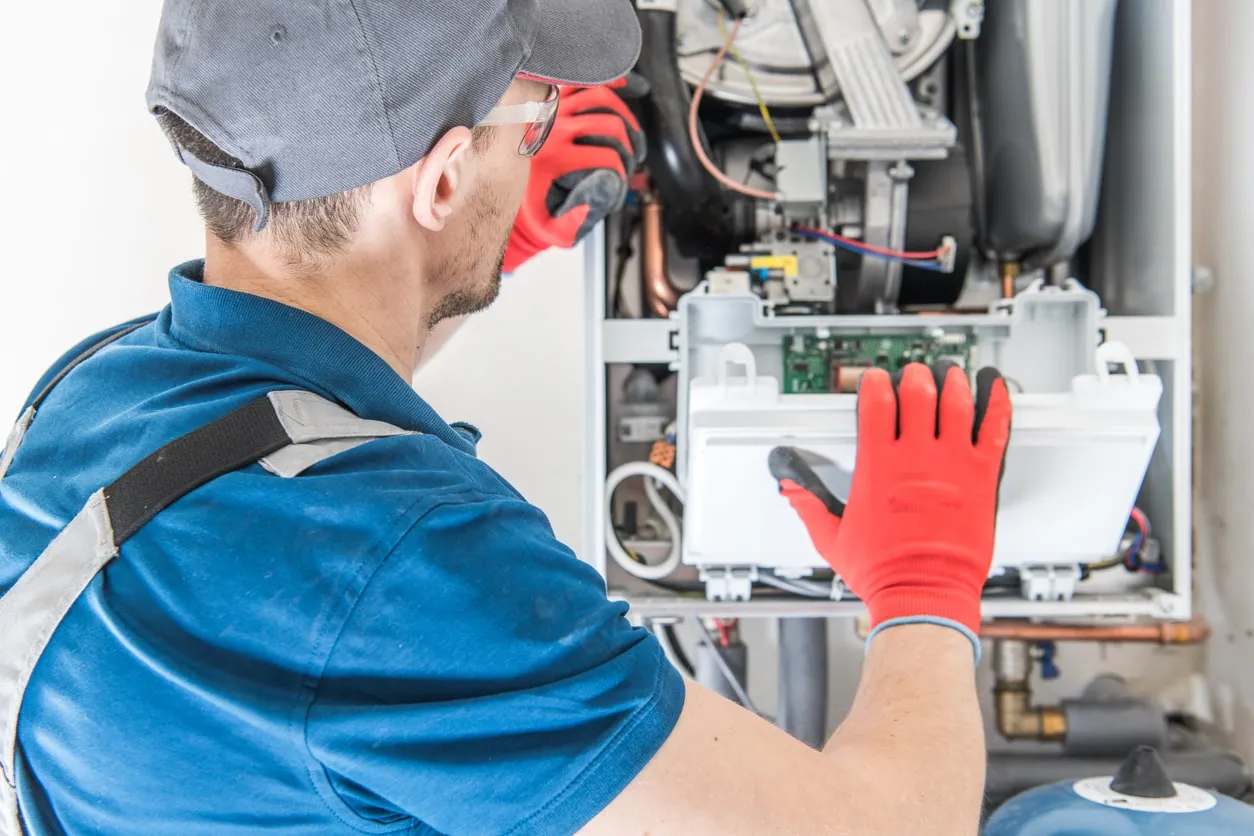
- On-Site Assessment: The technician begins with a safety inspection. This involves checking for carbon monoxide leaks and gas line integrity before powering on the unit for testing.
- System Diagnosis: We run the furnace through a full heating cycle to observe its operation. We test voltage, amperage, gas pressure, and temperature rise to pinpoint the exact malfunction.
- Upfront Explanation and Quote: Once the issue is identified, we explain the problem in plain English. You receive a detailed quote outlining the cost of parts and labor. No work begins until you approve this scope.
- Execution of Repair: We proceed with the necessary repairs, utilizing high-quality OEM or equivalent parts. We protect your workspace with drop cloths and shoe covers to keep your home clean.
- Final Testing and Validation: After the repair is complete, we do not simply leave. We cycle the system again to verify the fix, check for proper venting, and ensure the system is running at peak efficiency.
Deciding Between Repair and System Replacement
One of the most difficult decisions homeowners face is whether to repair an aging unit or invest in a replacement. While our primary goal is to repair your existing system, there are mathematical and practical tipping points where replacement becomes the more improved financial decision.
We help you evaluate the condition of your furnace using several critical factors:
- The 50% Rule: If the cost of the repair approaches 50% of the value of a new system, replacement is generally the wiser investment.
- Age of the Equipment: The average lifespan of a gas furnace is 15 to 20 years. If your unit is over 15 years old and requires a major component like a blower motor or gas valve, the money is often better spent on a new, more efficient unit.
- Heat Exchanger Integrity: A cracked heat exchanger is a non-negotiable safety hazard that can leak carbon monoxide into your home. In almost all cases involving a cracked heat exchanger, replacement is required due to the cost and complexity of the repair.
- Frequency of Breakdowns: If you have required multiple repairs in the last two winters, your system is likely nearing the end of its useful life. "Nickel and diming" repairs can quickly exceed the monthly cost of financing a new system.
- Rising Energy Bills: As furnaces age, they lose efficiency. If your heating bills are spiking despite normal usage, older technology or internal wear may be wasting fuel.
We provide you with the data needed to make this choice. We break down the cost of the repair versus the projected energy savings and warranty benefits of a new installation, allowing you to decide without pressure.
Navigating Local Requirements and Winter Conditions
Operating a heating system in this region requires specific attention to local building codes and environmental factors. Mission Hills experiences significant snowfall and freezing temperatures, which directly impact how furnaces must be vented and maintained:
- Permitting and Code Compliance: Any significant repair involving gas lines or flue modifications must adhere to local safety codes. We handle the technical specifications to ensure your system remains compliant with city regulations, avoiding issues when you eventually sell your home.
- Venting and Snow: High-efficiency furnaces often vent through the side of the house. In our area, snow accumulation can block these intake and exhaust pipes, causing the furnace to shut down automatically for safety. We inspect venting configurations to ensure they are positioned high enough to avoid snow blockage.
- Utility Integration: We work with local gas and electric providers to ensure your system meets current efficiency standards. This includes verifying that gas pressure coming into the home is sufficient for modern, high-demand appliances.
- Condensate Management: High-efficiency furnaces produce condensation. In unconditioned spaces like attics or garages, these drain lines can freeze. We ensure proper insulation and heat tape applications are in place to prevent frozen drain lines from shutting down your heat.
Common Furnace Issues We Resolve
Our technicians encounter a wide variety of heating problems. Recognizing the symptoms early can prevent a total system failure during a cold snap:
- Short Cycling: If the furnace runs for only a few minutes and then shuts off repeatedly, it is short cycling. This destroys efficiency and puts immense strain on the heat exchanger. Causes often include a dirty flame sensor, restricted airflow, or an oversized unit.
- Blowing Cold Air: A furnace blowing cold air usually indicates that the blower is working, but the burners are not lit. This can be caused by a tripped limit switch, a lack of fuel, or a failed ignition sequence.
- Loud or Unusual Noises: Rattling, banging, or screeching sounds are never normal. Screeching often points to a failing blower motor belt or bearing, while banging can indicate delayed ignition—a dangerous condition where gas builds up before igniting.
- Electronic Ignition Failure: Modern furnaces do not use standing pilot lights. If the hot surface igniter cracks or the control board fails to send voltage to the igniter, the furnace will not produce heat.
- Thermostat Discrepancies: Sometimes the issue is not the furnace but the control center. Wiring issues or battery failure in the thermostat can prevent the signal from reaching the furnace.
Why Professional Service Matters for Long-Term Reliability
Attempting DIY repairs on a gas furnace carries significant risks. Beyond the obvious danger of gas leaks and fire hazards, improper handling of components can void manufacturer warranties. Most major furnace manufacturers require proof of professional maintenance and repair to honor parts warranties.
Professional intervention ensures that safety mechanisms are not bypassed. We encounter many systems where a homeowner or handyman has jumped a safety switch to force the unit to run. This removes the system's ability to shut down during dangerous conditions, such as overheating or venting blockages. Our technicians test every safety circuit to ensure they are active and functioning.
Furthermore, professional repair includes a focus on efficiency. A furnace that runs but burns fuel with an improper air-to-fuel ratio will result in incomplete combustion. This creates soot buildup and wastes energy. We use combustion analyzers to tune the system for optimal burn, ensuring you get the maximum heat output for every dollar spent on fuel. All Day Comfort Heating and Cooling LLC technicians are trained to look at the system holistically, addressing not just the broken part, but the conditions that caused it to fail.
Maintaining Efficiency Through the Season
While repairs fix immediate problems, maintaining that repair requires diligence during the heating season. There are steps homeowners can take to support the work we do and keep the system running smoothly:
- Filter Discipline: The single most common cause of furnace failure is a dirty air filter. We recommend checking filters monthly during peak winter usage. A clogged filter restricts airflow, causing the heat exchanger to overheat and the limit switch to trip.
- Register Management: Keep all supply and return vents open and unblocked by furniture or curtains. Closing vents in unused rooms increases pressure in the ductwork, which can increase air leakage and strain the blower motor.
- External Clearances: Ensure that exhaust flues and intake pipes on the exterior of the home remain clear of snow, ice, and debris. Blocked vents can cause carbon monoxide to back up into the home or cause the pressure switch to shut the furnace down.
- Carbon Monoxide Detectors: Ensure you have working carbon monoxide detectors on every level of the home and near sleeping areas. A failing furnace can emit this odorless gas, and detectors are your first line of defense.
Restoring Warmth and Safety to Your Home
A broken furnace is more than an inconvenience; it disrupts your life and endangers your home’s infrastructure. You need a partner who can diagnose the issue accurately, explain the solution clearly, and execute the repair immediately. We provide the technical expertise and local knowledge required to handle the specific heating challenges faced by residents in Mission Hills.
Whether you are dealing with a minor noise or a complete system shutdown, delay can lead to more extensive damage. We are committed to providing transparent, high-quality service that restores your comfort and peace of mind. Trust All Day Comfort Heating and Cooling LLC to keep your home warm this winter.
SchContact usedule your emergency furnace repair service now
Contact Us
customer reviews
Areas We Serve



Copyright © 2026 All Day Comfort Heating and Cooling.
All rights reserved.
