




Duct Repair in Mission Hills, KS
Experience enhanced home comfort with professional duct repair services in Mission Hills. Seal leaks, improve airflow, and reduce energy costs. Schedule an inspection today!
Rising Energy Bills and Uneven Temperatures Often Signal Ductwork Failures
Is your home consistently uncomfortable, no matter how much you adjust the thermostat, while energy costs continue to climb? Faulty, leaking, or disconnected ducts are likely undermining the performance of your HVAC system by allowing conditioned air to escape before it reaches your living spaces. Schedule a comprehensive duct inspection today to stop energy loss and restore comfort.
Our repair services focus on the following outcomes:
- Restore consistent airflow to every room in the house by sealing breaches and reconnecting segments.
- Enhance overall system efficiency to significantly reduce monthly heating and cooling expenses.
- Receive precise diagnostic and repair services from experienced technicians compliant with local standards.
All repair services are performed in full compliance with local building codes and are backed by a satisfaction guarantee on workmanship.
When homeowners in Mission Hills, KS, experience hot and cold spots or notice excessive dust accumulation shortly after cleaning, the issue rarely lies with the furnace or air conditioner itself. The distribution network—your air ducts—is responsible for delivering conditioned air. When this network is compromised, your equipment must work harder to maintain set temperatures, leading to premature wear. All Day Comfort Heating and Cooling LLC provides targeted duct repair solutions designed to seal the envelope of your HVAC system, ensuring that the air you pay to heat or cool actually reaches the intended rooms.
Comprehensive Diagnostics and Repair Scope
Duct repair is not merely about applying tape to a visible hole; it is a forensic process of identifying where airflow is being lost and why. Many duct systems are located in unconditioned spaces such as attics, crawlspaces, or between floors, making them difficult to access and inspect without professional equipment. A thorough service engagement begins with a static pressure test and visual inspection to locate disconnects, crushed flex ducts, or deteriorating seals.
The scope of repair services covers several critical areas:
- Sealant Application: Technicians identify air leaks at joints and seams. These are sealed using professional-grade mastic sealant or metal-backed tape, which hardens to create a permanent, airtight bond that does not degrade over time like standard duct tape.
- Reconnection and Support: Over time, flexible ductwork can sag, or straps can break, causing restricted airflow or complete disconnection. Services include re-securing ductwork with proper hanging straps to ensure straight runs and optimal airflow velocity.
- Insulation Restoration: Ducts running through unconditioned spaces in Mission Hills must be insulated to prevent thermal loss. Repairing or replacing torn insulation ensures that the air inside the duct maintains its temperature as it travels to your vents.
- Damper Adjustment: If manual dampers are stuck or loose, they are repaired or replaced to allow for proper balancing of air distribution throughout the home.
This process addresses the root causes of efficiency loss. By tightening the ductwork infrastructure, the load on the HVAC unit decreases immediately. This results in a quieter system, more stable indoor humidity levels, and a reduction in the infiltration of pollutants from attics or crawlspaces into the breathing air of the home.
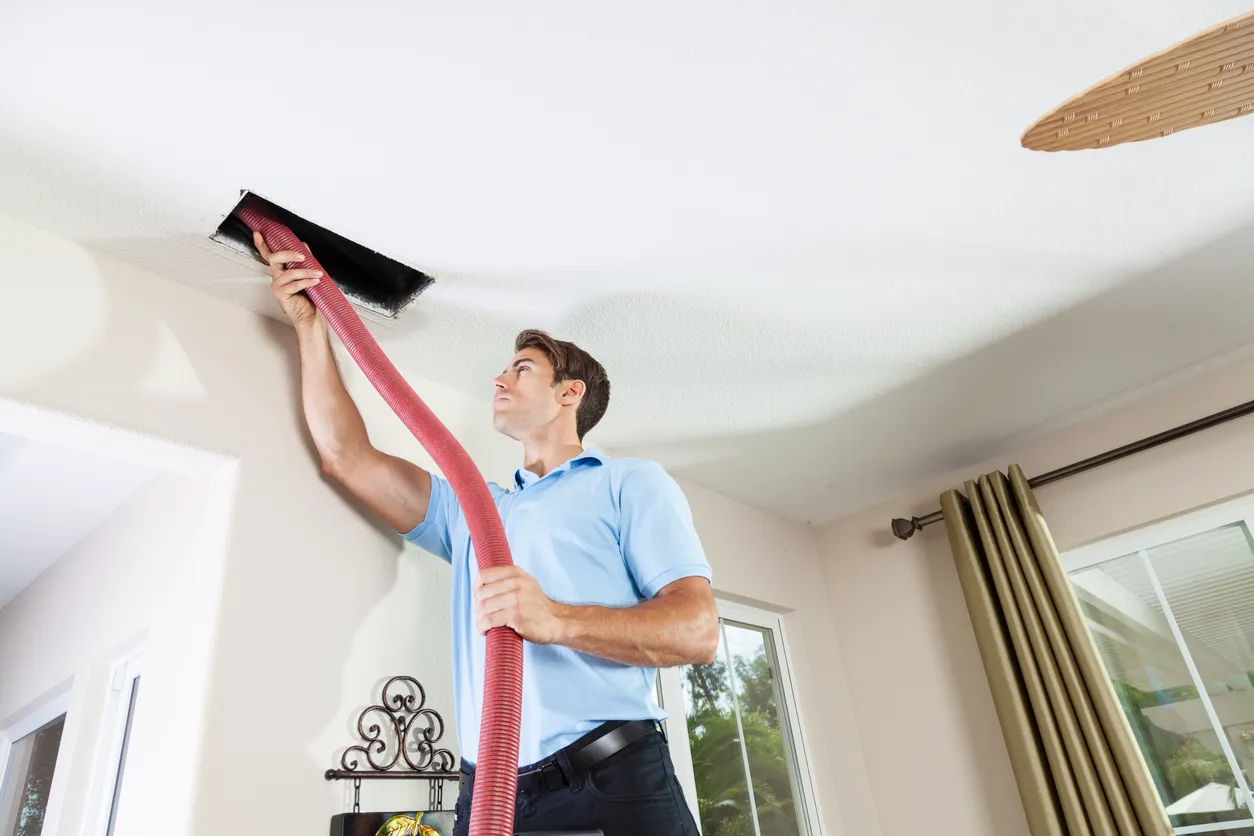
The Structural and Sealant Repair Process
Understanding how the repair process unfolds helps homeowners prepare for the service. The objective is to minimize disruption while maximizing the airtightness of the system. Professional technicians follow a systematic approach to ensure no leak is overlooked and that the repairs endure through the shifting seasons of Kansas.
The execution of duct repairs generally follows this sequence:
- System Isolation and Testing: The process begins with turning off the HVAC system. Technicians may perform a duct blaster test or use thermal imaging cameras while the system is briefly running to identify thermal bypasses—areas where heat is escaping or entering the ductwork. This creates a map of problem areas that need immediate attention.
- Physical Access and Exposure: Technicians access the ductwork through crawlspaces, attics, or basements. In finished basements or walls, minimally invasive methods are used to reach compromised sections. Protective coverings are placed in the workspace to prevent dust or insulation debris from entering the living area.
- Structural Correction: Before sealing, the physical structure of the duct is addressed. Crushed or kinked flexible ducts are straightened or spliced with new sections to restore full diameter. Disconnected metal pipes are refitted and secured with sheet metal screws to prevent future separation due to vibration or thermal expansion.
- Sealing and Mastic Application: Once the structure is sound, a thick layer of mastic sealant is applied to all joints, connections, and gores (elbows). This water-based, fiber-reinforced sealant paints on wet and dries to a hard, rubbery texture that flexes with the metal, ensuring the seal remains intact even as the metal expands and contracts during heating cycles.
- Insulation and Vapor Barrier Repair: After the sealant cures, the insulation jacket is repaired. This is critical in humid climates to prevent the cold metal of an AC duct from sweating. A vapor barrier is taped over the insulation to stop moisture from penetrating the fiberglass, preventing mold growth and water damage to ceilings.
- Final Verification: The system is powered back on, and airflow is measured at the registers. Technicians verify that static pressure is within the manufacturer's specifications for the furnace or air handler. This confirms that the repairs have successfully restored the intended airflow dynamics.
Determining When Replacement Outweighs Repair
While repair is the preferred and most cost-effective route for minor leaks and localized damage, there are scenarios where the ductwork is too degraded to be salvaged. Assessing the viability of the current system is a critical decision point. Continuing to patch a failing system can result in diminishing returns, where the cost of repeated repairs exceeds the investment in a modern, efficient layout.
Factors that necessitate replacement over repair include:
- Age and Material Deterioration: Ductwork that is over 15 to 20 years old may have internal insulation liners that are disintegrating. If fiberglass particles are breaking loose and entering the airstream, sealing the outside will not solve the indoor air quality hazard. In these cases, replacement is necessary for health reasons.
- Severe Rust or Mold Contamination: If moisture has chronically entered the system, metal ducts may be rusted through, or mold may have colonized the porous insulation liner. Remediation of mold inside a flex duct is impossible; the contaminated sections must be removed entirely to ensure the safety of the home’s occupants.
- Improper Sizing and Design: Technicians from All Day Comfort Heating and Cooling LLC assess whether the original ductwork was sized correctly for the installed HVAC equipment. If the return air ducts are undersized, the system will starve for air, leading to frequent equipment overheating and failure. No amount of sealing can fix a design flaw; the ductwork must be redesigned and replaced to accommodate the required cubic feet per minute (CFM) of airflow.
- Structural Collapse: In older Mission Hills homes, flexible ducts may have been installed without proper support, leading to permanent collapse or restriction. If more than 30% of the ductwork requires structural reconstruction, full replacement often offers a better warranty and performance guarantee than extensive patchwork.
Regional Factors Impacting Duct Health
Operating a heating and cooling system in Mission Hills, KS, presents specific challenges due to the region's distinct four-season climate. The environmental conditions outside the home directly influence the stress placed on the ductwork, particularly for ducts located in attics and crawlspaces that are exposed to ambient temperatures.
Local variables affecting duct performance include:
- Summer Humidity and Condensation: Kansas summers bring high humidity levels. When cold air passes through ducts located in a hot attic, the temperature differential can cause condensation to form on the exterior of the ductwork if the vapor barrier is compromised. This "sweating" can lead to water damage on drywall ceilings and creates an environment conducive to mold growth. Repair services in this region prioritize verifying the integrity of the vapor barrier to prevent these moisture issues.
- Winter Heat Loss: During frigid winters, the air inside the supply ducts may be 120°F or higher, while the attic temperature is near freezing. Leaks in this environment act like an open window, venting expensive heat directly outside. Furthermore, poor insulation allows heat to conduct through the duct walls, meaning the air arriving at the register is significantly cooler than when it left the furnace. Sealing and insulating are paramount for winter efficiency.
- Pests and Wildlife: As temperatures drop, rodents and small animals often seek refuge in crawlspaces and attics. They can chew through flexible ductwork and insulation to build nests. This not only destroys the duct integrity but also introduces biological contaminants into the home’s airflow. Local repair protocols often include inspecting for animal intrusion and recommending exclusion barriers alongside duct repairs.
- Code Compliance and Renovations: Many homes in the area have undergone renovations or additions. Often, new branches are added to existing duct trunks without calculating the increased load. This results in weak airflow to the new rooms. Professional repair includes evaluating the balance of the system to ensure that modifications meet current building codes and energy efficiency standards.
Optimization of Airflow Dynamics
Repairing ductwork is fundamentally about managing air pressure. An HVAC system relies on a delicate balance between the supply side (pushing air out) and the return side (pulling air in). When this balance is disrupted by leaks, the pressure dynamics of the home change. A leaky supply duct creates negative pressure in the house, which pulls unfiltered outdoor air, dust, and allergens in through gaps in windows and doors. Conversely, a leaky return duct in a basement or attic will suck in mold spores, insulation fibers, and humidity, distributing them throughout the entire residence.
Addressing these issues requires a technical understanding of static pressure and aerodynamics. The interior surface of the duct affects how air moves; smooth metal offers less resistance than flex duct. Repair strategies often involve replacing crushed flex sections with rigid metal elbows to reduce friction and turbulence, allowing the blower motor to operate more efficiently. This technical attention to detail ensures that the repair goes beyond simply stopping a leak—it optimizes the entire respiratory system of the home.
Correcting these airflow dynamics extends the lifespan of the furnace and air conditioner. When ducts are sealed and sized correctly, the blower motor does not have to run at maximum capacity to satisfy the thermostat. This reduction in strain lowers the risk of mechanical breakdown and prolongs the interval between expensive equipment replacements.
Secure Your Home’s Efficiency and Air Quality
Ignoring signs of duct failure leads to compounding costs—both in monthly utility payments and potential long-term damage to your HVAC equipment. The comfort of your home relies on the integrity of the path air travels to reach you. Addressing leaks, disconnects, and insulation failures is the most direct way to improve indoor air quality and system performance. All Day Comfort Heating and Cooling LLC delivers precise, code-compliant repair services designed to maximize the efficiency of your existing infrastructure.
Schedule a professional duct assessment today to permanently resolve airflow issues and secure your home’s thermal envelope. — Contact us today.
Contact Us
customer reviews
Areas We Serve




Copyright © 2026 All Day Comfort Heating and Cooling.
All rights reserved.
