




Smart Thermostat Installation in Olathe KS
Upgrade to a smart thermostat in Olathe for enhanced home efficiency and comfort. Save on energy and enjoy automated, precise temperature control. Contact us today!
Stop Overpaying Due to Outdated Temperature Controls
Navigating the extreme temperatures in Olathe can be tough on your wallet and your comfort, especially when relying on antiquated manual thermostats that cannot adapt to shifting weather patterns. A smart thermostat installation is your first step towards more efficient home temperature management and immediate utility savings. Contact us today to schedule your upgrade or ask about our flexible financing options.
Updating your HVAC controls does more than just modernize your wall; it transforms how your entire heating and cooling system operates.
- Reduce your energy bills with automated temperature adjustments that learn your schedule.
- Enjoy consistent indoor comfort year-round, regardless of outside humidity or temperature spikes.
- Gain control with remote temperature management features via your smartphone.
At All Day Comfort Heating and Cooling LLC, all installations are compliant with local codes, with extended warranties and flexible financing options available.
Enhance Your Home's Efficiency with Smart Thermostat Installation
The primary driver for upgrading to a smart thermostat is energy efficiency. Traditional thermostats operate on a simple set-point logic: they run the system until a temperature is reached and then shut off. They do not account for external weather data, the thermal properties of your home, or your actual occupancy patterns. This results in wasted energy, such as cooling an empty house or overheating a room that is already receiving direct sunlight.
Smart thermostat installation introduces an intelligent control center to your HVAC system. These devices utilize algorithms to learn your heating and cooling preferences over time. By analyzing how long it takes your specific home to heat up or cool down in Olathe weather, the device optimizes run times. This prevents the system from overworking, reduces wear and tear on your furnace and air conditioner, and ensures energy is consumed only when necessary.
Beyond simple scheduling, modern units offer geofencing capabilities. This feature uses your smartphone’s location services to determine when you leave the house and when you are returning. The system automatically adjusts to an energy-saving "away" mode when you leave and begins conditioning the air before you walk through the door. This seamless transition ensures comfort upon arrival without running the system at full blast all day.
Humidity control is another critical component often overlooked. In regions with significant precipitation and humidity fluctuations, temperature is only half the equation for comfort. Advanced smart thermostats can read indoor humidity levels and coordinate with your air conditioner or whole-home humidifier to maintain an ideal dew point. This capability reduces the "sticky" feeling in summer and prevents dry air issues in winter, allowing you to feel comfortable at energy-saving temperatures.
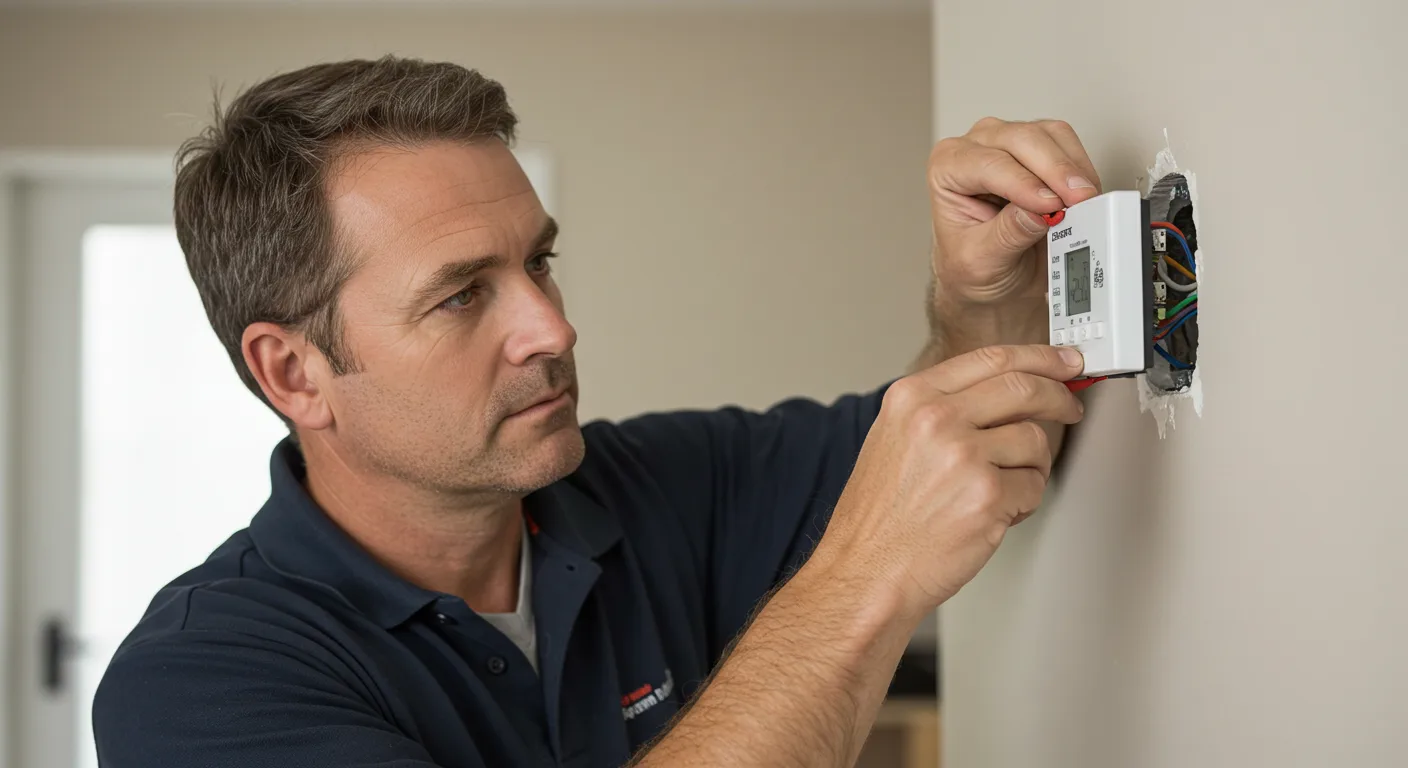
What to Expect: Installation Process & Inclusions
When you schedule a professional installation, the service encompasses more than just mounting a device to the wall. The goal is to ensure full compatibility with your existing heating and cooling equipment and to configure the software for maximum efficiency immediately. The process begins with a technical assessment of your current HVAC system type. Whether you have a heat pump, a gas furnace, dual-fuel system, or radiant heating, the thermostat must be wired correctly to control stages of heating and cooling without damaging the equipment.
One of the most common hurdles in smart thermostat installation is the "C-wire" or common wire. Older analog thermostats often did not require a continuous power source, running instead on batteries or stealing power when the system cycled on. Smart thermostats with Wi-Fi radios and color touchscreens require constant 24-volt power. All Day Comfort Heating and Cooling LLC technicians verify the presence of a C-wire. If one is missing, the service includes installing a C-wire adapter or running new thermostat wire through the walls to ensure the device has a reliable power supply.
The installation package includes:
- Site Assessment: Verification of HVAC system type (1-stage, 2-stage, variable speed) and voltage compatibility.
- Removal and Disposal: Safe removal of the existing thermostat, including proper disposal of old mercury-switch units if present.
- Wiring and Mounting: Precision wiring to the backplate, ensuring secure connections and leveling the unit for an aesthetic finish.
- System Configuration: Programming the thermostat to recognize the specific equipment installed (e.g., configuring heat pump reversing valves or auxiliary heat settings).
- Wi-Fi Integration: Connecting the device to your home network and assisting with the initial pairing to the manufacturer’s app.
Technicians also perform a full system test following installation. This involves cycling the heat, the air conditioning, and the fan to confirm the thermostat is sending the correct signals. If you have accessories like humidifiers, dehumidifiers, or ventilators, these are also integrated into the control logic during this visit.
Installation Details: From Setup to Completion
A professional installation follows a strict protocol to ensure safety and functionality. While the physical installation may seem straightforward, the configuration of internal settings determines the longevity of your HVAC equipment. An incorrectly configured thermostat can short-cycle a compressor or engage expensive emergency heat strips unnecessarily.
The installation sequence generally follows these steps:
- Power Down: The technician shuts off power to the HVAC system at the breaker panel to prevent blown fuses or damage to the control board during wiring.
- Labeling and Disconnect: The existing faceplate is removed. Wires are photographed and labeled based on their terminal designations (R, W, Y, G, C, O/B) to ensure accurate translation to the new system.
- Wall Preparation: Once the old backplate is removed, the technician assesses the condition of the drywall. If the new thermostat is smaller than the old one, a trim plate is installed to cover unpainted areas or old screw holes.
- Backplate Installation: The new mounting plate is secured to the wall using anchors. A level is used to ensure the unit sits perfectly straight.
- Wiring Connections: Wires are trimmed, stripped, and inserted into the new terminals. This is the critical phase where C-wire adapters are installed at the furnace control board if a direct C-wire is unavailable at the wall.
- Unit Attachment: The thermostat display is snapped onto the backplate. Power is restored to the HVAC system.
- Setup Wizard Navigation: The technician navigates the on-screen setup wizard. This involves inputting the fuel type (gas, electric, oil), heating type (forced air, radiant, heat pump), and system efficiency stages.
- Sensor Placement: If the system includes remote room sensors, the technician identifies optimal locations away from direct sunlight or drafts to ensure accurate average temperature readings across the home.
- User Training: The final step involves walking you through the physical interface and the mobile app, demonstrating how to set schedules, adjust overrides, and view energy usage reports.
Upgrading to Smart Thermostat: Why and When?
Deciding when to upgrade to a smart thermostat often coincides with other home improvements or rising energy costs. If you are noticing significant variances in temperature between rooms or if your energy bills are climbing despite normal usage, the control system is a prime suspect.
Replacement is recommended over keeping an existing thermostat in several scenarios:
- System Incompatibility: If you have recently upgraded your HVAC equipment to a high-efficiency variable-speed unit, an older thermostat may not be utilizing the equipment's full capabilities. High-efficiency systems require sophisticated communication to modulate fan speeds and compressor output.
- Drifting Calibration: Older mechanical thermostats utilize bi-metal coils or mercury switches that can lose calibration over time. If the thermostat reads 72 degrees but the room feels like 65, the mechanism is likely failing. Smart thermostats use digital thermistors for precise accuracy.
- Lifestyle Changes: If your household schedule has become more dynamic—with differing work-from-home days or travel schedules—a programmable 7-day thermostat is often insufficient. A smart thermostat adapts in real-time, making it superior for irregular schedules.
- Integration Needs: For homeowners building a connected smart home ecosystem, the thermostat is a central hub. If you want voice control capabilities or integration with smart smoke detectors and locks, upgrading is the only path forward.
It is important to note that a smart thermostat cannot fix a broken furnace or air conditioner. If your system is blowing warm air when it should be cooling, or making strange noises, a repair diagnostic is needed before a thermostat upgrade. However, if the HVAC equipment is sound, the thermostat upgrade acts as an immediate performance booster.
Adhering to Olathe's Regulations and Seasonal Advice
Operating in Olathe requires specific attention to local climate challenges and regulatory standards. The humid continental climate means your HVAC system faces a heavy workload in both summer and winter. Smart thermostats provide distinct advantages in this environment by offering "compressor protection" features that prevent the A/C from restarting too quickly after a power flicker during spring storms, protecting the unit from damage.
Local building codes and utility guidelines also play a role in installation.
- Permit Requirements: While simple thermostat swaps generally do not require a city permit, any modification to the line voltage wiring or significant alterations to the electrical panel to accommodate the HVAC system must adhere to local electrical codes. Professional installers ensure all low-voltage wiring is routed safely and complies with NEC standards adopted by the municipality.
- Utility Rebates: Local utility providers frequently offer rebates for the installation of Energy Star-certified smart thermostats. These programs are designed to lower the aggregate load on the power grid during peak summer hours. To qualify, the thermostat often needs to be installed by a licensed professional, and specific models must be selected.
- Seasonal Configuration: Winter in Kansas brings freezing temperatures that threaten pipes. Smart thermostats feature safety temperatures (e.g., ensuring the home never drops below 55°F) that function even if the thermostat is set to "off" or if the Wi-Fi disconnects. This is a critical safeguard for homeowners who travel during the winter holidays.
- Sensor Calibration: Due to the variance in Olathe’s weather, outdoor temperature sensors (either hardwired or Wi-Fi based) must be calibrated to local weather stations to ensure the "dual fuel" switchover points are correct. This ensures your system switches from a heat pump to a gas furnace exactly when efficiency dictates, usually around 35-40°F.
Why Choose Us? Our Commitments and Credentials
Selecting the right partner for your smart thermostat installation ensures that the technology delivers on its promises of savings and comfort. The market is flooded with devices, but proper implementation requires deep knowledge of HVAC circuitry and airflow dynamics.
We prioritize technical precision. Our technicians are trained on all major smart thermostat brands, including Nest, Ecobee, and Honeywell. This broad expertise allows us to recommend the specific device that matches your existing HVAC equipment's communication protocol. We do not believe in a one-size-fits-all approach; a thermostat designed for a single-stage furnace will not work effectively on a communicating variable-speed heat pump. We ensure the hardware match is perfect before opening the box.
Our service includes comprehensive post-installation support. If connectivity issues arise or if the system requires fine-tuning after the initial learning period, we remain available to assist. We stand behind our workmanship with guarantees that cover the wiring and configuration, providing peace of mind that your investment is protected.
Furthermore, we focus on data privacy and security. Smart thermostats are internet-connected devices. Our setup process ensures your device is connected to a secure network with proper password protocols, protecting your home network from vulnerabilities. We provide clear instruction on how to manage user access, ensuring you maintain total control over who can adjust your home’s climate.
Upgrading your home’s temperature control system is a smart investment in long-term efficiency and daily comfort. By removing the guesswork from heating and cooling, you ensure your home remains a sanctuary regardless of the weather outside. All Day Comfort Heating and Cooling LLC is ready to help you make the switch to a smarter, more efficient home.
Take control of your home comfort today. Contact us to schedule your smart thermostat installation.
Contact Us
customer reviews
Areas We Serve




Copyright © 2026 All Day Comfort Heating and Cooling.
All rights reserved.
