



Furnace Repair in Olathe, KS
Need immediate furnace repair in Olathe? Contact All Day Comfort Heating and Cooling for 24/7 emergency services, quality diagnostics, and trustworthy repairs.
Is Your Furnace Not Heating? Get Fast Repair Services Now
When your furnace stops working on a freezing night, you do not have time to wait for a call back or navigate complicated booking systems. All Day Comfort Heating and Cooling LLC sends certified technicians to your home to restore warmth with quick, reliable repairs. Contact us today or inquire about our financing options to get your heat back immediately.
- Emergency service available 24/7 – We are here when you need us.
- Licensed and insured technicians ensure quality and trust.
- Competitive pricing with easy financing options.
- Accurate diagnostics that pinpoint the root cause of the failure.
All repairs are fully licensed, insured, and backed by a satisfaction guarantee.
What Our Furnace Repair Services Include
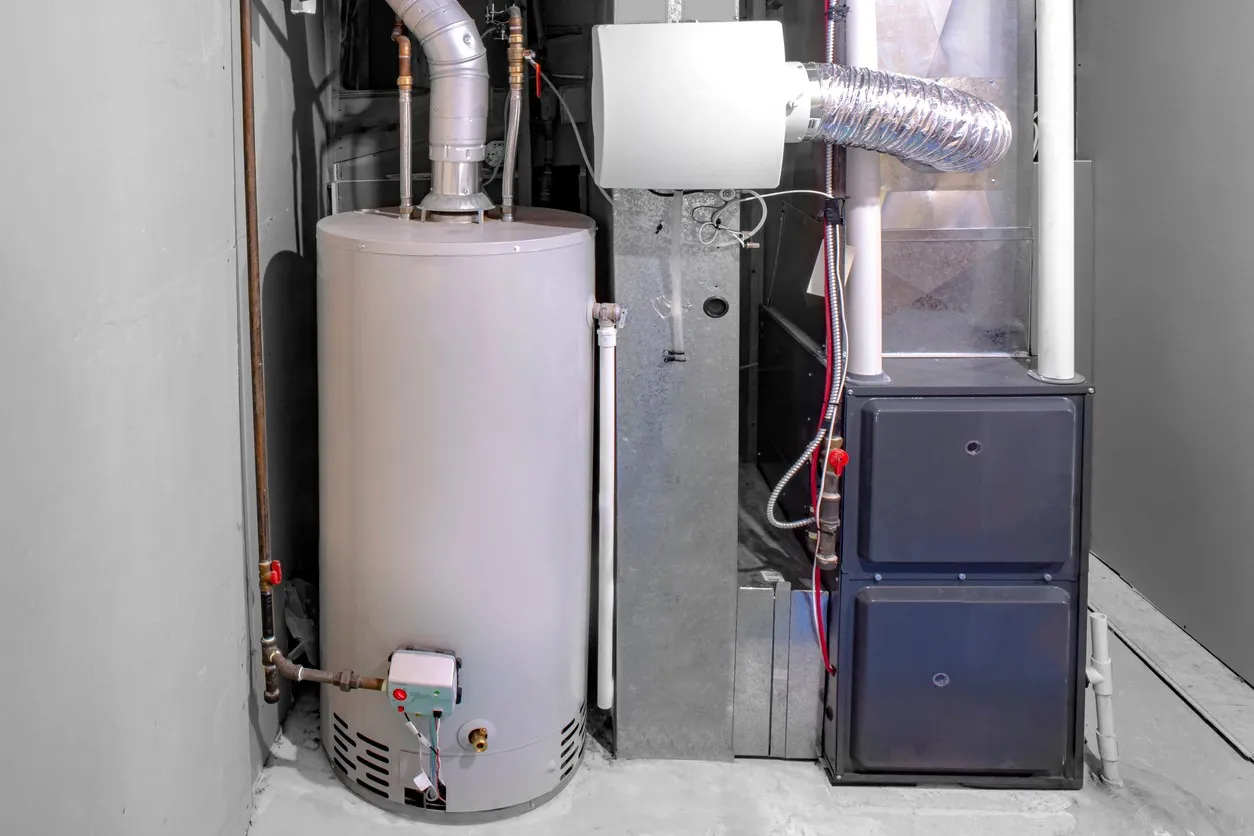
When a heating system fails in Olathe, the issue often stems from one of several core components. Our repair services cover the entire spectrum of furnace mechanics, ensuring that whether you have a gas, electric, or propane unit, the problem is identified and resolved on the first visit whenever possible. We arrive with fully stocked trucks, prepared to address common failures immediately.
Ignition System and Pilot Light Repair
Modern furnaces rely on electronic ignition systems or hot surface ignitors, while older models may still use a standing pilot light. If your furnace clicks but fails to fire, or if the pilot light refuses to stay lit, the issue is often a faulty sensor, a dirty burner, or a failed ignitor. We clean, calibrate, and replace these components to ensure reliable startup.
Airflow and Blower Motor Solutions
If you hear the furnace running but feel little to no air coming from the vents, or if the air is cold, the blower motor or capacitor may be failing. Restricted airflow can cause the system to overheat and shut down prematurely. Our team inspects the blower wheel, tests the motor’s amperage, and checks belt tension on older units to restore proper air circulation throughout the home.
Thermostat and Control Board Diagnostics
Sometimes the furnace is functional, but the signal from the thermostat never reaches the control board. We troubleshoot communication errors between your interface and the heating unit. This includes recalibrating thermostats, checking for low-voltage wiring shorts, and replacing control boards that have suffered from power surges or age-related wear.
Safety Switch and Sensor Replacement
Furnaces are equipped with multiple safety mechanisms, such as limit switches, rollout switches, and flame sensors. These components are designed to shut the system down if dangerous conditions, like overheating or gas leaks, are detected. A dirty flame sensor is a common cause of "short cycling," where the furnace turns on and off rapidly. We clean sensors and replace faulty switches to maintain safe operation.
Gas Valve and Heat Exchanger Inspection
The heat exchanger is the critical component that separates breathing air from combustion gases. A crack in the heat exchanger can lead to carbon monoxide leaks. During every repair call, we inspect the heat exchanger for integrity. We also test the gas valve to ensure it is regulating fuel pressure correctly, preventing inefficient burn rates or dangerous accumulation of gas.
Our Furnace Repair Process Explained
We utilize a systematic approach to heating repair that eliminates guesswork — request service today. Our technicians follow a standardized workflow to diagnose issues accurately and provide transparent solutions.
Initial Assessment and Safety Check
Upon arrival, the technician performs a safety sweep of the unit. This involves checking for gas leaks, carbon monoxide presence, and clear venting. We listen to the unit during its startup sequence to identify abnormal noises like grinding, squealing, or banging, which provide clues to mechanical failures.
Comprehensive Diagnostic Testing
Using multimeter tools and pressure gauges, we test electrical components and gas pressure. We measure the temperature rise—the difference between the air temperature entering the return vent and leaving the supply vent—to determine if the system is heating within manufacturer specifications. We identify the specific part or workflow failure causing the outage.
Clear Reporting and Options
Once the problem is isolated, we explain the findings clearly. You receive a breakdown of what part failed, why it failed, and the cost to repair it. If there are multiple ways to address the issue (such as a temporary fix versus a permanent component replacement), we present those options so you can make an informed decision based on your budget and future plans for the home.
Execution of Repairs
After approval, we proceed with the repair. We use OEM or high-quality equivalent parts to ensure longevity. The technician installs the new components, cleans the surrounding area within the cabinet, and secures all wiring and connections.
System Testing and Calibration
We never leave immediately after installing a part. We cycle the furnace through a full heating run to verify that the repair holds. We check that the flame is blue and steady, the blower initiates at the correct time, and the thermostat satisfies the set temperature. Only when the system is running smoothly do we consider the job complete.
Should You Repair or Replace Your Furnace?
Deciding between sinking money into a repair or investing in a new system is a common dilemma for homeowners. While our priority is to fix your existing unit, there are mathematical and safety thresholds where replacement becomes the more logical financial decision.
The 50% Rule
A general industry standard is the 50% rule. If the cost of the repair approaches or exceeds 50% of the value of a new system, replacement is usually the better investment. Large expenses, such as replacing a heat exchanger or a compressor in a dual-fuel system, often trigger this threshold.
Age of the Equipment
The average lifespan of a forced-air furnace is between 15 and 20 years. If your unit is over 15 years old and requires a significant repair, parts may be harder to source, and efficiency has likely degraded. Investing in a repair for a unit at the end of its lifecycle often leads to throwing good money after bad, as other components are likely to fail soon.
Frequency of Breakdowns
If you have required multiple service calls in the last two winters, your furnace is becoming unreliable. Frequent breakdowns indicate that the internal components are wearing out collectively. Moving to a new system eliminates the stress of unexpected outages during extreme cold.
Safety Concerns
If a diagnosis reveals a cracked heat exchanger, the unit must be shut down immediately due to the risk of carbon monoxide poisoning. While heat exchangers can be replaced, the labor and part cost is substantial. In this specific scenario, replacement is almost always recommended for safety and warranty reasons.
Rising Energy Bills
Older furnaces often operate at 60% to 70% AFUE (Annual Fuel Utilization Efficiency), meaning 30 to 40 cents of every dollar spent on gas is wasted. If your repair bill is high and your monthly utility bills have been creeping up, a modern high-efficiency system (90%+ AFUE) can help offset its cost through monthly savings.
Navigating Local HVAC Regulations and Seasonal Tips
Operating a heating system in Johnson County requires attention to specific regional factors. The humid continental climate means winters can be harsh, with snowfall averaging over 20 inches and temperatures frequently dropping below freezing. This weather pattern places a heavy load on furnaces, requiring them to operate for extended cycles.
Handling Humidity and Condensation
Olathe experiences high humidity in the summer, but winters can be extremely dry inside the home. However, high-efficiency furnaces produce condensation as a byproduct of combustion. In freezing temperatures, the condensate drain lines can freeze if not properly insulated or routed, causing the furnace to shut off via a safety switch. We ensure drain lines are clear and protected against local freeze cycles.
Permit and Code Compliance
Standard repairs, such as replacing a sensor or motor, generally do not require a municipal permit. However, if a repair involves altering gas piping, extensive electrical work, or replacing the entire unit, local codes must be followed to ensure safety and insurance compliance. All Day Comfort Heating and Cooling LLC stays updated on all local regulations to ensure any significant modifications meet current safety standards.
Combustion Air Requirements
Many homes in our area are being renovated to be more airtight for energy efficiency. This can inadvertently starve a standard furnace of the air it needs for combustion. If your furnace is in a small utility closet or basement, we verify that there is adequate intake air. If not, the system may backdraft, pulling exhaust gases back into the home. We assess your mechanical room to ensure it meets local ventilation codes.
Venting Obstructions
With annual snowfall reaching up to 25 inches, it is vital to keep intake and exhaust pipes clear. High-efficiency furnaces often vent out the side of the house low to the ground. Drifting snow can block these pipes, causing the furnace to shut down. We advise homeowners on where to check during heavy snowstorms to prevent unnecessary lockouts.
Why Choose Us for Your Heating Needs
Finding a service provider who offers technical precision without aggressive sales tactics is essential for your peace of mind. Our approach focuses entirely on the mechanics of your home comfort and the longevity of your equipment.
Technical Expertise and Certification
Our team consists of trained professionals who understand the thermodynamics and electrical theory behind modern HVAC systems. We do not just swap parts; we understand how the system functions as a whole. This depth of knowledge allows us to solve complex problems that other companies might miss.
Truck Stock Efficiency
We value your time. Our service vehicles are stocked with a wide inventory of universal and brand-specific parts. This preparation significantly increases the likelihood that we can fix your heating issue in a single visit, reducing the time your home remains without heat.
Transparent Communication
You will never be surprised by a bill. We provide upfront explanations of the work required. We believe in educating our clients on what went wrong and how to prevent it in the future, rather than keeping you in the dark.
Warranty and Guarantees
We stand behind the quality of our workmanship. Repairs are backed by warranties that protect you in the unlikely event a part fails prematurely. When we fix a system, we aim for that repair to last.
Get Immediate Help With Your Heating System
Do not let a broken furnace compromise the safety and comfort of your home. Whether it is a minor electrical glitch or a major component failure, prompt attention prevents further damage and restores your heat faster. Trust All Day Comfort Heating and Cooling LLC to provide the professional, efficient repair service you deserve.
Call us today to schedule your diagnostic visit or apply for financing to handle your repair immediately.
Contact Us
customer reviews
Areas We Serve



Copyright © 2026 All Day Comfort Heating and Cooling.
All rights reserved.
