




Water Heater Repair in Shawnee, KS
Discover expert water heater repair services in Shawnee. Rapid response, comprehensive diagnostics from certified professionals. Get your hot water back today!
Waking Up to a Cold Shower or Leaking Tank?
Is a malfunctioning or broken water heater disrupting your daily routine and causing unnecessary stress in your home? Get efficient, prompt repairs from certified professionals who understand the urgency of restoring your hot water immediately — request service today.
When your water heater fails, it brings household chores and personal hygiene to a grinding halt. Whether you are dealing with a massive leak flooding your utility room or a pilot light that simply refuses to stay lit, you need a solution that prioritizes speed and safety. All Day Comfort Heating and Cooling LLC provides comprehensive diagnostic and repair services to homeowners in Shawnee, ensuring your system is back online without delay.
Our service approach focuses on three critical outcomes:
- Restore your hot water supply today with our prioritized repair scheduling and rapid response protocols.
- Avoid future breakdowns and extend the lifespan of your unit with comprehensive maintenance checks included during the repair.
- Ensure safe, efficient operation with a system that is optimally tuned to handle the demands of your specific household size.
All services are fully licensed, insured, and backed by a satisfaction guarantee to give you total peace of mind.
What to Expect From Professional Repair Services
When a water heater malfunctions, the symptoms are often obvious, but the root cause requires technical expertise to identify. You might experience lukewarm water, a complete lack of heat, strange popping noises coming from the tank, or discolored water. Professional repair services go beyond a quick patch; they involve a thorough analysis of the entire water heating system to ensure the fix is permanent and safe.
Our technicians arrive equipped to handle both gas and electric water heater models. For gas units, the focus is often on the combustion assembly. This includes inspecting the thermocouple, a safety device that detects if the pilot light is on. If the thermocouple is faulty, it shuts off the gas supply to prevent leaks. We also examine the gas control valve, the burner assembly for proper flame characteristics, and the flue vent to ensure dangerous exhaust gases like carbon monoxide are properly vented outside your home.
For electric water heaters, the diagnosis shifts to the electrical components. We test the upper and lower heating elements using a multimeter to detect open circuits or shorts. The thermostats, which regulate the temperature of the water, are also tested to ensure they are cycling the elements on and off correctly. A stuck thermostat can lead to dangerously hot water or no hot water at all. Additionally, we inspect the internal wiring for signs of overheating or corrosion that could pose a fire hazard.
Common components we inspect and repair include:
- Temperature and Pressure Relief Valve (T&P Valve): This safety valve releases water if the pressure or temperature inside the tank gets too high. If it is leaking or stuck, it must be replaced immediately to prevent tank rupture.
- Anode Rod: This "sacrificial" rod attracts corrosion to protect the steel tank. We check its condition and replace it if it is depleted to prevent tank leaks.
- Dip Tube: This tube directs cold water to the bottom of the tank to be heated. If it breaks, cold water mixes with hot water at the top, resulting in lukewarm showers.
- Expansion Tank: In closed plumbing systems, this small tank absorbs excess pressure created by thermal expansion. We check the air charge and integrity of the bladder.
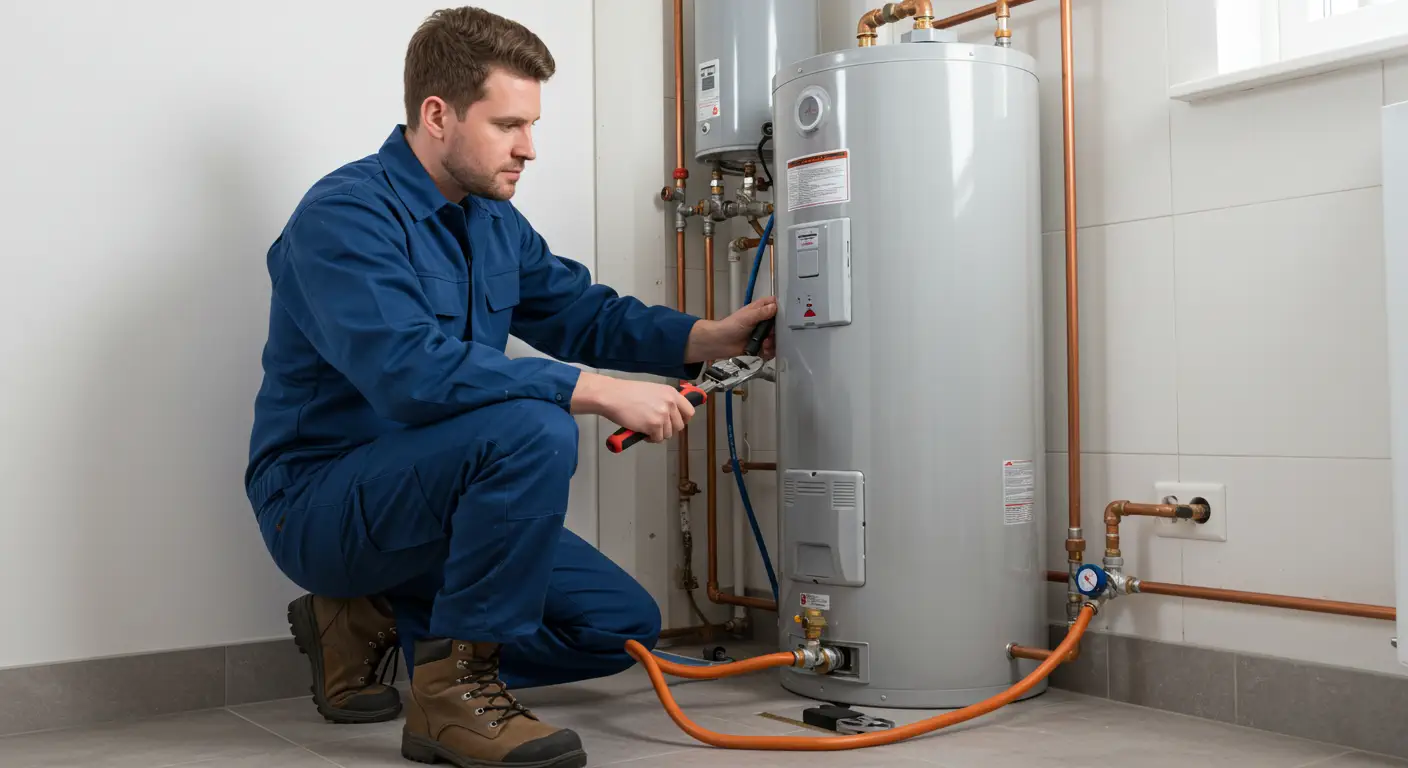
The Water Heater Repair and Restoration Process
Restoring your hot water involves a systematic process designed to identify the issue, rectify it, and verify the safety of the unit. We do not rely on guesswork. Every step is calculated to ensure the repair adheres to manufacturer specifications and local building codes.
The repair workflow typically proceeds as follows:
- Initial Diagnostic and Safety Check: The technician begins by shutting off power or gas to the unit to ensure a safe working environment. We then perform a visual inspection for leaks, soot buildup (on gas units), or scorched wiring. We verify the age of the unit and its capacity to determine if parts are readily available.
- System Draining and Flushing: If the repair requires replacing a heating element or if sediment buildup is suspected, the tank must be partially or fully drained. In areas like Shawnee where water hardness can vary, sediment settles at the bottom of the tank, insulating the water from the heat source and causing the tank to overheat. Flushing removes this sediment, improving efficiency and reducing noise.
- Component Replacement: Once the faulty part is isolated—whether it is a thermocouple, element, or valve—we remove the old component and install a high-quality OEM (Original Equipment Manufacturer) equivalent. Proper installation is critical; for example, heating elements must be properly sealed to prevent leaks, and gas connections must be tested for tightness.
- Refilling and Testing: After the repair is complete, the tank is refilled with water. It is crucial to open a hot water faucet in the house to bleed air out of the lines before turning the power or gas back on. This prevents "dry firing," which can instantly burn out a new electric heating element.
- Final Calibration: We light the pilot (for gas) or flip the breaker (for electric) and monitor the heating cycle. We check the thermostat settings to ensure the water reaches the target temperature—usually 120°F to balance comfort and safety against scalding risks.
- Cleanup and Inspection: The work area is cleaned, and a final inspection ensures no water is dripping from connections. We also verify that the venting system is drawing exhaust correctly.
Making the Call: Repair vs. Replacement
One of the most common questions homeowners face is whether to invest in a repair or opt for a full system replacement. This decision is not always straightforward and depends on several variables, including the age of the unit, the cost of the repair, and the frequency of breakdowns.
Consider these factors when deciding the best path forward:
- The 50% Rule: A general industry standard suggests that if the cost of the repair is 50% or more of the cost of a new water heater, replacement is the smarter financial move — view financing options.
- Age of the Unit: Most traditional tank-style water heaters have a lifespan of 8 to 12 years. If your unit is over 10 years old and requires a significant repair, replacement is usually recommended. Even if the part is fixed, the tank itself is at risk of leaking due to corrosion, which cannot be repaired.
- Frequency of Issues: If you find yourself calling for service multiple times a year, the unit is likely reaching the end of its operational life. Constant repairs add up quickly and result in repeated inconvenience.
- Efficiency Ratings: Older units are significantly less energy-efficient than modern models. If your utility bills have been creeping up, a new unit with better insulation and more efficient heating technology could pay for itself over time in energy savings.
- Tank Integrity: If the tank itself is leaking, repair is not an option. A leaking tank indicates that the internal steel lining has corroded. In this scenario, the entire unit must be replaced immediately to prevent water damage to your home.
All Day Comfort Heating and Cooling LLC technicians provide honest assessments. We will never push for a replacement if a simple repair can extend the life of your current system effectively, but we will also be transparent when a unit has become a liability.
Local Considerations for Homeowners
Operating a water heater in Shawnee presents specific challenges driven by the regional climate and local infrastructure. Understanding these local factors can help you maintain your system better and anticipate when repairs might be needed.
Local nuances that impact your water heater include:
- Seasonal Temperature Fluctuations: The region experiences hot summers and freezing winters. During winter, the incoming groundwater temperature drops significantly. This means your water heater has to work much harder to raise the water temperature to 120°F. This increased workload often leads to heating element failure or sediment-related issues surfacing during the coldest months.
- Water Quality and Sediment: Hard water is a common issue in the area. Minerals like calcium and magnesium precipitate out of the water when heated, forming a layer of sediment at the bottom of the tank. This sediment acts as an insulator, causing the bottom of the tank to overheat and eventually crack. It also causes the "kettling" or popping sounds often heard in older units. Regular flushing is essential in this region.
- Pressure Regulation: Some areas have high municipal water pressure. If the pressure entering your home exceeds 80 psi, it can damage your water heater and other plumbing fixtures. We often check for the presence of a functioning Pressure Reducing Valve (PRV) and an expansion tank.
- Expansion Tanks: Local building codes often require the installation of a thermal expansion tank on closed plumbing systems. When water heats up, it expands. If your home has a backflow preventer on the main water line, that expanded water has nowhere to go, increasing pressure inside the heater. The expansion tank absorbs this pressure. If the bladder in this tank fails, you may see the relief valve on your water heater dripping.
Why Professional Diagnostics Matter
While it may be tempting to attempt a DIY fix for a water heater, the risks usually outweigh the potential savings. Water heaters involve high-voltage electricity, combustible gas, and pressurized hot water. Mishandling any of these elements can lead to catastrophic failure, property damage, or personal injury.
Professional diagnostics provide several distinct advantages:
- Accurate Root Cause Analysis: A tripped breaker might seem like an electrical issue, but it could be caused by a burnt-out heating element or a water leak shorting the connection. Replacing the breaker won't solve the problem. Professionals identify the source, not just the symptom.
- Safety Assurance: Gas leaks are silent and deadly. A professional technician has the tools to detect minute gas leaks and verify that carbon monoxide is not back-drafting into the home. For electric units, ensuring proper grounding is essential to prevent shock hazards.
- Warranty Preservation: Many water heater manufacturers require proof of professional maintenance and repair to honor the warranty. DIY repairs can void these warranties, leaving you responsible for the full cost of a replacement if the tank fails later.
- Code Compliance: Repairs and installations must adhere to local plumbing and building codes. This includes proper clearances for venting, correct gas line sizing, and appropriate discharge piping for the relief valve. Professional technicians are versed in these regulations, ensuring your home remains compliant and insurable.
A professional repair restores the unit to factory specifications. This means you get the correct recovery rate (how fast the water heats up) and the energy efficiency you paid for. Ignoring small issues often leads to larger, more expensive failures down the road. By addressing noises, drips, or temperature fluctuations early with professional help, you protect your investment and ensure continuous comfort for your family.
Secure Your Comfort and Safety Today
A functional water heater is not a luxury; it is a necessity for a sanitary and comfortable home. Don't let a cold shower ruin your morning or a leaking tank damage your property. Quick action can save you money and prevent the need for a premature replacement.
If you are experiencing inconsistent temperatures, strange noises, or leaks, professional help is available to diagnose and resolve the issue immediately. Trust the experts to handle the complexities of gas and electric systems safely. For reliable diagnostics and fast repair services that stand the test of time, reach out to All Day Comfort Heating and Cooling LLC. We are ready to restore your hot water and your peace of mind. Contact us today!
Contact Us
customer reviews
Areas We Serve




Copyright © 2026 All Day Comfort Heating and Cooling.
All rights reserved.
