




HVAC Repair in Lee's Summit, MO
Get reliable HVAC installation in Lee's Summit to ensure comfortable interiors year-round. Contact us for same-day services and expert home assessments.
Facing a Sudden Heating or Cooling Failure?
When your heat pump quits in the middle of a Lee's Summit winter, or your AC sputters during a summer heatwave, quick help is essential. All Day Comfort Heating and Cooling LLC ensures you are not left waiting in uncomfortable temperatures while searching for a solution. Contact us today to schedule a diagnostic or apply for financing immediately:
- Same-day service ensures your comfort is restored quickly.
- Transparent pricing with no hidden fees keeps your finances in check.
- Certified technicians guarantee a high-quality repair on the first visit.
Licensed, bonded, and insured—with flexible financing to ease unexpected burdens.
What to Expect During an HVAC Service Visit
A broken HVAC system disrupts your entire routine. The priority is identifying the root cause of the failure immediately rather than applying a temporary bandage. When a technician arrives at your home, the focus is on a comprehensive diagnostic process that isolates the mechanical or electrical failure.
Modern heating and cooling systems are complex networks of sensors, motors, and pressurized gases. A noise in the outdoor unit might indicate a failing compressor, or it could be a loose fan blade. A furnace blowing cold air could be a simple flame sensor issue or a cracked heat exchanger. The goal is to provide a clear explanation of what is wrong, how long the repair will take, and exactly what it will cost before any work begins.
Service trucks are stocked with a wide inventory of universal and OEM parts to minimize downtime. This includes capacitors, contactors, igniters, control boards, and refrigerants. In most cases, the repair is completed during the initial visit. If a specialized part must be ordered, the timeline is communicated clearly, and temporary solutions may be discussed to keep the home safe.
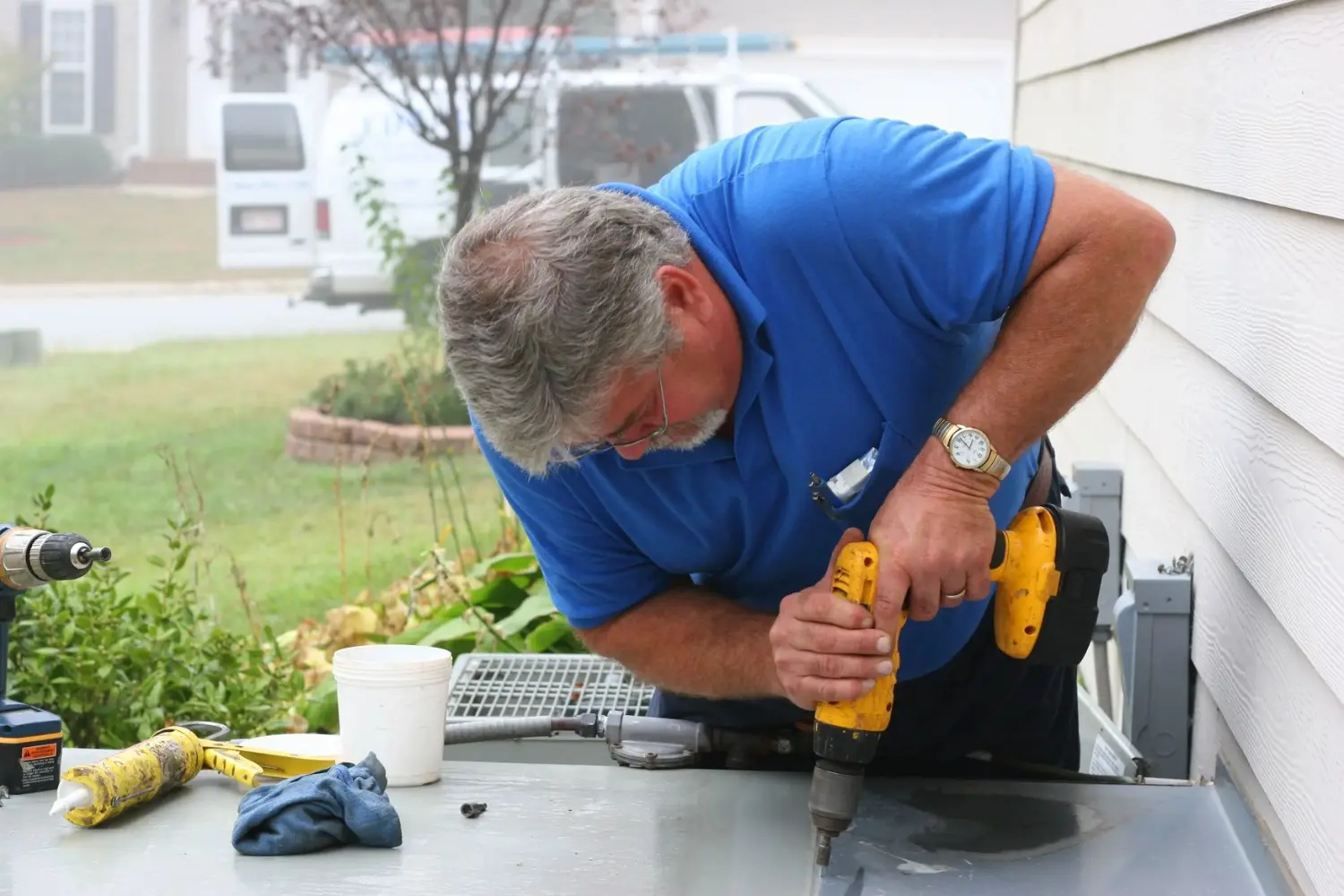
The Technical Repair Process
Restoring a heating or cooling system requires a systematic approach to ensure safety and efficiency. Arbitrary parts swapping is expensive and ineffective. The repair process follows a strict protocol to ensure the system operates according to manufacturer specifications — request service today:
- System Diagnostics: The technician connects gauges to measure refrigerant pressures (subcooling and superheat) and uses multimeters to check voltage and amperage draws on motors and compressors. This data reveals the health of the system.
- Safety Inspection: For furnaces, the heat exchanger is inspected for cracks that could leak carbon monoxide. Gas lines are tested for leaks, and safety switches (limit switches, pressure switches) are verified for proper operation.
- Component Isolation: Once the fault is found, the specific component is isolated. For example, if a capacitor has swollen and failed, it is removed and replaced with a component matching the correct microfarad rating.
- System Cleaning: Often, repairs require cleaning related components. A dirty flame sensor will be polished, or a clogged condensate drain line will be flushed to prevent water damage.
- Performance Testing: After the part is replaced, the system is run through a full cycle. The technician measures the temperature split (the difference between supply and return air) to verify the system is actually heating or cooling effectively.
- Thermostat Calibration: The interface between the user and the machine is checked to ensure it reads the ambient temperature correctly and communicates signals effectively to the control board.
Determining When to Repair vs. Replace
Homeowners often face the difficult decision of whether to invest in a repair or replace the system entirely. This decision should be based on data, age, and long-term cost, not high-pressure sales tactics. There are specific thresholds where repair makes financial sense and others where it becomes a sunk cost.
Consider the age of the unit. In the Lee's Summit area, the average lifespan of an air conditioner or heat pump is 10 to 15 years, while furnaces may last 15 to 20 years. If the equipment is nearing the end of this window, a major repair—such as a compressor or heat exchanger replacement—is rarely a wise investment.
Frequency of breakdowns is another major factor. If the system has required multiple repairs in the last two years, or if utility bills have been steadily climbing despite moderate usage, the system’s efficiency has likely degraded significantly. Newer systems with higher SEER2 (Seasonal Energy Efficiency Ratio) and AFUE (Annual Fuel Utilization Efficiency) ratings can lower monthly energy costs, helping to offset the price of installation:
- The 50% Rule: If the cost of the repair approaches 50% of the value of a new system, replacement is generally the better financial option.
- Refrigerant Type: Older systems utilizing R-22 (Freon) are becoming prohibitively expensive to repair due to the phase-out of this refrigerant. If an R-22 system has a leak, replacement is almost always the correct path.
- Comfort Issues: If the current system results in hot and cold spots throughout the house or fails to control humidity, a simple repair will not solve these design or capacity issues.
- Warranty Status: If the parts are still under manufacturer warranty, repair is usually the most logical choice. If the labor and parts warranties have expired, the risk of future costs increases.
Addressing Common HVAC Failures
Understanding why systems fail helps in making informed decisions. Components wear out due to thermal stress, vibration, and electrical surges.
Capacitor Failure
The run capacitor is like a battery that gives the compressor and fan motors the torque they need to start and run. In high heat, these components degrade. A failing capacitor can cause the compressor to hard start, overheating the windings and potentially causing permanent compressor failure.
Ignition Issues
In gas furnaces, the ignition sequence is strictly monitored by the control board. If the hot surface igniter cracks or the pilot assembly is dirty, the furnace will lock out to prevent gas accumulation. Modern furnaces use flame rectification to prove a fire is present; if the sensor is coated in carbon buildup, the furnace will shut down after a few seconds.
Refrigerant Leaks
An air conditioner is a sealed system. It does not "use up" refrigerant like a car uses gas. Low refrigerant levels indicate a leak. Simply "topping it off" is illegal and ineffective. The leak must be located—often in the evaporator coil or braze joints—and repaired before recharging the system.
Blower Motor Burnout
The blower motor circulates air throughout the ductwork. If the air filter is clogged, the motor must work harder to pull air through, leading to overheating and failure. Variable-speed motors are complex and sensitive to static pressure changes within the ductwork.
Thermostat Malfunctions
Sometimes the issue is not the equipment but the brain controlling it. Dead batteries, loose wiring, or a failed sensor in the thermostat can prevent the system from turning on or cause it to short cycle.
Regional Considerations for HVAC Systems
Operating heating and cooling equipment in Missouri presents unique challenges due to the drastic seasonal swings. Equipment here must be robust enough to handle sub-zero snaps and high-humidity heatwaves:
Humidity Control
Summers in this region are notoriously humid. An air conditioner does more than cool the air; it removes moisture. If an AC unit is short-cycling (turning on and off too quickly), it cools the air but leaves the humidity, resulting in a clammy, uncomfortable indoor environment. Repairs often focus on ensuring the system runs long enough to effectively dehumidify the space.
Winter Freeze/Thaw Cycles
Heat pumps in the area are subject to freezing rain and snow accumulation. The outdoor unit needs to go into a defrost cycle to melt ice off the coils. If the defrost control board fails or the reversing valve sticks, the unit can turn into a block of ice, stopping heat transfer and potentially crushing the fan blades.
Permitting and Codes
When major repairs involve structural changes or full system replacements, adherence to local building codes is mandatory. Work performed in Lee's Summit must comply with city-specific mechanical codes. This includes requirements for flue venting, gas line sizing, and electrical disconnects. Professional providers handle the permitting process to ensure the work passes inspection and future home sales are not jeopardized.
Utility Rebates
Local utility providers often offer rebates for high-efficiency repairs or upgrades. Keeping a system running at peak efficiency aligns with regional energy conservation goals. Documentation provided after a professional repair or tune-up is often necessary to qualify for these incentives.
The Importance of Professional Execution
Attempting DIY repairs on HVAC systems poses significant safety risks. These systems handle high-voltage electricity, combustible gases, and high-pressure refrigerants. A mistake can lead to electrocution, fire, or severe equipment damage.
Professional technicians utilize diagnostic tools that are unavailable to the average homeowner. Manometers measure static pressure in the ducts to ensure proper airflow. Combustion analyzers measure the flue gases to ensure the furnace is burning cleanly and not emitting carbon monoxide into the living space.
All Day Comfort Heating and Cooling LLC focuses on precision. Electrical connections are tightened to specific torque settings. Refrigerant is weighed in to the ounce. Gas pressure is adjusted to the fraction of an inch of water column. This attention to detail extends the life of the repair and ensures the safety of the household.
Reliability involves looking beyond the immediate symptom. If a fuse blows, replacing the fuse does not fix the problem; finding the short circuit does. If a compressor fails, determining if it was caused by liquid slugging or acid in the lines is crucial to preventing the new compressor from failing in the same way.
Maintaining Efficiency After Repair
Once a system is repaired, maintaining that efficiency requires diligence. A repaired system is only as good as its maintenance schedule. The airflow must remain unobstructed:
- Filter Changes: The most critical task for a homeowner is changing the air filter regularly. A dirty filter restricts airflow, raising the temperature of the heat exchanger or freezing the evaporator coil.
- Outdoor Unit Clearance: The outdoor condenser needs room to breathe. Shrubs, fences, and debris should be kept at least two feet away from the unit to allow for proper heat rejection.
- Register Management: Closing vents in unused rooms increases static pressure in the ductwork, which can damage the blower motor and reduce efficiency. Keep at least 80% of registers open.
- Line Set Protection: The copper lines running from the house to the outdoor unit are insulated. If this insulation rots away or is damaged by lawn equipment, the system loses efficiency.
Restoring Your Home's Climate
A functional HVAC system is not a luxury; it is a necessity for health and safety. Whether it is keeping pipes from freezing in January or ensuring a good night's sleep in July, the system must perform on demand. Delaying repairs often leads to more extensive damage and higher costs down the road.
The focus remains on delivering accurate diagnostics, durable repairs, and clear communication. Every home deserves a reliable climate control system backed by technical expertise and local knowledge.
Restore your comfort and ensure your system is operating safely.
Contact our team today to schedule your priority repair service.
Contact Us
customer reviews
Areas We Serve




Copyright © 2026 All Day Comfort Heating and Cooling.
All rights reserved.
