




Duct Installation in Lenexa, KS
Upgrade your HVAC efficiency with professional duct installation in Lenexa by All Day Comfort Heating and Cooling. Ensure balanced indoor climate and lower energy bills. Contact us now!
Dealing with Uneven Temperatures and Rising Energy Costs?
Experiencing hot and cold spots or noticing a steady climb in utility bills despite running a modern HVAC unit? These issues often point to compromised air ducts that require professional attention, not just quick patches. Contact us today to schedule your comprehensive ductwork assessment or inquire about our flexible financing options.
For homeowners in Lenexa, KS, relying on an aging or poorly designed duct system means sacrificing comfort and overpaying for energy. All Day Comfort Heating and Cooling LLC specializes in diagnosing airflow issues and executing precision duct installations that restore balance to your indoor climate.
- Boost your heating and cooling efficiency with expert duct installation designed for optimal airflow.
- Reduce your monthly energy bills by optimizing your HVAC system and eliminating air leaks.
- Experience prompt service to get your comfort back on track quickly.
Licensed and insured services with flexible financing options available.
What to Expect from Our Duct Installation Service
When you commit to a duct installation or replacement, you are investing in the circulatory system of your home. The process begins with an immediate, thorough evaluation of your current infrastructure. Unlike simple repairs that address surface-level symptoms, a full installation focuses on the long-term efficiency and distribution of air throughout the property. You can expect a technician to arrive equipped to assess the static pressure, insulation levels, and structural integrity of the existing layout.
Our approach prioritizes minimizing disruption to your daily routine while ensuring the job is done correctly the first time. Upon arrival, the focus shifts to identifying the root causes of airflow restriction, whether that involves crushed flexible ducts, disconnected joints, or improper sizing for your specific HVAC unit. We provide a clear scope of work that outlines the materials required, the timeline for completion, and exactly how the new design will improve temperature regulation in every room.
Key components of the service include:
- Comprehensive Load Calculation: Determining the exact heating and cooling requirements of your specific floor plan to ensure ducts are sized correctly.
- Custom Fabrication: Creating or sourcing sheet metal and flexible ductwork that fits the unique architectural constraints of your home.
- Sealing and Insulation: Applying industrial-grade mastic or foil tape to seal connections and wrapping ducts in high R-value insulation to prevent thermal loss.
- Airflow Balancing: Adjusting dampers and registers post-installation to ensure every room receives the correct volume of conditioned air.
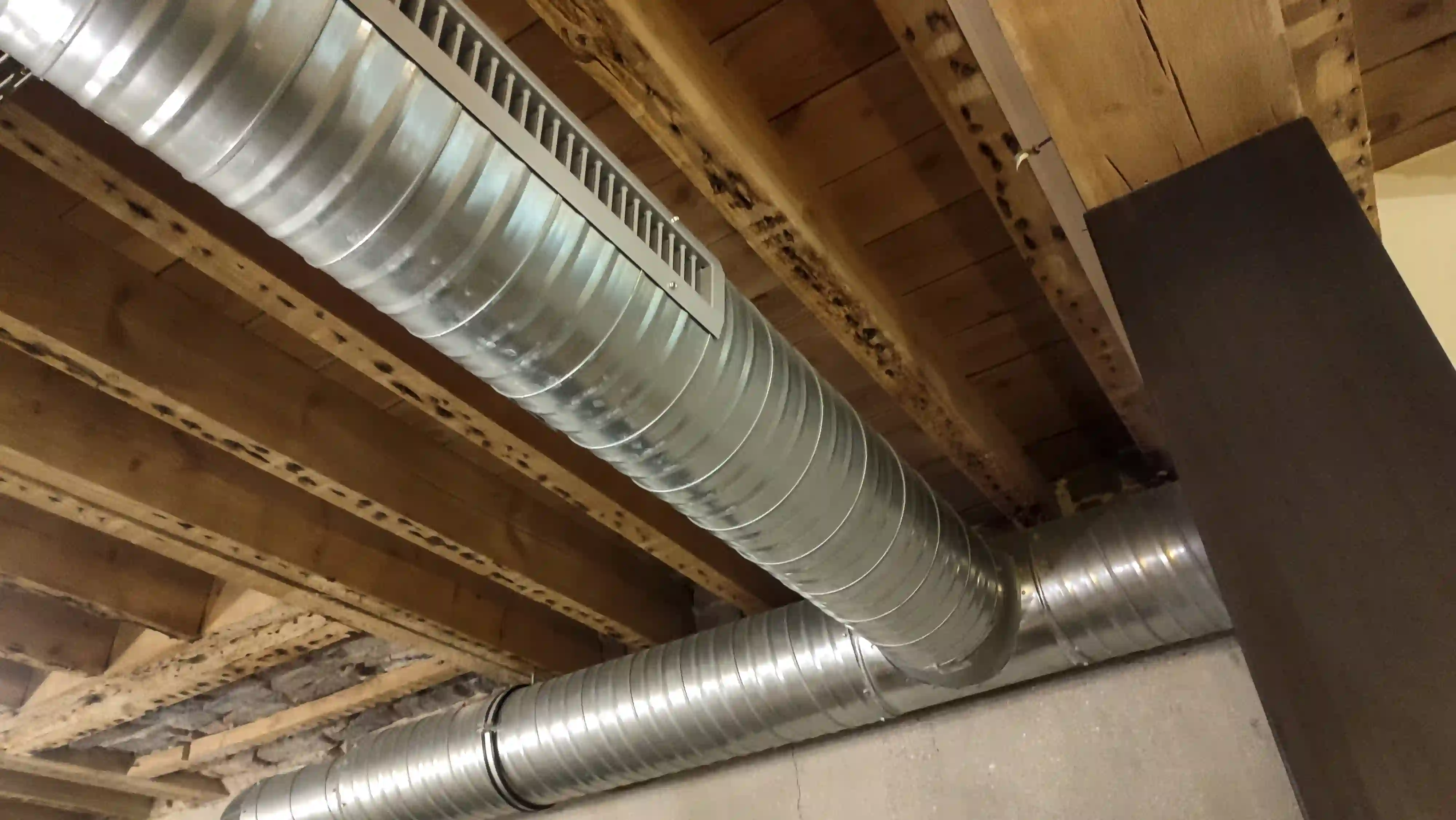
Your Duct Installation Process Explained
A professional duct installation is a systematic operation designed to maximize the lifespan of your heating and cooling equipment. While the complexity of the job varies based on the size of the home and accessibility of the ducts (attics, crawlspaces, or basements), the workflow remains consistent to ensure quality control.
- Site Preparation and Protection
First, the installation team prepares the workspace. This involves laying down drop cloths and protective coverings to safeguard your flooring and furniture. Access points to the attic or crawlspace are cleared, and safety checks are performed to ensure the structural integrity of the workspace. If the job involves a full replacement, the team will establish a pathway for removing old, contaminated materials without spreading dust or debris into the living areas.
- Removal of Old Infrastructure
Next, the existing ductwork is carefully dismantled. This step is critical because old ducts often harbor mold, dust mites, and allergens accumulated over decades. The team disconnects the supply and returns trunks from the main plenum. Careful attention is paid to how the old system was supported to determine if new strapping or hanging mechanisms are necessary. All waste materials are removed from the property for proper disposal.
- Installation of New Ductwork
Following removal, the new system is installed. This phase often starts at the plenum (the box connecting the ducts to the HVAC unit) and works outward toward the vents. Rigid sheet metal is typically used for main trunk lines to maximize airflow efficiency, while flexible ductwork may be utilized for branch lines in tight spaces. Every connection is mechanically fastened with screws and then sealed air-tight. This prevents the "leaky duct" syndrome that plagues many homes in the region.
- insulation and Sealing
Once the physical structure is in place, the team focuses on thermal efficiency. In unconditioned spaces like attics or crawlspaces, ducts are wrapped in thick insulation. This barrier prevents the air inside the duct from heating up in the summer or cooling down in the winter before it reaches your rooms. All joints are sealed with mastic, a gooey sealant that hardens to create a permanent bond, ensuring that the air you pay to condition actually makes it into your living space.
- Final Testing and Cleanup
Finally, the system undergoes rigorous testing. The team turns on the HVAC unit to measure static pressure and airflow velocity at each register. This verifies that the system is balanced and that no room is being starved of air. After the technical checks are complete, a final walkthrough is conducted to ensure the work area is clean and that you understand how to maintain the new system.
Deciding Between Duct Replacement and Repair
Homeowners often struggle with the decision to repair existing ductwork or invest in a completely new installation. While repairs can be cost-effective for minor issues, there are specific scenarios where replacement is the only financially sound option. Continuing to patch a failing system can lead to diminishing returns, higher energy bills, and premature failure of your furnace or air conditioner.
Age of the Ductwork
Ductwork is not designed to last forever. If your system is over 15 to 20 years old, the seals have likely deteriorated, and the insulation has lost its effectiveness. In older homes, the materials used may no longer meet current building codes or energy efficiency standards. If the ducts are reaching the two-decade mark, replacement is usually the smarter investment.
Severity of Damage
Minor leaks can be sealed, but structural damage is different. If flexible ducts have been crushed, torn by pests, or have collapsed due to age, they cannot be effectively repaired. Similarly, if metal ducts have rusted through due to moisture issues, patching the holes will not stop the oxidation process. Extensive damage that restricts airflow requires a full replacement to restore system function.
Incorrect Sizing
Many homes suffer from ductwork that was never sized correctly in the first place. If your ducts are too small for your HVAC unit, it creates high static pressure that strains the blower motor. No amount of sealing will fix a sizing issue. If you have recently upgraded to a larger or more efficient HVAC unit, you may need to replace the ductwork to match the new system’s airflow requirements.
Indoor Air Quality Concerns
If there has been a significant mold infestation or a rodent problem inside the ducts, cleaning may not be sufficient. Porous materials like the inner lining of flexible ducts or fiberglass insulation can trap contaminants that are impossible to fully remove. In these cases, replacement is necessary to ensure the health and safety of the household.
All Day Comfort Heating and Cooling LLC can help you evaluate the condition of your current system and provide data-backed recommendations on whether repair or replacement is the best path forward.
Understanding Lenexa’s Climate Impacts on Your Ductwork
The climate in Lenexa creates specific challenges for ductwork that generic installation practices may not address. The region experiences a humid continental climate, characterized by hot, muggy summers and cold winters with significant precipitation. This drastic seasonal variance places a heavy load on your HVAC infrastructure and necessitates specific installation protocols.
Managing High Humidity
During the summer months, high humidity levels can wreak havoc on ductwork located in unconditioned spaces like crawlspaces or attics. When cold air travels through a duct in a hot, humid attic, condensation can form on the exterior of the duct if it is not properly insulated. This "sweating" can lead to water damage on ceilings, wood rot in framing, and mold growth. Professional installation in this area requires the use of vapor barriers and high R-value insulation to prevent condensation from forming.
Combating Winter Heat Loss
In the winter, the temperature differential works in reverse. Heated air traveling through cold ducts loses thermal energy rapidly if the insulation is insufficient. This forces your furnace to run longer to satisfy the thermostat, increasing wear and tear. Furthermore, winter precipitation and freezing temperatures can affect the structural integrity of the home’s envelope. Ensuring that duct penetrations (where ducts enter or exit the house) are sealed against drafts is crucial for maintaining efficiency during freezing spells.
Code Compliance and Permits
Local building codes in the area regulate how ductwork must be supported, sealed, and insulated. These codes are in place to ensure energy efficiency and fire safety. Professional installers are familiar with these specific local requirements and ensure that every job includes the necessary permits and passes all required inspections. Ignoring these regulations can lead to complications when selling the home or filing insurance claims.
Why Choose Us? Experience, Certification, and Local Commitment
Selecting a contractor for duct installation is a significant decision that impacts your home’s value and your family’s daily comfort. You need a partner who understands the technical science of airflow and the specific architectural styles found throughout the community.
Technical Precision
We utilize industry-standard protocols, such as Manual J and Manual D calculations, to ensure that your new duct system is mathematically designed for your home. We do not guess when it comes to sizing; we measure, calculate, and verify. This technical precision results in a system that runs quieter, maintains consistent temperatures, and uses less energy.
Licensed and Insured Professionals
Our team consists of fully licensed and insured technicians who are trained in the latest HVAC technologies. We take pride in our workmanship and adhere to strict safety standards on every job site. You can trust that the people working in your home are vetted professionals committed to excellence.
Local Expertise
We understand the common issues faced by homeowners in this region, from split-level airflow problems to basement humidity control. Our solutions are tailored to the local housing stock and climate conditions, ensuring that your installation stands up to the weather extremes we experience throughout the year.
Take the Next Step: Secure Your Comfort Today
If you are ready to eliminate hot spots, reduce dust, and lower your utility bills, it is time to upgrade your infrastructure. Don’t let leaky, inefficient ducts drain your wallet any longer — contact us today. Check out our customer reviews to see why homeowners in Lenexa trust us for reliable, efficient, and long-lasting ductwork solutions.
Secure your home comfort and efficiency today—contact All Day Comfort Heating and Cooling LLC to schedule your professional duct installation estimate.
Contact Us
customer reviews
Areas We Serve




Copyright © 2026 All Day Comfort Heating and Cooling.
All rights reserved.
