




Water Heater Service in Lenexa, KS
Struggling with water heater issues in Lenexa? Contact All Day Comfort Heating and Cooling for rapid, expert water heater repairs and installation. Secure your home comfort today.
Is Your Water Heater Failing to Meet Your Daily Needs?
When your water heater fails, it interrupts daily life, leaving you with cold showers and high stress. You rely on consistent hot water for sanitation, comfort, and cleaning, and an unexpected breakdown can bring your household routine to a grinding halt. Our quick, professional service in Lenexa, KS, ensures your hot water is back without disruption. Contact us today to schedule an immediate assessment or discuss flexible financing options.
We provide a streamlined solution to get your system running again:
- Rapid response and assessment within 24 hours to diagnose the root cause.
- Expert installation and maintenance that prolongs appliance life and improves efficiency.
- Transparent pricing and no hidden fees for all services, from minor repairs to full replacements.
All services are fully licensed, with extensive warranties and flexible financing available to suit your budget.
Comprehensive Water Heater Services Available Today
Homeowners often take hot water for granted until the tap runs cold. When you engage All Day Comfort Heating and Cooling LLC for service, you receive a comprehensive approach to water heating tailored to the specific demands of your household. We handle every aspect of water heater care, ensuring that your system functions safely, efficiently, and reliably.
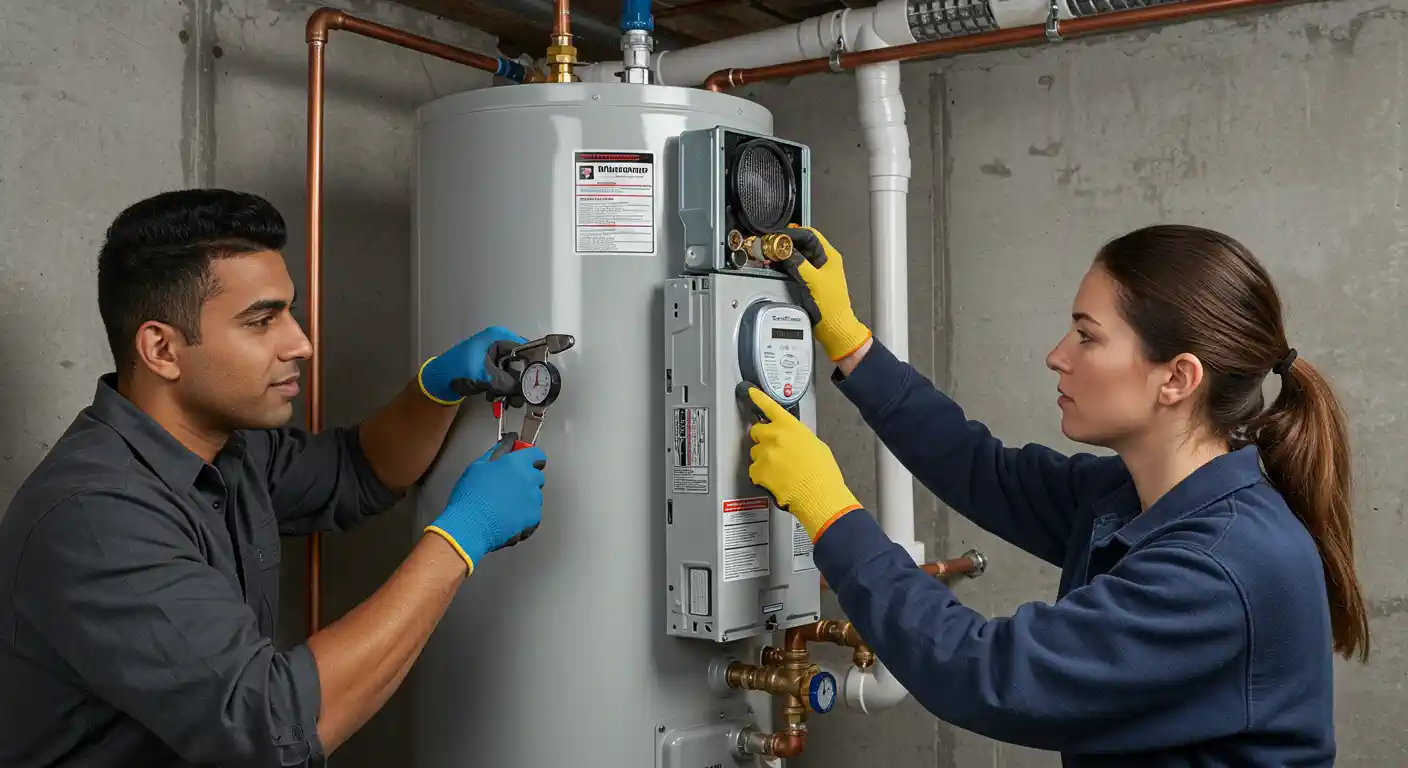
Gas and Electric Tank Water Heaters
Traditional tank-style water heaters remain the most common systems in the region. Whether your unit runs on natural gas or electricity, our team provides full-scope service.
- Diagnosis: We test heating elements, thermostats, gas control valves, and thermocouples to pinpoint exactly why a unit is not producing hot water or is leaking.
- Flush and Drain: Over time, sediment builds up at the bottom of the tank, creating a barrier between the burner and the water. We perform professional flushes to remove this calcification, which restores efficiency and prevents the tank from overheating and cracking.
- Component Replacement: We carry high-quality replacement parts for major brands. If a dip tube is disintegrated or a temperature-pressure relief valve is faulty, we replace the specific component to restore function without requiring a full system swap.
Tankless Water Heater Solutions
For homeowners seeking endless hot water and energy savings, tankless systems are a sophisticated alternative. These units require specialized knowledge due to their complex electronics and combustion systems.
- Descaling: Tankless units are highly susceptible to mineral scale buildup in the heat exchanger. We perform chemical descaling to ensure proper heat transfer and prevent error codes.
- Ventilation Checks: Tankless units often require dedicated venting. We inspect intake and exhaust pipes to ensure there are no blockages or leaks that could lead to carbon monoxide hazards.
- Flow Sensor Calibration: If the unit fails to ignite when the tap is turned on, it is often a flow sensor issue. We calibrate or replace sensors to ensure the unit recognizes demand immediately.
Emergency Leak Repair
A leaking water heater is more than an inconvenience; it is a property damage risk. Water pooling in a utility room or basement can rot flooring and lead to mold growth.
- Shut-off Services: We assist in locating and shutting off the water supply to the unit immediately to mitigate damage — request service today.
- Expansion Tank Service: Leaks often occur because of thermal expansion. We check and replace thermal expansion tanks to ensure safe pressure levels within your plumbing system.
- Drain Valve Replacement: If the leak is coming from the drain valve, we replace the plastic or brass fitting to stop the drip.
The Installation and Replacement Process
Installing a water heater is a technical process involving gas lines, high-voltage electricity, and plumbing connections. Improper installation can lead to water damage, gas leaks, or fire hazards. We follow a rigorous, standardized protocol to ensure every installation meets safety standards and manufacturer specifications.
Assessment and Sizing
- First, we evaluate your current hot water usage. A growing family may need a larger capacity tank or a high-recovery tankless unit. We calculate the First Hour Rating (FHR) required for your home to ensure you do not run out of hot water during peak usage times.
- Next, we measure the physical space. Modern water heaters often have more insulation, making them wider than older models. We ensure the new unit fits within the designated footprint while maintaining required clearances for ventilation and service access.
Safe Removal and Disposal
- We disconnect the power source or gas supply safely.
- We connect a heavy-duty hose to the drain valve to empty the tank. If the tank is filled with sediment, this process requires specialized pumps to extract the water.
- We disconnect the water lines and venting.
- Finally, we haul away the old unit and dispose of it according to environmental regulations, keeping your home clean and clutter-free.
Precision Installation
- We position the new unit, ensuring it is level. A leveled tank is crucial for proper operation and to prevent uneven stress on plumbing connections.
- We install a new drain pan under the unit if required, routing it to a floor drain to protect against future leaks.
- We solder copper pipes or utilize press-fittings to connect the water lines. We also install dielectric unions to prevent galvanic corrosion between dissimilar metals, a common cause of premature pipe failure.
- For gas units, we connect the gas line and test for leaks using electronic sniffers and bubble solutions. We also verify that the flue venting has the correct pitch to exhaust combustion gases safely.
Testing and Commissioning
- We fill the tank completely before turning on the power or gas. "Dry firing" an electric water heater for even a second can burn out the upper heating element instantly.
- We ignite the pilot or power on the unit and set the thermostat to a safe temperature (typically 120°F) to prevent scalding while maximizing energy efficiency.
- Finally, we cycle the system, checking for proper pressure relief and verifying that hot water is delivered to faucets throughout the home.
Deciding Between Repair and Replacement
Determining whether to invest in a repair or opt for a new unit is a common dilemma for homeowners. We provide an honest assessment based on the condition of your current system. The decision typically hinges on four main factors: age, cost, condition, and efficiency.
The Age of the Unit
- Under 6 Years: If the unit is relatively new, repair is almost always the best option. Most manufacturers provide warranties that cover parts for six years. We can process these warranty claims to lower your repair costs.
- 6 to 10 Years: This is the "gray area." If the repair is minor, such as replacing a thermostat or thermocouple, it is worth doing. However, if the unit has not been maintained, this is the age where sediment damage becomes irreversible.
- Over 10 Years: Once a standard tank heater passes the decade mark, it is living on borrowed time. Even if a repair restores function, the likelihood of the tank rusting through and causing a massive leak increases significantly. Replacement is usually the financially prudent choice here.
The 50% Rule
- We recommend following the 50% rule: If the cost of the repair approaches or exceeds 50% of the cost of a brand-new unit (including installation), you should replace it. Investing heavily in an old appliance often leads to "throwing good money after bad" when another component fails shortly after.
Physical Condition
- Leaking Tank: If the steel tank itself is leaking, it cannot be repaired. The liner has failed, and the unit must be replaced immediately.
- Rusty Water: If hot water comes out brown or rusty, it indicates corrosion inside the tank. This signals that the anode rod is depleted and the tank wall is deteriorating. Replacement is necessary to ensure clean water.
- Strange Noises: Rumbling or popping sounds indicate hardened sediment at the bottom of the tank. While a flush might help, severe sediment buildup often means the tank has overheated repeatedly, weakening the metal.
Efficiency Considerations
- Older units are significantly less efficient than modern models. A 15-year-old water heater lacks the insulation and burner technology of current standards. Replacing an old unit can result in noticeable savings on monthly utility bills, which helps offset the cost of installation over time.
Local Considerations for Lenexa Homeowners
Operating a water heater in this region requires specific attention to local climate patterns and municipal regulations. Lenexa and the surrounding Kansas areas present unique challenges that impact how water heaters function and how long they last.
Seasonal Impacts
- Winter Usage: During Kansas winters, the inlet water temperature—the water entering your home from the municipal supply—drops significantly. This means your water heater must work much harder to raise that water to 120°F compared to the summer months. This increased thermal load can expose weak components, leading to failures during the coldest weeks of the year.
- Venting Requirements: Snow and ice accumulation can block roof vents or sidewall intakes for high-efficiency units. Our installation process accounts for local snowfall patterns to ensure vents remain clear, preventing carbon monoxide buildup or system lockouts.
Water Quality and Hardness
- The Midwest is known for having hard water, which contains high levels of dissolved minerals like calcium and magnesium. When water is heated, these minerals precipitate out and form scale.
- Without regular maintenance, this scale coats heating elements (insulating them from the water) and fills the bottom of gas tanks. This causes the burner to run longer to heat the water, increasing energy bills and shortening the tank's lifespan. We strongly recommend annual flushing or the installation of water softeners to combat local water hardness.
Building Codes and Permits
- Lenexa has adopted specific building codes to ensure safety. For example, local codes require thermal expansion tanks on closed plumbing systems. A closed system is created when a backflow preventer is installed on the main water line. Without an expansion tank, the pressure generated by heating water has nowhere to go, damaging valves and pipes.
- Pressure Reducing Valves (PRVs) are often required if the municipal water pressure exceeds 80 PSI. High pressure can rupture water heater tanks. We check your home’s pressure during service to ensure compliance and safety.
- Permits are generally required for water heater replacements. We handle the permitting process, ensuring that the installation passes inspection by local authorities. This compliance is vital for your safety and for maintaining the validity of your homeowner's insurance.
Why Professional Service Matters
While some home repairs can be handled by a handy homeowner, water heater service involves risk factors that require professional certification. Dealing with gas lines, exhaust fumes, and 240-volt electricity requires specialized training and tools.
Safety Verification
- Carbon Monoxide: Improperly vented gas water heaters are a leading cause of carbon monoxide leaks in homes. We use sensitive equipment to detect back-drafting, ensuring that dangerous gases are being vented outside, not into your living space.
- Gas Leaks: A small gas leak can be catastrophic. We ensure all connections are sealed and pressure-tested.
- Scald Prevention: We set thermostats to safe levels and can install mixing valves to ensure water is hot enough to kill bacteria in the tank but cool enough to prevent scalding at the tap.
Warranty Protection
- Most water heater manufacturers require proof of professional installation to honor their warranties. DIY installation often voids the warranty immediately. By choosing All Day Comfort Heating and Cooling LLC, you ensure your equipment remains covered against manufacturing defects.
Proper Sizing and Efficiency
- An undersized water heater will run constantly, driving up energy costs and failing to provide enough hot water. An oversized unit wastes energy keeping a massive volume of water hot when it isn’t needed. We perform load calculations to match the unit perfectly to your family’s needs, optimizing energy consumption and comfort.
Secure Your Home’s Hot Water Supply
A reliable water heater is essential for the hygiene and comfort of your household. Ignoring signs of failure—such as lukewarm water, odd noises, or puddles—can lead to emergency breakdowns and water damage. By addressing issues early with professional maintenance or timely replacement, you protect your home and ensure consistent performance year-round.
We deliver decisive, expert solutions for all water heating issues. Whether you need a simple repair, routine maintenance to fight sediment buildup, or a complete system replacement with a high-efficiency model, our team executes the work with precision and adherence to all local safety codes.
Don't wait for a cold shower to take action. Secure the comfort and safety of your home today.
Contact us now to schedule your water heater service.
Contact Us
customer reviews
Areas We Serve




Copyright © 2026 All Day Comfort Heating and Cooling.
All rights reserved.
