




AC Replacement in Overland Park, KS
Beating Overland Park's heat with efficient AC replacement. Quick, professional service and high-performance cooling systems. Schedule a consultation today.
Surviving the Summer Heat: Is It Time to Replace Your AC?
Struggling with an air conditioner that can't keep up with the intense humidity and 90-degree days common in Overland Park? You might be facing frequent repairs, rising utility bills, or a system that simply blows warm air when you need cooling the most. If you are ready to restore comfort to your home, contact us here to schedule your replacement consultation today.
When a cooling system reaches the end of its lifespan, patching it up often costs more in the long run than investing in a modern, efficient unit. Homeowners need a solution that addresses immediate discomfort while providing long-term reliability.
- Quick, professional installation to ensure your comfort is restored without delay
- Energy-efficient systems that drastically reduce your monthly utility bills
- Reliable local service with a satisfaction guarantee regarding performance
All installations are backed by a full warranty and competitive financing options, approved quickly.
Immediate Relief and Long-Term Cooling Solutions
The decision to replace a central air conditioning system is significant, involving more than just swapping out the outdoor condenser. It is an investment in the infrastructure of your home and the health of your family. All Day Comfort Heating and Cooling LLC provides a comprehensive replacement service designed to minimize downtime while maximizing the efficiency of the new equipment.
Modern air conditioning units operate differently than systems manufactured even ten years ago. Advances in compressor technology, variable-speed motors, and smart thermostat integration mean that a new installation offers precise temperature control and superior humidity removal. For residents in Overland Park, where summer moisture levels can make indoor air feel heavy and uncomfortable, superior humidity control is a non-negotiable requirement.
A proper replacement involves a holistic view of the HVAC system. This includes inspecting existing ductwork for leaks that could compromise the new unit's efficiency, checking the refrigerant line set for integrity, and ensuring the electrical panel can support the new equipment. The goal is to provide a seamless transition from a failing unit to a high-performance system that runs quietly in the background.
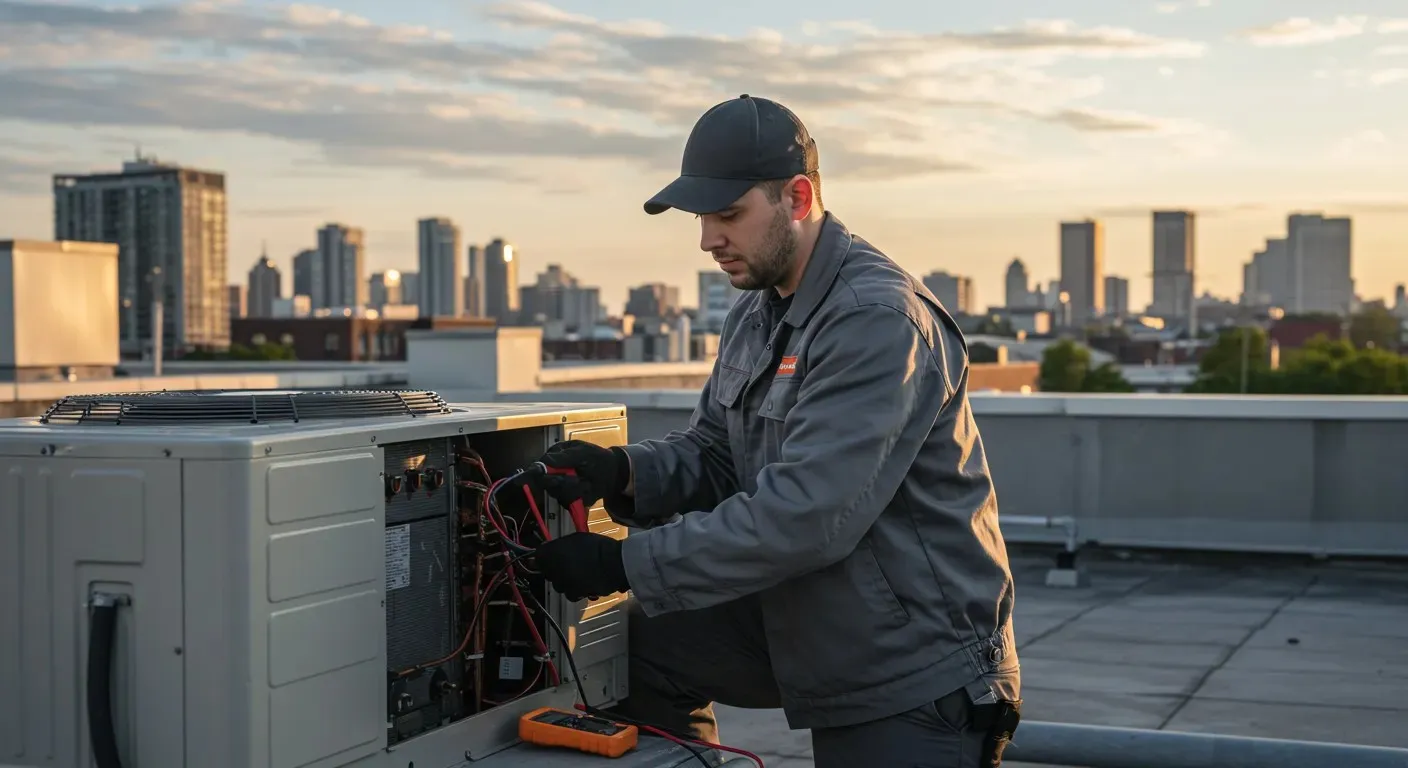
A Systematized Approach to Air Conditioner Installation
A successful installation relies on a strict adherence to technical standards and manufacturer specifications. Cutting corners during the installation phase is the leading cause of premature system failure. A rigorous process ensures that the equipment operates at its rated efficiency (SEER2) and delivers the expected lifespan.
The installation process generally follows these critical phases:
- Site Evaluation and Load Calculation: The process begins with a Manual J load calculation. This engineering standard determines exactly how much cooling power a home requires based on square footage, insulation levels, window orientation, and local climate data. Installing an oversized unit causes "short cycling," where the unit turns on and off too frequently, failing to remove humidity. An undersized unit runs constantly without reaching the target temperature.
- System Selection: Based on the load calculation, options are presented that fit the specific structural needs of the home. This includes selecting the right Seasonal Energy Efficiency Ratio (SEER2) to balance upfront costs with long-term energy savings.
- Safe Removal of Existing Equipment: The old refrigerant must be recovered according to EPA regulations to prevent environmental contamination. The old unit is then disconnected from the electrical and ductwork systems and removed from the property.
- Preparation of the Installation Site: The pad where the outdoor unit sits is leveled or replaced to ensure proper drainage and vibration isolation. Indoors, the plenum (the box connecting the unit to the ductwork) is inspected and modified if necessary to fit the new evaporator coil.
- Installation of Components: The new condenser (outdoor unit) and evaporator coil (indoor unit) are positioned. The refrigerant line set—the copper tubing connecting the two—is either flushed and reused or replaced entirely depending on the type of refrigerant used in the previous system.
- Brazing and sealing: Technicians connect the copper lines using high-heat brazing techniques to create a sealed, high-pressure loop. This step is critical to preventing refrigerant leaks, which are a primary cause of poor cooling performance.
- Electrical and Thermostat Connections: High-voltage wiring is connected to the disconnect box and the unit, adhering to all local safety codes. Low-voltage control wiring is connected to the thermostat.
- Vacuum and Charge: A vacuum pump removes all moisture and air from the refrigerant lines. Once a deep vacuum is achieved, the system is charged with the precise amount of refrigerant specified by the manufacturer.
- Final Testing and Commissioning: The system is powered on, and technicians measure airflow, static pressure, and temperature drop (the difference in air temperature entering and leaving the unit) to verify optimal performance.
Deciding Between a Repair and a New System
Determining whether to repair a faltering unit or replace it entirely is a common dilemma — request a quote today. While repairs can solve immediate issues, they often serve as temporary bandages on a system that is fundamentally failing. There are clear indicators that shift the logic from repair to replacement.
The most widely used metric is the "50% Rule." If the cost of the repair approaches 50% of the value of the system—or 50% of the cost of a new unit—replacement is the financially sound choice. Additionally, the "5,000 Rule" serves as a helpful guide: multiply the age of the unit by the repair cost. If the total exceeds $5,000, replacement is recommended. For example, a 12-year-old unit requiring a $500 repair (12 x 500 = 6,000) is a candidate for replacement.
Other critical factors include:
- Refrigerant Type: Older systems utilize R-22 (Freon), which has been phased out due to environmental regulations. R-22 is becoming prohibitively expensive and difficult to source. If an R-22 system develops a leak or compressor failure, replacement with a system using R-410A or newer refrigerants is usually the only viable option.
- Frequency of Breakdowns: If a system requires service calls multiple times a year, the cumulative cost of service fees and parts often exceeds the monthly financing cost of a new system.
- Rising Energy Bills: As components wear out, motors and compressors work harder to produce the same amount of cooling. A sudden spike in electricity usage during the summer months indicates the system has lost efficiency.
- Uneven Cooling: If certain rooms remain hot while others are freezing, or if the unit runs constantly without dropping the temperature, the compressor may be losing compression or the unit may be undersized for the current heat load of the home.
Navigating Local Climate and Regulatory Requirements
Operating an air conditioner in this region presents specific challenges due to the climate. The combination of high ambient temperatures and significant humidity places a heavy load on cooling equipment. A standard AC unit doesn't just cool the air; it acts as a dehumidifier. If a unit is not functioning correctly in this climate, mold and mildew growth can become a concern within the ductwork and the home.
Local regulations also play a role in replacement projects. Most municipalities require permits for HVAC replacements to ensure the work meets safety standards.
- Permitting: A professional provider handles the acquisition of all necessary mechanical and electrical permits. This ensures the installation complies with local building codes regarding breaker sizing, wire gauge, and disconnect box placement.
- Inspections: Following installation, a city or county inspector may review the work. This provides a layer of protection for the homeowner, verifying that the installation is safe and code-compliant.
- Clearance and Placement: Local codes often dictate where an outdoor unit can be placed relative to the property line and operable windows. Correct placement ensures compliance and prevents noise disturbances for neighbors.
- Condensate Management: Local codes specify how condensate (water removed from the air) must be drained. In many cases, a secondary drain pan and a float switch are required to prevent water damage to the home if the primary drain line clogs.
Selecting the Right Cooling Technology for Your Home
Homeowners today have more choices than ever regarding how they cool their living spaces. The architecture of the home and existing ductwork infrastructure usually dictate the best option, but understanding the differences is helpful during the decision process.
- Central Air Conditioning (Split Systems): This is the most common setup, consisting of an outdoor condenser and an indoor evaporator coil located on the furnace or air handler. It uses existing ductwork to distribute air. Modern central systems are available in single-stage (on/off), two-stage (high/low), and variable-speed configurations. Variable-speed units offer the highest efficiency and comfort by adjusting cooling output in small increments to match the heat load.
- Heat Pumps: Physically looking much like a standard AC, a heat pump can reverse its operation to provide heating in the winter and cooling in the summer. In climates with moderate winters, or when paired with a gas furnace (dual fuel), heat pumps are incredibly efficient.
- Ductless Mini-Splits: For homes without ductwork, or for room additions that the current central system cannot support, ductless mini-splits are an ideal solution. These systems mount directly on the wall or ceiling and connect to an outdoor compressor via a small conduit. They allow for "zoning," meaning different rooms can be set to different temperatures.
Maximizing Energy Efficiency and Lowering Monthly Costs
The efficiency of an air conditioner is measured by its Seasonal Energy Efficiency Ratio (SEER2). The higher the rating, the less energy the unit consumes to provide a specific cooling output. Federal regulations have raised the minimum efficiency standards, meaning even a baseline new unit is significantly more efficient than a model installed 15 years ago.
Upgrading from a 10 SEER unit to a 16 SEER2 unit can reduce cooling costs by a substantial margin. Over the lifespan of the system—typically 15 to 20 years—these savings can offset a large portion of the initial installation cost.
Beyond the unit itself, efficiency is maximized through:
- Smart Thermostats: These devices learn the homeowner's schedule and adjust temperatures automatically, ensuring energy isn't wasted cooling an empty house. Many can be controlled remotely via smartphone apps.
- Variable Speed Blowers: All Day Comfort Heating and Cooling LLC often recommends pairing new AC units with variable-speed furnaces or air handlers. These blowers consume less electricity and circulate air more continuously, which helps eliminate hot spots and improves air filtration.
- Proper Airflow: Ensuring that return air vents are not blocked by furniture and that the filter is changed regularly keeps the static pressure low, allowing the motor to run efficiently without overheating.
Reliable Cooling Performance You Can Trust
Investing in a new air conditioning system from All Day Comfort Heating and Cooling LLC is about securing peace of mind. It means knowing that when the temperature spikes, your home will remain a sanctuary. It involves trusting that the technicians entering your home are background-checked, certified, and respectful of your property.
A professional AC replacement service in Overland Park, KS includes robust warranty protection. This typically includes a manufacturer's limited warranty on parts (often 10 years upon registration) and a labor warranty from the installer. These guarantees ensure that if a defect arises, the homeowner is not left covering the cost of repairs for a brand-new system.
Don't wait for a total system failure during the hottest week of the year. Proactive replacement allows you to choose the system that best fits your budget and comfort needs without the pressure of an emergency. Secure your home's comfort and efficiency with a professionally installed cooling system.
Click here to schedule your AC replacement estimate.
Contact Us
customer reviews
Areas We Serve




Copyright © 2026 All Day Comfort Heating and Cooling.
All rights reserved.
