




Duct Repair in Overland Park, KS
Experience quick, effective duct repair in Overland Park with All Day Comfort. Schedule today to fix uneven temperatures and improve air quality in your home.
Solving Your Ductwork Dilemmas Quickly and Effectively
Dealing with malfunctioning HVAC systems due to duct issues in Overland Park can lead to uneven temperatures, skyrocketing energy bills, and poor indoor air quality. We ensure a quick, effective repair that restores your comfort without delay—Schedule your duct repair service today.
When your air distribution system fails, the comfort of your home is compromised immediately. Whether you are hearing strange rattling noises, noticing dust accumulation near vents, or feeling weak airflow in specific rooms, All Day Comfort Heating and Cooling LLC provides the technical expertise required to diagnose and resolve the issue. Homeowners need reliable solutions that address the root cause of the air loss rather than temporary patches.
- Expert technicians available to address airflow concerns immediately.
- Clear pricing and no hidden costs for all duct repairs.
- High-quality repairs that ensure long-term relief and efficiency.
All repairs comply with local codes and come with a full warranty for peace of mind.
What You Can Expect From Professional Duct Repair Services
When you authorize a professional repair, the goal is to restore the integrity of the "envelope" that carries conditioned air throughout your home. A technician does not simply apply tape to a leak; the process involves a comprehensive assessment of the static pressure and physical condition of the ductwork. The service scope typically covers the sealing of leaks, re-connecting separated sections, insulating exposed metal, and straightening flex ducts that have collapsed or kinked.
Most repair jobs are completed within a single day, depending on the accessibility of the ducts in attics, crawlspaces, or basements. The immediate result of a successful repair is a noticeable change in how the system sounds and feels. The HVAC unit no longer strains to push air through compromised channels, which often results in a quieter operation. Furthermore, the air reaching your living spaces is cleaner because pollutants from the attic or crawlspace can no longer be siphoned into the supply air through gaps in the ductwork.
- Leak Identification: Technicians use specialized diagnostic tools to locate invisible leaks where conditioned air is escaping.
- Material Application: Professional-grade mastic sealant and fiberglass mesh are used instead of standard duct tape, which creates a permanent, airtight seal.
- Insulation Restoration: Any insulation that was removed or damaged during the failure is replaced to prevent thermal loss and condensation issues.
- Airflow Balancing: Adjustments are made to dampers and registers to ensure that air is distributed evenly across all rooms, eliminating hot or cold spots.
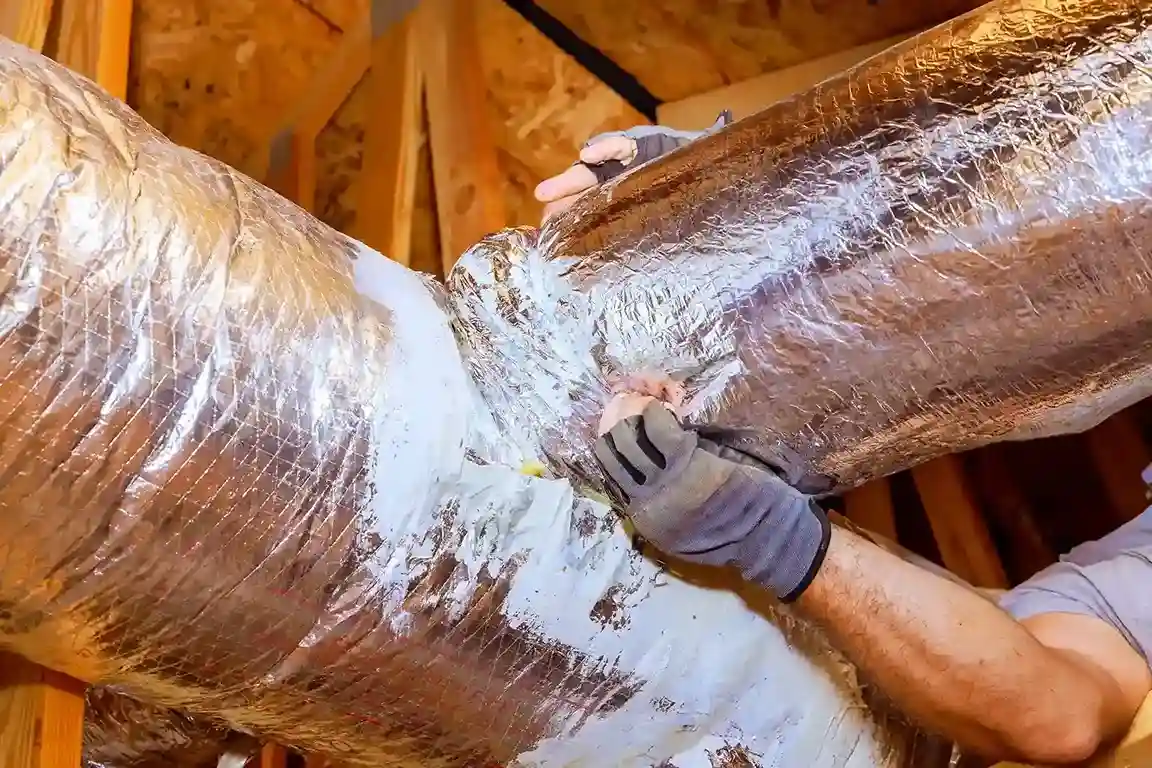
The Repair Execution Process: Restoring System Integrity
Restoring a compromised duct system requires a methodical approach to ensure no leak is overlooked. The process begins with a thorough inspection. Technicians must physically enter the spaces where ducts run—often tight, unconditioned areas like attics or crawlspaces—to visually inspect every connection point. They look for disconnected joints, crushed flexible ducts, and deterioration caused by age or pests.
Once the damage is mapped out, the physical repair work begins. This involves removing damaged materials and preparing the surface for sealing. If a metal duct section has rusted or bent, it may need to be re-shaped or reinforced with sheet metal screws before sealing. For flexible ducts, the inner liner is checked for tears. If the inner liner is intact but the outer insulation is torn, the insulation is repaired. If the inner core is breached, that section is typically cut out and replaced with a new splice to ensure smooth airflow.
- Initial Diagnostics: The team measures static pressure to determine if the system is suffering from high restriction or significant leakage.
- Access and Preparation: Work areas are prepped to keep the home clean, and technicians navigate to the problem areas with the necessary tools and materials.
- Sealing and Securing: Mastic paste is painted over joints and seams. This substance hardens into a durable, rubber-like seal that creates an airtight bond. Mechanical fasteners are tightened to ensure ducts do not vibrate loose in the future.
- Support and Strapping: Flexible ducts are re-hung using proper strapping techniques. This eliminates sags that restrict airflow and reduces the strain on connection points.
- Final Verification: The system is turned on, and airflow is tested at the registers. Technicians verify that the repairs have restored proper pressure and velocity to the system.
Determining When to Repair vs. Replace Ductwork
Homeowners often face the decision of whether to patch an existing system or invest in a full replacement. This decision relies heavily on the age of the ductwork, the material it is made from, and the extent of the damage. Repair is generally the preferred route when the damage is localized. If a single boot has disconnected or a specific run of flex duct has been crushed, a targeted repair is cost-effective and efficient. Metal ductwork is highly durable and can often be resealed and insulated effectively even after decades of use, provided it has not rusted through.
However, there are scenarios where replacement becomes the more logical financial decision. If the ductwork is over 15 to 20 years old and requires multiple repairs in different locations, the labor cost of fixing each leak may approach the cost of installing a modern, more efficient system. Additionally, older systems were often designed without modern airflow calculations, meaning they may be undersized for the current HVAC equipment. In such cases, repair will not solve the fundamental design flaws causing the discomfort.
- Extent of Damage: If more than 30% of the duct system requires repair, replacement is often recommended to ensure consistent performance.
- Contamination Issues: If ducts have been infested by rodents or have extensive mold growth inside the lining, cleaning and repair are rarely sufficient. Replacement ensures sanitary air quality.
- Energy Efficiency Goals: Modern flexible ducts have higher insulation values (R-8 or higher) compared to older materials. Replacing old, thin ducts can significantly reduce thermal loss.
- Collapsed Insulation: If the insulation on flex ducts has degraded or become wet, it loses its ability to retain heat or cold. This often necessitates replacement of the affected runs.
Regional Considerations for Duct Performance
The climate in this region plays a significant role in how ductwork functions and degrades over time. Overland Park experiences significant humidity swings, with hot, muggy summers and cold, dry winters. This variance creates stress on duct systems, particularly those located in unconditioned spaces like attics. In the summer, the temperature in an attic can exceed 130°F. If the cold supply ducts are not perfectly insulated and sealed, condensation (sweating) will form on the exterior of the ducts. This moisture can lead to water damage on ceilings, mold growth on the duct insulation, and accelerated rusting of metal components.
Conversely, during the winter months, heat loss from leaky ducts in unheated spaces represents a direct waste of money. The furnace must work harder to maintain the set temperature because a portion of the heated air is bleeding into the attic or crawlspace. Local building codes and energy standards (IECC) are designed to combat these losses. Repairs must meet specific sealing requirements to minimize air leakage. Professionals must be aware of these local standards to ensure that any modification to the system passes inspection and delivers the expected energy savings.
- Condensation Management: Proper vapor barriers are essential in this climate to prevent the humid summer air from reaching the cold surface of the inner duct.
- Utility Efficiency: Leaky ducts are a primary cause of high utility bills during peak heating and cooling seasons. Sealing these leaks directly impacts monthly operational costs.
- Permitting and Safety: Significant modifications to the duct system may require permits to ensure safety and compliance with local fire and mechanical codes.
- Seasonal Inspections: Due to the extreme temperature shifts, All Day Comfort Heating and Cooling LLC recommends checking ductwork periodically to ensure seals have not cracked due to thermal expansion and contraction.
Signs Your Ductwork Needs Professional Attention
Identifying duct issues early can prevent premature failure of the furnace or air conditioner. The HVAC system relies on a precise balance of supply and return air. When ducts leak, this balance is thrown off, causing the blower motor to work against incorrect pressures. One of the most common signs of a problem is excessive dust. If you find yourself dusting furniture constantly, or if you see dark streaks on the carpet near baseboard vents, it often indicates that the return ducts are pulling dirty air from wall cavities or crawlspaces.
Another clear indicator is a discrepancy in room temperatures. If the living room is comfortable but a bedroom down the hall is perpetually five degrees hotter in the summer, the duct leading to that room may be disconnected, crushed, or leaking significantly. Odors are also a telling sign. Musty smells when the AC turns on or fume-like odors often suggest that the return air ducts are drawing in air from the garage, basement, or attic rather than recirculating clean air from the house.
- High Energy Bills: A sudden or gradual increase in energy costs without a change in usage habits points to system inefficiency, often caused by duct leakage.
- Noisy Operation: Whistling, popping, or booming noises when the system starts or stops can indicate pressure imbalances or loose metal connections.
- Weak Airflow: Putting a hand over a vent and feeling little to no air coming out, despite the system running, confirms a blockage or disconnection in the branch line.
- Pest Intrusion: Evidence of rodents or insects in the home can sometimes be traced back to entry points in compromised ductwork.
Why Precision Matters in Air Distribution
The quality of the repair determines the longevity of the solution. "Good enough" does not apply to aerodynamics and thermodynamics. A small gap in a return plenum can suck in enough humid air to overwhelm an air conditioner's dehumidification capacity. A crushed flex duct can reduce airflow to a room by over 50%, rendering that room unusable during extreme weather. Professional repair services focus on the physics of airflow, ensuring that every cubic foot of conditioned air produced by your equipment reaches its intended destination.
Technical accuracy also extends to the materials used. Cloth-backed duct tape fails quickly due to the heat cycles in an attic. Professionals use mastic sealant, which is a gooey, cement-like substance that is painted on and reinforced with mesh. Once cured, it creates a seal that lasts for decades. Metal foil tape with an acrylic adhesive is used for specific applications, but only when appropriate. Understanding which material to use and where is what separates a professional repair from a temporary handyman fix.
- Static Pressure Testing: Ensuring the repair does not increase the resistance in the system, which could damage the blower motor.
- Thermal Imaging: Using infrared cameras to verify that insulation repairs are effective and no heat is bleeding through the fix.
- Code Compliance: Ensuring all materials meet the fire and smoke safety ratings required for residential construction.
Securing Your Home's Comfort and Efficiency
A compromised duct system undermines the performance of even the most expensive heating and cooling equipment. By addressing leaks, disconnects, and insulation failures, you restore the efficiency, safety, and comfort of your home. The investment in repair pays dividends through lower utility bills, reduced dust, and consistent temperatures in every room.
Don't let energy waste and discomfort continue to impact your household. All Day Comfort Heating and Cooling LLC is ready to assess your system and provide the precise repairs needed to get your air distribution back on track.
Contact us now to secure your duct repair appointment
Contact Us
customer reviews
Areas We Serve




Copyright © 2026 All Day Comfort Heating and Cooling.
All rights reserved.
