



Heating Service in Overland Park, KS
Facing heating issues in Overland Park? Get fast, reliable repair services with no hidden fees. Immediate assessments, comprehensive diagnostics and quick solutions tailored for your comfort.
Reliable Heating Solutions for Critical System Failures
Frigid temperatures in Overland Park can push your heating system to the limit, often causing breakdowns exactly when you need warmth the most. When your furnace or heat pump fails, you need swift, trustworthy service to restore your comfort and protect your home from freezing conditions. Secure your appointment for heating service in Overland Park, KS.
- Immediate on-site service assessments and repairs to restore heat quickly.
- Transparent pricing structures provided upfront with no hidden fees.
- Full-service HVAC solutions designed to keep your system in optimal condition year-round.
Backed by comprehensive warranties and convenient financing options to ensure your peace of mind, All Day Comfort Heating and Cooling LLC provides the technical expertise required to handle complex heating challenges.
Comprehensive Diagnostics and Immediate Repair Scope
When a heating system malfunctions, the primary goal is to accurately identify the root cause rather than simply treating the symptom. A lack of heat is often a sign of a specific component failure, airflow restriction, or electrical issue. Professional service begins with a thorough evaluation of the entire system to ensure that once the heat comes back on, it stays on.
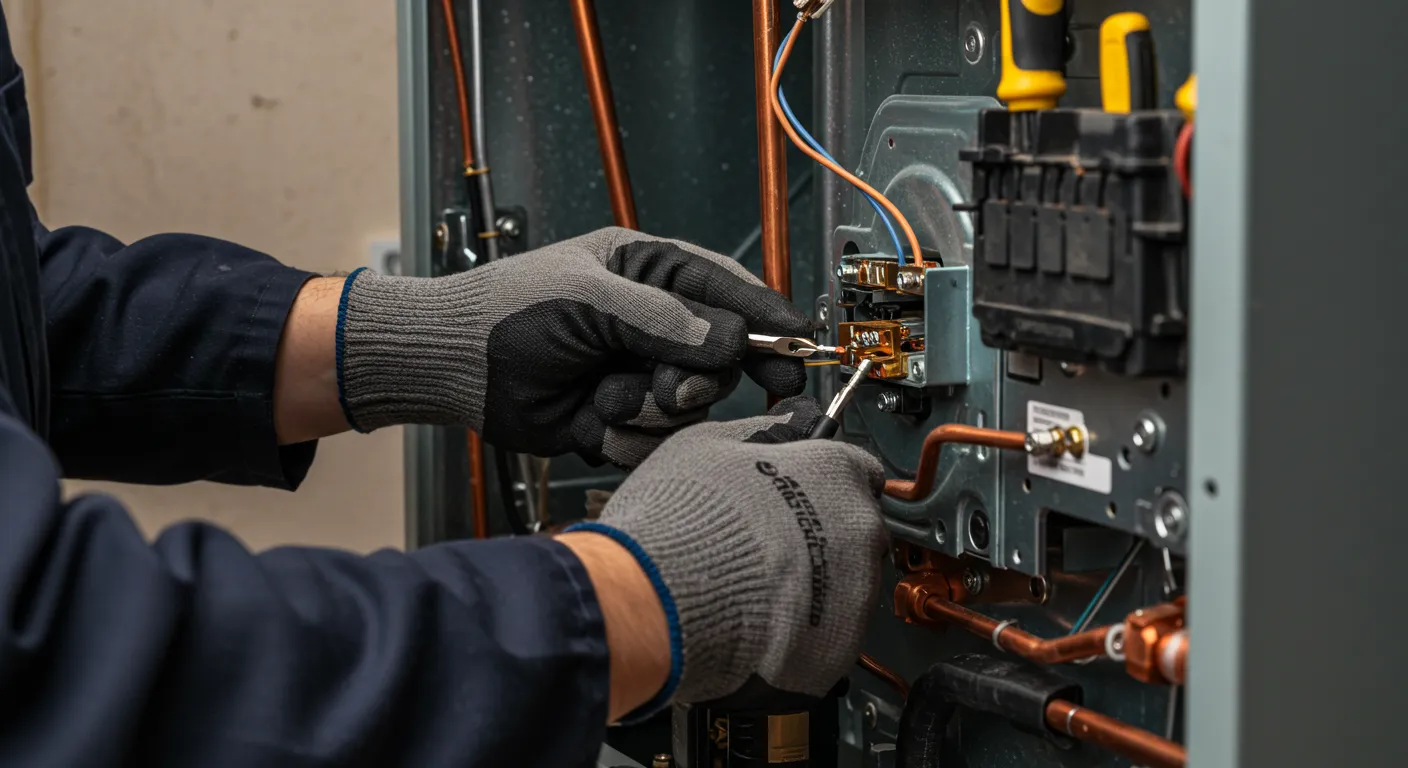
Upon arrival, certified technicians perform a series of diagnostic tests. These tests measure the electrical draw of motors, check the integrity of the heat exchanger, and verify that safety switches are functioning correctly. This data-driven approach ensures that the repair addresses the core issue. For homeowners in Overland Park, where winter temperatures can drop precipitously, this level of thoroughness is essential for safety and reliability.
Services Included in a Standard Visit
- Ignition System Troubleshooting: Technicians check the pilot light, hot surface ignitor, or spark ignition system to ensure the burners light reliably.
- Airflow and Blower Motor Analysis: Restricted airflow can cause overheating and system shutoff. The blower motor, capacitor, and fan belt (if applicable) are inspected for wear and proper operation.
- Thermostat Calibration: Sometimes the issue lies in the communication between the control unit and the furnace. Calibration ensures accurate temperature readings.
- Safety Control Testing: Limit switches, flame sensors, and pressure switches are tested to verify they shut the system down in case of a safety hazard, such as a blocked flue or gas leak.
- Heat Exchanger Inspection: A critical safety check involves looking for cracks or corrosion in the heat exchanger, which is vital for preventing carbon monoxide leaks.
The Process of Restoring or Upgrading Your Heating System
Understanding the workflow of a service call or installation helps homeowners prepare for the visit. The process is designed to be efficient, minimizing disruption to the household while ensuring all work meets strict industry standards.
Step-by-Step Service Workflow
- Initial Assessment: The technician arrives with a fully stocked vehicle to assess the unit. They will ask about the history of the unit, recent performance issues, and the specific symptoms you are experiencing.
- Detailed Proposal: Once the diagnostic is complete, you receive a clear explanation of the findings. This includes a breakdown of necessary repairs, the cost of parts and labor, and an estimated timeline for completion. There is no guesswork; every line item is explained.
- Execution of Work: Upon approval, the technician proceeds with the repair or installation. This may involve replacing a faulty circuit board, installing a new blower motor, or swapping out the entire unit if an upgrade is selected.
- System Testing: The job is not complete when the part is installed. The system is cycled through multiple run times to ensure it reaches the set temperature, maintains consistent airflow, and operates quietly.
- Cleanup and Walkthrough: The work area is cleaned of any debris or old parts. The technician then walks you through the repair, explaining what was done and providing tips for maintaining the efficiency of the new components.
Installation Specifics
If a new system is required, the process includes a load calculation. This calculation determines the exact heating requirements of the home based on square footage, insulation levels, and window orientation. An improperly sized unit—whether too big or too small—will lead to short-cycling, increased energy bills, and uneven heating. Correct sizing is the foundation of a high-performance HVAC installation.
Determining When to Replace vs. Repair
Deciding between repairing an existing furnace and investing in a new one is a significant financial decision. While repairs are often the fastest solution for minor issues, there comes a point where sinking money into an aging system becomes uneconomical. Several technical factors influence this decision.
The Age and Efficiency Factor
Heating systems typically have a lifespan of 15 to 20 years. As units age, their Annual Fuel Utilization Efficiency (AFUE) rating effectively drops due to wear and tear. A furnace that was 80% efficient fifteen years ago may now be operating at significantly lower efficiency, leading to higher utility bills. If the unit is over 15 years old and requires a major repair, replacement is often the more prudent financial choice. Modern units offer AFUE ratings upwards of 96%, meaning 96% of the fuel is converted into heat, compared to older models that waste considerable energy.
The 50% Investment Rule
A common guideline used in the industry is the 50% rule. If the cost of the necessary repair approaches or exceeds 50% of the cost of a new system, replacement is recommended. This is particularly true if the warranty on the existing unit has expired. Investing half the cost of a new machine into an old one that may fail again in a few months is rarely a sound strategy.
Comfort and Reliability Indicators
- Frequent Breakdowns: If you have required multiple service calls in the last two years, the system is likely nearing the end of its reliable service life.
- Uneven Heating: Cold spots in certain rooms or a unit that runs constantly without reaching the set temperature indicate that the system can no longer keep up with the home’s heat load.
- Rising Energy Bills: A sudden spike in heating costs without a corresponding change in usage patterns suggests the internal components are working harder to produce the same amount of heat.
- Noise and Air Quality: Excessive rattling, booming noises upon startup, or a persistent dryness/dustiness in the air can signal internal mechanical failure or a cracked heat exchanger.
Local Factors Impacting Heating Performance
Operating a heating system in this region requires attention to specific environmental and regulatory factors. The climate here is characterized by distinct four-season weather, but the winters can be particularly harsh with rapid temperature drops.
Climate-Specific Challenges
The transition from hot, humid summers to freezing winters places significant stress on HVAC materials. Metal components expand and contract with temperature changes. Over time, this thermal stress can cause cracks in heat exchangers or loosen electrical connections. Furthermore, high humidity levels during the summer can lead to rust and corrosion within the furnace cabinet if the system is not properly maintained, which then compromises performance when winter arrives.
Technicians from All Day Comfort Heating and Cooling LLC are familiar with these regional challenges and inspect for humidity-related corrosion and thermal stress damage during every visit.
Permitting and Code Compliance
Heating installations and major modifications are subject to local building codes and permit requirements. These regulations ensure that gas lines are sized correctly, venting is safe, and electrical connections meet fire safety standards.
- Venting Requirements: Modern high-efficiency furnaces often require different venting materials (PVC vs. metal) compared to older standard-efficiency units. Local codes dictate how these vents must be routed to prevent flue gases from re-entering the home.
- Gas Piping: Adherence to fuel gas codes is non-negotiable. This involves pressure testing gas lines to ensure there are no leaks and that the pipe diameter provides sufficient fuel flow for the appliance.
- Electrical Standards: Dedicated circuits and proper grounding are required to protect the sensitive electronics found in modern heating equipment.
Utility Considerations
Local utility providers may occasionally offer rebates for upgrading to high-efficiency Energy Star-rated equipment. While these programs vary and change annually, checking for available incentives can help offset the initial cost of installation. Additionally, ensuring your home has adequate insulation—specifically in the attic and crawl spaces—is crucial for maximizing the benefit of a new heating system in this climate.
Technical Differentiators in Service
Choosing a service provider involves looking for technical competence and operational transparency. High-quality heating service goes beyond swapping parts; it involves a holistic view of the home's thermal envelope and the mechanical systems that support it.
Advanced Diagnostic Tools
Top-tier service providers utilize advanced diagnostic tools such as combustion analyzers. These devices measure the oxygen, carbon dioxide, and carbon monoxide levels in the flue gas. This data allows technicians to tune the furnace for maximum efficiency and safety. Without combustion analysis, a technician is simply guessing at the air-fuel mixture, which can lead to inefficient burning and safety hazards.
Inventory and Availability
In the middle of a freeze, waiting days for a common part is not an option. Professional service trucks are stocked with "universal" parts such as ignitors, flame sensors, and control boards that fit a wide variety of makes and models. This preparation enables same-day repairs for the majority of common heating failures.
Warranty Support
Reputable providers stand behind their work. This includes warranties not just on the parts (which are covered by the manufacturer) but on the labor itself. If a repair fails shortly after execution, a guarantee ensures it is rectified without additional cost to the homeowner.
Focus on Safety
Carbon monoxide is a colorless, odorless byproduct of incomplete combustion. A key differentiator in professional service is the rigorous testing for CO leaks during every heating service call. This protocol protects the household from one of the most dangerous risks associated with gas heating systems.
Whether you are facing an emergency breakdown in the middle of a cold snap or planning a proactive replacement to improve energy efficiency, the focus remains on delivering technical excellence and reliable results. For homeowners in Overland Park, maintaining a functional heating system is a necessity, not a luxury. Trust All Day Comfort Heating and Cooling LLC to deliver the expertise and rapid response required to keep your home warm and safe.
Contact us today to schedule your heating service or system evaluation.
Contact Us
customer reviews
Areas We Serve



Copyright © 2026 All Day Comfort Heating and Cooling.
All rights reserved.
