




HVAC Installation in Overland Park, KS
Need a reliable HVAC installation in Overland Park? Schedule your system assessment and secure efficient home comfort solutions with comprehensive warranties.
Restore Consistent Comfort to Your Home Immediately
Is your HVAC system failing to keep up with the unpredictable Kansas weather, leaving you sweating through humidity or shivering during cold snaps? From sweltering summers to freezing winters in Overland Park, you need a reliable solution that operates seamlessly without constant adjustments.
Schedule your system assessment and installation estimate here
- Experience same-day service availability to restore your comfort quickly.
- Enjoy peace of mind with comprehensive warranties on all new installations.
- Access flexible financing options available to fit your specific budget requirements.
All Day Comfort Heating and Cooling LLC ensures HVAC installations are fully compliant with local codes and backed by robust manufacturer and labor warranties in Overland Park, KS.
Comprehensive HVAC Installation Solutions Available Now
When you invest in a new HVAC system, you are purchasing more than just a metal box that sits outside or in your basement. You are securing the primary defense against the extreme temperature fluctuations common in this region. Modern installation goes beyond simply swapping out old equipment; it involves a complete assessment of your home's thermal characteristics to ensure maximum efficiency.
Current systems offer advanced technology that was likely unavailable when your previous unit was installed. High-efficiency furnaces with AFUE ratings over 96% and air conditioners with high SEER2 ratings significantly reduce monthly utility draw. This upgrade process provides immediate relief from inconsistent temperatures, loud operational noises, and humidity issues that older units can no longer manage.
A professional installation includes a full load calculation. This ensures the equipment is sized perfectly for your square footage, window placement, and insulation levels. An oversized unit will short-cycle, failing to remove humidity, while an undersized unit will run continuously without ever reaching the set temperature. Your installation service covers the removal of old equipment, structural modifications to the plenum or ductwork if necessary, and a complete system test to verify airflow and refrigerant pressures.
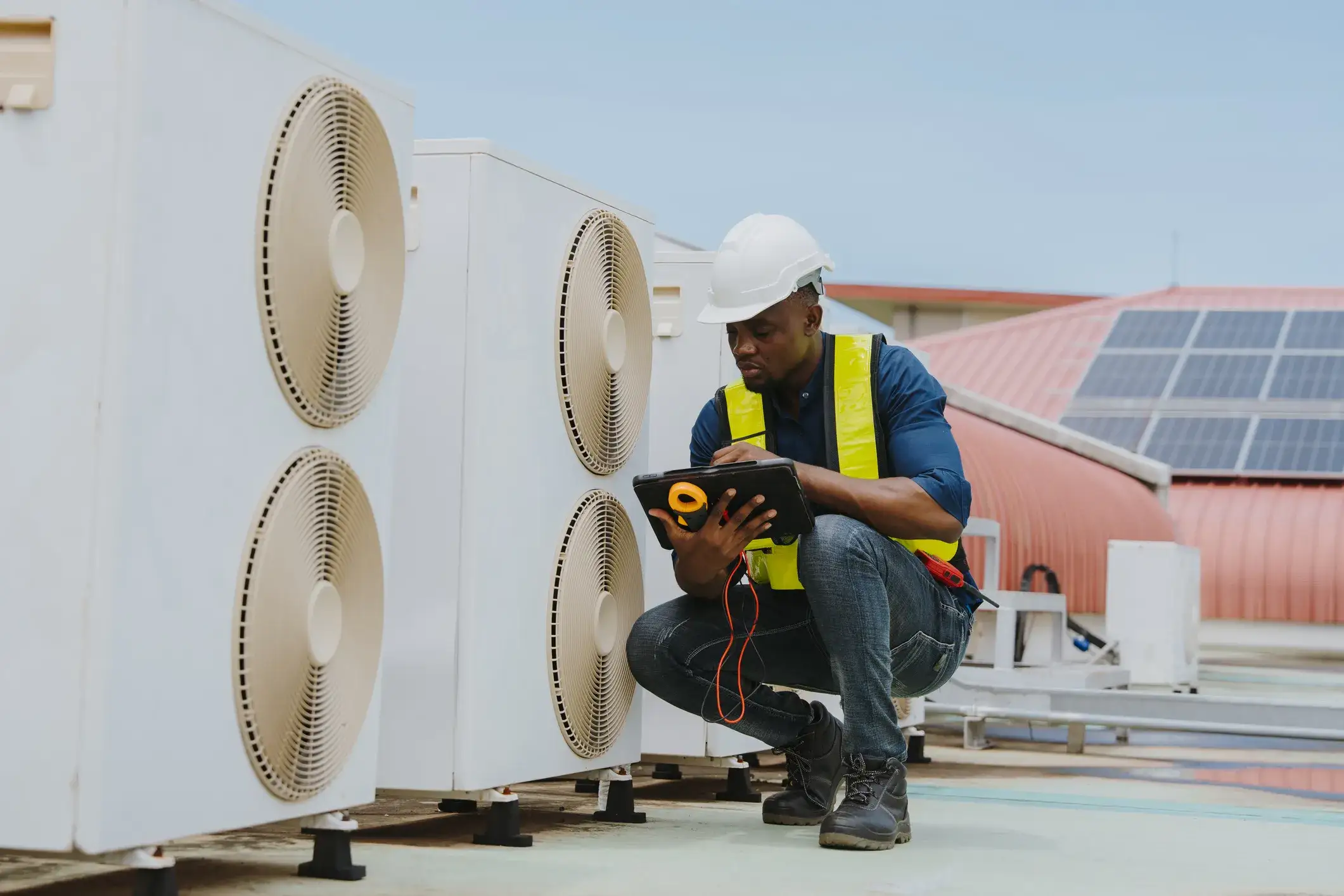
The Step-by-Step Installation Process
Replacing a heating and cooling system is a major construction project within your home, but a structured process minimizes disruption. A professional crew handles every aspect of the transition, ensuring safety and adherence to technical standards.
- Site Assessment and Sizing: The process begins with a Manual J load calculation. Techs measure the home to determine the exact heating and cooling load required. This accounts for solar gain, insulation quality, and air leakage. Correct sizing is the most critical factor in the longevity of the system.
- Protecting the Work Area: Before any equipment is moved, floor runners and protective coverings are placed from the entry point to the mechanical area. This protects flooring and keeps the home clean during the removal of heavy machinery.
- Decommissioning and Removal: The existing unit is disconnected from electrical and gas supplies. Technicians safely recover any existing refrigerant according to EPA regulations to prevent environmental contamination. The old furnace, evaporator coil, and outdoor condenser are removed and hauled away for recycling.
- Ductwork and Plenum Modification: New equipment often has different physical dimensions than older models. The supply and return plenums (the metal boxes connecting the unit to your ducts) are modified or rebuilt to ensure an airtight fit. This step is vital for preventing air leaks that waste energy.
- Equipment Placement and Connection: The new furnace and indoor coil are leveled and secured. The outdoor condenser is placed on a new pad to ensure stability and vibration isolation. Technicians then braze the copper refrigerant lines, ensuring a sealed system capable of holding high pressures.
- Electrical and Gas Piping: High-voltage wiring is connected with new disconnect boxes if required by code. For gas furnaces, the gas piping is reconnected with a new sediment trap and shut-off valve to meet current safety standards. Low-voltage control wiring is run to the thermostat.
- System Commissioning and Testing: Once physically installed, the system is not just turned on; it is commissioned. Technicians measure static pressure in the ducts, adjust blower speeds, and charge the refrigerant to precise subcooling or superheat targets. This fine-tuning ensures the system delivers the rated efficiency.
- Final Walkthrough: You receive a demonstration of the new thermostat and instructions on filter maintenance. The team reviews the warranty registration and maintenance requirements before leaving the site clean.
Determining When to Replace vs. Repair
Homeowners often struggle to decide whether to sink more money into a failing unit or invest in a replacement. While repairs can extend the life of a system, there is a mathematical and practical tipping point where replacement becomes the only logical financial decision.
- The 50% Rule: If the cost of a necessary repair approaches 50% of the value of a new system, replacement is the smarter financial move. Investing thousands into a compressor for a 15-year-old unit is rarely cost-effective, as other components are likely to fail soon after.
- System Age and Reliability: Most air conditioners and heat pumps last 10 to 15 years, while furnaces may last 15 to 20 years. If your equipment is within this age range and requires frequent service calls, the cumulative cost of repairs will quickly outpace the monthly financing cost of a new unit.
- Efficiency and Energy Costs: Older systems often operate at 60-70% efficiency. Modern systems operate between 90-98% efficiency. If energy bills have been steadily climbing despite normal usage, the system has lost its ability to transfer heat effectively. The savings on monthly utility bills from a new system often offset a significant portion of the installation cost.
- Safety Concerns: For gas furnaces, a cracked heat exchanger is a non-negotiable replacement signal. This failure puts the home at risk of carbon monoxide leaks. Similarly, older AC units using phased-out refrigerants (like R-22) are prohibitively expensive to recharge, making replacement the only viable option when a leak occurs.
- Comfort and Air Quality: If some rooms are always hot while others are cold, or if the home feels muggy in the summer, the current system is likely failing to distribute air or remove humidity effectively. New systems with variable-speed blowers resolve these comfort issues immediately.
Navigating Local Requirements and Climate Factors
Installing HVAC equipment in Overland Park requires specific attention to local building codes, utility requirements, and the unique weather patterns of the region. A generic installation approach will fail to address the specific loads placed on equipment in this area.
- Permitting and Inspections: The City of Overland Park requires permits for HVAC replacements to ensure safety standards are met. This includes verifying that gas line sizing is correct, venting meets clearance requirements, and electrical disconnects are accessible. A professional installation includes handling all permit applications and scheduling the required city inspection upon completion.
- Handling High Humidity: Summers in this region are not just hot; they are incredibly humid. Standard single-stage air conditioners often cool the air too quickly without running long enough to remove moisture. This leads to a cold but clammy home. Installations here often prioritize two-stage or variable-speed cooling units that can run at lower capacities to dehumidify the air effectively without overcooling the space.
- Winter Heating Loads: Winters can bring sub-freezing temperatures for extended periods. Furnaces must be sized to handle the "design temperature" of the region without struggling. Additionally, checking the integrity of the flue liner is critical. Many older homes have masonry chimneys that require a metal liner to safely vent the lower-temperature exhaust of modern, high-efficiency furnaces.
- Utility Rebates and Incentives: Local utility providers, such as Evergy and Spire, often offer rebates for upgrading to high-efficiency equipment. Professional installers are familiar with the current SEER2 and AFUE thresholds required to qualify for these financial incentives and can assist in providing the necessary documentation to claim them.
Differentiators That Define Quality Installation
Choosing the right contractor is as important as choosing the brand of equipment. The quality of the installation determines 75% of the system’s ultimate efficiency and lifespan. Poor installation practices can reduce efficiency by up to 30%, negating the benefits of buying high-end equipment.
- Licensed and Insured Technicians: Every technician on site carries the proper mechanical licenses required by the state and local municipalities. Liability insurance and workers' compensation coverage protect the homeowner from any risk during the construction process.
- Detailed Load Calculations: Guesswork is eliminated. Calculations are based on building science, not "rule of thumb" estimates. This prevents the common issues of short-cycling and uneven temperatures caused by improper sizing.
- Ductwork Analysis: New equipment cannot function properly if connected to restricted or leaky ducts. The installation scope includes an analysis of the existing air distribution system. Minor modifications to improve airflow are standard, ensuring the new unit can "breathe" properly.
- Transparent Pricing and Financing: Estimates are provided upfront with no hidden fees. Options for financing are clearly explained, allowing homeowners to choose a payment plan that fits their monthly budget without delaying necessary comfort upgrades.
- Respect for Property: Technicians treat the home with respect, using drop cloths and shoe covers. The workspace is left cleaner than it was found, with all debris and old equipment removed immediately.
- Post-Installation Support: The relationship does not end when the truck drives away. All Day Comfort Heating and Cooling LLC provides clear warranty documentation and offers maintenance plans to keep the new system running at peak performance for years to come.
Secure Your Home Comfort Today
Delaying an HVAC replacement often results in emergency breakdowns during the most extreme weather, leading to rushed decisions and discomfort. By proactively scheduling your installation from All Day Comfort Heating and Cooling LLC experts, you gain control over the timeline, the budget, and the specific features of your new system.
Whether you need to replace a failing furnace before winter or upgrade an inefficient air conditioner before the summer heat spikes, professional installation ensures your home remains a sanctuary. Do not settle for inconsistent temperatures or worrying about the next repair bill.
Upgrade your system now and experience the difference that professional sizing and modern technology make.
Get your free estimate and restore your home comfort immediately. Click here to contact us.
Contact Us
customer reviews
Areas We Serve




Copyright © 2026 All Day Comfort Heating and Cooling.
All rights reserved.
