




HVAC Installation in Mission Hills, KS
Ensure your home's comfort with professional HVAC installation in Mission Hills. Rapid, same-day service available. Click now to schedule!
Struggling with Unreliable Heating or Cooling?
When your HVAC system fails, comfort in your home can deteriorate rapidly, especially amid Mission Hills' unpredictable weather. Don't let a malfunction leave you in discomfort; schedule your service today:
- Rapid, same-day installation services to restore your comfort quickly.
- Licensed and insured technicians ensuring a reliable and worry-free installation.
- Comprehensive service plans to fit all budgets, ensuring quality isn't compromised.
Enjoy peace of mind with our fully insured services, backed by comprehensive warranties.
All Day Comfort Heating and Cooling LLC understands that a functioning HVAC system is not a luxury; it is a necessity for maintaining a safe and habitable home environment. In the distinct climate of Mission Hills, KS, where winter temperatures frequently drop below freezing and summer heatwaves push past 100°F, an inefficient or broken system disrupts daily life immediately. Whether you are dealing with a furnace that blows cold air in January or an air conditioner that fails to dehumidify in July, our team provides the technical expertise required to secure your indoor climate. We focus on precision installation standards that maximize energy efficiency and equipment longevity.
Today’s HVAC Service: What to Expect
Modern HVAC installation involves more than simply swapping out a box. When you initiate a replacement project, the immediate focus shifts to assessing the specific thermal dynamics of your property. A technician arrives to evaluate the current infrastructure, including ductwork integrity, electrical capacity, and refrigerant line sets. The goal is to identify why the previous system failed and ensure the new unit performs optimally from day one.
Homeowners can expect a transparent timeline. Most residential installations in the Mission Hills area are completed within a single day, provided no major structural modifications are required. The process begins with the safe removal and disposal of the old unit, adhering to environmental regulations regarding refrigerant handling. Once the site is cleared, the installation team prepares the mechanical connections.
Key components of the service scope include:
- Load Calculation: Verification of the correct unit size based on square footage, insulation levels, and window exposure, rather than simply matching the size of the old unit.
- Code Compliance: Ensuring all electrical wiring and gas piping meet current local safety codes.
- System Matching: Pairing the indoor coil and outdoor condensing unit correctly to achieve the rated SEER2 (Seasonal Energy Efficiency Ratio) and AFUE (Annual Fuel Utilization Efficiency) performance.
- Commissioning: A comprehensive startup sequence that tests airflow, static pressure, and temperature differentials before the job is marked complete.
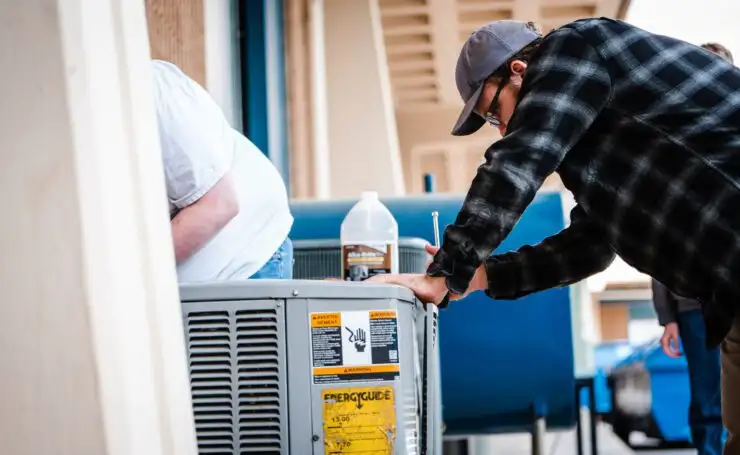
Our HVAC Installation Process: Step-by-Step
A systematic approach prevents future breakdowns and efficiency losses. We utilize a rigorous installation protocol to ensure every component functions as intended by the manufacturer:
- Site Preparation and Protection: The first step involves protecting your home. Technicians lay down drop cloths and wear protective shoe covers to ensure flooring and carpets remain clean. The workspace around the indoor and outdoor units is cleared to allow for safe maneuvering of heavy equipment.
- Decommissioning the Old System: Power to the HVAC unit is shut off at the breaker panel. If the system contains refrigerant, it is recovered into a certified cylinder to prevent atmospheric release. Gas lines are disconnected and capped for safety. The old equipment is then disconnected from the ductwork and physically removed from the premises.
- Infrastructure Inspection and Modification: Before the new unit is set in place, the existing plenum (the box connecting the unit to the ducts) and return drops are inspected. If the new unit has different dimensions, custom sheet metal transitions are fabricated to ensure an airtight fit. This is also when the technician inspects the drain pan and condensate lines to prevent future water damage.
- Equipment Setting and Connection: The new furnace or air handler is leveled and secured. For outdoor units, a new pad is often installed to ensure stability and proper drainage. Refrigerant lines are brazed using nitrogen purging to prevent oxidation inside the copper tubing—a critical step for the longevity of modern environmentally friendly refrigerants. Electrical connections are tightened, and the thermostat is wired to the control board.
- Final Testing and Calibration: The system is powered on, and technicians perform a sequence of tests. They measure the static pressure in the supply and return ducts to verify airflow. They check the refrigerant charge using subcooling and superheat methods. Finally, the gas pressure (for furnaces) is adjusted to manufacturer specifications to ensure clean and efficient combustion.
Deciding Between HVAC Repair and Replacement
Determining whether to invest in a repair or opt for a full replacement is a financial and practical decision based on data. While repairs can resolve minor issues, aging systems often reach a tipping point where replacement becomes the more economical choice.
Consider the following factors when making this decision:
- The 50% Rule: If the cost of the repair approaches or exceeds 50% of the value of a new system, replacement is generally recommended. This prevents "throwing good money after bad" on a depreciating asset.
- Equipment Age: The average lifespan of an air conditioner is 10 to 15 years, while furnaces may last 15 to 20 years. If your system is within this age range and requires a major component (like a compressor or heat exchanger), replacement offers better long-term value.
- Frequency of Breakdowns: Multiple service calls within a short period indicate that the system is nearing the end of its operational life. Consistent unreliability is a strong signal to upgrade.
- Energy Efficiency: Older units often operate at 10 SEER or lower. Modern standards require a minimum of 13.4 or 14.3 SEER2 depending on the region. Upgrading to a high-efficiency system can significantly reduce monthly utility bills, offsetting the installation cost over time.
- Comfort Issues: Uneven heating or cooling, high humidity levels inside the home, or excessive noise during operation often suggest the current system is undersized or failing mechanically.
Technical Considerations: System Sizing and Efficiency
One of the most common errors in HVAC installation is improper sizing. An oversized unit will cycle on and off too frequently (short-cycling), leading to high humidity, wear on components, and temperature swings. An undersized unit will run continuously without ever reaching the thermostat setpoint, driving up energy costs.
Proper sizing requires a Manual J load calculation. This engineering calculation accounts for:
- Insulation Values: The R-value of walls, attics, and floors.
- Windows and Doors: The type of glazing, orientation to the sun, and seal quality.
- Internal Loads: Heat generated by appliances, lighting, and occupants.
- Air Leakage: How much unconditioned air enters the home through gaps and cracks.
By adhering to strict sizing protocols, we ensure the installed equipment matches the specific thermal load of the property. This results in longer run times at lower speeds (for variable-speed units), which improves dehumidification and air filtration.
Importance of Ductwork Integrity
Even the highest-rated HVAC system cannot perform efficiently if the ductwork is compromised. Leaky ducts can result in a loss of up to 30% of conditioned air before it reaches the living spaces. During the installation process, All Day Comfort Heating and Cooling LLC assesses the accessible duct system.
Issues frequently addressed include:
- Disconnected Ducts: Reattaching sections that have pulled apart over time.
- Poor Insulation: Ensuring ducts running through unconditioned spaces (like attics or crawlspaces) are properly insulated to prevent thermal loss.
- Design Restrictions: Identifying undersized return air grilles that starve the system of air, causing the blower motor to work harder than necessary.
Correcting these airflow issues is essential for maximizing the performance of the new installation.
Local HVAC Insights: Permits and Seasonal Advice
Operating in Mission Hills requires adherence to specific regulatory and environmental standards. The local municipality enforces building codes designed to ensure safety and energy conservation:
- Permitting and Inspections: Replacing a furnace or air conditioner is considered a major mechanical alteration. The City of Mission Hills generally requires a permit for such work. This process includes a final inspection by a city official to verify that gas lines, electrical connections, and venting systems meet safety codes. Professional installers handle the application and scheduling of these inspections to ensure the homeowner remains compliant.
- Winter Preparation: The region sees significant snowfall and freezing temperatures. Installations performed in this area must account for snow accumulation. Outdoor heat pump units are elevated on "snow legs" or risers to prevent snowdrifts from blocking airflow, which can cause the system to freeze up and fail.
- Summer Humidity Control: Kansas summers are notoriously humid. When selecting a new system, considering two-stage or variable-speed compressors is beneficial. These units run at lower capacities for longer periods, effectively removing more moisture from the air than standard single-stage units, which creates a cooler feeling environment at higher thermostat settings.
- Electrical Grid Considerations: During peak heatwaves, the local grid experiences high demand. High-efficiency systems with "soft start" kits reduce the initial power draw required to start the compressor, putting less strain on the home’s electrical panel and the local grid.
Why Choose Us: Licensing, Experience, and Guarantees
Selecting a contractor is as critical as selecting the brand of equipment. The quality of the installation determines 70% of the system’s efficiency and longevity. We prioritize technical proficiency and consumer protection:
- Licensing and Bonding: We hold all necessary mechanical licenses required to operate in the jurisdiction. This proves that our technicians have passed rigorous exams demonstrating their knowledge of HVAC theory, safety protocols, and local codes. Bonding provides an extra layer of financial security for the homeowner.
- Insurance Coverage: Comprehensive general liability and workers' compensation insurance protect you from liability in the event of an accident on your property. Never hire a contractor who cannot provide proof of current insurance.
- Manufacturer Warranties: We register all installed equipment with the manufacturer to activate full warranty coverage. This typically includes 10-year parts warranties on major components.
- Labor Guarantees: Beyond the equipment warranty, we stand behind our workmanship. If an issue arises due to the installation process, we return to correct it.
Advanced Filtration and Air Quality Options
When installing a new heating and cooling system, it is the ideal time to address Indoor Air Quality (IAQ). Standard one-inch filters protect the equipment but do little to improve the air you breathe.
Installation options often include:
- Media Cabinets: Thicker, 4-inch pleated filters that capture smaller particles like pollen, pet dander, and dust without restricting airflow.
- UV Germicidal Lights: Installed in the coil or ductwork to neutralize bacteria, mold, and viruses that can grow in the moist environment of an AC system.
- Whole-Home Humidifiers: Essential for local winters, these integrate with the furnace to add moisture to dry heated air, protecting wood furniture and improving respiratory comfort.
Integrating these components during the primary installation saves on labor costs compared to adding them later.
Final Thoughts on Restoring Comfort
A reliable HVAC system is the backbone of a functional home. Navigating the complexities of installation, from load calculations to permitting, requires professional oversight to ensure the investment delivers comfort for years to come. By focusing on technical accuracy and adherence to local codes, we eliminate the variables that lead to premature failure. Trust All Day Comfort Heating and Cooling LLC to handle your installation with the precision and urgency your home requires.
CLICK HERE TO SCHEDULE YOUR HVAC INSTALLATION NOW
Contact Us
customer reviews
Areas We Serve




Copyright © 2026 All Day Comfort Heating and Cooling.
All rights reserved.
