




HVAC Service in Prairie Village, KS
Explore top-notch HVAC services in Prairie Village. From emergency repairs to system upgrades, ensure your home's comfort. Call now for expert help!
Is Your HVAC System Failing to Handle Extreme Weather?
Facing unbearable heat or chilling cold in Prairie Village due to a malfunctioning unit creates stress and discomfort for your entire household. When your climate control system falters, you need a reliable solution that restores safety and efficiency to your home immediately. For urgent repairs or system assessments — schedule service today.
We provide the following outcomes for homeowners:
- Ensure optimal comfort with same-day service to restore your indoor environment immediately.
- Dispatch certified technicians equipped to handle repairs and installations on all major models and makes.
- Provide 24/7 availability to address any heating or cooling emergency you face, regardless of the hour.
At All Day Comfort Heating and Cooling LLC, all services come with a full warranty and options for financing to make superior home comfort affordable.
Comprehensive HVAC Service Solutions Available Today
When you request service in the Prairie Village area, you are not just paying for a quick fix; you are investing in the long-term reliability of your home’s climate control. Our approach focuses on immediate diagnostics followed by comprehensive solutions. Whether dealing with a furnace that blows cold air or an air conditioner that freezes up, All Day Comfort Heating and Cooling LLC provides a thorough evaluation of the mechanical, electrical, and airflow systems:
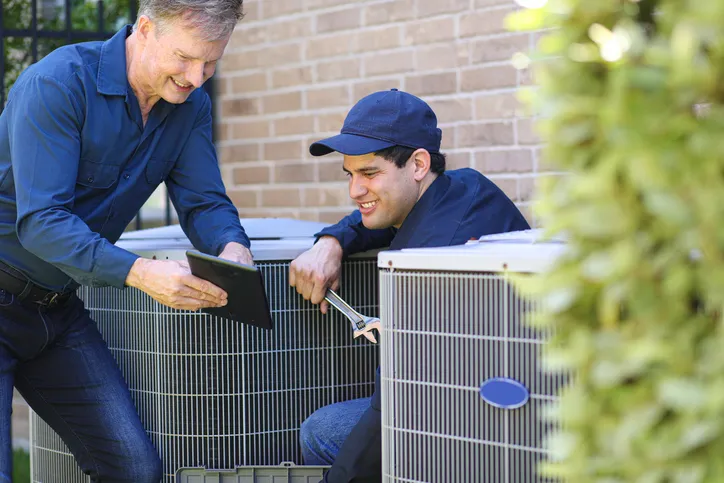
Diagnostic and Repair Scope
Upon arrival, the technician performs a multi-point inspection to identify not only the symptom but the root cause of the failure. This prevents recurring issues that often plague systems fixed with "band-aid" solutions. The service scope includes:
- Electrical Component Analysis: Technicians test capacitors, contactors, and relays. Loose connections or worn electrical parts are the leading cause of sudden system failure during peak demand. Tightening connections and measuring voltage ensures the unit draws power safely.
- Refrigerant Level Checks: For cooling systems, correct refrigerant charge is critical. Low levels indicate a leak that must be sealed. Technicians measure superheat and subcooling to ensure the system removes humidity effectively, which is vital for Kansas summers.
- Airflow and Ductwork Inspection: A unit cannot perform if the distribution system is compromised. We inspect for blockages, dirty coils, and filter issues that restrict air movement, causing the blower motor to overheat or the coil to freeze.
- Safety Control Testing: For heating units, safety is paramount. We test limit switches, flame sensors, and carbon monoxide detectors to ensure the unit operates without posing a risk to the household.
- Thermostat Calibration: Often, the issue lies in communication. We verify that the thermostat reads indoor temperatures accurately and signals the equipment correctly for cycling.
Emergency Availability and Timelines
HVAC breakdowns rarely happen at convenient times. They occur during the hottest afternoon of the year or the coldest night. Recognizing this, we structure our service model around urgency:
- Same-Day Response: We prioritize systems that are completely non-functional to ensure no family is left in dangerous temperatures.
- Truck Stock: Our vehicles are stocked with universal parts, meaning most common repairs—such as replacing a fan motor or a run capacitor—are completed in a single visit without waiting for parts delivery.
The Process: How Installation and System Replacement Works
When a repair is no longer feasible, replacing your heating and cooling system is a significant project that requires precise execution. A poor installation will reduce the efficiency of even the most expensive equipment. We adhere to a strict, standardized process to ensure your new system operates at peak performance from day one.
Step 1: Load Calculation and Sizing
- First, we perform a Manual J load calculation. This is the industry standard for determining the exact heating and cooling requirements of your specific home.
- We measure square footage, window types, insulation levels, and orientation.
- This step ensures the unit is neither undersized (which leads to constant running and failure to reach temperature) nor oversized (which leads to short-cycling and poor humidity control).
Step 2: System Selection and Site Preparation
- Next, we present options that fit the calculated load requirements. We discuss SEER2 ratings for cooling and AFUE ratings for heating to help you balance upfront costs with long-term energy savings.
- Once a system is selected, technicians prepare the site. This involves laying down drop cloths to protect your flooring and clearing the workspace around the indoor and outdoor units.
- We also inspect existing ductwork and gas lines to ensure they meet current building codes before the new equipment is brought in.
Step 3: Safe Removal and Disposal
- Technicians disconnect the old unit, carefully recovering any existing refrigerant according to EPA regulations to prevent environmental contamination.
- Gas lines and high-voltage electrical connections are capped and secured.
- The old equipment is removed from the property and disposed of or recycled properly, leaving you with no debris to manage.
Step 4: Precision Installation
- The new indoor air handler or furnace is positioned and leveled. Proper leveling is essential for drainage and quiet operation.
- The outdoor condenser is set on a new pad to ensure stability and proper airflow clearance.
- Technicians braze the copper refrigerant lines using nitrogen to prevent oxidation inside the pipes, a critical step for the longevity of modern compressors.
- Electrical wiring is connected, and a new thermostat or control system is integrated.
Step 5: Commissioning and Testing
- Finally, the system is commissioned. This is not simply turning it on; it involves adjusting blower speeds to match duct static pressure and charging the refrigerant to manufacturer specifications.
- We test the temperature differential (split) between supply and return air to verify cooling or heating capacity.
- A final walkthrough is conducted to show you how to operate the new thermostat and how to change filters.
Deciding When to Replace vs. Repair Your System
Homeowners often struggle with the financial decision of fixing an old unit or investing in a new one. While repairs are often cheaper upfront, they can be costlier over time if the system is nearing the end of its lifecycle. We help you make an educated decision based on data and equipment condition:
The 50% Rule
- A general guideline used in the industry is the 50% rule. If the cost of the repair approaches 50% of the value of the system (or the cost of a new system), replacement is usually the wiser financial choice.
- For example, replacing a compressor in a 12-year-old unit is rarely worth the investment, as other components are likely to fail soon after.
Age of Equipment
- Air Conditioners and Heat Pumps: Most systems last between 10 and 15 years. If your unit is over 12 years old and requires a major part, technology has likely advanced enough that a new unit will significantly lower your energy bills.
- Furnaces: Gas furnaces typically last 15 to 20 years. If your furnace is approaching the two-decade mark, the risk of heat exchanger failure increases.
Frequency of Breakdowns
- If you have required repairs more than twice in the last two years, your system is becoming unreliable. The cumulative cost of service calls, parts, and refrigerant often exceeds the monthly payments on a financed new system.
- Chronic issues suggest that the internal components are wearing out simultaneously.
Rising Energy Bills
- As HVAC systems age, they lose efficiency due to wear and tear on motors and compressors, and grime buildup on coils.
- If your utility bills in Prairie Village have increased steadily despite normal usage, your system is working harder to provide the same amount of conditioning. Upgrading to a high-efficiency model can sometimes offset the monthly cost of the new unit through utility savings alone.
Safety Concerns
- Specific failures demand immediate replacement for safety reasons. A cracked heat exchanger in a furnace can leak carbon monoxide into the home. This is a non-negotiable replacement scenario.
- Similarly, older systems using phased-out refrigerants (like R-22) are becoming prohibitively expensive to repair due to the scarcity of the refrigerant.
Prairie Village Climate Factors and Local Requirements
Operating HVAC equipment in this region requires specific attention to environmental factors and local regulations. The weather patterns here exert significant stress on residential systems, requiring robust maintenance and installation practices:
Handling High Humidity and Heat
- Summer temperatures frequently reach the 90s, but the high humidity levels create the real challenge. An air conditioner must run long enough to dehumidify the air, not just cool it.
- Oversized units will cool the air too quickly and shut off before removing moisture, leading to a clammy, uncomfortable indoor environment. We prioritize proper sizing to ensure humidity control.
- Regular condensate drain cleaning is essential here, as algae growth is accelerated in humid conditions, leading to water backups and potential ceiling damage.
Winter Resilience and Snow
- With average lows in the 20s and significant snowfall, heating systems must be reliable. Heat pumps often require a backup heating source (electric strip or gas furnace/dual fuel) to handle the coldest nights efficiently.
- Outdoor units must be kept clear of snow drifts. We advise homeowners on proper clearance to prevent ice buildup on fan blades, which can destroy the motor.
- Flue pipes for high-efficiency furnaces must be kept clear of snow accumulation to prevent safety shut-offs.
Storm Damage Protection
- Severe thunderstorms and tornado risks mean power surges are a common threat. We recommend and install whole-home surge protectors to shield sensitive HVAC circuit boards from electrical spikes.
- Hail damage to outdoor condenser coils is also common. We inspect for bent fins that restrict airflow and reduce efficiency, offering combing services or coil replacements when necessary.
Permits and Codes
- Any significant alteration to your HVAC system, particularly replacements, requires adherence to local building codes. This ensures the gas piping, electrical connections, and venting meet safety standards.
- We handle the permitting process for you, ensuring that all installations comply with city and county regulations. This is vital for your safety and for the resale value of your home.
Why Homeowners Trust Us for Their Heating and Cooling
Choosing a service provider is about trust and technical competence. We distinguish ourselves through certified expertise and a commitment to transparency. We do not rely on guesswork; we rely on building science and manufacturer specifications:
Certified Technical Expertise
- Our team consists of NATE-certified technicians. This certification is the gold standard in the HVAC industry, representing a rigorous understanding of heating and cooling theory and application.
- We invest in continuous training to keep up with the latest inverter technology, smart thermostats, and high-efficiency systems. You are getting a specialist, not a general handyman.
Transparent, Diagnostic-Led Service
- We believe in educating the homeowner. We show you exactly what failed and explain why.
- You receive a clear explanation of your options—repair versus replace—without high-pressure sales tactics. The goal is to solve the problem in a way that fits your budget and long-term plans.
Local Experience
- We understand the specific challenges of homes in this area, from the ductwork quirks of mid-century builds to the insulation needs of new construction.
- Our familiarity with local utility providers allows us to guide you toward equipment that maximizes potential rebates and energy efficiency incentives.
Warranty and Reliability
- Every installation and repair is backed by strong warranties. We stand behind our workmanship.
- If a part we installed fails within the warranty period, we handle the replacement. This peace of mind is part of the standard service package.
Secure Your Home’s Comfort with Expert HVAC Care
When your comfort is compromised, you need a partner who acts quickly and works correctly. From emergency repairs during a blizzard to upgrading your AC before the summer heat spikes, All Day Comfort Heating and Cooling LLC delivers results that keep your home safe and comfortable.
Secure your comfort today. Contact us now to schedule your service or system assessment.
Contact Us
customer reviews
Areas We Serve




Copyright © 2026 All Day Comfort Heating and Cooling.
All rights reserved.
