




Furnace Repair in Prairie Village, KS
Troubled by a broken furnace in Prairie Village? Get prompt, professional furnace repair with All Day Comfort. Schedule your service now and stay warm!
Troubled by Furnace Breakdowns? Fast Local Fixes Available!
Facing the chill of a broken furnace in Prairie Village? All Day Comfort Heating and Cooling LLC ensures prompt, professional furnace repair so you do not have to endure the cold for long. If your system has stopped working, schedule your service immediately.
When the temperature drops, you need a solution that works the first time:
- Immediate service turnaround: Get your heating back the same day you call.
- Guaranteed quality: Every repair is backed by years of trusted local service expertise.
- Clear, upfront pricing: You receive a complete quote before work begins—no surprises, just warmth.
Fully licensed technicians, with comprehensive warranties and flexible financing options, are ready to restore your comfort.
Restoring Heat to Your Home Immediately
A furnace failure during a Kansas winter is not merely an inconvenience; it is a safety concern. When indoor temperatures drop rapidly, particularly in January when averages hover around 20°F, the integrity of your home’s plumbing and the health of your family become the priority. The goal of professional repair service is to diagnose the root cause accurately and restore thermal comfort without delay.
Modern heating systems are complex assemblies of electrical, mechanical, and gas-burning components. A breakdown rarely happens at a convenient time. Professional technicians arrive equipped with mobile inventories stocked with the most frequently required parts, such as flame sensors, igniters, capacitors, and control boards. This preparation significantly reduces the need for follow-up visits and ensures that heat is restored during the initial appointment in the vast majority of cases.
Upon arrival, the focus shifts immediately to the safety and functionality of the unit. The service begins with a comprehensive diagnostic assessment. This involves testing the thermostat communication, checking gas pressure, examining electrical connections, and verifying airflow. Once the issue is isolated, you receive a detailed explanation of the failure and a fixed price for the repair. There are no hourly guessing games; the focus is entirely on the resolution of the heating issue.
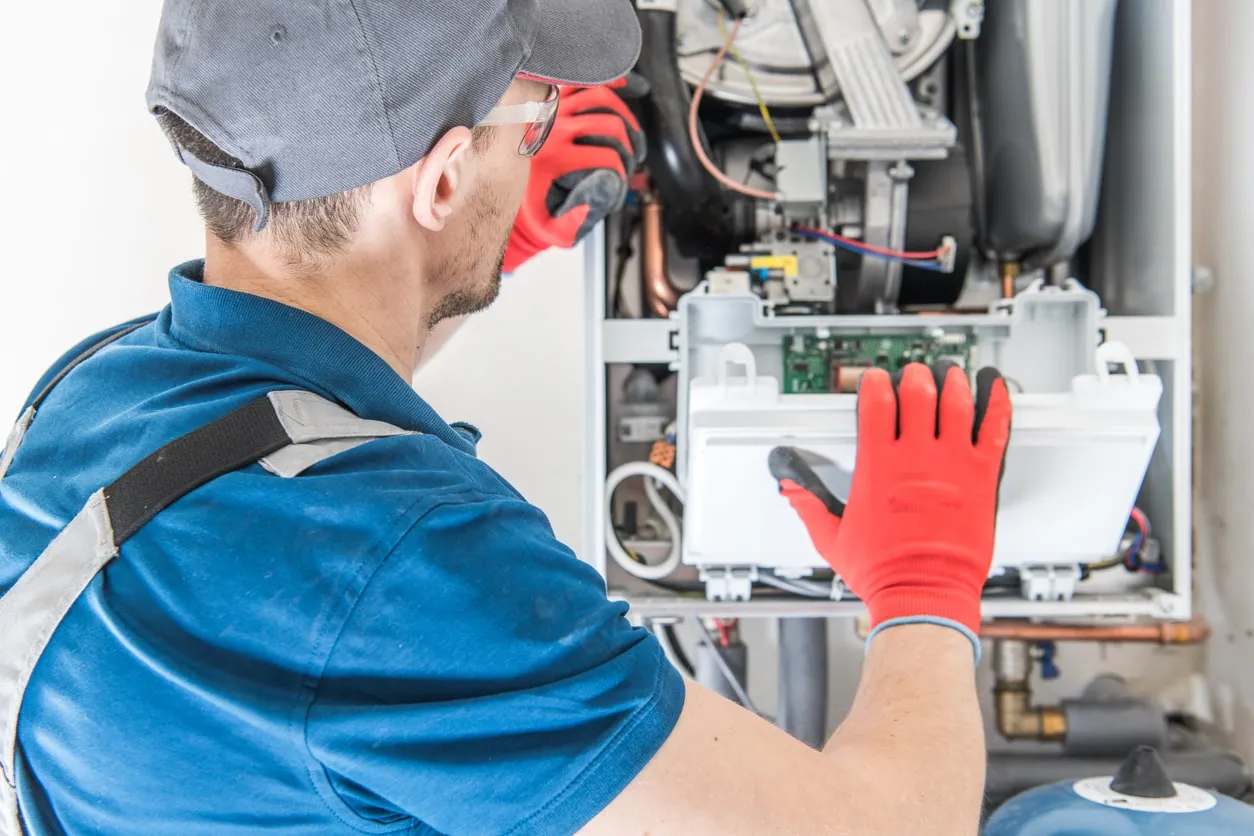
The Furnace Repair Process: From Diagnosis to Warmth
Effective furnace repair follows a rigorous, systematic approach to ensure no underlying issues are missed. This prevents the "band-aid" fixes that lead to recurring breakdowns a few weeks later. The process is designed to be transparent, safe, and efficient.
System Diagnostics and Safety Inspection
The repair process starts with a thorough evaluation of the entire heating envelope. Technicians do not just swap parts; they investigate why a part failed:
- Thermostat Calibration: Verification that the thermostat is reading room temperature correctly and sending the proper signals to the control board.
- Ignition Sequence Check: Analysis of the startup cycle. If the furnace attempts to light but fails, or lights and immediately goes out, specific sensors are tested.
- Airflow Analysis: Restricted airflow is a leading cause of overheating and system failure. Technicians check filters, blower motor amperage, and ductwork static pressure.
- Safety Control Testing: Limit switches and rollout switches are safety devices designed to shut the furnace down if dangerous conditions are detected. These are tested to ensure they are functioning to protect the home.
Component Repair and Replacement
Once the issue is identified, the physical repair work begins. This involves handling high-voltage electricity and combustible gases, requiring specialized training and tools:
- Igniter Replacement: Silicon nitride or silicon carbide igniters are common failure points. These are replaced to ensure reliable startup.
- Flame Sensor Cleaning or Replacement: Over time, flame sensors oxidize. This prevents the furnace from "knowing" a flame is present, causing it to shut down for safety. Cleaning or replacing this sensor restores normal operation.
- Blower Motor Service: If the fan is seizing or the capacitor has failed, the motor cannot circulate air. Repairs range from capacitor replacement to full motor swaps.
- Gas Valve Adjustment: Incorrect gas pressure can lead to inefficient burning or soot buildup. Technicians use manometers to calibrate the gas valve to the manufacturer's specifications.
Final Testing and Combustion Analysis
A repair is not complete until the system is proven to be running safely and efficiently:
- Carbon Monoxide Testing: A crucial step involves checking for CO leaks around the heat exchanger and exhaust venting.
- Temperature Rise Verification: Technicians measure the temperature difference between the supply and return air to ensure the furnace is operating within its rated capacity.
- Cycle Testing: The system is allowed to run through several full heating cycles to confirm reliability before the technician departs.
Critical Decisions: When to Repair vs. Replace
Homeowners often face the difficult decision of whether to pour more money into an aging unit or invest in a modern, high-efficiency replacement. Making this decision requires an objective look at the data, the age of the system, and the projected costs:
The 50% Investment Rule
Industry standards suggest that if the cost of the repair approaches 50% of the value of the system (or the cost of a new unit), replacement is the more financially sound option. This is particularly true if the warranty has expired. Putting a $800 compressor or heat exchanger into a 15-year-old furnace is often throwing good money after bad, as other components are likely to fail shortly after.
Age and Frequency of Breakdowns
Furnaces typically last between 15 and 20 years. If your unit is over 15 years old and requires repair, it has reached the end of its expected service life. Even if a repair is possible, the heat exchanger—the heart of the furnace—is likely fatigued. Metal fatigue can lead to cracks, which pose a carbon monoxide risk. If you have required repairs more than once in the last two years, the system is signaling that it is becoming unreliable.
Efficiency Considerations
Older units often operate at 60% to 70% AFUE (Annual Fuel Utilization Efficiency). This means 30 to 40 cents of every dollar spent on gas is sent up the chimney as waste. Modern units in Prairie Village often operate at 96% efficiency or higher. While a repair fixes the immediate heat loss, it does not address the monthly financial drain of an inefficient unit. Transitioning to a new system can sometimes offset the monthly payment through energy savings alone.
Understanding Local Requirements in Prairie Village
Operating a heating system in this region requires specific attention to local climate patterns and building codes. The weather exerts significant stress on heating equipment, and local regulations ensure that repairs and installations maintain high safety standards.
Adapting to Freezing Winters
The local climate is characterized by winters where temperatures frequently dip below freezing and can sustain sub-zero wind chills. A furnace here must work harder and longer than in milder climates. This heavy load emphasizes the need for robust startup capacitors and clean flame sensors. Systems that are not tuned for these extremes often fail during the first hard freeze of the season.
Dealing with Humidity and Precipitation
With an average of 40 inches of precipitation and significant winter snowfall (15-20 inches), moisture control is vital. High-efficiency furnaces produce condensate (water) as a byproduct of combustion. In freezing weather, if the condensate drain lines are not properly insulated or routed, they can freeze, causing the furnace to shut down to prevent water damage. Local technicians check drain traps and lines specifically for this regional vulnerability.
Permit and Code Compliance
For significant repairs involving gas lines, venting changes, or total system replacements, adherence to Johnson County and Prairie Village building codes is mandatory:
- Venting Standards: Flue pipes must have proper clearance from combustibles and correct slope to vent gases safely.
- Gas Line Safety: Drip legs (sediment traps) are required on gas lines to prevent debris from entering the gas valve.
- Electrical Disconnects: Codes require a service switch to be within sight of the furnace for emergency shutoff.
Professional providers ensure all work complies with these local statutes to avoid issues during future home inspections or sales.
Why Specialized Technical Expertise Matters
Attempting DIY repairs on a furnace is dangerous and often voids manufacturer warranties. Modern furnaces are computerized appliances that happen to burn gas. They require diagnostic computers, multimeters, and manometers to service correctly:
Safety Protocols
The primary risk in furnace repair is Carbon Monoxide (CO) and natural gas leaks. A professional technician does not rely on smell or intuition; they use calibrated electronic sniffers to detect leaks that are invisible to the senses. Incorrectly reassembling a burner compartment or flue pipe can pull exhaust gases back into the living space. Professional service ensures the combustion process is sealed and vented correctly.
Preserving Manufacturer Warranties
Most furnace manufacturers explicitly state that warranties are void if repairs are not performed by a licensed HVAC professional. Using generic parts bought online or attempting to bypass safety switches can leave you without warranty coverage when a major component, like a heat exchanger, fails. All Day Comfort Heating and Cooling LLC utilizes OEM (Original Equipment Manufacturer) or equivalent certified parts to maintain the integrity of your warranty coverage.
Advanced Tooling and Diagnostics
Technicians utilize tools that go beyond the standard homeowner toolkit:
- Manometers: To measure gas pressure in inches of water column, ensuring the flame is neither too weak nor too strong.
- Anemometers: To measure air velocity and volume in the ductwork.
- Multimeters with Microamp Capability: To measure the minute electrical current in flame rectification circuits.
- Combustion Analyzers: To measure the oxygen and carbon dioxide content in the flue gas, optimizing efficiency.
Securing Your Comfort and Safety
A broken furnace disrupts your life and endangers your home. You need a resolution that is swift, technically sound, and backed by a commitment to safety. Whether it is a minor sensor cleaning or a major component replacement, the focus remains on restoring reliable heat to your home.
At All Day Comfort Heating and Cooling LLC, we provide clear communication regarding the state of your system, giving you the information needed to make the right choice for your property and budget. By choosing professional service, you ensure that your heating system operates safely, efficiently, and reliably through the harshest winter nights.
Don't let a cold house compromise your comfort or safety. Secure your appointment for expert furnace repair in Prairie Village today.
Contact Us
customer reviews
Areas We Serve



Copyright © 2026 All Day Comfort Heating and Cooling.
All rights reserved.
