



Heating Installation in Prairie Village, KS
Ensure your home stays warm this winter with professional heating installation in Prairie Village. Fast, reliable service with a satisfaction guarantee. Sign up today.
Restore Home Comfort With Professional Heating Installation
Facing the winter chill in Prairie Village with a failing heater creates immediate stress and threatens the safety and comfort of your family. schedule your heating installation assessment and restore warmth to your home. At All Day Comfort Heating and Cooling LLC, we provide swift, code-compliant installations designed to handle the specific demands of Kansas winters:
- Ensure your heating system is installed correctly the first time for maximum efficiency.
- Experience the comfort of a new heater with rapid turnaround times.
- Enjoy peace of mind with comprehensive manufacturer warranties and clear communication.
All installations are fully insured, permitted, and backed by our satisfaction guarantee.
What Our Heating Installation Includes: Speed, Accuracy, and Reliability
When you invest in a new heating system, you are purchasing more than just the equipment; you are investing in the installation quality that dictates the unit's lifespan and efficiency. A furnace is only as good as the technician who installs it. Our service encompasses a comprehensive replacement of your heating infrastructure to ensure seamless operation from day one. We focus on high-efficiency systems that reduce monthly utility bills while maintaining consistent indoor temperatures, regardless of how low the mercury drops outside.
This comprehensive service covers the removal and environmentally responsible disposal of your existing unit. We do not leave old equipment on your curb. The installation process includes connecting the new furnace to your existing ductwork, gas lines, and electrical systems. We inspect the plenum and transition ducting to ensure airflow is not restricted, as airflow bottlenecks can cause high-efficiency units to overheat and fail prematurely.
We also address the critical peripheral components. This includes upgrading the thermostat if necessary to communicate effectively with modern two-stage or variable-speed furnaces. We verify the integrity of the flue pipe and venting system. In many older homes, existing venting may not meet the requirements for modern high-efficiency condensing furnaces, which require PVC venting due to lower exhaust temperatures. We handle all necessary retrofitting to ensure carbon monoxide is safely vented outside the home.
Furthermore, we meticulously seal all connections. Air leaks around the furnace base or plenum can draw in basement air or leak conditioned air, reducing system efficiency. We use professional-grade mastic and tape to seal the system, ensuring the heat you pay for reaches your living spaces. Finally, we perform a full system startup and combustion analysis to verify the unit is burning fuel safely and efficiently before we consider the job complete.
Your Installation Journey: From Assessment to Enjoying Warmth
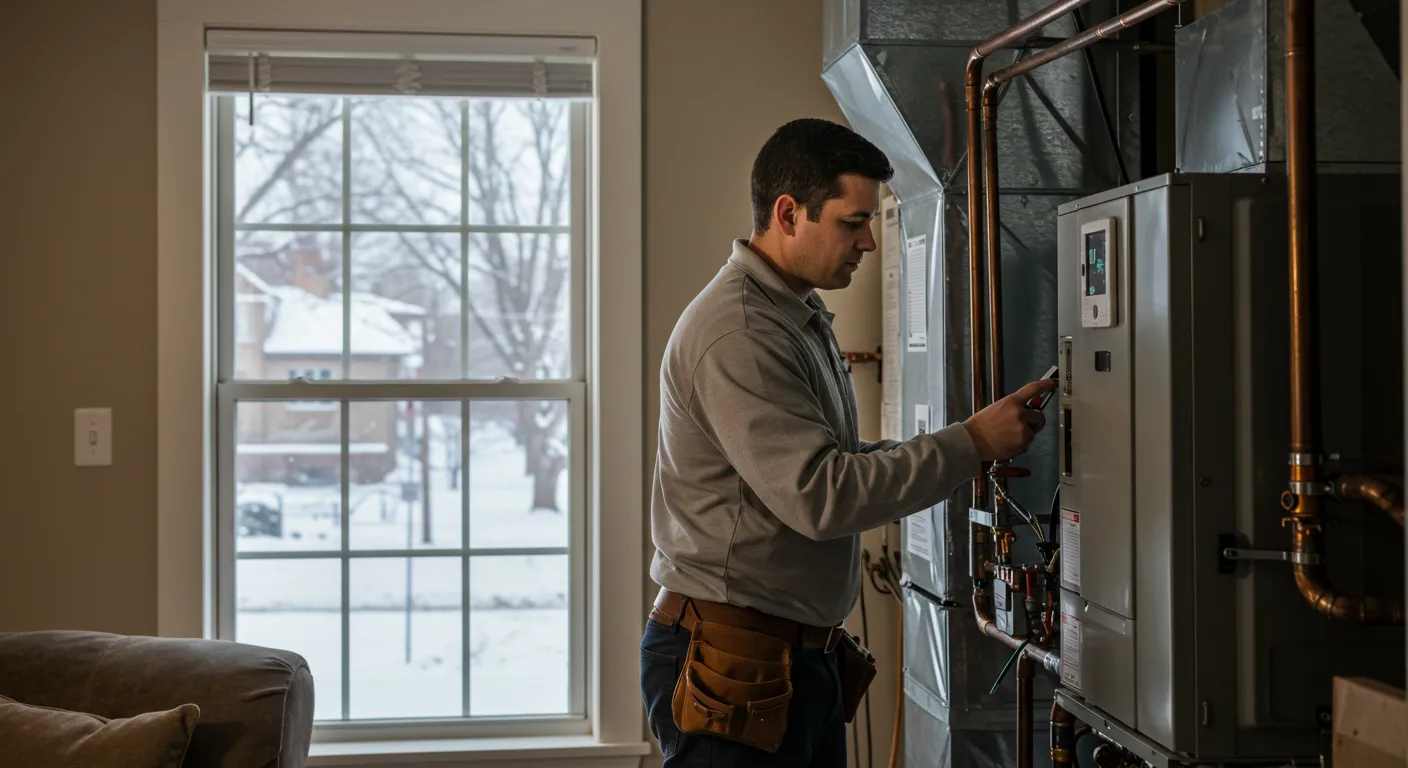
Understanding the installation timeline helps homeowners plan their day and reduces the anxiety associated with major home repairs. We have streamlined our process to minimize disruption to your daily routine while adhering to strict technical standards:
Technical Assessment and Load Calculation
The process begins with a detailed evaluation of your home’s heating needs. We do not simply look at the size of your old unit and install a matching one. Insulation levels, window quality, and home renovations can change your heating requirements over time. We perform a load calculation to determine the exact BTU output required. This prevents "short cycling," where an oversized unit turns on and off too frequently, causing wear and tear, or an undersized unit running constantly without satisfying the thermostat.
Site Preparation and Protection
On the day of installation, our technicians arrive with the necessary equipment and protective gear. We respect your property by laying down drop cloths and wearing shoe covers to protect your flooring. We clear the workspace around the utility area and disconnect gas and electrical lines safely. Safety is paramount during this phase to prevent gas leaks or electrical hazards.
Removal of Existing Equipment
The old furnace is disconnected and carefully removed from the premises. During this stage, we inspect the area beneath the unit for any signs of moisture damage, mold, or structural issues that might have been hidden by the old equipment. Addressing these underlying issues now prevents future complications with the new system.
Installation of New Equipment
The new furnace is positioned and leveled. Leveling is critical for condensing furnaces to ensure proper drainage of the condensate water produced during the heating process. We then connect the gas lines, installing a new sediment trap (drip leg) if one is missing, which protects the gas valve from debris. Electrical connections are made, and the thermostat is wired to match the specific staging capabilities of the new heater.
Venting and Ductwork Connection
The flue pipe is installed or reconnected, ensuring proper slope and clearance from combustible materials. We then connect the supply and return plenums, fabricating custom sheet metal transitions if necessary to ensure a perfect fit. This airtight seal is crucial for static pressure management.
System Startup and Testing
Once physical installation is complete, we initiate the startup sequence. We check gas pressure at the manifold to ensure it matches manufacturer specifications. We test the temperature rise—the difference in air temperature between the return and supply—to confirm the heat exchanger is operating within safe limits. We also test safety switches, including the limit switch and flame sensor, to verify they will shut the system down in an emergency.
Final Walkthrough and Education
We do not leave until you understand how to operate your new system. We guide you through the thermostat functions, show you how and when to change the filter, and explain the maintenance requirements to keep your warranty valid.
Deciding on Repair vs. Replacement: What You Need to Know
Homeowners often struggle with the decision to repair a failing unit or invest in a new one. While repairs can offer a short-term fix, there are specific mathematical and safety thresholds where replacement becomes the only logical financial decision:
The 50% Rule
A general industry standard regarding repair costs helps clarify the decision. If the cost of the repair approaches 50% of the cost of a new system, replacement is the smarter financial move. A major repair on an old unit essentially throws good money after bad, as other components are likely to fail soon after.
Age of the Equipment
Furnaces typically last between 15 and 20 years. If your unit is over 15 years old and requires a significant repair—such as a blower motor or control board—replacement is usually recommended. Modern systems are significantly more efficient than units manufactured two decades ago. Replacing a 15-year-old unit often results in immediate savings on monthly energy bills, helping to offset the cost of installation.
Heat Exchanger Integrity
The heat exchanger is the metal barrier between the burning gas and the air circulating in your home. If this component cracks, it can leak carbon monoxide into your living space. A cracked heat exchanger is a non-negotiable safety hazard. In almost all cases involving a cracked heat exchanger, specifically in out-of-warranty units, full system replacement is required for the safety of the household.
Frequency of Breakdowns
If you have required multiple repairs in the last two years, your system has likely entered the failure phase of its lifecycle. Constant unreliability is not only expensive but also risky during extreme cold snaps. Relying on a system that breaks down annually puts your home at risk of frozen pipes and water damage during deep freezes.
Home Comfort Issues
If some rooms in your house are freezing while others are hot, or if the air feels excessively dry, your current unit may be improperly sized or failing to circulate air correctly. New systems with variable-speed blowers can resolve these comfort issues by mixing air more continuously and effectively.
Local Compliance and Rebates: How They Benefit You
Operating in the Prairie Village area requires strict adherence to local building codes and an understanding of regional climate challenges. Local codes are not arbitrary; they are designed to ensure the safety of your home and family:
Permitting and Inspections
Professional installation always involves pulling the necessary permits from the city. This triggers a third-party inspection after the work is done. The inspector verifies that the gas piping is leak-free, the electrical work meets code, and the venting is safe. We handle the entire permitting process, ensuring that your installation is legal and compliant. Unpermitted work can cause significant issues when you eventually sell your home and may void your homeowner's insurance coverage in the event of a fire.
Utility Rebates and Incentives
Local utility providers often offer rebates for upgrading to high-efficiency heating equipment. These programs are designed to reduce the load on the energy grid. We assist you in identifying available rebates and providing the necessary documentation, such as AHRI certificates, to claim these savings. High-efficiency units (90% AFUE and above) often qualify for significant financial incentives.
Climate-Specific Considerations
Our region experiences significant temperature fluctuations. We are located in an area where winter temperatures can drop well below freezing, but also where spring and fall can be mild. This makes two-stage or modulating furnaces particularly valuable here. Unlike single-stage furnaces that run at 100% capacity whenever they are on, multi-stage units can run at lower capacity during milder weather, providing quieter operation and better energy efficiency.
Additionally, considering the frequency of severe weather and power fluctuations in Tornado Alley, we ensure all electrical connections are robust and surge protection options are discussed to safeguard the sensitive electronics in modern furnaces.
Why Choose Us? Our Commitments Make the Difference
Selecting a contractor is the most critical step in the heating installation process. The market is flooded with options, but the difference lies in technical expertise, accountability, and transparency:
- Technical Excellence and Certification: We employ technicians who are rigorously trained in modern HVAC technology. Our team understands the physics of airflow, the chemistry of combustion, and the complexities of modern control circuits. We do not guess; we measure, calculate, and verify. This technical proficiency ensures that your high-efficiency equipment actually delivers the efficiency ratings promised on the box.
- Respect for Your Home: We treat your home with the utmost respect. From wearing protective shoe covers to cleaning up all debris after the installation, our goal is to leave your home cleaner than we found it. We understand that a furnace installation is a construction project happening inside your living space, and we conduct ourselves with professionalism and courtesy.
- Transparent Pricing and Communication: You will never face hidden fees or surprise charges with All Day Comfort Heating and Cooling LLC. We provide clear, upfront assessments and pricing before any work begins. We take the time to explain the options available to you, helping you choose the system that fits your budget and your home’s needs, rather than pushing the most expensive option.
- Post-Installation Support: Our relationship does not end when the truck drives away. We register your equipment warranties for you and provide ongoing support. If you have questions about your new thermostat or need adjustments to the airflow, we are available to ensure your complete satisfaction. We stand behind our workmanship, ensuring that the investment you made in your home’s comfort is protected for years to come.
Your Trusted HVAC Contractor in Overland Park, KS
When it comes to dependable heating installation, working with the right HVAC contractor in Prairie Village, KS ensures your home stays warm, efficient, and safe all winter long. At All Day Comfort Heating and Cooling LLC, we provide precise, code-compliant installations backed by transparent pricing, fast turnaround, and skilled technicians trained in today’s most advanced heating systems.
Schedule your heating installation assessment today and experience reliable home comfort backed by industry-leading warranties and customer-focused service.
Secure your home's warmth and efficiency with a professional installation today.
Contact Us
customer reviews
Areas We Serve



Copyright © 2026 All Day Comfort Heating and Cooling.
All rights reserved.
