




Emergency HVAC in Raymore, MO
Experiencing an HVAC breakdown in Raymore? Contact us for immediate, professional service. Expert technicians available 24/7. Call now for quick resolution.
HVAC System Failure Requires Immediate Professional Attention
When your heating or cooling system fails unexpectedly, the resulting discomfort is more than an inconvenience; it constitutes a genuine emergency that impacts the safety and livability of your home. For immediate dispatch to restore your home's temperature, contact us at (816) 438-7667.
At All Day Comfort Heating and Cooling LLC, we are on call 24/7 to ensure your environment returns to comfort as swiftly as possible. Residents in Raymore know that extreme weather waits for no one, and neither do we. Whether facing a furnace lockout during a snowstorm or an air conditioner seizure during a heatwave, prompt action mitigates damage to the unit and restores safety to the household.
- Immediate Dispatch: Technicians are ready to respond to your location within the hour to minimize downtime.
- Effective Solutions: We provide quick, accurate diagnosis and repair to get your system back on track immediately.
- Transparent Pricing: You receive clear, upfront costs with no hidden fees, even during emergency situations.
We are licensed, insured, and fully compliant with local regulations for your complete peace of mind.
24/7 Emergency Service Scope and Capabilities
An HVAC emergency is rarely a convenient occurrence. It typically happens during the hottest afternoon of the year or the coldest night of winter. Our emergency service model is built on readiness and technical expertise. We do not operate with an answering service that queues calls for the next business day; we operate with on-call technicians equipped to handle mechanical failures immediately.
When you request emergency service, the focus is on stabilization and restoration. This involves a rapid deployment of a fully stocked service vehicle containing the most common fail-points in modern HVAC systems, including capacitors, contactors, igniters, and flame sensors. The goal is to complete the repair in a single trip whenever possible.
We address a wide range of critical system failures:
- Complete System Loss: Situations where the furnace or air conditioner will not turn on, leaving the home vulnerable to rapid temperature changes.
- Safety Hazards: Detection of gas leaks, burning odors, sparks, or carbon monoxide warnings that require immediate system shutdown and professional intervention.
- Refrigerant Leaks: Identification and repair of leaks that cause coils to freeze and systems to lose cooling capacity rapidly.
- Airflow Obstructions: Clearing blockages in ductwork or filtration systems that are causing the blower motor to overheat and shut down.
- Electrical Failures: Repairing blown fuses, tripped breakers, and corroded wiring that prevent the thermostat from communicating with the unit.
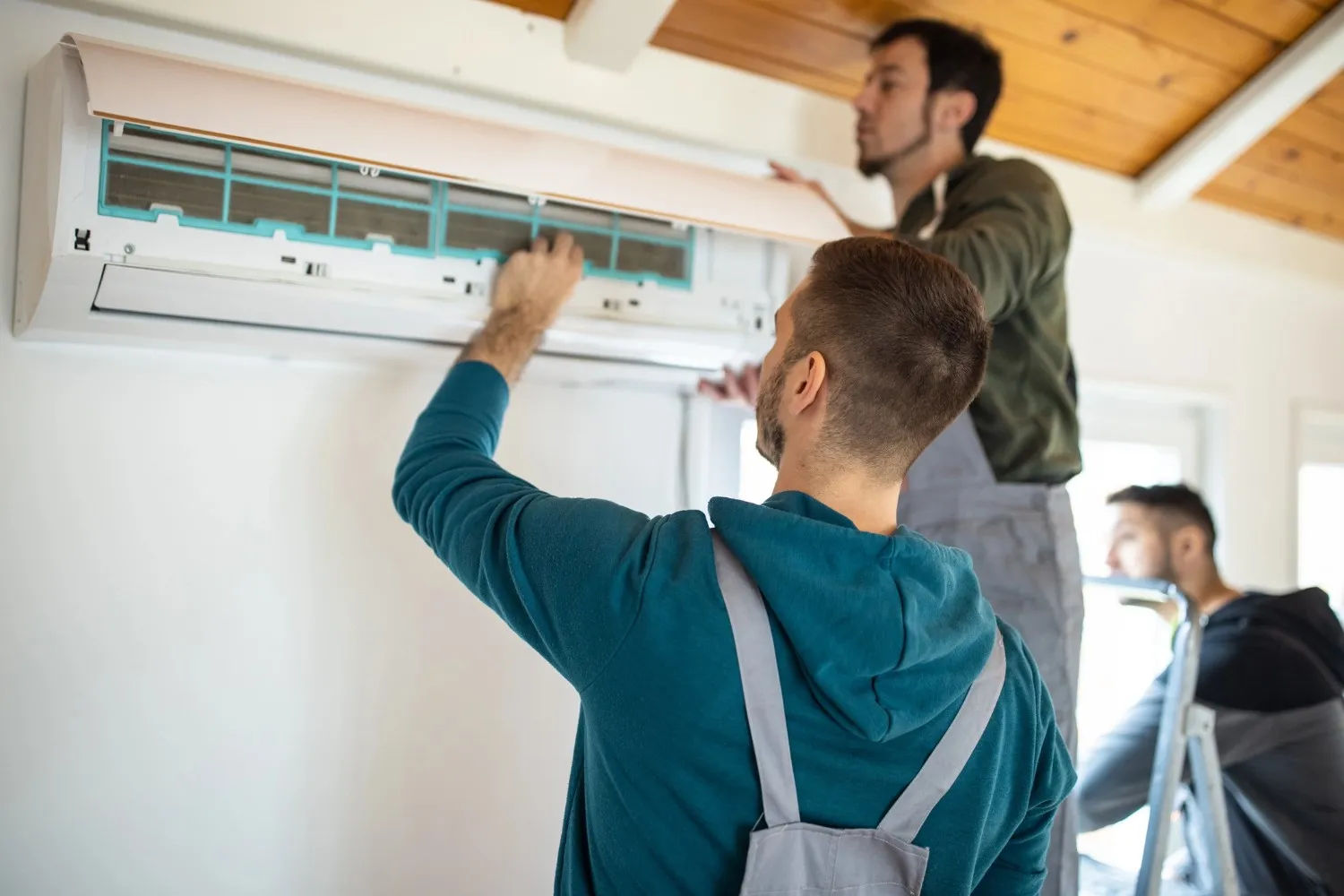
The Emergency Repair Process: From Call to Comfort
Understanding how the repair process works helps manage the stress associated with a system breakdown. We utilize a streamlined protocol designed to diagnose the issue accurately and implement a fix without unnecessary delays.
- Triage and Dispatch: The process begins immediately upon contact. A service coordinator assesses the severity of the issue—distinguishing between a total system failure and a performance drop—and dispatches the nearest technician to Raymore. This step ensures that the technician arrives with the correct context and potential parts needed for the job.
- On-Site Diagnostics: Upon arrival, the technician performs a comprehensive system check. This goes beyond just looking at the broken part. We test the electrical draw on motors, check refrigerant pressures, inspect the heat exchanger for cracks, and verify thermostat calibration. This "whole-system" approach prevents fixing a symptom while missing the root cause.
- Clear Explanation and Quote: Before any wrench is turned, you receive a detailed explanation of the failure. You are presented with the specific cause of the breakdown, the required repair, and the exact cost. There is no ambiguity; you approve the work before it begins.
- Execution and Testing: The technician performs the repair using OEM-grade parts. Once the new component is installed, the system is not just turned on; it is stress-tested. We cycle the unit through its stages to ensure it reaches the set temperature and maintains pressure, verifying that the repair holds under load.
- Site Cleanup and Reporting: The service area is left clean. We remove all debris and failed parts from your property. You receive a digital report detailing the work performed, warranty information on the new parts, and notes on the overall health of the system.
Deciding Between Emergency Repair and System Replacement
In the heat of an emergency, the instinct is often to patch the problem to get the air flowing again. However, there are scenarios where pouring money into a repair is not the most financially sound decision. We act as technical advisors to help you determine when a repair is viable and when replacement is the smarter long-term investment.
Several technical factors influence this decision:
- The 50% Rule: If the cost of the emergency repair approaches or exceeds 50% of the value of a new system, replacement is generally recommended. This is particularly true for major component failures like a cracked heat exchanger or a seized compressor.
- System Age: ASHRAE standards suggest that heat pumps and air conditioners have a lifespan of 10-15 years, while furnaces may last 15-20 years. If your unit is in the breakdown phase of its lifecycle, a repair today is often followed by another failure tomorrow.
- Refrigerant Type: Older systems utilizing R-22 refrigerant (Freon) are becoming prohibitively expensive to repair due to the phase-out of this chemical. If an older unit has a refrigerant leak, investing in a new system that uses environmentally compliant R-410A or newer refrigerants is often more cost-effective.
- Frequency of Breakdowns: If you have required emergency service more than once in the past two years, the system has likely become unreliable. Continual repairs on a "lemon" unit quickly outpace the monthly cost of financing a new, high-efficiency system.
- Safety Concerns: In cases where the breakdown involves a cracked heat exchanger in a furnace, repair is often not an option due to the risk of carbon monoxide poisoning. In these instances, replacement is a mandatory safety requirement.
Regional Considerations for HVAC Systems
Operating HVAC equipment in this region presents unique challenges due to the specific climate conditions. Raymore experiences a wide variance in weather, from hot, humid summers to winters with significant snowfall. These environmental factors directly impact how systems fail and how they must be repaired.
- Humidity Management: The spring and summer months bring high humidity levels. This places a heavy latent load on air conditioners. If a system is short-cycling or low on refrigerant, the evaporator coil can freeze into a block of ice, halting airflow. Emergency repairs often involve de-icing the system and adjusting the charge to handle the humidity load effectively.
- Winter Precipitation: With average winter snowfalls of 10-15 inches, heat pumps and gas furnaces face external threats. Snow and ice can accumulate around outdoor heat pump units, restricting airflow and causing emergency shut-offs. For gas furnaces, snow can block intake and exhaust pipes, triggering safety switches that shut down the heat. Technicians check these external factors immediately during winter calls.
- Utility and Code Compliance: Emergency replacements or major repairs involving gas lines or high-voltage electrical connections must adhere to local building codes. We ensure that all emergency work meets the current safety standards required by city ordinances, preventing future issues during home inspections or permit reviews.
- Temperature Swings: Rapid shifts from freezing to thawing can cause thermal expansion and contraction in ductwork and piping. This stress frequently leads to refrigerant leaks at brazed joints or cracked solder connections in control boards, necessitating precision welding repairs.
Why Professional Diagnosis Matters
Attempting DIY repairs during an HVAC emergency often exacerbates the problem. Modern high-efficiency systems utilize complex control boards, variable-speed motors, and high-pressure refrigerant lines. Without specialized tools and training, it is easy to misdiagnose a problem or void the manufacturer's warranty.
Professional diagnosis utilizes specific instrumentation to isolate issues:
- Manifold Gauges: To measure superheat and subcooling, ensuring the refrigerant charge is exact. Incorrect charging reduces efficiency and can destroy the compressor.
- Multimeters: To safely test high-voltage electrical components. Electrical issues are the leading cause of system failure and pose significant fire risks if handled improperly.
- Combustion Analyzers: To measure the efficiency and safety of gas furnaces, ensuring that carbon monoxide is not leaking into the living space.
- Static Pressure Manometers: To measure airflow resistance within the ducts, identifying blockages that are invisible to the naked eye.
Component Failure Analysis
When All Day Comfort Heating and Cooling LLC responds to an emergency, we look at the specific components that have failed to understand why they failed. A blown capacitor, for example, is often a symptom of a dirty condenser coil or an overheating motor. Simply replacing the capacitor without cleaning the coil guarantees another breakdown shortly.
Common critical components we address include:
- Compressor Contactors: These switches control the high-voltage power to the compressor. Over time, the contact points become pitted and carbonized, leading to welding (sticking closed) or failing to make contact. This prevents the outdoor unit from running.
- Blower Motors: The heart of the air distribution system. Motors can fail due to overheating caused by dirty filters or closed vents. Emergency replacement restores air circulation to the home.
- Thermostatic Expansion Valves (TXV): This valve regulates the flow of refrigerant into the evaporator coil. If it becomes clogged or stuck, the system cannot cool. Diagnosing a bad TXV requires precise pressure readings.
- Igniters and Flame Sensors: In furnaces, these are the most common failure points. If the sensor is dirty or the igniter is cracked, the furnace will lock out as a safety precaution. We carry universal and OEM replacements to restore heat immediately.
Warranty and Future Prevention
After an emergency repair is completed, the focus shifts to preventing recurrence. We provide clear documentation on the warranty coverage for the specific repair performed. Most replacement parts come with a manufacturer's warranty, and we stand behind our labor.
Furthermore, many emergency breakdowns are preventable through routine care. While the immediate priority is fixing the current issue, our technicians will highlight any other areas of concern—such as frayed wiring or rusting pans—that could lead to future emergencies. This proactive approach helps homeowners budget for maintenance rather than being surprised by urgent repairs.
We also assist in verifying if your system is still under the original equipment manufacturer's warranty. If the unit is relatively new, the cost of parts may be covered, significantly reducing the financial impact of the emergency. We handle the warranty processing and paperwork, ensuring you receive the full benefit of your coverage.
Restoring Safety and Comfort
A broken HVAC system disrupts your life and threatens the safety of your home environment. The goal of emergency service is to resolve this disruption with speed, technical precision, and absolute transparency. We do not leverage the urgency of the situation to inflate costs; rather, we use our expertise to provide the most efficient path back to a comfortable home.
From the moment the dispatch is received to the final test of the repaired unit, the process is handled with professional rigor. We understand the specific demands of the local climate and the intricacies of modern heating and cooling equipment. When the temperature in your home becomes critical, you need a solution that is both immediate and lasting — contact us today.
Do not let a system failure compromise your safety or comfort for another hour. Contact us now for immediate emergency service.
Contact Us
customer reviews
Areas We Serve




Copyright © 2026 All Day Comfort Heating and Cooling.
All rights reserved.
