



Furnace Repair in Raymore, MO
Facing furnace issues in Raymore? Get 24-hour emergency service with flexible financing options. Ensure your home's warmth and safety without delay.
Immediate Furnace Repair Solutions
Facing a furnace failure in Raymore? Don’t let chilly weather catch you off-guard or compromise the safety of your home during a freeze. Contact us immediately for 24-hour emergency service or to discuss available financing options to restore your heat today.
When the temperature drops, a malfunctioning heating system is more than an inconvenience; it becomes a safety concern for your plumbing and your family. All Day Comfort Heating and Cooling LLC provides rapid response protocols designed to identify the root cause of the breakdown and implement a lasting fix without delay. You need a solution that prioritizes restoring warmth and ensuring the system operates safely for the remainder of the season.
- Same-day service ensures your warmth is restored promptly before the house freezes.
- 24/7 emergency repairs are available because furnace issues rarely happen during convenient business hours.
- Expert technicians are equipped to handle all furnace brands and models, ensuring no time is wasted waiting on knowledge gaps.
Certified and insured technicians handle every job, with flexible financing options available for major repairs or necessary replacements.
What to Expect From a Professional Diagnostic Visit
When your heating system fails, the immediate goal is to understand exactly what went wrong and what is required to fix it. A professional diagnostic visit is not a cursory glance at the unit; it is a systematic examination of the mechanical, electrical, and safety components of your furnace. This process determines whether a simple part swap will suffice or if a more complex mechanical failure has occurred.
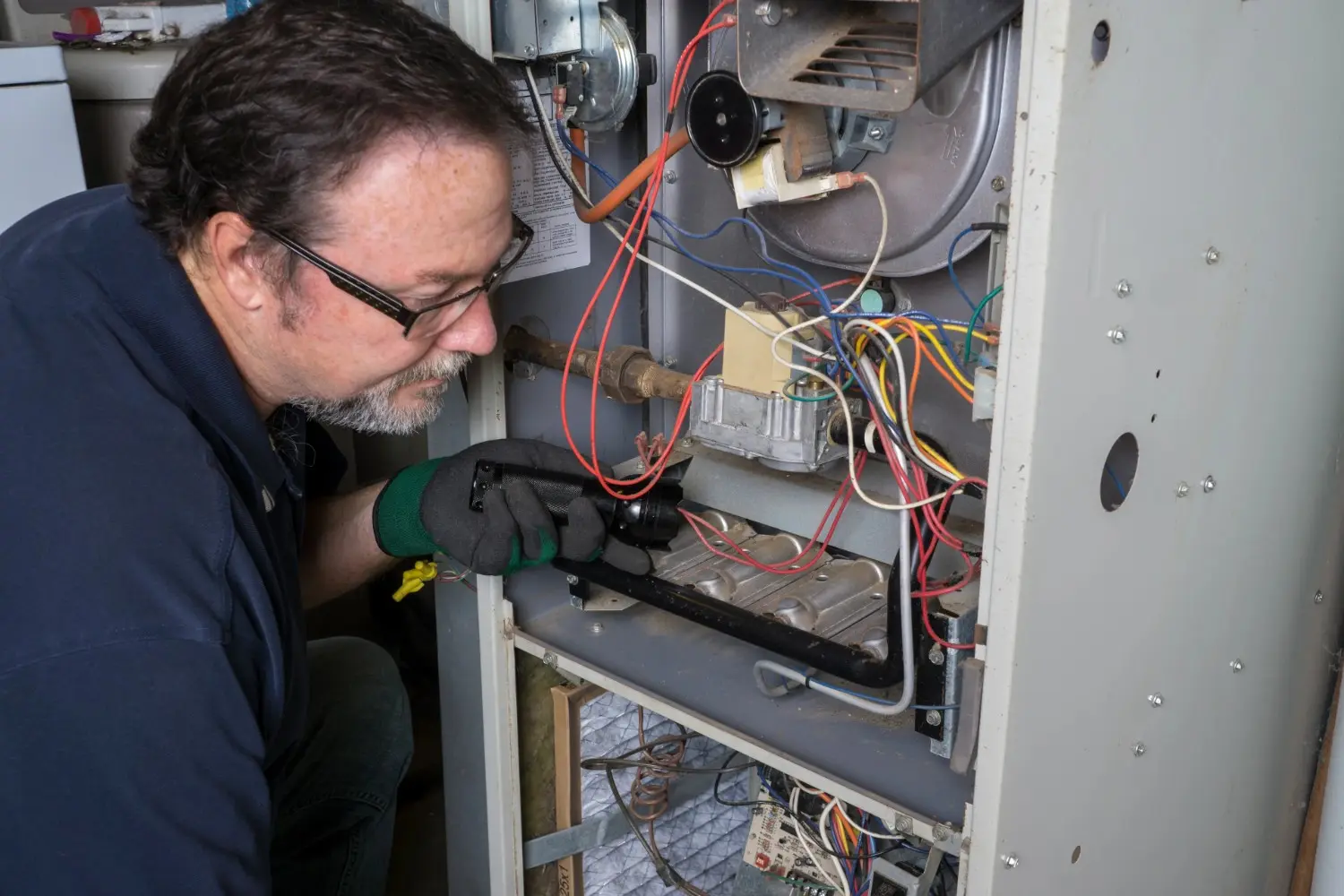
Upon arrival, technicians focus on the immediate symptoms—whether the unit is blowing cold air, making unusual noises, or failing to turn on entirely. The assessment moves quickly to the internal components. This includes testing the thermostat communication to ensure the signal to heat is actually reaching the furnace control board. If the signal is present but the unit is unresponsive, the investigation moves to the electrical systems.
Key components inspected during a standard service call include:
- Ignition System and Pilot Light: For gas furnaces, the igniter or pilot light is the catalyst for heat. If the igniter is cracked or the pilot assembly is clogged, the burners will not fire.
- Flame Sensor Analysis: This safety device ensures gas is only flowing when a fire is present. If it is dirty or oxidized, it will shut the system down repeatedly to prevent gas leaks.
- Blower Motor Performance: The blower is responsible for circulating air. Technicians check the capacitor and the motor amp draw to ensure it isn't overheating or seizing up.
- Heat Exchanger Integrity: This is the most critical safety check. A cracked heat exchanger can leak carbon monoxide into the living space. Technicians use combustion analyzers to detect even microscopic cracks or leaks.
- Flue and Venting: Proper ventilation is essential for safety and efficiency. Blockages in the flue pipe can cause the system to overheat and shut down automatically.
This thorough evaluation provides a clear picture of the system's health. You receive a detailed report explaining the specific failure, the condition of related parts, and a direct quote for the repair. There is no guesswork involved; only data-driven recommendations based on the current state of your equipment.
The Repair Process: From Diagnosis to Warmth
Understanding the workflow of a repair appointment helps homeowners plan their day and manage expectations. The objective is to minimize downtime and disruption to the household while ensuring the repair adheres to all local building and safety codes. The process is streamlined to move from identification to resolution as efficiently as possible.
- Arrival and Site Protection: The technician arrives fully equipped with a stocked vehicle containing common parts. Before entering, they ensure they have the necessary protective gear to keep your home clean.
- System Isolation: For safety, gas and electrical power to the furnace are shut off. This prevents accidental ignition or shock during the repair work.
- Component Replacement: The faulty part is removed. If it is a motor, board, or valve, the technician verifies the specifications of the new part match the manufacturer's requirements exactly.
- System Cleaning: While the unit is open, technicians often clean the immediate area of dust and debris that may have contributed to the failure, such as clearing a clogged condensate trap in high-efficiency models.
- Re-testing and Calibration: Once the new part is installed, the system is powered back on. The technician does not simply leave once the fire starts. They monitor the heating cycle, measure the temperature rise (the difference between air entering and leaving the furnace), and check gas pressure settings.
- Final Safety Check: A final sweep for gas leaks and carbon monoxide ensures the unit is safe for continuous operation.
Deciding When to Repair vs. Replace
One of the most difficult decisions a homeowner faces is whether to invest in another repair or to replace the entire furnace. This decision shouldn't be based on a guess; it requires analyzing the age of the unit, the cost of the current repair, and the history of breakdowns. All Day Comfort Heating and Cooling LLC helps residents navigate this choice by looking at the math and the long-term reliability of the system.
There are specific benchmarks that indicate replacement is the more financially sound option. If the cost of the repair approaches 50% of the value of a new system, replacement is generally recommended. This is often referred to as the "50% rule." Pouring money into a degrading asset often leads to diminishing returns, as one fix is quickly followed by another component failure.
Consider replacement if the following factors apply:
- Age of the Unit: Furnaces typically last 15 to 20 years. If your unit is in Raymore and is over 15 years old, parts may be obsolete or expensive to source, and the efficiency is likely far below modern standards.
- Frequency of Repairs: If you have required repairs more than twice in the last two years, the system is signaling the end of its lifespan. Frequent breakdowns indicate that multiple internal components are reaching their fatigue points simultaneously.
- Rising Energy Bills: As furnaces age, they lose efficiency. If your fuel usage has spiked despite normal weather patterns, the internal mechanisms are likely worn out, forcing the unit to run longer to produce the same amount of heat.
- Uneven Heating: If some rooms are freezing while others are hot, or if the furnace runs constantly without satisfying the thermostat, the blower or heat exchanger may be failing beyond the point of reasonable repair.
- Safety Concerns: A cracked heat exchanger is an automatic condemnation of the furnace due to carbon monoxide risks. In this scenario, replacement is the only safe option.
Common Furnace Issues in the Region
The climate in Raymore significantly impacts how furnaces operate and fail. With winter lows regularly dropping between -4 and -7 °C, heating systems run long, hard cycles. This intense usage puts heavy strain on the ignition systems and blower motors. The transition from humid springs to freezing winters can also accelerate corrosion on electrical contacts and sensors.
Local homeowners frequently encounter specific issues driven by these weather patterns. For instance, short cycling—where the furnace turns on and off rapidly without heating the home—is common when airflow is restricted by debris or dirty filters, which happens frequently after a dusty autumn.
Other common local issues include:
- Limit Switch Failures: The limit switch detects internal heat. When the furnace overheats due to long run times during a deep freeze, this switch can wear out, causing the fan to run continuously or the burners to shut off prematurely.
- Thermostat Miscalibration: Drastic temperature swings can sometimes cause older thermostats to lose calibration, resulting in the house being much colder than the setting indicates.
- Frozen Condensate Lines: High-efficiency furnaces produce water (condensate). In extreme cold, if the drain line isn't properly insulated or routed, it can freeze, causing the furnace to shut down to prevent water damage.
Local Regulations and Safety Considerations
Operating a furnace in this area requires adherence to specific local codes and safety standards. When repairs involve gas lines, venting, or electrical modifications, it is not just a matter of fixing the machine; it is about complying with Raymore regulations designed to protect residents.
Professional technicians are familiar with the local requirements for flue venting clearances and combustion air intake. If a repair involves altering the venting system, it must meet the current code to prevent exhaust gases from recirculating into the home. Additionally, utility providers in the region may have specific requirements for gas pressure and piping that must be verified during any major repair.
Technicians also verify that the furnace meets the efficiency standards required for the region. While repairs don't always trigger a need for upgrades, understanding the Annual Fuel Utilization Efficiency (AFUE) rating of your current unit helps in planning for future efficiency upgrades that align with local energy incentives or rebate programs.
The Importance of Professional Execution
Attempting DIY furnace repair is dangerous and often void of warranties. Modern heating systems are complex appliances that integrate high-voltage electricity with combustible gas. A misdiagnosis or improper installation of a part can lead to gas leaks, electrical fires, or total system destruction.
Manufacturer warranties almost universally require proof of professional service to remain valid. If a part fails under warranty, the manufacturer will ask for service records from a licensed provider. Without this, you may be liable for the full cost of the replacement part. Professional service ensures that the correct OEM (Original Equipment Manufacturer) parts are used, maintaining the system's designed efficiency and safety ratings.
Furthermore, professional technicians carry the specialized tools required for accurate diagnosis, such as manometers for checking gas pressure and multimeters for tracing electrical faults. These tools allow for precision that guesswork cannot replicate. By relying on a professional, you ensure the repair resolves the root cause, rather than just treating a symptom.
Secure Your Comfort and Safety Today
A broken furnace is a time-sensitive issue that requires immediate, professional attention. Waiting to address strange noises, weak airflow, or ignition failures can lead to more extensive damage and higher repair costs down the line. You need a partner who understands the urgency of the situation and has the technical expertise to resolve it correctly on the first visit.
All Day Comfort Heating and Cooling LLC is committed to restoring safe, reliable heating to your home. Do not gamble with your home’s temperature or your family’s safety.
Contact Us
customer reviews
Areas We Serve



Copyright © 2026 All Day Comfort Heating and Cooling.
All rights reserved.
