




AC Maintenance in Leawood, KS
Ensure your AC is summer-ready with All Day Comfort's expert maintenance in Leawood. Avoid breakages, save on repairs. Call us today for reliable AC services!
Is Your Air Conditioner Ready for Leawood’s Summer?
Facing sudden AC failures during Leawood's unpredictable summers creates unnecessary stress and discomfort when humidity spikes. Schedule your inspection today to ensure consistent cooling. All Day Comfort Heating and Cooling LLC ensures your AC runs smoothly with rapid, reliable maintenance services designed to prevent breakdowns before the heat wave hits.
- Same-Day Service: Get your AC checked and fixed the same day you call.
- 24/7 Emergency Repairs: Available around the clock for any sudden breakdowns.
- Season Maintenance Plans: Ensure year-round efficiency with comprehensive upkeep agreements.
All services are performed by certified technicians with comprehensive service guarantees.
Comprehensive Tune-Ups to Maximize Cooling Efficiency
Effective air conditioning maintenance goes far beyond a simple filter change. It involves a rigorous inspection and calibration of your system’s most critical components. When the humidity in Leawood begins to climb in late spring, your system must work significantly harder not just to cool the air, but to remove moisture from your home. Without proper tuning, the system runs longer, consumes more electricity, and fails to provide the crisp, cool air you expect.
A professional maintenance visit focuses on the mechanical, electrical, and airflow aspects of your unit. Technicians utilize precision tools to measure performance data against the manufacturer’s specifications. If a component is drifting out of tolerance, it is adjusted or flagged for attention before it causes a catastrophic failure on a ninety-degree day. This proactive approach ensures that every kilowatt of energy used translates directly into comfort.
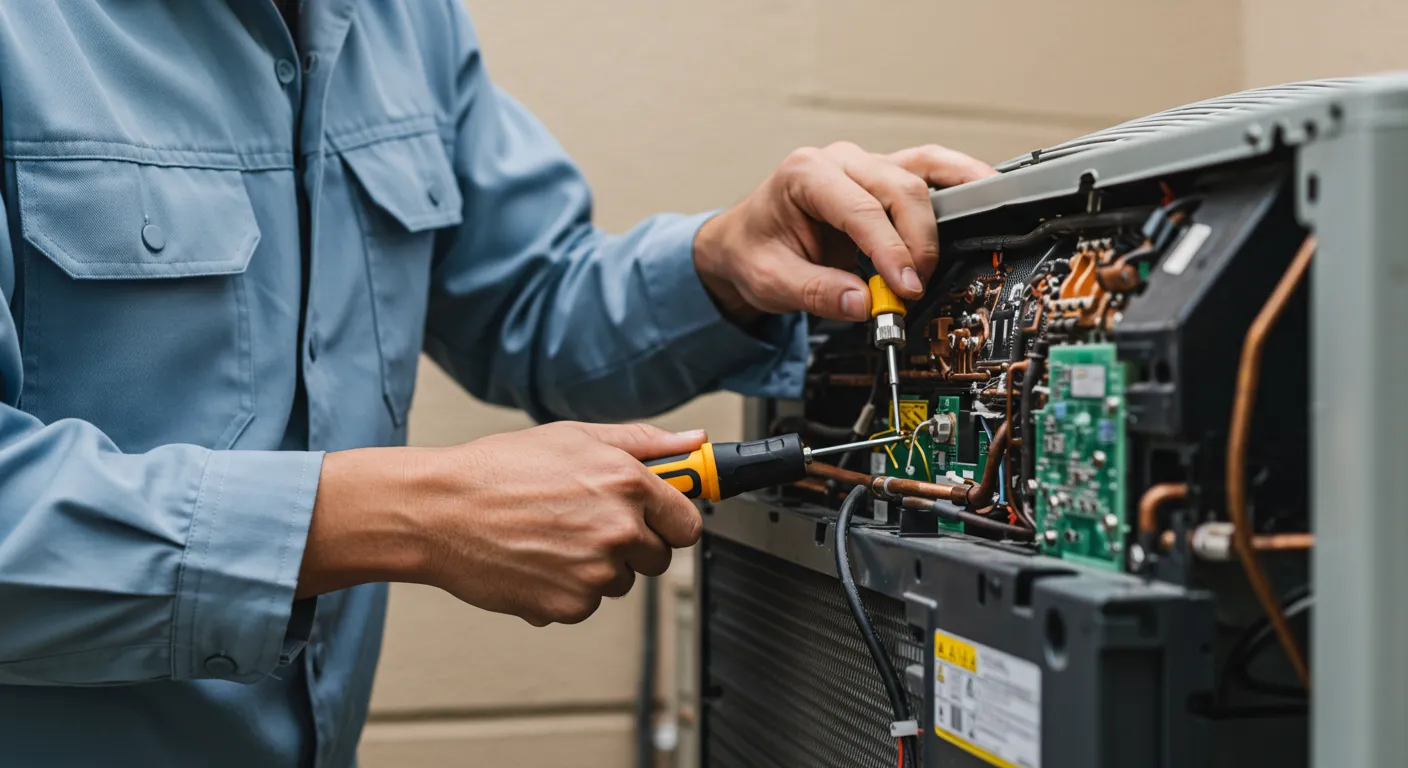
Critical Cleaning and Airflow Optimization
Airflow is the lifeblood of any HVAC system. Restricted airflow places immense strain on the blower motor and compressor, leading to overheating and premature failure. During a maintenance visit, the focus is often on the evaporator and condenser coils. Over time, these coils collect dust, pollen, and debris common in the region. Even a micro-layer of dirt acts as an insulator, preventing the coils from absorbing or releasing heat effectively.
- Technicians chemically clean the condenser coils to remove grime and debris that block heat transfer.
- The blower motor and wheel are inspected for dust buildup, which can unbalance the fan and damage bearings.
- Air filters are evaluated and replaced if necessary to ensure unrestricted air movement.
- Supply and return registers are checked for blockages that might disrupt pressure balance in the home.
Electrical Component Safety and Calibration
Electrical failures are among the most common reasons for AC downtime. Vibration from normal operation can loosen connections over time, creating hot spots that melt wires or destroy components. A maintenance service includes a thorough tightening of all electrical connections and a safety inspection of the wiring.
- Capacitors are tested to ensure they are holding the correct charge necessary to start motors and compressors.
- The contactor is inspected for pitting or burning, which can lead to voltage irregularities or the system sticking in the "on" position.
- Amperage draws on the compressor and fan motors are measured to detect internal wear or resistance.
- Thermostat calibration is verified to ensure the temperature reading matches the actual room temperature.
Refrigerant Level and Pressure Checks
The refrigerant in your system does not expire; it circulates in a closed loop. However, leaks can occur due to vibration or corrosion. Low refrigerant levels cause the evaporator coil to freeze, leading to water damage and a complete lack of cooling. Conversely, an overcharged system can slug the compressor with liquid refrigerant, destroying the heart of your AC unit.
- Gauges are attached to measure superheat and subcooling levels, providing an accurate picture of the refrigerant charge.
- If levels are low, a leak search is performed to identify the source before adding more refrigerant.
- Technicians verify that the refrigerant lines are properly insulated to prevent energy loss during transport between the indoor and outdoor units.
A Systematic Approach to System Reliability
The process of maintaining an air conditioning system is structured to cover every potential point of failure. Rather than a quick glance, a standardized protocol is followed to ensure consistency and thoroughness. This methodical approach allows technicians to spot anomalies that might be missed during a less rigorous inspection.
- First, the technician performs a visual inspection of the outdoor unit, checking for structural integrity and clearance from vegetation or obstructions.
- Next, the system is powered down to safely access internal components for cleaning and electrical testing.
- Following the internal checks, the condensate drain line is flushed. Algae and biological growth frequently clog these lines in humid climates, leading to water backing up and triggering safety float switches that shut down the system.
- Once cleaning and static checks are complete, the system is powered back on.
- Finally, the technician monitors the system through a full cooling cycle, observing temperature splits (the difference in temperature between air entering and leaving the system) to confirm operational efficiency.
When Replacement Beats Repair
While maintenance extends the life of your equipment, there comes a point where pouring money into an aging system is no longer economically viable. A maintenance visit often serves as a health check that helps homeowners determine the remaining lifespan of their unit. Understanding the threshold between a worthwhile repair and a necessary replacement saves money in the long run.
The 50% Rule
A common metric used in the industry is the 50% rule. If the cost of a necessary repair approaches or exceeds 50% of the value of a new system, replacement is generally the wiser financial decision. Major failures, such as a burnt-out compressor or a leaking evaporator coil in an older unit, often trigger this threshold. Investing thousands into a system that is already nearing the end of its design life is rarely recommended.
Frequency of Breakdowns
If a system requires multiple service calls within a single season, it indicates that the internal components are failing in succession. Partnering with All Day Comfort Heating and Cooling LLC ensures you receive honest assessments regarding the condition of your unit. When reliability becomes a constant worry, replacing the unit eliminates the uncertainty and the recurring costs of minor fixes.
Refrigerant Type Availability
Older systems often utilize R-22 refrigerant, which has been phased out due to environmental regulations. The cost of R-22 has skyrocketed as supplies dwindle. If an older unit develops a refrigerant leak, the cost to recharge it can be exorbitant. In these cases, upgrading to a modern system that uses R-410A or newer refrigerants is the only practical solution.
Efficiency Ratings and Energy Bills
Air conditioning technology has advanced rapidly. A system installed 15 years ago likely has a SEER (Seasonal Energy Efficiency Ratio) rating significantly lower than modern standards. Even if the old unit is running, it may be costing you significantly more to operate than a new, high-efficiency model. If energy bills are steadily climbing despite regular maintenance, the equipment’s efficiency has likely degraded beyond recovery.
Maintaining Efficiency in Eastern Kansas Weather
The local environment plays a massive role in how air conditioning systems function and degrade. The operational demands in this region are specific, requiring maintenance protocols that account for high humidity, storm seasons, and biological debris.
Combatting Humidity and Precipitation
The months of May and June are historically wet, bringing high humidity levels. Your AC unit is your primary dehumidifier during the summer. If the coils are dirty or the refrigerant charge is incorrect, the system cannot remove moisture effectively. This leads to a "clammy" feeling indoors, prompting users to lower the thermostat further, which increases energy consumption without solving the comfort issue. Regular maintenance ensures the condensate removal system is functioning perfectly to handle this heavy moisture load.
Cottonwood and Biological Debris
Spring in the area brings a significant amount of cottonwood and pollen. These airborne particles are drawn directly into the outdoor condenser fins. Cottonwood is particularly problematic as it weaves a mat over the coil, essentially suffocating the unit. This blockage forces the compressor to run at dangerously high temperatures. Mid-season cleaning is often necessary to remove this layer and restore proper heat dissipation.
Electrical Surges from Spring Storms
Severe weather in the spring often brings thunderstorms and lightning, resulting in voltage fluctuations and power surges. These surges can damage capacitors and sensitive control boards. During a maintenance check, technicians look for signs of electrical stress or scorched wiring that may have resulted from recent storm activity, ensuring the system is safe to operate for the remainder of the season.
Technical Expertise That Protects Your Investment
Choosing the right provider for AC maintenance determines the longevity of your cooling system. The difference between a superficial check and a deep diagnostic service lies in the expertise of the technician and the tools they employ. High-quality maintenance is an investment in asset protection, reducing the likelihood of expensive emergency calls down the road.
Advanced Diagnostic Tools
Modern HVAC maintenance utilizes digital manifold gauges, anemometers for airflow measurement, and thermal imaging to detect hot spots in electrical panels. These tools provide precise data points that eliminate guesswork. A technician equipped with the right technology can diagnose a failing part months before it actually breaks, allowing for a scheduled, stress-free repair rather than an emergency outage.
Adherence to Manufacturers’ Protocols
Every AC manufacturer has specific maintenance requirements to keep warranties valid. Skipping annual maintenance often voids these warranties, leaving the homeowner liable for part replacements. Professional service adheres strictly to these guidelines, documenting every check and adjustment. This documentation serves as proof of care should a warranty claim ever be necessary.
Integrity in Service
The goal of maintenance is to keep the existing system running as long and as efficiently as possible. Technicians focus on optimizing the current equipment, providing clear explanations of any issues found without pushing unnecessary upgrades. The objective is to ensure the home remains cool and comfortable, regardless of how high the temperature rises outside.
Schedule Your AC Service Now
Keeping your home cool requires proactive attention to detail. By addressing wear and tear early, ensuring clean airflow, and verifying electrical safety, you protect your home from the inconvenience of summer breakdowns. The team at All Day Comfort Heating and Cooling LLC is ready to deliver the precise, technical care your system requires. Don't wait for the heat to stop your system; secure your comfort and schedule your comprehensive AC maintenance service now. Contact us!
Contact Us
customer reviews
Areas We Serve




Copyright © 2026 All Day Comfort Heating and Cooling.
All rights reserved.
