




Emergency HVAC in Leawood, KS
Need fast HVAC repair in Leawood? Contact us for immediate assistance and expert service around the clock. Ensure your home's comfort and safety today!
Facing an Unexpected HVAC Breakdown at the Worst Possible Time?
When your HVAC system fails unexpectedly, it immediately disrupts the safety and comfort of your home, often leaving you battling extreme temperatures without a clear solution. If you are located in Leawood and require immediate assistance to restore your heating or cooling, schedule your emergency service now.
Our certified technicians are ready 24/7 to diagnose the failure and restore your system quickly and efficiently. We understand that mechanical failures rarely happen during convenient business hours, which is why our operational model prioritizes rapid deployment for critical system errors.
- Immediate response time: We have technicians on-call 24/7 to address urgent heating and cooling failures.
- Transparent pricing: You receive a clear, upfront quote for the necessary repairs with no hidden fees or surprise surcharges.
- Quality assurance: Every service call is backed by a guarantee of efficiency, ensuring the fix holds up against local weather demands.
All services are fully licensed, with extended warranties and flexible financing options available for major repairs or replacements. All Day Comfort Heating and Cooling LLC focuses on getting your system running correctly so you can return to normal life.
What Constitutes an HVAC Emergency and What to Expect
Not every noise or rattle requires an immediate dispatch, but specific scenarios demand urgent professional attention to prevent property damage or health risks. In the variable climate of Leawood, losing heat during a winter freeze or air conditioning during a humid heatwave constitutes a functional emergency. Beyond comfort, specific mechanical symptoms indicate immediate danger. If you smell gas, detect a burning electrical odor, or notice water leaking extensively from the unit into your living space or attic, shut the system down immediately and call for service.
When you request emergency service, the priority is stabilization and safety. The goal is not merely to patch a problem but to identify the root cause of the failure. Upon arrival, technicians focus on isolating the electrical, mechanical, or airflow issue that triggered the shutdown.
- Diagnostic Accuracy: The first step involves a comprehensive system check. This includes testing voltage amps on motors, checking refrigerant pressures, and inspecting the heat exchanger for cracks.
- Safety Verification: Technicians verify that no carbon monoxide leaks are present and that all electrical connections are secure to prevent fire hazards.
- Inventory Readiness: Service vehicles are stocked with common universal parts—such as capacitors, contactors, and hard start kits—to facilitate same-day repairs whenever possible.
- Clear Communication: You are informed of the exact failure point and provided with repair options before any work begins.
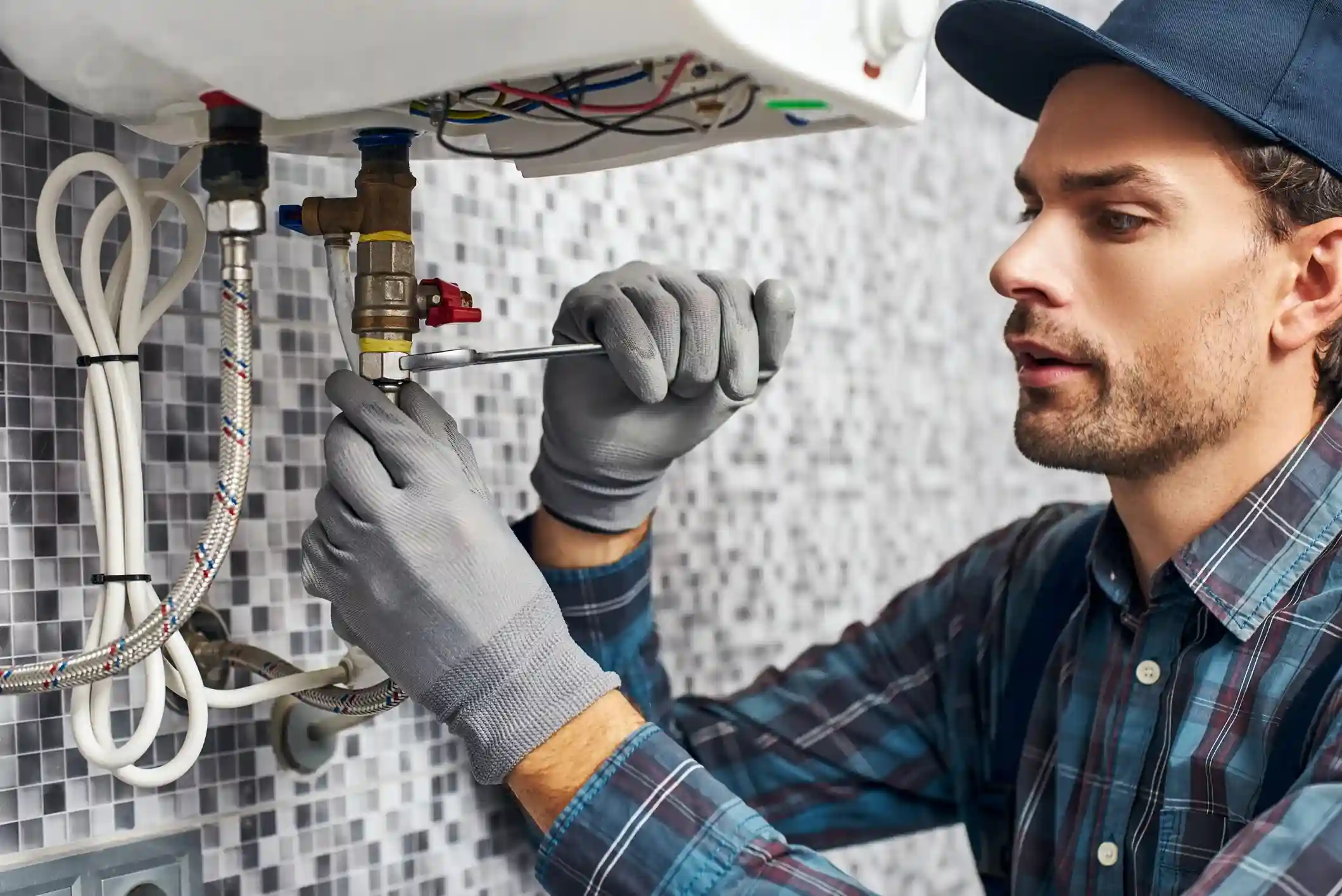
How the Emergency Repair Process Works
Navigating a system breakdown is stressful, but the repair process follows a structured, logical protocol designed to minimize downtime. We eliminate the guesswork by adhering to manufacturer specifications and industry best practices during every emergency call.
- Initial Triage and Dispatch: Once a request is logged, dispatchers assess the severity of the issue. Calls involving total system failure in extreme weather or safety hazards are prioritized. You receive a notification when a technician is en route to your property.
- On-Site Assessment: The technician arrives and performs a visual and mechanical inspection. This often involves removing service panels to access the internal components of the furnace or air handler. For cooling issues, gauges are attached to the condenser to read subcooling and superheat levels, which indicate the health of the refrigeration cycle.
- Problem Isolation: Using multimeters and diagnostic tools, the technician traces the failure. For example, if an AC unit is humming but the fan isn't spinning, the issue is isolated to the capacitor or the fan motor itself. If a furnace is blowing cold air, the ignition sequence is tested to see if the issue lies with the ignitor, flame sensor, or gas valve.
- Authorization and Repair: You receive a detailed explanation of what failed and why. Once you approve the scope of work, the technician performs the repair. This may involve replacing a blown fuse, clearing a clogged condensate drain line that tripped a float switch, or replacing a seized compressor.
- System Validation: After the repair is made, the system is not just turned on; it is cycled through a full operation sequence. The technician measures the temperature split (the difference between supply and return air) to ensure the unit is actually heating or cooling to capacity.
- Final Report: You receive a digital report detailing the work performed, the parts used, and any recommendations for future maintenance to prevent recurrence.
Deciding Between Emergency Repair and System Replacement
One of the most difficult decisions homeowners face during an emergency is whether to invest in a repair or opt for a full system replacement. This decision should be based on data, financial logic, and the long-term viability of the equipment, not just immediate panic.
We help you weigh the options by analyzing the "Repair vs. Replace" equation. Industry standards suggest the $5,000 rule: multiply the age of the unit by the repair cost. If the total exceeds $5,000, replacement is often the more prudent financial choice. However, there are specific technical factors to consider as well.
- Refrigerant Type: If your air conditioner utilizes R-22 (Freon), which has been phased out, adding refrigerant is prohibitively expensive. A major leak in an R-22 system usually dictates replacement rather than repair.
- Component Failure Hierarchy: Replacing a capacitor or contactor is a minor repair. However, if the compressor (the heart of the AC) or the heat exchanger (the core of the furnace) has failed, the cost of the part and labor often approaches the cost of a new unit.
- Frequency of Breakdowns: If the system has required multiple emergency repairs in the last two years, it indicates that the unit is reaching the end of its service life. Continuing to patch a dying system is often "throwing good money after bad."
- Efficiency Ratings: Older units often operate at 10 SEER or 80% AFUE. Upgrading to modern standards (14+ SEER2 or 90%+ AFUE) can result in significant energy savings that help offset the cost of installation over time.
- Warranty Status: If the unit is out of warranty, you bear the full cost of parts. New systems come with 10-year parts warranties, providing a decade of financial protection against defects.
Local Factors Affecting HVAC Performance
Operating HVAC equipment in this region requires specific attention to environmental factors. The weather patterns in Leawood and the surrounding Johnson County area exert heavy loads on residential systems. Summers are characterized by high humidity, which forces air conditioners to work harder not just to cool the air, but to remove moisture. If a system is short-cycling (turning on and off too quickly), it fails to dehumidify, leading to clammy indoor conditions and potential mold growth.
Winters bring their own challenges, with temperatures frequently dropping below freezing. Heat pumps must have functioning defrost boards to prevent ice accumulation on the outdoor coil. Gas furnaces must have clear intake and exhaust flues, which can sometimes be obstructed by snow drifts or ice buildup, causing the system to shut down on a safety lock-out.
- Permitting and Code Compliance: All major HVAC installations and significant repairs must adhere to local building codes. This includes ensuring proper clearance for outdoor units, correct sizing of breaker panels, and adherence to ventilation standards. Professional intervention ensures that all work remains compliant with city regulations, preventing issues during future home sales.
- Electrical Infrastructure: Summer storms often bring power surges. Local grids can fluctuate, and a sudden spike can fry sensitive control boards. We recommend and install surge protectors to safeguard modern, electronics-heavy HVAC systems.
- Ductwork Limitations: Many older homes in the area have ductwork designed for heating only or for smaller AC units. When upgrading or repairing, we assess static pressure to ensure the existing ducts can handle the airflow required by high-efficiency equipment.
Why Homeowners Choose Our Emergency Team
When your comfort is compromised, you need a service provider that combines technical expertise with operational integrity. We do not employ high-pressure sales tactics during an emergency. Our technicians are trained to solve the immediate problem and provide honest assessments of your system’s health.
All Day Comfort Heating and Cooling distinguishes itself through a commitment to technical excellence and customer respect. We arrive with fully stocked trucks, meaning we aim to fix the problem on the first visit rather than making you wait for parts ordering. Our team is familiar with all major brands and models, ensuring that whether you have a standard split system, a ductless mini-split, or a high-efficiency gas furnace, we have the knowledge to repair it.
- Certified Technicians: Our staff undergoes rigorous training and certification to stay current with evolving HVAC technology and refrigerants.
- Upfront Warranties: We stand behind our workmanship. Repairs are guaranteed, giving you peace of mind that the solution is permanent.
- Respect for Property: Technicians use shoe covers and drop cloths to protect your home during the repair process and ensure the workspace is left clean.
- Comprehensive Diagnostics: We don't just swap parts; we look for the underlying cause, such as restricted airflow or incorrect voltage, to prevent the issue from returning.
Restore Your Home Comfort Immediately
A broken HVAC system is more than an inconvenience; it affects your quality of life and the safety of your home environment. Waiting for business hours is not an option when temperatures are soaring or plummeting. You need a solution that is fast, reliable, and technically sound.
Don't let a mechanical failure dictate your comfort for another hour. Our team is ready to deploy, diagnose, and repair your system with the urgency and expertise the situation demands. Contact us now to dispatch an emergency technician to your home and restore your heating and cooling system today.
Contact Us
customer reviews
Areas We Serve




Copyright © 2026 All Day Comfort Heating and Cooling.
All rights reserved.
