




Duct Repair in Leawood, KS
Discover expert duct repair services in Leawood to seal leaks and enhance efficiency. Ensure your HVAC performs optimally with our professional sealing and insulation. Schedule today for better home comfort.
Uneven Heating and Cooling Often Indicates Failing Ductwork
Dealing with erratic temperatures or stuffy rooms at home usually means the issue lies within the hidden network of ducts moving air through your walls. When your ductwork is compromised, your HVAC system has to work double-time to satisfy the thermostat, leading to discomfort and wasted energy in your Leawood home. Schedule a professional duct assessment today by contacting us to restore balanced airflow.
Duct issues are rarely visible to the naked eye, but the symptoms are impossible to ignore. You might notice that one room stays freezing while the hallway is sweltering, or that dust accumulates on furniture hours after cleaning. These are signs that conditioned air is escaping into your attic, basement, or crawlspace rather than reaching your living areas. All Day Comfort Heating and Cooling LLC addresses these inefficiencies directly, turning a leaky system into a sealed, pressurized network that delivers comfort exactly where it is needed.
- Seal and repair aggressive air leaks to immediately improve system efficiency and home comfort.
- Install proper insulation wrapping to maintain consistent indoor temperatures regardless of the season.
- Implement energy-efficient upgrades that decrease monthly utility bills by reducing load on the HVAC unit.
- All services come with a full warranty and financing options to make the upgrade easy on your wallet. — explore financing
Comprehensive Duct Repair Services: What to Expect
When you commission a duct repair service, you are looking for more than just a patch job; you need a restoration of airflow dynamics. The primary goal is to eliminate "infiltration" and "exfiltration." Infiltration occurs when dirty, unconditioned air from a crawlspace or attic is sucked into the return ducts, polluting your indoor air quality. Exfiltration happens when the expensive heated or cooled air you paid for leaks out of supply ducts before reaching the vents.
Addressing these issues starts with a thorough diagnostic. This involves checking the static pressure of the system to see if the ducts are undersized, restricted, or disconnected. Technicians look for crushed flex ducts, rusted sheet metal joints, and seals that have dried out and crumbled over time. The scope of repair often involves re-sealing joints with professional-grade mastic (a gummy sealant that hardens to form an airtight bond) rather than standard tape, which often fails after a few seasons of thermal expansion and contraction.
Beyond sealing, the service includes aligning the ductwork to ensure straight runs. Loops, kinks, or sharp turns in flexible ductwork significantly reduce airflow velocity. By straightening these runs and supporting them properly with straps, the system experiences less resistance. This allows your furnace or air conditioner to circulate air more quietly and effectively, reducing the strain on the blower motor and extending the life of the mechanical equipment.
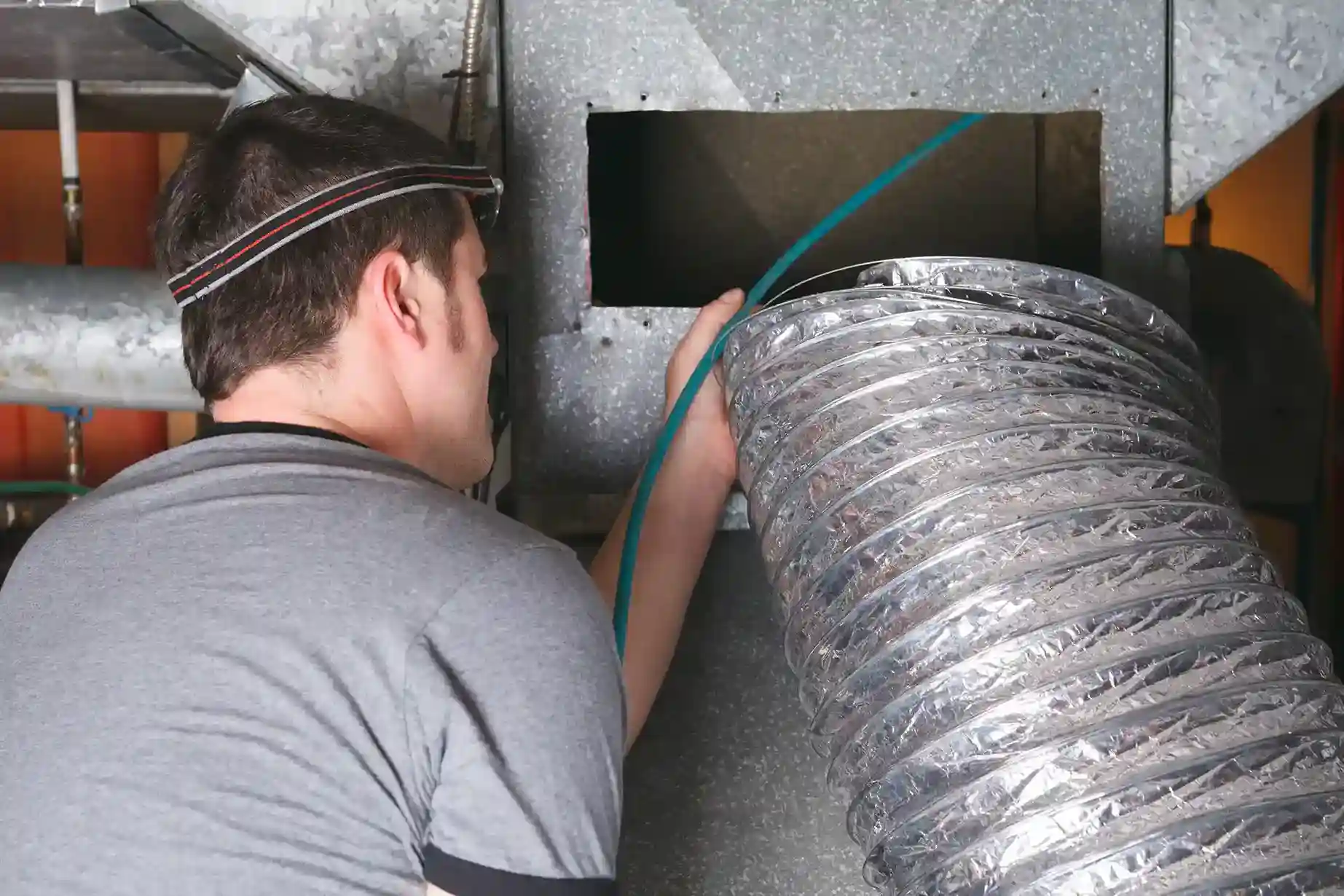
The Duct Restoration and Repair Process
Professional execution of duct repair follows a logical, step-by-step protocol designed to minimize disruption while maximizing results. This process moves from identification to physical repair and finally to verification.
Initial Pressure Testing and Inspection
The process begins with quantifying the problem. Technicians may perform a static pressure test to measure the resistance within the system. High static pressure suggests blockages or undersized ducts, while low pressure might indicate a major disconnect or leak. Thermal imaging cameras are often used to spot temperature differences behind walls or in ceilings, pinpointing exactly where hot or cold air is bleeding out.
Access and Site Preparation
Ductwork is often located in hard-to-reach areas like attics, crawlspaces, or tight basement ceilings. Technicians set up access paths to reach these components safely. Drop cloths and protective coverings are deployed to ensure that no debris from the repair area enters the living space. If the ducts are heavily laden with dust or debris, a cleaning phase may be recommended before repairs begin to ensure sealants adhere properly to the material.
Physical Repair and Sealing
This is the core of the work. Disconnected joints are mechanically fastened with screws and then sealed. Crushed sections of flexible ducting are removed and replaced with new, properly sized ducts. Mastic sealant is applied liberally to all seams, connections, and wye-branches. Unlike duct tape, mastic creates a permanent seal that creates a singular, airtight unit.
Insulation and Support
Once the airtight seal is established, the focus shifts to thermal efficiency. In unconditioned spaces, bare metal or plastic ducts allow heat transfer, warming up your cold air in summer or cooling down your hot air in winter. Technicians wrap these ducts in high R-value insulation to preserve the temperature of the air as it travels. Additionally, sagging ducts are strapped and supported to facilitate smooth airflow.
Final Verification
The job is not complete until the system is tested again. Technicians verify that airflow has improved at the registers and that the static pressure is within manufacturer specifications. This ensures the repairs have successfully resolved the initial complaints of uneven temperatures or weak airflow.
Deciding Between Duct Repair and Full Replacement
Homeowners often face the dilemma of whether to patch existing ductwork or tear it out and start fresh. This decision comes down to the age of the material, the extent of the damage, and the original design of the system.
When Repair is the Right Choice:
- Localized Damage: If the issues are isolated to a few specific areas, such as a single disconnected run or a section damaged by an accidental impact, repair is the most cost-effective solution.
- Recent Installation: If the ductwork is relatively new (under 10 years old) but was poorly sealed during installation, applying mastic and proper strapping can bring it up to par without a full replacement.
- Accessible Leaks: When the leaks are easily accessible in an attic or basement, sealing them is a straightforward process that yields high returns on investment.
When Replacement is Necessary:
- Age and Material Deterioration: Ductwork over 15 to 20 years old, particularly flexible ducting, often suffers from eroding plastic liners and disintegrated insulation. If the outer vapor barrier is flaking or the inner liner is brittle, repairs will only be temporary fixes.
- Severe Contamination: If ducts have been infested by rodents or have extensive mold growth due to years of moisture exposure, cleaning and repair are often insufficient. Replacement ensures the biological hazards are completely removed from the home.
- Incorrect Sizing: No amount of sealing will fix a system that was undersized from the start. If the return air plenum is too small to feed the furnace, or the supply trunks cannot handle the volume of air required, the system will be loud and inefficient. In these cases, resizing and replacing the ductwork is the only way to achieve comfort and protect the HVAC equipment.
Local Considerations for Ductwork in the Region
Operating in the Leawood area requires specific attention to the local climate. The region experiences a humid continental climate, characterized by hot, humid summers and freezing winters. This wide temperature variance places significant stress on ductwork, particularly sections located in unconditioned spaces like attics and garages.
During the humid summer months, cold air running through uninsulated or poorly insulated ducts in a hot attic can cause "sweating." This condensation occurs on the exterior of the ducts, dripping onto insulation and drywall, potentially causing water damage and mold growth. Local repair services prioritize checking the vapor barriers on duct insulation to prevent this sweating phenomenon. Upgrading insulation R-values is frequently necessary to combat the extreme attic temperatures common in July and August.
Conversely, in winter, any leakage in the return ducts can pull freezing air into the system, forcing the furnace to work much harder to reach the set temperature. Additionally, the integrity of ductwork in basements and crawlspaces is critical. Given the region's susceptibility to severe spring storms and occasional tornadoes, ensuring that ductwork is securely strapped and structurally sound is a safety consideration as well as a performance one. All Day Comfort Heating and Cooling LLC ensures that all repairs adhere to local mechanical codes and permit requirements, ensuring safety and compliance with regional building standards.
Why Professional Execution Matters
While some homeowners may attempt to patch a visible hole with tape, professional duct repair goes far beyond surface-level fixes. True efficiency requires understanding the physics of airflow—static pressure, velocity, and friction rates. A professional technician does not just stop leaks; they balance the system.
Balancing involves adjusting dampers and ensuring that the supply of air to each room matches the heat load requirements of that space. A bedroom facing the afternoon sun needs more cooling airflow than a shaded interior room. Professionals use flow hoods and manometers to measure these values precisely, adjusting the ductwork to deliver balanced comfort throughout the house.
Furthermore, professional repair utilizes materials that are safe for indoor air quality. Cheap sealants or improper tapes can off-gas volatile organic compounds (VOCs) when heated. Professional-grade mastic and UL-listed tapes are designed to be safe, fire-resistant, and durable. This attention to detail protects the health of the household while securing the efficiency of the HVAC system.
Restoring Efficiency to Your Home
Ignoring duct issues leads to a compounding cycle of problems: higher energy bills, reduced equipment lifespan, and a home that never feels quite comfortable. Whether it is a small leak causing a whistle in the hallway or a disconnected trunk line cooling your crawlspace, addressing the root cause is essential. A sealed and insulated duct system transforms the performance of your heating and cooling units, delivering clean, consistent air to every corner of your living space.
Take the step to optimize your home’s airflow. Reach out to All Day Comfort Heating and Cooling LLC to evaluate your system and implement the necessary repairs. Proper airflow is the silent engine of home comfort; ensure yours is running at peak performance. Stop paying to heat your attic and start feeling the difference indoors—contact us today to schedule your comprehensive duct repair service.
Contact Us
customer reviews
Areas We Serve




Copyright © 2026 All Day Comfort Heating and Cooling.
All rights reserved.
