




AC Replacement in Leawood, KS
Seeking AC replacement in Leawood? All Day Comfort offers rapid, same-day installations and flexible financing options. Restore your home's comfort today!
Is Your Air Conditioner Failing to Keep Your Home Cool?
Is your home uncomfortably hot due to a malfunctioning air conditioner that simply cannot keep up with the demand? Don’t sweat through another day waiting for a fix when a reliable, permanent solution is available immediately. Schedule your assessment or apply for financing today to restore comfort to your home.
Homeowners in Leawood, KS, know that when the humidity rises and temperatures spike, a working cooling system is not a luxury; it is a necessity. All Day Comfort Heating and Cooling LLC provides comprehensive replacement services designed to minimize downtime and maximize energy efficiency.
- Experience rapid, same-day AC replacement services to restore safety and comfort.
- Enjoy clear, upfront pricing and flexible financing options that fit your budget.
- Trust in a solution backed by a full satisfaction warranty and rigorous installation standards.
- All services are fully licensed, meeting specific regional codes and manufacturer requirements.
What to Expect From a Modern Replacement Service
When you decide to replace your air conditioning unit, the goal is to transition from a broken or inefficient system to high-performance cooling with minimal disruption to your daily life. A professional replacement service goes beyond simply swapping boxes; it involves a comprehensive analysis of your home's thermal characteristics to ensure the new unit performs flawlessly for years to come.
The scope of a replacement project typically begins with an evaluation of the existing ductwork and electrical infrastructure. Older homes often require modifications to accommodate modern, high-efficiency equipment. Today’s systems are physically larger and technologically more advanced than units manufactured 15 years ago. This means the installation team must assess the physical space available, both indoors and outdoors, to ensure proper airflow and serviceability.
Included in a standard replacement service is the safe recovery of old refrigerant, the removal and disposal of the existing equipment, and the installation of the new condenser and evaporator coil. Furthermore, the service includes the transition of the line set—the copper tubing that connects the indoor and outdoor units—and the installation of a new thermostat if required. The focus is on delivering a turnkey solution where the homeowner does not have to worry about permits, cleanup, or system configuration.
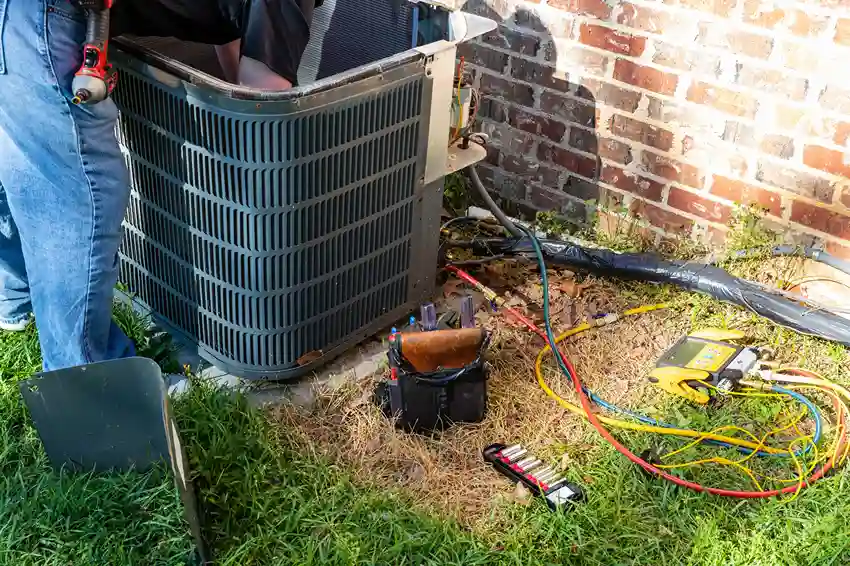
The Installation Process: Step-by-Step
A structured installation process ensures that every component functions correctly and that the system meets the manufacturer's efficiency ratings. Professional technicians follow a strict protocol to guarantee safety and performance.
Site Preparation and Protection
- Technicians arrive with floor runners and protective gear to ensure your home remains clean throughout the process.
- Power to the HVAC system is disconnected at the main panel to ensure safety during the removal phase.
- The area around the outdoor unit is cleared of debris, and the indoor workspace is prepped for equipment access.
System Removal
- Existing refrigerant is pumped out of the system and captured in recovery cylinders according to EPA regulations to prevent environmental contamination.
- The old electrical whip and disconnect box are disconnected.
- The old condenser unit and indoor evaporator coil are carefully removed and loaded for recycling or disposal.
New Equipment Installation
- A new pad is placed and leveled for the outdoor condenser. This is critical for preventing vibration and ensuring proper drainage.
- The new condenser is set in place, maintaining specific clearance distances from walls and shrubbery to allow for adequate airflow.
- The indoor evaporator coil is installed and sealed to the furnace or air handler to prevent air leaks.
Line Set and Electrical Connection
- New copper refrigerant lines are run or existing lines are flushed and cleaned.
- Technicians braze the connections using nitrogen purging to prevent oxidation inside the copper pipes, which protects the compressor.
- High-voltage wiring and low-voltage control wires are connected to the unit, often involving the installation of a new safety disconnect box.
Commissioning and Testing
- The system is vacuumed down to remove moisture and air from the lines, creating a deep vacuum measured in microns.
- Refrigerant is released or added to meet the exact subcooling and superheat requirements of the specific unit.
- Technicians perform a static pressure test to ensure the ductwork can handle the airflow of the new system.
- The thermostat is programmed, and the system runs through a full cycle to verify temperature drops and humidity removal.
When Replacement Is the Smarter Financial Move
Determining whether to repair a struggling unit or invest in a replacement is a common dilemma. While repairs may seem cheaper upfront, there is a tipping point where maintaining an old system becomes a financial drain. Understanding the specific criteria for replacement helps homeowners make data-driven decisions rather than emotional ones during a heatwave.
- The 50% Rule: If the cost of the repair approaches or exceeds 50% of the value of a new system, replacement is generally the better investment. Major failures, such as a blown compressor or a leaking evaporator coil, often carry repair bills that rival the down payment on a brand-new unit.
- Age of the Equipment: Most air conditioners have a lifespan of 10 to 15 years. If your unit is over 10 years old and requires a significant repair, the technology is likely obsolete. Investing in a new unit resets the clock on warranties and reliability.
- Refrigerant Type: Older units utilize R-22 (Freon), which has been phased out due to environmental regulations. The cost of R-22 has skyrocketed, making even minor refrigerant leaks incredibly expensive to fix. Modern systems use R-410A or newer refrigerants, which are more efficient and affordable.
- Frequency of Breakdowns: If you have required service calls more than twice in the last two years, the system is becoming unreliable. A "nickel and dime" situation often costs more in the long run than a monthly payment on a new, high-efficiency system.
- Energy Bills Increasing: As internal components wear out, motors work harder, and coils become less efficient at heat transfer. If utility bills have risen steadily despite normal usage, the system has lost its efficiency rating, and replacement will result in immediate monthly savings.
Considerations for Local Homeowners
Operating a cooling system in this region requires attention to specific environmental and regulatory factors. The climate in Leawood involves high humidity in the summer and significant temperature fluctuations. This environment demands a system that is correctly sized not just for cooling the air, but for effectively removing moisture. If a system is oversized, it will cool the house too quickly without running long enough to dehumidify, leading to a clammy indoor environment.
Permitting and Codes
Replacement projects typically require a permit from the local municipality. This ensures that the installation meets current safety codes regarding electrical connections and breaker sizing. Post-installation inspections are standard to verify that the work complies with local ordinances.
HOA and Noise Regulations
Many neighborhoods have strict guidelines regarding the placement and noise levels of outdoor mechanical equipment. Modern units are significantly quieter than older models, but placement must still adhere to property line setbacks and noise ordinances to avoid penalties.
Electrical Capacity
Older homes may have electrical panels that are maxed out. Installing a modern AC sometimes requires upgrading the circuit breaker or running a new wire gauge to the disconnect box to handle the load safely.
Ductwork Integrity
In many local homes, ductwork is located in unconditioned spaces like attics or crawl spaces. Before connecting a high-efficiency unit, it is vital to seal any duct leaks. Leaky ducts can undermine the efficiency of a new AC by up to 30%.
Maximizing Comfort with Advanced Features
Modern air conditioning technology offers features that go far beyond simple on/off operation. When selecting a replacement, understanding these technologies can help you choose a system that delivers superior comfort and lower operating costs.
- Variable Speed Compressors: Unlike single-stage units that run at 100% capacity or not at all, variable speed compressors adjust their output to match the cooling demand. This results in longer run times at lower speeds, which maintains a consistent temperature and removes more humidity.
- Two-Stage Cooling: These units operate at a lower setting for mild days and kick into high gear only during extreme heat. This prevents the "blast of cold air" effect and reduces energy consumption during the majority of the cooling season.
- Smart Thermostat Integration: New systems are often paired with smart thermostats that learn your schedule and adjust temperatures automatically. These devices can be controlled remotely, ensuring you never cool an empty house.
- High-Efficiency SEER2 Ratings: The Seasonal Energy Efficiency Ratio (SEER2) measures how much cooling a unit delivers per watt of electricity. Upgrading from an old 10 SEER unit to a modern 16 or 20 SEER2 system can reduce cooling costs by 30% to 50%.
Why Professional Execution Is Non-Negotiable
The most important day in the life of an air conditioner is the day it is installed. Industry studies consistently show that improper installation can reduce system efficiency by up to 30% and lead to premature component failure. This is why selecting a certified provider is more critical than the brand of equipment chosen.
Factory-trained technicians understand the nuances of airflow, refrigerant charging, and electrical safety. They utilize specialized tools to measure static pressure and ensure the system is balanced. A professional installation also ensures that the manufacturer’s warranty remains valid. Most manufacturers will void warranties if the equipment is not installed by a licensed professional or if it is not registered correctly.
Furthermore, professional providers carry liability insurance and workers’ compensation. This protects the homeowner from liability in the event of an accident on the property. When All Day Comfort Heating and Cooling LLC handles a replacement, every safety protocol is observed to protect both the home and the technicians.
Securing Your Home’s Comfort
Ignoring the warning signs of a failing air conditioner can lead to emergency breakdowns during the hottest days of the year. Proactive replacement allows you to choose the right system for your specific needs, secure financing, and schedule the installation at a convenient time. A new system offers peace of mind, reduced energy bills, and a comfortable environment regardless of the weather outside.
Make the decision to upgrade your home’s cooling infrastructure today. Reliable, efficient, and professional service is just a step away. Call now to schedule your AC replacement consultation.
Contact Us
customer reviews
Areas We Serve




Copyright © 2026 All Day Comfort Heating and Cooling.
All rights reserved.
