




Duct Installation in Leawood, KS
Discover top-notch duct installation in Leawood. Reduce energy bills and enhance comfort with tailored ductwork. Schedule a professional assessment today!
Inefficient Airflow Driving Up Your Energy Costs?
Are rising energy bills and uncomfortable temperatures at home making you consider duct installation or upgrades in Leawood? You are not alone, as many homeowners struggle with inconsistent heating and cooling due to aging or poorly designed infrastructure. Get a professional assessment and quote for your ductwork today.
- Enhance indoor comfort with efficiently installed ductwork tailored to the specific climate demands of Kansas.
- Reduce energy costs with expertly designed systems that optimize airflow and stabilize room temperatures.
- Experience quick installation with minimal disruption to your daily routine and home environment.
All services are fully licensed, backed by a satisfaction guarantee, and we handle all necessary permits for your peace of mind.
What to Expect From Professional Duct Installation Services
Investing in new ductwork is a significant decision that directly impacts the performance of your HVAC system and your monthly utility expenses. When you schedule a duct installation, the primary goal is to create a sealed, balanced, and properly sized pathway for conditioned air to reach every corner of your home. Existing ductwork often suffers from leaks, disconnects, or improper sizing that forces your furnace and air conditioner to work harder than necessary.
Current industry standards prioritize static pressure and velocity. A modern installation focuses on fabricating and installing a system that matches the specific output of your heating and cooling units. This ensures that the air pushed by the blower motor actually reaches the registers rather than being lost in basements, attics, or wall cavities. Homeowners in Leawood can expect a thorough evaluation of their home’s layout to determine the most efficient trunk and branch line configuration.
The scope of a full installation generally includes the removal of old, compromised materials, the calculation of load requirements, and the precise fitting of new metal or flexible ducting. Timeline expectations vary based on the size of the property and accessibility, but most residential projects are completed within a specific timeframe to restore comfort quickly. You receive a system designed to handle the hot, humid summers and freezing winters typical of the region without putting excessive strain on your mechanical equipment.
The Operational Process of Installing New Air Ducts
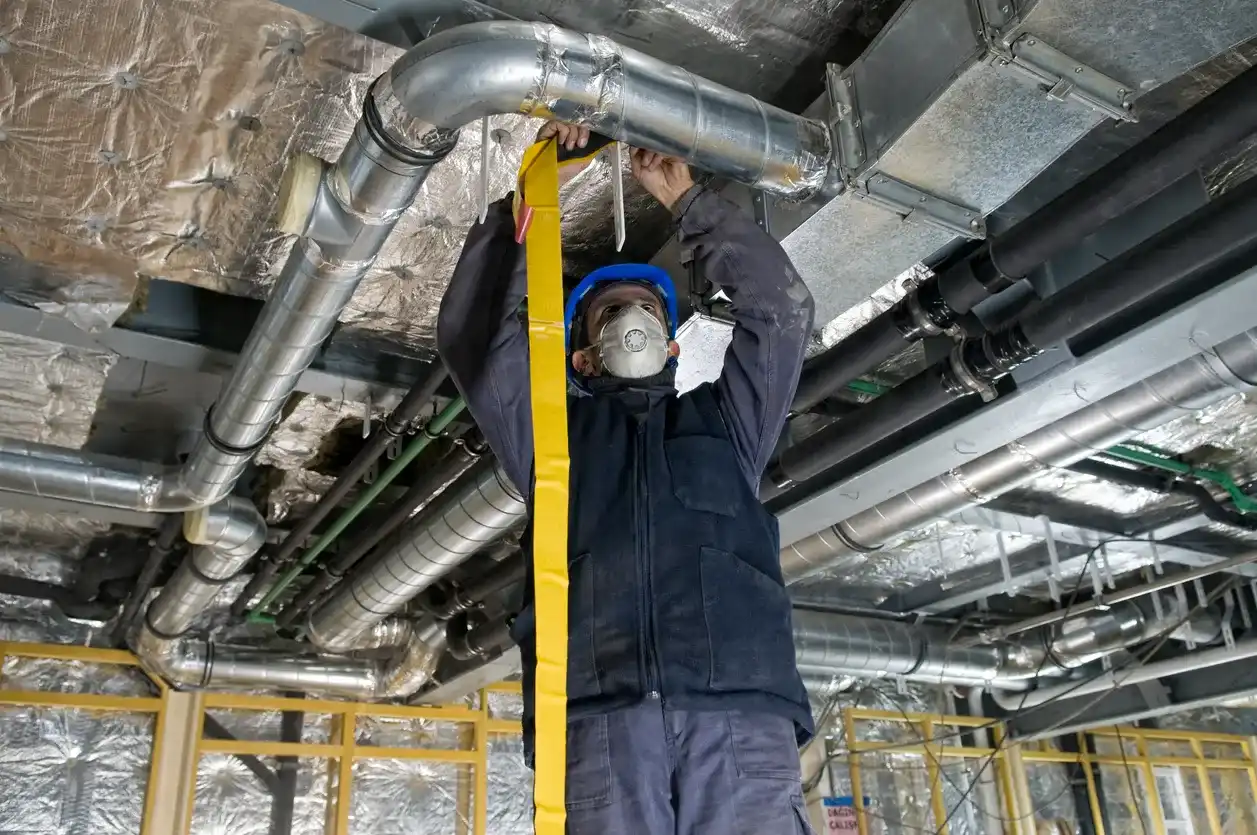
A structured approach to installation ensures that the new infrastructure supports long-term efficiency and air quality. The process begins with a technical design phase. Technicians perform load calculations to understand exactly how much air is required in each room to maintain a consistent temperature. This eliminates the common issue of hot and cold spots where one room feels like a freezer while another remains stuffy.
- Site Preparation and Removal: Technicians protect flooring and furniture before accessing the workspaces, which are often located in attics, crawlspaces, or basements. If replacing an existing system, the crew carefully dismantles and disposes of the old materials, inspecting the framing and support structures for any signs of mold or damage that need addressing before the new work begins.
- Fabrication and Hanging: The main trunk line is installed first, acting as the spine of the airflow system. This is typically constructed from rigid metal to maximize airflow and durability. Branches are then run from the trunk to individual vents. During this stage, technicians ensure that the runs are as straight as possible, as excessive bends and turns reduce air velocity and efficiency.
- Sealing and Insulation: Once the physical connections are made, every joint and seam is sealed using professional-grade mastic or metal tape. This step is critical because even small leaks can lead to significant energy loss. Following the sealing process, the ducts are insulated. In unconditioned spaces like attics, high R-value insulation is applied to prevent the air inside the ducts from gaining heat in the summer or losing heat in the winter.
- Testing and Balancing: The final step involves pressurizing the system to test for leaks and measuring airflow at the registers. Dampers—valves inside the ductwork—are adjusted to balance the airflow, ensuring that bedrooms, living areas, and kitchens all receive the correct volume of conditioned air.
When Full Replacement Is Required Over Repair
Determining whether to patch existing ductwork or opt for a complete replacement is a decision based on the age, condition, and material of the current system. While minor leaks or a single disconnected run can often be repaired, there are specific scenarios where replacement is the only financially sound option. All Day Comfort Heating and Cooling LLC often advises homeowners to look at the age of the system first; ductwork over 15 to 20 years old typically lacks modern insulation standards and may have accumulated interior contaminants that are impossible to fully clean.
- Severe Structural Damage or Collapse: Flexible ductwork often utilizes a wire coil frame covered in plastic and insulation. Over time, these materials can deteriorate, causing the ducts to sag, kink, or collapse entirely. If the airflow is restricted due to structural failure, no amount of cleaning or patching will restore functionality. Replacement ensures the pathways are open and structurally sound.
- Presence of Extensive Mold or Pest Infestation: If organic growth has penetrated the insulation of the ductwork or if pests have nested inside, the air quality of the entire home is compromised. Cleaning porous insulation is rarely effective. In these cases, removing the contaminated materials is necessary to protect the health of the occupants.
- Incompatible Sizing with New HVAC Units: Installing a high-efficiency furnace or air conditioner requires ductwork that can handle specific airflow requirements. If you upgrade your mechanical unit but keep undersized or restrictive ducts, the new unit will short-cycle, overheat, and fail prematurely. Replacement allows for the installation of correctly sized plenums and drops that complement modern high-efficiency equipment.
- Widespread Corrosion or Rust: In metal duct systems, moisture issues over time can lead to rust. Once corrosion sets in, it creates holes and weakens the metal's integrity. Patching rusty metal is a temporary fix that usually fails quickly. Replacement with galvanized steel eliminates the issue and prevents potential structural failure.
Navigating Local Climate and Building Requirements
Leawood experiences a wide variance in temperature throughout the year, ranging from sub-freezing winters to sweltering, humid summers. This seasonality dictates specific requirements for duct installation, particularly regarding insulation and vapor barriers. When ducts run through unconditioned spaces, such as a hot attic in July, the temperature difference between the cold air inside the duct and the hot air outside causes condensation. Without proper vapor barriers and insulation, this "sweating" leads to water damage and mold growth.
Local building codes in Kansas strictly regulate how ductwork is sealed and supported to ensure energy conservation. Compliance with these codes is not optional; it ensures that the system passes inspection and operates safely. Specific attention is paid to the return air paths. Many older homes in the area lack sufficient return air vents, creating negative pressure that sucks in unfiltered air from outside or back-drafts combustion gases from water heaters. Modern installations correct these imbalances, ensuring the home meets current safety and efficiency standards.
Permitting is handled as part of the professional service. This includes verifying that the materials used meet fire safety standards and that the layout does not interfere with structural integrity. Whether the installation is for a renovation, an addition, or a system overhaul, adherence to local regulations protects the homeowner’s investment and property value.
The Impact of Static Pressure and Air Velocity
A key differentiator in high-quality duct installation is the attention paid to static pressure. Static pressure refers to the resistance against airflow within the HVAC system. Think of it like blood pressure for your home's heating and cooling; too high, and the "heart" (the blower motor) fails; too low, and there is no circulation. Many generic installations fail to account for the total effective length of the duct runs, leading to systems that are noisy and inefficient.
- Reducing Noise Levels: Properly sized ducts reduce the "whooshing" noise associated with forced air systems. When air is forced through a duct that is too small, velocity increases, creating turbulence and noise. Correct sizing maintains volume while keeping velocity at a quiet, comfortable level.
- Extending Equipment Lifespan: When static pressure is high due to poor duct design, the blower motor overheats and consumes excess electricity. By optimizing the ductwork to reduce resistance, the strain on the HVAC unit is significantly reduced. This results in fewer breakdowns and a longer operational lifespan for the heating and cooling equipment.
- Improving Filtration Efficiency: Leaks in the return ductwork pull in dust and debris from basements or attics, bypassing the air filter. A tightly sealed system ensures that all air circulating through the house passes through the filtration system, resulting in cleaner air and less dust accumulation on furniture.
Ensuring Long-Term Efficiency and Comfort
The ultimate goal of upgrading or installing new ductwork is to create a controlled environment where energy is used effectively. The difference between a standard installation and a high-performance installation lies in the details: the radius of the elbows, the tightness of the seals, and the strategic placement of registers. These elements combine to eliminate drafts and ensure that the temperature set on the thermostat matches the temperature in the room.
Material selection also plays a role. While flexible ducting is useful in tight spaces, rigid metal ducting offers superior airflow characteristics and longevity. A hybrid approach is often best, utilizing rigid trunks for the main air movement and short flexible runs for the final connections to reduce sound transmission. This strategic design minimizes friction loss and maximizes the delivery of conditioned air.
Homeowners who prioritize these technical aspects see an immediate return on investment through lower utility bills. The system runs for shorter cycles to satisfy the thermostat, and the reduced runtime translates directly to savings. Furthermore, a balanced system manages humidity better, which is essential during humid Kansas summers for preventing a clammy indoor atmosphere.
Trusting Professional Fabrication and Design
Proper ductwork is a permanent upgrade to the home's infrastructure. Unlike a filter change or a tune-up, this is a construction project that alters how the home functions. It requires specialized tools for cutting, crimping, and sealing metal, as well as diagnostic equipment to verify airflow metrics. Attempting to address airflow issues without a comprehensive view of the system often leads to chasing symptoms rather than solving the root cause.
Professionals bring an understanding of fluid dynamics to the project. They calculate not just the size of the ducts, but the layout that provides the path of least resistance. This engineering mindset ensures that the investment yields tangible results in comfort and efficiency. From the initial load calculation to the final airflow balancing, every step is executed to align the home’s thermal envelope with the mechanical systems.
When you choose All Day Comfort Heating and Cooling LLC for your project, you are selecting a partner dedicated to precision and performance. The result is a home that heats up faster in the winter, cools down quicker in the summer, and maintains superior air quality year-round. Contact us today to schedule your ductwork evaluation and improve your home comfort.
Tired of Hot and Cold Spots? Get Professional Duct Installation Now
Are you tired of uneven temperatures or skyrocketing energy bills? Let All Day Comfort Heating and Cooling LLC help you upgrade your ductwork for improved comfort and efficiency. Our expert team will assess your home’s needs and install a system tailored to ensure optimal airflow and consistent heating and cooling. Schedule your duct installation consultation today and take the first step toward a more comfortable, energy-efficient home.
Contact Us
customer reviews
Areas We Serve




Copyright © 2026 All Day Comfort Heating and Cooling.
All rights reserved.
