




Smart Thermostat Installation in Leawood, KS
Get professional smart thermostat installation in Leawood. Optimize your HVAC system, lower energy bills, and enjoy remote climate control. Schedule today!
Struggling with High Home Energy Bills?
Feel like you’re constantly adjusting your thermostat to maintain comfort? You might not be alone in facing frequent, uncomfortable temperature swings during Leawood's fluctuating seasons. Schedule your professional installation today to take control of your climate.
- Install a smart thermostat to optimize home temperatures automatically.
- Reduce your monthly energy costs with efficient heating and cooling.
- Enjoy the convenience of adjusting your settings remotely from any device.
Includes full setup and demonstration, with extended warranties and financing options available.
Managing indoor climate in Leawood requires more than just a basic dial on the wall. Between the humid, sweltering summers and the biting cold of winter, your HVAC system works hard year-round. A manual or basic programmable thermostat often fails to keep up with these shifts efficiently, leading to energy waste and uneven cooling or heating. All Day Comfort Heating and Cooling LLC provides the technical expertise required to integrate advanced climate control systems into your home, ensuring your equipment runs only when necessary and exactly how you want it to.
Modern Control for Your Heating and Cooling System
Upgrading to a smart thermostat is not merely about adding a gadget to your wall; it is about installing a central brain that optimizes your entire HVAC infrastructure. While older units simply read the temperature at a single point in the hallway, modern systems utilize advanced algorithms, room sensors, and Wi-Fi connectivity to create a comprehensive climate strategy for your home.
When you schedule a professional installation, you are investing in a service that covers every technical aspect required to get the device running correctly. This includes verifying compatibility with your specific furnace, air conditioner, or heat pump, and handling the often-complex wiring requirements that vary between older and newer homes.
- Comprehensive System Evaluation: Technicians assess your current HVAC equipment (single-stage, multi-stage, or variable speed) to select and configure the thermostat correctly.
- C-Wire Installation or Adaptation: Many smart devices require a "Common Wire" for continuous power. If your home lacks this, professional installation includes running new wire or installing a power adapter kit (PAK) to prevent battery drainage or Wi-Fi disconnection.
- Wi-Fi and App Integration: The service includes connecting the device to your home network, setting up the manufacturer’s app on your phone, and integrating it with smart home ecosystems like Google Home, Amazon Alexa, or Apple HomeKit.
- Remote Sensor Placement: If your system supports room sensors, technicians determine the optimal placement to balance hot and cold spots in bedrooms or living areas.
- Custom Scheduling: You receive assistance in programming your initial schedule based on your sleep and work habits, ensuring immediate efficiency gains.
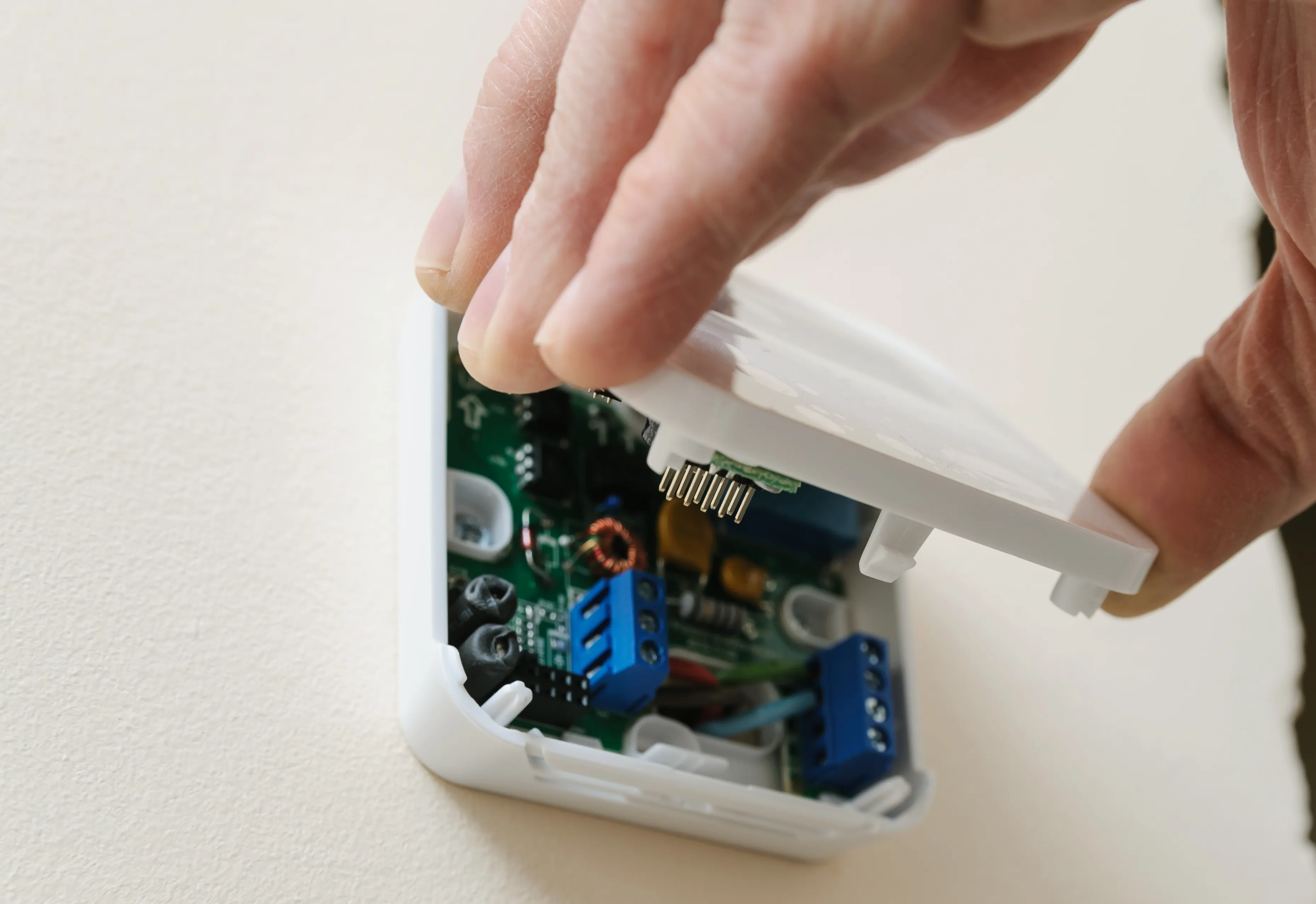
The Professional Installation Process
The process of installing a smart thermostat involves dealing with low-voltage wiring and ensuring that the thermostat effectively communicates with the control board on your furnace or air handler. Incorrect wiring can blow fuses, damage the control board, or result in a system that runs the AC and heat simultaneously. A professional approach mitigates these risks through a systematic workflow.
Site Assessment and Safety Check
Before removing the old unit, the technician cuts power to the HVAC system at the breaker panel to ensure safety. They then inspect the existing wiring block. This step is critical because wire colors do not always match industry standards, especially in older Leawood homes where previous renovations may have occurred. The technician identifies and labels each wire based on its function (Heat, Cool, Fan, Common, Reversing Valve) rather than just its color.
Wiring and Mounting
Once the old backplate is removed, the wall is prepped. This often involves patching or painting small areas if the new thermostat has a smaller footprint than the old one, or installing a trim plate for a clean look. The new base is leveled and mounted securely. The wiring is then connected to the corresponding terminals. This is the stage where the Common Wire (C-wire) is connected. If a C-wire is not present in the wall bundle, the technician will install an adapter at the furnace control board to utilize the existing wires for power without losing functionality.
Configuration and System Testing
After the hardware is physically installed, the power is restored. The technician enters the setup menu—a backend interface often hidden from standard users—to tell the thermostat exactly what equipment it is controlling. They configure settings for heat pump reversing valves, fan control logic (gas vs. electric), and stage cycling. Following configuration, a full system test is run. The technician forces the AC, Heat, and Fan to run to verify that the signals are being received and executed correctly by the HVAC equipment.
User Onboarding
The final step involves handing control over to the homeowner. This is not just handing over a manual; it involves a walkthrough of the interface. You learn how to override schedules, how to set up geofencing (so the system saves energy when you leave the house), and how to monitor energy usage reports.
Is It Time to Upgrade Your Thermostat?
Determining whether to replace your current thermostat involves looking at the age of your equipment and your current energy bills. Many homeowners operate with "set it and forget it" units that run blindly, regardless of the weather outside or whether the house is occupied.
The Hidden Cost of Manual Operation
Older thermostats, particularly those with mercury switches or simple digital displays, have a large "temperature swing" or differential. This means the temperature might drop several degrees below your set point before the heat kicks in, or rise significantly before the AC starts. This leads to discomfort and forces the system to run longer cycles to recover. Smart thermostats have precise sensors (often accurate to within half a degree) that maintain comfort with shorter, more efficient cycles.
Learning vs. Programming
Standard programmable thermostats require you to manually input times and temperatures, a task so tedious that many people never do it. Smart thermostats utilize "learning" capabilities. Over the first few weeks of operation, the device learns your habits—when you wake up, when you leave for work, and what temperature you prefer while watching TV. It then builds a schedule automatically. If your schedule changes, the thermostat adapts without you needing to press a button.
Remote Management Needs
If you travel frequently or have a fluctuating schedule, a smart thermostat is a necessary upgrade. Being able to check your home's temperature from an app allows you to ensure pipes don't freeze during a winter vacation or to cool the house down before you return from a summer road trip.
Zoning and Hot Spots
If you have rooms that are always too hot in the summer or too cold in the winter, a smart thermostat with remote room sensors is the superior choice over repairing or calibrating an old thermostat. The main unit can average the temperature across multiple rooms or prioritize occupied rooms (like the bedroom at night) to ensure actual comfort where you are, rather than just in the hallway.
Navigating Local Climate and Utility Requirements
Living in Leawood means dealing with a climate that demands a responsive HVAC system. The swing from humid, 95-degree summer days to sub-freezing winter nights puts immense strain on heating and cooling equipment. A smart thermostat acts as the first line of defense against energy waste during these extremes.
Humidity Control
In this region, humidity is a major factor in comfort. Simply lowering the temperature isn't always enough. Many advanced smart thermostats include humidity sensors. If your HVAC system has a variable speed blower or a whole-home dehumidifier, the thermostat can control these elements to remove excess moisture without over-cooling the house. Even without a dehumidifier, the thermostat can serve as a monitor, alerting you when indoor humidity reaches levels that could encourage mold growth.
Heat Pump Optimization
For homes utilizing heat pumps, the transition from the heat pump to the auxiliary (emergency) heat strip is a critical energy moment. Auxiliary heat is significantly more expensive to run. Smart thermostats have "lockout" features that are configured based on local outdoor temperatures. They utilize local weather data via Wi-Fi to maximize the use of the efficient heat pump and only engage the expensive auxiliary heat when absolutely necessary.
Utility Rebates and Incentives
Local utility providers often incentivize the installation of Energy Star-certified smart thermostats. These devices reduce the load on the electrical grid during peak demand times. Professional installation ensures that the device you choose qualifies for these programs. Furthermore, properly documented installation by a service provider can be helpful if you ever need to file a warranty claim with the thermostat manufacturer, as they often require proof of professional setup for full coverage.
Building Codes and Permits
While replacing a thermostat generally does not require a municipal permit in the same way installing a new furnace does, adherence to electrical safety is paramount. If new wiring needs to be run from the furnace to the thermostat location (for example, moving the thermostat to a better location away from a drafty window or direct sunlight), this falls under low-voltage work that must comply with local building standards to ensure fire safety and system integrity.
Ensuring Compatibility and Performance
The market is flooded with smart devices, but not all are universal. Some require specific voltage levels, while others are incompatible with "communicating" HVAC systems that use proprietary data protocols. All Day Comfort Heating and Cooling LLC ensures that the hardware selected matches the specific engineering of your furnace and air conditioner.
Protecting Your HVAC Investment
A thermostat is essentially a switch that turns your expensive equipment on and off. If installed incorrectly, it can "short cycle" the system—turning it on and off rapidly. This is one of the leading causes of compressor failure in air conditioners and heat exchanger cracks in furnaces. Professional calibration sets the "cycle rate" effectively, ensuring the equipment runs long enough to reach peak efficiency but not so long that it overheats or wastes energy.
Data-Driven Decisions
Once installed, your smart thermostat begins generating data. You will receive monthly reports detailing how many hours your system ran and how your usage compares to similar homes in the area. This data identifies trends. For example, if your system is running significantly longer to maintain the same temperature compared to the previous year, it may indicate a need for HVAC maintenance or filter replacement before a breakdown occurs.
Integration with Indoor Air Quality (IAQ)
Modern homes often include accessories like humidifiers, ventilators, or UV lights. A smart thermostat can often centralize control of these devices. Instead of walking to the basement to adjust a humidifier dial, you can manage humidity levels from the same interface used for temperature. Technicians ensure these accessory wires are correctly integrated into the new thermostat backplate, removing the need for multiple controllers on your wall.
Maximizing Energy Efficiency
The primary driver for most smart thermostat installations is the potential for savings. By reducing usage when no one is home and optimizing the runtime of the equipment, homeowners often see a reduction in heating and cooling bills.
- Geofencing Technology: Uses your phone’s location services to detect when you leave the perimeter of your home, automatically setting the system to an "Away" eco-mode.
- Smart Recovery: The system calculates exactly how long it takes to heat or cool your home. If you want it to be 70 degrees at 6:00 PM, the thermostat checks the weather and current indoor temp to start the system at the precise moment needed to hit that target, rather than starting arbitrarily early.
- Filter Reminders: Clogged filters restrict airflow and increase energy consumption. Smart thermostats track fan runtime and send alerts to your phone when it is time to change the filter, ensuring the system always breathes freely.
Taking control of your home’s energy usage requires precision and professional execution. Upgrading your controls protects your HVAC equipment and improves your daily comfort. Contact us to schedule your smart thermostat installation.
Upgrade to a Smart Thermostat for Ultimate Comfort and Savings
Say goodbye to constant thermostat adjustments and hello to ultimate comfort with a smart thermostat installation from All Day Comfort Heating and Cooling LLC. Take control of your home's climate with precision, while saving energy and reducing your bills. Our expert technicians ensure a seamless setup, from Wi-Fi integration to full system optimization. Don’t wait—schedule your smart thermostat installation today and enjoy smarter, more efficient climate control year-round.
Contact Us
customer reviews
Areas We Serve




Copyright © 2026 All Day Comfort Heating and Cooling.
All rights reserved.
