




HVAC Service in Raymore, MO
Struggling with heating or cooling issues in Raymore? Get reliable diagnostics, maintenance, and repair from licensed experts. Schedule your service today to enhance comfort and efficiency.
Inconsistent Indoor Temperatures Compromising Your Comfort?
Is your heating or cooling system failing to keep up with the distinct seasonal shifts typical of the Raymore climate, leaving specific rooms uncomfortable or your utility bills inexplicably high? You need a technical solution that stabilizes your indoor environment immediately and ensures your equipment runs efficiently year-round—contact us to schedule a comprehensive diagnostic or service appointment today.
Homeowners frequently face the frustration of equipment that cycles on and off without reaching the set temperature, or units that simply refuse to start when the weather turns extreme. Delays in addressing these mechanical failures can lead to frozen pipes in winter or dangerous humidity levels in summer. We provide a decisive response to these issues.
- Rapid response times for emergency diagnostics to restore functionality quickly.
- Comprehensive maintenance protocols designed to extend the operational lifespan of your existing equipment.
- Transparent, upfront pricing structures with flexible financing options for major repairs or replacements.
All services are fully licensed and compliant with local codes, backed by extensive labor warranties and manufacturer guarantees to protect your investment.
Comprehensive HVAC Solutions for Reliability and Efficiency
When a technician arrives at your property, the objective is to move beyond symptoms and identify the root cause of the system failure. Modern heating and cooling equipment involves complex interactions between airflow, thermodynamics, and electrical control circuits. A surface-level fix often misses underlying issues that cause recurrent breakdowns. Our approach ensures every component functions according to manufacturer specifications.
Cooling System Diagnostics and Repair
During the warmer months, your air conditioning unit bears a heavy load. Service visits focus on the critical heat rejection process. If the system cannot absorb heat from inside and release it outside effectively, energy consumption spikes while comfort drops.
- Refrigerant Charge Verification: Technicians measure superheat and subcooling levels to ensure the refrigerant charge matches the factory specifications. Incorrect levels indicate a leak or improper installation, both of which severely hamper efficiency.
- Electrical Component Analysis: The capacitor, contactor, and compressor windings are tested for resistance and capacitance. Worn electrical parts are the leading cause of sudden compressor failure.
- Airflow and Static Pressure: We measure the static pressure within the ductwork to ensure the blower motor is moving the correct volume of air (CFM) across the evaporator coil. Restricted airflow causes coils to freeze and compressors to overheat.
- Condensate Drain Cleaning: Blocked drain lines can trigger safety switches that shut down the unit or cause water damage to the home. We clear these lines and test the pump operation.
Heating System Safety and Performance
Heating maintenance and repair prioritize safety, particularly with gas-fired furnaces. Incomplete combustion or heat exchanger breaches pose serious risks.
- Heat Exchanger Inspection: A visual and camera-assisted inspection checks for cracks or corrosion in the heat exchanger, which prevents carbon monoxide from leaking into the air stream.
- Combustion Analysis: We analyze the flue gas to ensure the fuel is burning efficiently and that draft pressure is venting exhaust gases safely out of the home.
- Ignition Sequence Testing: From the pressure switch to the igniter and flame sensor, we verify that the safety interlock circuit functions correctly before the gas valve opens.
- Blower Motor Amp Draw: The motor is tested to ensure it operates within its rated amperage. Overworking motors suggest duct restrictions or dirty components.
All Day Comfort Heating and Cooling LLC utilizes advanced diagnostic tools to pinpoint these issues accurately, ensuring that the repair provided resolves the problem permanently rather than offering a temporary patch.
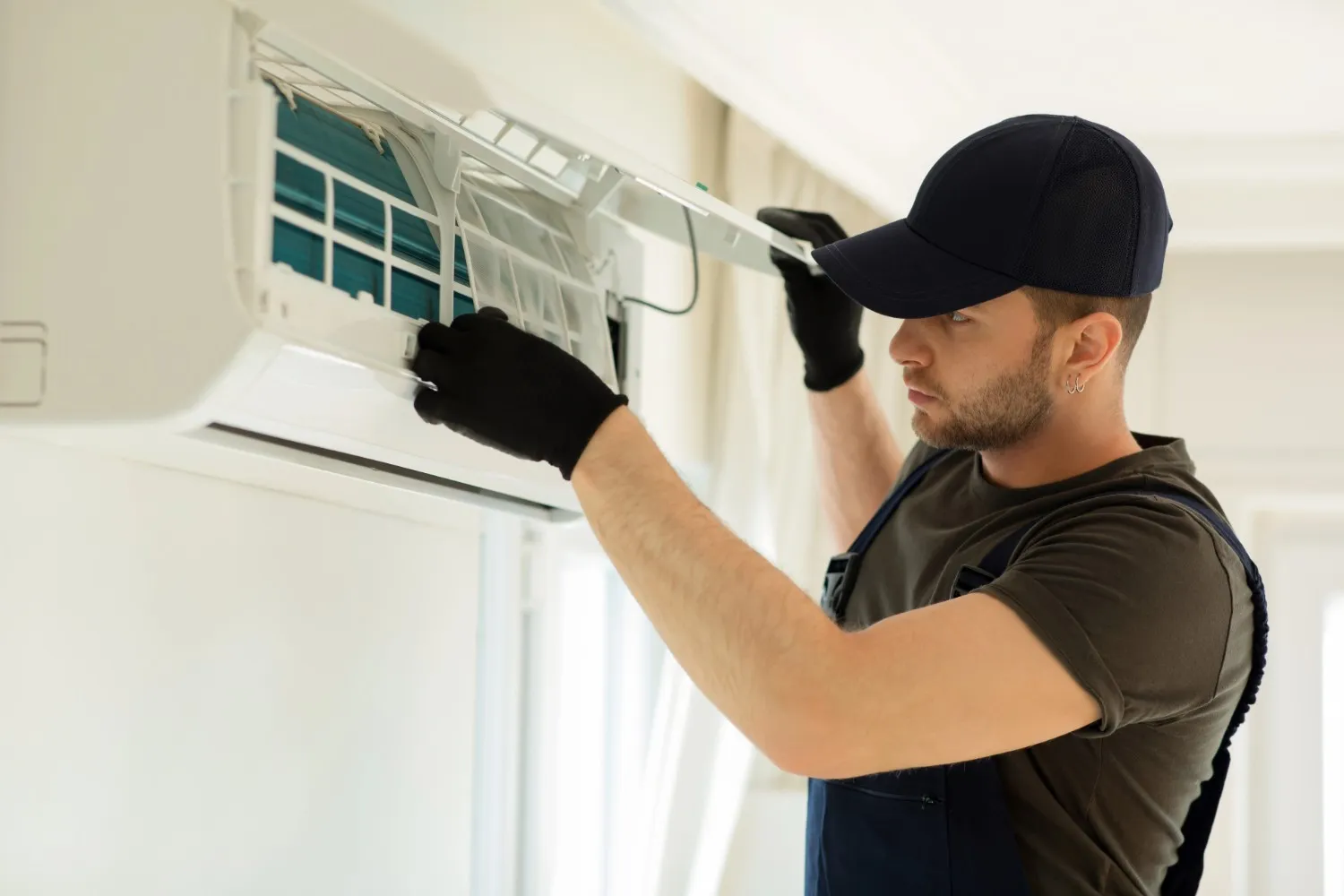
The Equipment Installation and Replacement Process
Installing a new HVAC system is a construction project that requires precise engineering. It is not simply swapping one box for another. The longevity and efficiency of your new unit are dictated almost entirely by the quality of the installation. A system with a high efficiency rating (SEER2 or AFUE) will perform like a low-end unit if the installation does not address ductwork sizing and airflow dynamics.
Sizing and Load Calculation
Before any equipment is selected, a proper load calculation must be performed. This involves more than just looking at the square footage of your home.
- First, we assess the thermal envelope of the house, including insulation levels in the attic and walls, window types, and air leakage rates.
- Next, we account for the orientation of the home, as south and west-facing windows contribute significantly more heat gain in the summer.
- Then, we factor in internal heat loads, such as appliances and the number of occupants.
- Finally, we select equipment capacity that matches this specific load requirement. Oversized units cycle too frequently, failing to dehumidify, while undersized units run constantly without reaching the set point.
Removal and Site Preparation
Proper removal of the old system prevents damage to the property and sets the stage for a clean installation.
- Technicians pump down remaining refrigerant in accordance with EPA regulations to prevent environmental contamination.
- Electrical disconnects and gas lines are safely shut off and capped.
- The old equipment is removed, and the installation area is cleaned and leveled. If a new pad is required for the outdoor unit, it is leveled and set on a gravel base to prevent sinking or vibration.
Installation and Commissioning
The physical installation involves connecting the new unit to the home's existing infrastructure.
- New refrigerant lines are brazed using nitrogen to prevent oxidation inside the copper tubing, which protects the compressor valves.
- Ductwork transitions are fabricated to ensure a smooth connection between the new air handler and the existing plenum. All joints are sealed with mastic to prevent air leakage.
- The system is pressure-tested with nitrogen to guarantee there are no leaks in the brazed joints.
- A deep vacuum is pulled on the lines to remove all moisture and non-condensables before the factory refrigerant is released.
- Finally, the system is commissioned. This involves adjusting blower speeds, setting gas pressure, and verifying that the temperature split across the coil meets manufacturer data.
Deciding Between Repair and Replacement
Homeowners often struggle to determine whether to invest in another repair or to replace the system entirely. Making the right financial decision requires analyzing the age of the unit, the cost of the repair, and the potential energy savings of a new system.
The 50% Rule and Investment Logic
A common industry standard for making this decision is the "50% Rule." If the cost of the necessary repair approaches 50% of the cost of a new system, replacement is generally the better financial option.
- Age Factor: If your air conditioner or heat pump is over 10 years old, or your furnace is over 15 years old, major component failures (like a compressor or heat exchanger) usually signal the end of the unit's useful life. Investing heavily in an old unit often leads to "throwing good money after bad" as other parts begin to fail shortly after.
- Frequency of Breakdowns: If you have required repairs more than twice in the last two years, the system has likely become unreliable. The cumulative cost of service calls and minor repairs can quickly exceed the monthly payment of a new, warrantied system.
- Refrigerant Type: Older systems utilize R-22 refrigerant, which has been phased out and is exponentially expensive to replace. If an older unit has a refrigerant leak, replacement is almost always the only viable option due to the cost of R-22.
Efficiency Improvements
Modern equipment offers significant efficiency jumps compared to units installed even a decade ago.
- SEER2 Ratings: New regulatory standards (SEER2) mean that modern AC units use significantly less electricity to provide the same amount of cooling.
- Variable Speed Technology: Newer systems often feature variable-speed blowers and multi-stage compressors. These units run at lower capacities for longer periods, which maintains a more consistent temperature, provides better dehumidification, and operates much quieter than single-stage units.
- AFUE Ratings: Modern furnaces can achieve up to 98% AFUE, meaning 98% of the gas consumed is converted into heat for your home. Older standard-efficiency furnaces may only be 80% efficient, wasting 20 cents of every dollar spent on gas.
Local Considerations for HVAC in Raymore
Operating heating and cooling equipment in Raymore, MO, requires attention to specific regional factors. The local climate, characterized by humid continental weather, places extreme stress on systems at both ends of the temperature spectrum.
Permits and Code Compliance
Any significant HVAC work, particularly system replacements, requires adherence to local building codes.
- Permits are generally required for the installation of new furnaces and air conditioning units to ensure safety standards are met.
- Local inspectors may verify that the electrical disconnects are easily accessible, that gas piping is sediment-trapped properly, and that venting clearances meet safety regulations.
- We handle the administrative burden of pulling necessary permits to ensure your installation is fully legal and compliant with city ordinances.
Seasonal Humidity and Weather Challenges
The high humidity levels in this region during summer months necessitate air conditioning systems that are correctly sized.
- An oversized AC unit will cool the house too quickly and shut off before it has removed the humidity. This leads to a "clammy" indoor feeling and can encourage mold growth.
- We prioritize humidity control in our system sizing and often recommend two-stage or variable-speed equipment that runs longer cycles to effectively dehumidify the air.
- In winter, temperatures can drop significantly below freezing. Heat pumps operating in this area require a properly functioning defrost board and reliable auxiliary heat strips (electric backup) or a dual-fuel arrangement (gas furnace backup) to maintain comfort during deep freezes.
Utility Rebates and Incentives
Local utility providers often offer rebates for upgrading to high-efficiency equipment.
- Electric and gas providers frequently have programs that offset the cost of installing high-SEER AC units or high-efficiency furnaces.
- To qualify, the equipment must meet specific AHRI (Air-Conditioning, Heating, and Refrigeration Institute) match-ups. We provide the necessary documentation and certifications to help you claim any available rebates.
Why Professional Execution Matters
The difference between a system that lasts 15 years and one that fails in 7 is often the quality of the service and installation. High-quality equipment installed poorly will fail prematurely. Our focus is on the technical precision required to get the maximum life out of your investment.
- Stocked Mobile Inventory: Our trucks carry a wide array of universal parts, including capacitors, contactors, control boards, and igniters. This minimizes downtime, allowing us to complete most repairs in a single visit without waiting for parts to be ordered.
- Property Protection: Technicians utilize drop cloths and shoe covers to protect your flooring and maintain a clean workspace. All debris and old equipment are removed from the site and disposed of properly.
- Warranty Management: We register all installed equipment with the manufacturer on your behalf to ensure full warranty coverage. Additionally, we provide labor warranties on our work, giving you recourse if any issues arise post-installation.
All Day Comfort Heating and Cooling LLC is committed to providing data-driven, technically sound solutions for your home comfort needs. Whether you are facing an emergency breakdown in the middle of a heatwave or planning a proactive system replacement, precise execution is the standard.
Secure the reliability of your heating and cooling system today—reach out to our team to schedule your service.
Contact Us
customer reviews
Areas We Serve




Copyright © 2026 All Day Comfort Heating and Cooling.
All rights reserved.
